From idea to ETF portfolio in minutes. Build yours now →




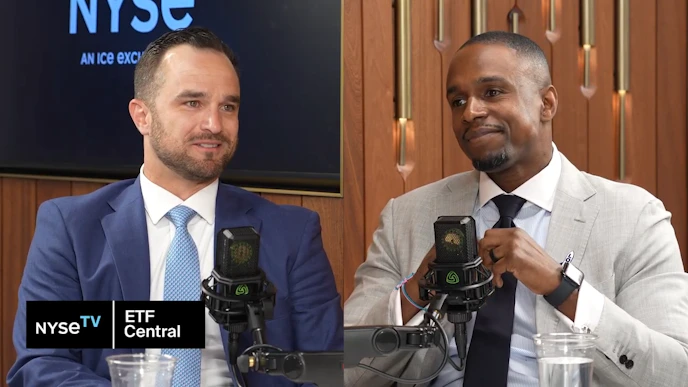
Baron Capital spent more than four decades without launching a single ETF. Then, in December 2025, it entered the market with five active ETFs at once. Just seven months later, the firm has expanded to seven ETFs, amassed roughly $750 million in assets, and hired Matt Camuso to lead its ETF strategy.
In the latest episode of ETF Central, Matt Camuso, Head of ETF Solutions at Baron Capital, joins Bilal Little to discuss the firm's long-awaited ETF debut, why it chose to enter the market now, and how a 43-year-old active manager is adapting its investment philosophy to the ETF wrapper. The conversation covers product development, active investing, AI, tokenization, private markets, and the challenges of standing out in today's increasingly crowded ETF landscape.
The Executive Who Specializes in Building ETF Platforms
For Camuso, launching ETF businesses is nothing new.
After beginning his career at State Street and joining the SPDR ETF business around 2012, he helped build ETF platforms at both JPMorgan Asset Management and BNY. Those experiences shaped his expertise in helping established asset managers make the transition into ETFs.
Now, roughly six months into his role at Baron Capital, he serves as the firm's Head of ETF Solutions, overseeing the commercial strategy behind the ETF platform across product development, marketing, sales, and capital markets.
Rather than building a large standalone ETF division, Camuso believes success comes from embedding ETF expertise throughout an organization.
His role, as he describes it, is less about creating another business unit and more about translating ETF expertise across the firm's existing investment, distribution, and operational teams.
Why Baron Waited 43 Years
Baron Capital is not an asset manager chasing the latest industry trend.
Founded by Ron Baron in 1982 with approximately $10 million, the firm has grown into a manager overseeing more than $50 billion using the same philosophy it has followed since inception: long-term, research-driven, bottom-up growth investing.
Throughout the interview, Camuso repeatedly emphasized that ETFs are simply another investment wrapper, not a replacement for mutual funds.
Baron continues to believe mutual funds, separately managed accounts, and collective investment trusts all serve important purposes. The ETF simply allows the firm to meet investors where they already prefer to invest.
It also opens the door to a new audience.
As Camuso noted, many investors today will only buy ETFs. Until now, those investors had no way to access Baron strategies.
Product Ideas Start With Client Conversations
Unlike many firms that rely on formal surveys or market research, Baron develops new ETF ideas through ongoing conversations with clients.
Camuso explained that advisors and institutional investors are constantly asked one simple question:
"What problems are you trying to solve?"
Several of Baron's ETF launches came directly from those discussions.
Clients requested access to the firm's emerging markets strategy through an ETF, leading to the launch of BCEM.
Institutional investors also wanted a version of Baron's investment process with tighter risk controls, resulting in BROL, the firm's risk-optimized large-cap ETF.
Launching five ETFs initially, then adding two more only months later, was intended to demonstrate that Baron was building a long-term ETF platform rather than testing the waters with a single product.
SpaceX Was Already in the Portfolio
One of Baron's most talked-about ETFs has been the Baron First Principles ETF
While several investment products have attempted to gain SpaceX exposure through special purpose vehicles or indirect structures, Camuso stressed that Baron's position wasn't created for marketing purposes.
The ETF combines two long-running Baron mutual fund strategies, both of which already owned SpaceX before the ETF existed.
As a result, including the company inside the ETF was simply a natural extension of existing portfolios.
Camuso also highlighted what he considers the more important story: portfolio construction.
Although the fund owns several high-growth companies, its meaningful allocation to financials helps offset volatility and improve overall portfolio balance.
He described this combination of position sizing, diversification, and long-term conviction as the real value active management provides.
The Trends That Could Shape ETFs
With active ETFs now firmly established, Camuso believes the industry's next wave of innovation will come elsewhere.
One area he finds particularly interesting is prediction market ETFs. Whether or not those products ultimately succeed, he believes every new asset class that becomes ETF-accessible expands the industry's long-term potential.
He also views tokenization primarily as a distribution opportunity rather than simply a technology upgrade.
Instead of focusing only on faster settlement, tokenized funds could eventually reach entirely new groups of investors who already hold digital assets.
Finally, Baron has filed for exemptive relief to offer ETF share classes but currently has no immediate plans to launch one.
Camuso sees the filing as maintaining flexibility while the industry continues working through the operational and regulatory details.
Active Management's Case in an AI World
Artificial intelligence was another major topic of discussion.
Camuso pointed to Baron Technology ETF portfolio managers Mike Lippert and Asha Mehra, who describe AI as the fastest-moving technological shift they have experienced during their careers.
Rather than framing the debate as active versus passive investing, Camuso argued that passive indexes naturally reward yesterday's winners.
Active managers, he said, have the opportunity to identify future winners before they become large enough to enter major benchmarks.
He cited Lumentum as one example.
Baron added the company to its technology strategy months before it entered the S&P 500. By the time index investors gained exposure, the stock had already appreciated significantly.
That philosophy extends across Baron portfolios.
The firm typically holds investments for approximately eight years and often researches companies for years before initiating a position.
Its investment process begins with a simple question:
Can this company double in value over the next three to five years?
Only businesses capable of meeting that hurdle move forward in the research process.
Too Many ETFs, Not Enough Investor Education
One statistic stood out during the interview.
Camuso noted that roughly 1,500 active ETFs launched between the beginning of 2025 and the end of the second quarter of 2026.
Only around 260 have surpassed $100 million in assets.
While he cautioned against using $100 million as the definitive measure of success, he believes the increasingly crowded market creates a different challenge.
New investors risk becoming overwhelmed by the sheer number of ETF choices or having a poor first experience if they don't understand how ETFs trade or fit within a portfolio.
That's why Baron invested heavily in capital markets expertise, including hiring Brian Moore to oversee ETF capital markets.
Bilal Little added that many retail investors have access to thousands of ETFs but often lack guidance on building diversified portfolios.
Camuso agreed, encouraging investors to engage directly with ETF issuers, ask questions about trading mechanics, portfolio construction, and implementation, and better understand how individual ETFs fit within broader investment strategies.
The ETF He Thinks Is Being Overlooked
When asked which Baron ETF deserves more attention, Camuso chose the Baron Emerging Markets Select ETF
Managed by Michael Kass, the strategy combines Baron's traditional bottom-up research with a thematic framework that identifies long-term structural trends before selecting individual companies.
Current themes include defense spending, deglobalization, and China's role within the global AI supply chain.
Camuso believes emerging markets remain one of the areas where active management has the greatest opportunity to outperform passive indexes.
A Personal Ending
Little closed the interview with an unexpected question about Camuso's earliest childhood memory.
His answer had nothing to do with finance.
He recalled spending time at the driving range with his father, who passed away when Camuso was in his early twenties. He remembered the smell of freshly cut grass and credited those experiences for his lifelong love of golf.
It was a fitting conclusion to a conversation centered on long-term thinking.
Just as Ron Baron often says he invests for decades rather than days, Camuso's own career reflects the same philosophy: building patiently, thinking long term, and focusing on enduring fundamentals rather than short-term trends.
Please note this article is for information purposes only and does not in any way constitute investment advice. It is essential that you seek advice from a registered financial professional prior to making any investment decision.
Mentioned ETFs



Expert-Built ETF Portfolios, All in One Place
Don’t start from scratch. Discover ready-made ETF portfolios built by professionals to match different goals, timelines, and market views. Use them as inspiration or as a starting point for your own allocation.