Explore professionally built ETF model portfolios. Discover now →



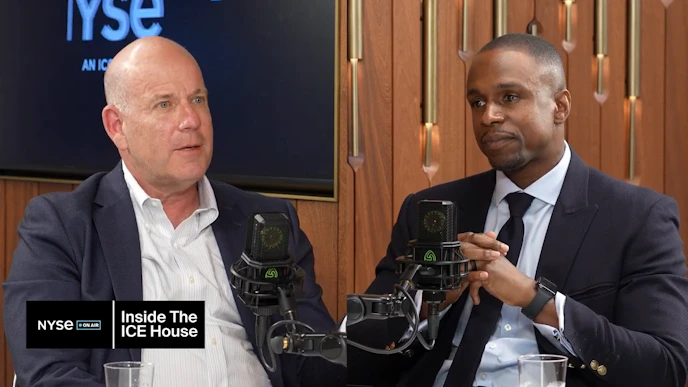
Adam Yofan, a wealth advisor and consultant with Focus Partners, joins Bilal Little on ETF Central to discuss how wealthy families approach investment and estate planning. Yofan shares his path from CPA to Smith Barney broker to building a planning-focused practice now part of Focus Partners, where he coaches roughly 800 advisors full-time. He argues that an advisor's real value lies not in the plan itself, which AI can now approximate, but in the trust and emotional intelligence needed to ask clients hard questions about family, legacy, and desired outcomes.
For Adam Yofan, the most important lesson in wealth management arrived on his first day in production at Smith Barney, the day after September 11, 2001.
Yofan had called a prospective client expecting to cancel their scheduled meeting. Instead, she told him, “I still need to retire.”
That moment stuck. Markets could crash, headlines could become terrifying and the world could change overnight, but people still had lives to fund. Retirement still had to happen. Families still needed plans.
It also helped Yofan realize that pitching stocks was not really the job he wanted.
From CPA to Coach
Yofan originally became a CPA, inspired, somewhat memorably, by one of his father’s friends who was a CPA with a Porsche and a big gold chain. He studied at Miami University in Ohio, worked at Deloitte for roughly a dozen years, then made the leap into financial advice.
After about five years at Smith Barney, he moved to a CPA firm and built out its planning business. He later bought out his partners, sold the firm to what eventually became Focus Partners, and continued working with clients there.
Then his role changed again.
Rather than personally advising roughly 100 families, Yofan moved into full-time coaching, teaching and mentoring for approximately 800 Focus advisers. The theory was simple: if he could improve the advisers serving families, he could potentially influence far more client outcomes.
His coaching ranges from webinars and in-person classes to one-on-one sessions. The goal is not to teach advisers how to sell more. It is to help them communicate better and move clients toward what Yofan repeatedly calls their “desired outcome.”
The Financial Plan Is Becoming Table Stakes
Technology has made the mechanics of advice increasingly accessible.
Portfolio construction, retirement projections, Social Security strategies and withdrawal-rate calculations can increasingly be generated or approximated with software and AI. Yofan says clients already walk into meetings armed with ChatGPT answers about safe withdrawal rates and appropriate portfolios.
And those answers may be reasonably close to what a professional adviser would produce.
That does not make the adviser obsolete. It changes where the value sits.
For Yofan, financial-planning competence is now table stakes. The bigger differentiator is trust, emotional intelligence and the ability to ask questions clients would rather avoid.
What is your plan for aging?
How do you want to pass values, not merely assets, to your children?
How should your estate treat an estranged child?
What happens with a son or daughter who has “failed to launch”?
Those questions can produce uncomfortable silence. That is partly the point.
A good adviser can calculate. A great one is willing to walk directly into the messy family issue everyone else has been avoiding.
Trust Requires More Than Being Likable
Yofan draws a sharp distinction between liking someone and trusting them.
You might like your barber, mechanic or the person who gives you a pedicure without knowing much about them personally. That relationship can remain transactional.
Trust goes deeper.
When an adviser is willing to show some vulnerability, acknowledge struggles and act like an actual human being, clients may become more willing to do the same. That creates room for conversations about the issues that really matter.
For younger people trying to enter financial advice, Yofan thinks the same principle applies. Grades, athletics and volunteer work can help, but many candidates now arrive with similarly polished resumes.
What can differentiate someone is authenticity.
Ask the firm what it actually needs. Show who you are. Admit vulnerabilities. Be relatable.
Because when markets are falling and clients are frightened, they are still likely to want another person on the other end of the phone.
Wealthy Families Often Think in Terms of Value
Asked what separates wealthier families from those just getting started, Yofan highlights one behavioral difference: affluent families often focus more on value than cost.
Their first question is not necessarily, “What is your fee?” or “What is the expense ratio?”
They want to understand what the service can accomplish.
Many have experienced premium service elsewhere, whether through their businesses or other parts of their lives, and are willing to pay when they perceive genuine value.
For younger families, Yofan’s central message is different: it is not what you make, but what you keep.
Accumulation gets most of the attention. Taxes often do not.
He compares wealth building to climbing Everest: reaching the summit is not enough. You still have to get back down.
Asset Location Can Matter as Much as Allocation
One tax strategy Yofan emphasizes is asset location.
Asset allocation asks what investments you should own. Asset location asks which account should hold them.
A Roth IRA, for example, can grow tax-free and generally be withdrawn tax-free under applicable rules. Yofan therefore argues that investors may want higher-expected-return assets positioned there.
Tax-deferred accounts such as traditional IRAs, 401(k)s or 403(b)s will generally create taxable income when distributions occur. In his framework, those accounts may be better suited to lower-expected-return assets.
That can produce strange-looking account statements. One account may significantly outperform another.
But comparing each account individually can miss the point. The goal is not to make every account look equally impressive. The goal is to improve the household’s after-tax outcome.
For high-net-worth families in particular, taxes matter because the number on a brokerage statement is not the same as spendable wealth.
Eventually the money may need to fund college, retirement, housing or another real-world expense. What matters is what remains after taxes.
In a Storm, Be the Buffalo
When markets turn ugly, Yofan uses the buffalo as an analogy.
Buffalo move into a storm rather than trying to run away from it.
He believes advisers should behave similarly.
Instead of burying clients beneath charts, they should acknowledge reality: this is painful, but the portfolio was constructed for both good and bad markets.
If a 60/40 portfolio drifts to 65/35 after a market rally, disciplined rebalancing may require selling some of what has performed well. After a decline, it may require buying more of what has fallen.
Both can feel uncomfortable.
A merely likable adviser may let clients keep riding the momentum. An accountability partner reminds them of the plan.
That requires guidance rather than data.
Advisers often love charts, decks and numbers. Clients frequently just want to know whether they remain on track.
Money Has Four Destinations
Yofan reduces financial planning to four eventual destinations for money: you spend it, pay it in taxes, give it to charity or leave it to heirs.
That makes the desired outcome the logical starting point.
If the goal is to make memories with family, build a spending plan around that.
If markets fall 10% but those goals remain achievable, then the decline may be uncomfortable without actually changing the destination.
Execution is another challenge. Two families can receive identical advice and respond very differently.
Part of that comes down to communication. Advisers can overwhelm clients with information. Clients can then fall into analysis paralysis.
Yofan prefers one step at a time, supported by a broader team when needed: accountant, attorney, insurance specialist, philanthropic adviser, exit-planning expert or aging-care professional.
A great adviser does not need to be the center of that universe.
DIY Investors Need to Separate Luck From Skill
The growth of self-directed investing has opened financial markets to more people than ever.
Yofan’s caution is simple: do not mistake luck for skill.
A rising market can make plenty of strategies look brilliant. The more important question is what the accumulated money is actually for.
Do you have a plan for risk? Taxes? Retirement? Legacy?
Some former do-it-yourself investors eventually reach a point where they acknowledge they need help. Yofan views that as a difficult but valuable step, particularly for people accustomed to handling everything themselves.
He has also observed the decline of higher-cost fund structures, greater ETF use and rising interest among wealthy investors in tax-aware separately managed accounts. He notes that SMAs can sometimes offer customization that appeals to investors especially focused on tax management.
AI Should Give Advisers More Time to Be Human
Yofan is enthusiastic about AI, mostly because of what it can remove from the adviser’s workload.
Workflow, documentation, email preparation and administrative tasks can increasingly be automated.
The best use of the time saved is not more administration. It is more client conversation.
Focus also uses tools such as Jump AI to analyze meetings, including how much the adviser talked and whether enough questions were asked.
That feedback can be uncomfortable. It can also be useful.
If technology can handle preparation and documentation, advisers have fewer excuses not to spend their time asking better questions.
Estate Planning Starts Before You Feel Ready
Estate planning is another area where avoidance can become costly.
Yofan argues that even people without substantial wealth should have basic documents in place. Online tools have made basic document preparation more accessible, although needs can vary considerably by family and jurisdiction.
At minimum, he points to items such as a will, guardianship provisions for minor children, a living will and healthcare power of attorney.
The obstacle is often psychological, not financial.
People do not like confronting mortality.
Yofan experienced the consequences personally. His father and brother both died within a 12-month period. His brother had not completed everything in advance, leaving the family scrambling for documents and a notary while he was in the hospital.
It was avoidable.
That experience reinforces Yofan’s preference for doing something rather than waiting for a perfect plan. Documents can generally be changed later. Starting creates a foundation.
Awareness, Action and Accountability
Yofan closes with what he calls the three A’s: awareness, action and accountability.
First, determine where you want to go and how large the gap is between today and that outcome.
Second, create an action plan that moves toward it one manageable step at a time.
Third, decide who or what will hold you accountable and help you course-correct when circumstances change.
That framework works whether someone is fresh out of school, preparing for retirement or managing significant family wealth.
The underlying lesson is surprisingly simple.
Financial planning is not really about producing the fanciest plan. It is about helping people make decisions, act on them and eventually use their money for the life they actually wanted.
And for Yofan, that is also the legacy he hopes to leave: helping people, acknowledging his own imperfections, doing the best he can with what he has, and taking advantage of the opportunities life gives you.
You get one spin. Drink it up.
Please note this article is for information purposes only and does not in any way constitute investment advice. It is essential that you seek advice from a registered financial professional prior to making any investment decision.
Topics
See all
This article does not have a tagged topic
Segments
See all
No specific market segments were tagged
Mentioned ETFs
No specific ETFs were tagged



Expert-Built ETF Portfolios, All in One Place
Don’t start from scratch. Discover ready-made ETF portfolios built by professionals to match different goals, timelines, and market views. Use them as inspiration or as a starting point for your own allocation.