Create, analyze, optimize your ETF portfolio. Start now →



ETF Central's Ultimate Guide to Dividend Investing, Part 6: Enhanced Dividend ETFs
This article is the final part of ETF Central's 6-part series on how ETFs use various dividend-based strategies.


Keep up with what matters in ETFs
Get timely ETF insights, market trends, and top ideas straight to your inbox.
Your newsletter subscriptions with us are subject to ETF Central's Privacy Policy and Terms and Conditions.
We've arrived at the final part of our series on dividend ETFs. In the previous articles, we gave you an overview of how to assess these ETFs and what metrics to watch. We covered high dividend yield, dividend growth, and dividend quality approaches, and explored some hybrid strategies.
Now, we turn our attention to enhanced dividend ETFs. This isn't an official name but rather my attempt at classifying the non-long-only strategies that employ the use of leverage or derivatives such as options and futures.
Here's a look at the three main categories to be found when it comes to enhanced dividend ETFs, and as usual, some examples to illustrate each.
Like what you're reading?
Stay in the loop — get the latest ETF insights: trends, analysis, and expert picks.
Enhanced dividend ETFs: leverage
Investing in dividend stocks with leverage is straightforward: you borrow money (margin) to invest, allowing you to buy more of the dividend stock.
After deducting interest payments, the net result can be magnified risks and returns, but also magnified dividend payouts as you own more shares than you could have without borrowing money.
Practically speaking, this is difficult to execute in an ETF due to regulatory constraints and the complexities of managing leveraged exposure within a diversified fund. As a result, most leveraged dividend strategies are found in Exchange-Traded Notes (ETNs) rather than ETFs.
ETNs are debt securities issued by banks that promise to pay the return of an index. They offer better tracking of the underlying index because they don't have to deal with the complexities of managing a portfolio of securities. However, ETNs come with counterparty risk: if the issuing bank goes under (like Lehman Brothers or Credit Suisse), investors could lose their money.
For example, consider the ETRACS Monthly Pay 2x Leveraged S&P Dividend ETN (SDYL), which provides two-times exposure to the monthly returns of dividend kings—stocks that have grown dividends for 50+ years—from the S&P 1500 composite.
Unlike most leveraged ETFs that reset daily, this ETN reset monthly. The upside is less drag from rebalancing and volatility decay, but the downside is a greater risk of wipeout if prices fall sharply and sustain over a multi-day period.
Enhanced dividend ETFs: covered calls
Naturally, virtually all covered call ETFs offer high yields because they trade potential future upside for immediate income from options premiums. However, most covered call strategies do not explicitly target dividend-paying stocks.
Why? Dividend stocks tend to be lower in volatility compared to non-dividend-paying ones. Higher volatility generally translates to higher options premiums, all else being equal. This is why many covered call strategies focus on volatile indexes like the Nasdaq 100 or sectors like tech.
However, there are outliers. One particularly effective example is the Amplify CWP Enhanced Dividend Income ETF
DIVO stands out from the usual covered call ETFs by doing two things. Firstly, it does not use an index as the underlying asset. Instead, its manager actively selects a concentrated portfolio of 20-30 dividend stocks screened for earnings quality and dividend growth.
Unlike other covered call ETFs, DIVO tactically sells calls on individual stocks rather than an entire index. This active management approach allows the fund to vary the level of coverage, the moneyness, and the expiries based on current volatility and events like earnings, whereas other covered call ETFs sell systematically and often give up a significant amount of upside.
Enhanced dividend ETFs: futures
Finally, from Pacer ETFs, we have perhaps the most unique lineup when it comes to enhanced dividend ETFs—the "Dividend Multiplier" strategy. One example is the Pacer Metaurus US Large Cap Dividend Multiplier 400 ETF
This ETF holds an allocation of four times (4x) the dividend component to provide cash distributions equal to 400% of the S&P 500's ordinary yield, in exchange for modestly lower exposure (approximately 88%) to the S&P 500 Index performance.
Dividend futures are derivatives that allow investors to speculate on or hedge against future dividend payments of an index or a stock. They work by locking in the price of the dividends expected to be paid out over a specified period.
Essentially, investors can buy or sell these futures contracts to gain or hedge exposure to the expected dividend payments – think of them like the dividend equivalent of a Treasury STRIP.
This arbitrage strategy involves taking advantage of the price differences between implied dividends (what the market expects) and realized dividends (what is actually paid).
By investing in dividend futures contracts, QDPL aims to capitalize on these discrepancies to amplify the cash distributions received while maintaining a significant but reduced exposure to the overall performance of the S&P 500 Index.
Please note this article is for information purposes only and does not in any way constitute investment advice. It is essential that you seek advice from a registered financial professional prior to making any investment decision.

Latest ETF News
See all ETF newsCould Water ETFs Be the Next AI Bottleneck Trade?

What is a Boomer Candy ETF?

ETF Comparison: NEOS Nasdaq-100 High Income ETF (QQQI) Versus Goldman Sachs Nasdaq-100 Premium Income ETF (GPIQ)





 Advantages of ETFs over Mutual Funds1/6
Lower Costs
In this guide, we'll explore the advantages of ETFs over mutual funds, giving you valuable insights into why ETFs have gained significant popularity among investors like yourself.
Leveraged ETFs: Unlocking the Potential for Amplified Returns1/6
Understanding Leveraged ETFs
Explore leveraged ETFs: potential for amplified returns & risks. 5 ETFs to consider across equities, commodities & fixed income.
What is a Leveraged ETF?1/6
Introducing Leveraged and Inverse ETFs
In this guide, we'll dive into the world of leveraged ETFs, exploring their definition, mechanics, potential risks, and rewards.
Recent educational content

ETF Trends
ETF Industry KPIs September 8, 2026
This week’s KPI data overview highlights key metrics and trends shaping the ETF landscape.

ETF Trends
ETF Industry KPIs August 31, 2026
This week’s KPI data overview highlights key metrics and trends shaping the ETF landscape.
ETF Trends
ETF Industry KPIs August 24, 2026
This week’s KPI data overview highlights key metrics and trends shaping the ETF landscape.
What’sTheFund
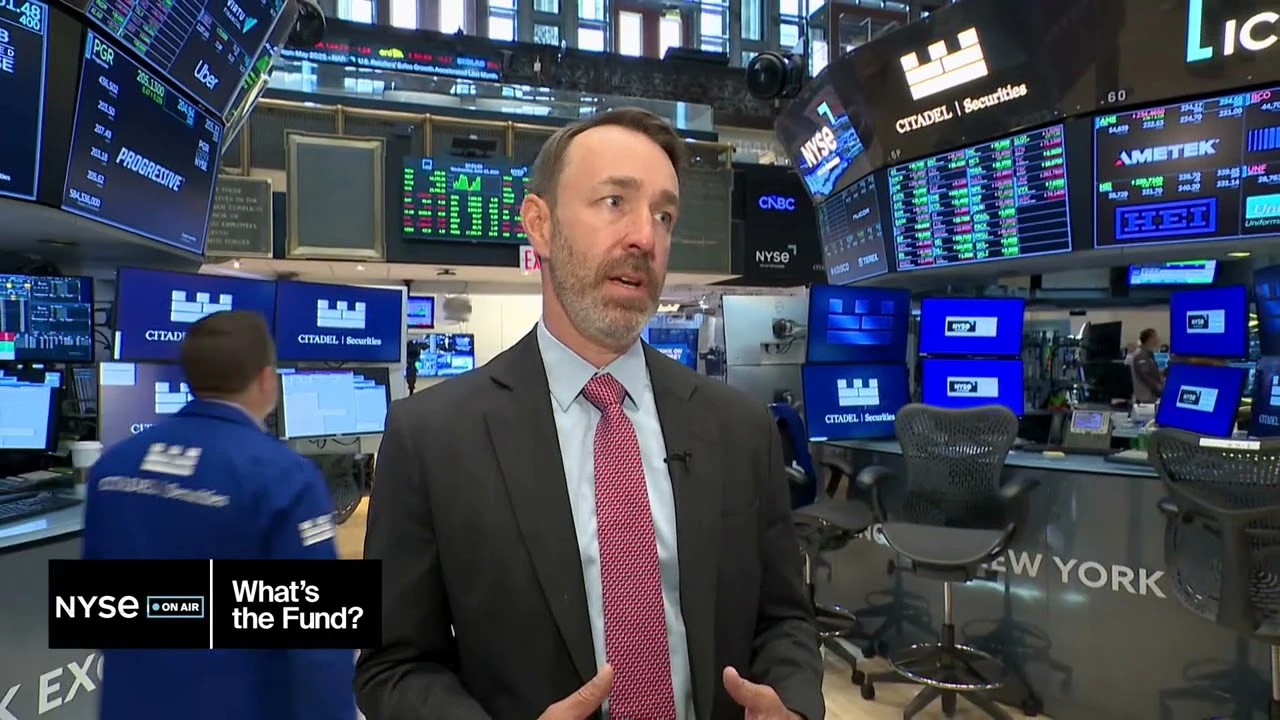
What's the Fund | Ocean Park Diversified Income ETF (DUKZ)
James St Aubin, Chief Investment Officer at Ocean Park Asset Management, discuss the DUKZ ETF, exposing investors to the whole spectrum of asset classes in the fixed income markets, through their rules-based process.

Browse all educational columns



Active Trader Report: Use of Leveraged & Inverse ETFs Way Up
Direxion partnered with Compound Insights and Vanda to explore what’s driving the evolution of active trading — and how active traders are using leveraged and inverse funds across equities, single stocks, commodities, and volatility.