Keep tabs on your favorite ETFs with a personalized weekly tracker. Create a Watchlist now →



ETF Central's Ultimate Guide to Dividend Investing, Part 4: Dividend Quality ETFs
This article is the fourth part of ETF Central's 6-part series on how ETFs use various dividend-based strategies.


Keep up with what matters in ETFs
Get timely ETF insights, market trends, and top ideas straight to your inbox.
Your newsletter subscriptions with us are subject to ETF Central's Privacy Policy and Terms and Conditions.
In the first part of this guide to dividend investing series, we introduced you to the world of dividend ETFs. Part two focused on high-yield dividend ETFs, which offer payouts that are higher than the average. In part three, we explored how dividend growth ETFs can inadvertently provide exposure to the "quality" factor – companies known for their robust profitability and conservative investment strategies.
But there is a more explicit way to target quality when it comes to dividends. A number of index or rules-based ETFs have emerged specifically to focus on dividend quality. These funds are designed to ensure that the dividends you receive are also sustainable and reliable over the long term.
As usual, we'll go over some key concepts when it comes to dividend quality investing and highlight a few standout ETF examples to illustrate these points.
Like what you're reading?
Stay in the loop — get the latest ETF insights: trends, analysis, and expert picks.
What is Dividend Quality?
Dividend quality refers to the sustainability and reliability of a company's dividend payments. While high yields and consistent growth are attractive, the true measure of a dividend's quality is its ability to be maintained through various economic cycles.
High-quality dividends are typically supported by strong fundamentals, and several metrics can help investors assess dividend quality:
- Payout Ratio: The percentage of earnings paid out as dividends. A lower payout ratio indicates that a company retains more of its earnings, providing a cushion to maintain dividends during downturns.
- Earnings Stability: Companies with consistent and stable earnings are more likely to sustain their dividend payments.
- Cash Flow Adequacy: Adequate free cash flow ensures that a company can cover its dividend payments without relying on debt or other financial manoeuvres.
- Debt Levels: Companies with lower debt levels are less likely to cut dividends in times of financial stress.
Why should you care about dividend quality?
Simply put, if you rely on dividends for income, a cut in dividend payments can be a significant setback or change your investment thesis altogether.
Dividend cuts can severely impact your cash flow, especially if you are using those dividends for living expenses or reinvesting them for compound growth. Ensuring the dividends you receive are from companies with strong fundamentals helps mitigate this risk.
Dividend cuts are not just a theoretical concern; they have happened to some of the most renowned companies. General Electric, once a blue-chip stalwart, drastically reduced its dividend in recent years due to financial struggles.
Even "Dividend Kings" like 3M, which had over 50 years of consecutive dividend growth, have faced challenges leading to dividend cuts. These examples underscore the importance of thoroughly evaluating the quality of a company's dividend to ensure it is sustainable over the long term.
In essence, evaluating dividend quality is a critical due diligence step. It's not enough to find a stock or ETF with attractive yields and growth; ensuring the underlying dividends are sustainable protects your income stream and investment returns.
How do ETFs target dividend quality?
The metrics listed earlier are pretty universal but also elementary. ETFs have a ton of leeway to implement these or choose different screeners altogether when it comes to dividend quality.
For example, consider the Global X S&P 500 Quality Dividend ETF
Then there's a duo from FlexShares: the FlexShares Quality Dividend Index Fund
However, there's a difference: QDEF also includes a low-volatility screen to ensure that the overall beta is generally between 0.5 to 1.0 times that of the Northern Trust 1250 Index. This actually makes it a hybrid dividend ETF, which will be the focus of the next part in this series.
But back to quality dividend ETF methodologies—each provider can have a unique approach. We've seen how FlexShares and Global X differ, and now we'll take a look at ALPS with the ALPS O'Shares US Quality Dividend ETF
This ETF targets mid and large cap U.S. dividend stocks, and the quality screen employed checks specifically for profitability via ROA, leverage via net debt to EBITDA, and dividend coverage.
But again, it really is more of a hybrid approach—it also requires 5-year dividend growth and low volatility via a 5-year weekly standard deviation screen.
The point is—dividend quality is hardly ever targeted in isolation. More commonly, you'll see it used in conjunction with dividend yield and growth screens. Unsurprisingly, part 5 of this series will focus on these hybrid dividend ETFs, so stay tuned for it!
Please note this article is for information purposes only and does not in any way constitute investment advice. It is essential that you seek advice from a registered financial professional prior to making any investment decision.

Latest ETF News
See all ETF newsCould Water ETFs Be the Next AI Bottleneck Trade?

What is a Boomer Candy ETF?

ETF Comparison: NEOS Nasdaq-100 High Income ETF (QQQI) Versus Goldman Sachs Nasdaq-100 Premium Income ETF (GPIQ)





 Advantages of ETFs over Mutual Funds1/6
Lower Costs
In this guide, we'll explore the advantages of ETFs over mutual funds, giving you valuable insights into why ETFs have gained significant popularity among investors like yourself.
Leveraged ETFs: Unlocking the Potential for Amplified Returns1/6
Understanding Leveraged ETFs
Explore leveraged ETFs: potential for amplified returns & risks. 5 ETFs to consider across equities, commodities & fixed income.
What is a Leveraged ETF?1/6
Introducing Leveraged and Inverse ETFs
In this guide, we'll dive into the world of leveraged ETFs, exploring their definition, mechanics, potential risks, and rewards.
Recent educational content

ETF Trends
ETF Industry KPIs September 8, 2026
This week’s KPI data overview highlights key metrics and trends shaping the ETF landscape.

ETF Trends
ETF Industry KPIs August 31, 2026
This week’s KPI data overview highlights key metrics and trends shaping the ETF landscape.
ETF Trends
ETF Industry KPIs August 24, 2026
This week’s KPI data overview highlights key metrics and trends shaping the ETF landscape.
What’sTheFund
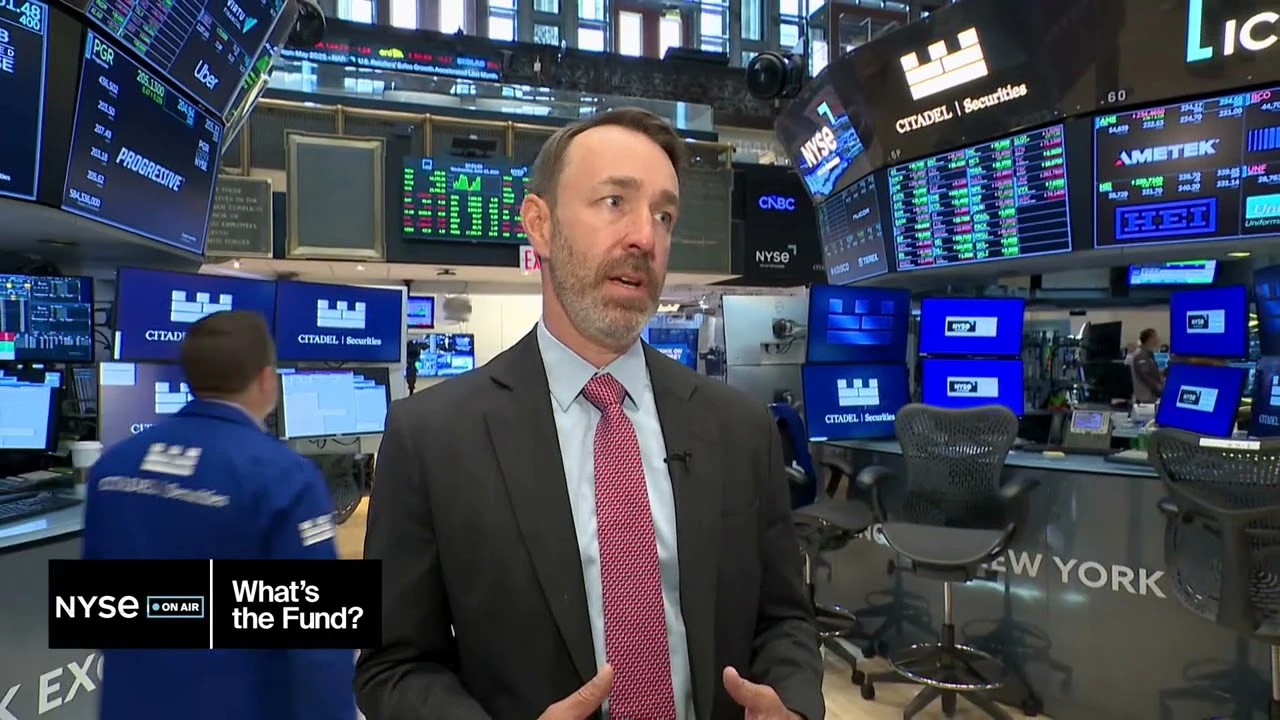
What's the Fund | Ocean Park Diversified Income ETF (DUKZ)
James St Aubin, Chief Investment Officer at Ocean Park Asset Management, discuss the DUKZ ETF, exposing investors to the whole spectrum of asset classes in the fixed income markets, through their rules-based process.

Browse all educational columns



Expert-Built ETF Portfolios, All in One Place
Don’t start from scratch. Discover ready-made ETF portfolios built by professionals to match different goals, timelines, and market views. Use them as inspiration or as a starting point for your own allocation.