From idea to ETF portfolio in minutes. Build yours now →



ETF Central's Ultimate Guide to Dividend Investing, Part 1: A Grand Overview
This article is the first part of ETF Central's 6-part series on how ETFs use various dividend-based strategies.


Keep up with what matters in ETFs
Get timely ETF insights, market trends, and top ideas straight to your inbox.
Your newsletter subscriptions with us are subject to ETF Central's Privacy Policy and Terms and Conditions.
As of June 18, the ETF Central screener lists 3,566 ETFs—a number that's almost guaranteed to be outdated by the time you're reading this. Out of these, 160 explicitly include "dividends" as part of their name. Even for non-ETF investors, dividends are a popular strategy, particularly for beginners.
One only needs to look at the glut of financial influencers touting dividend strategies, dividend-specific communities on Reddit, and even fund providers like WisdomTree, which have a robust dividend-oriented lineup and academic backing to support it (more on this later).
Because there's so much variety in this field, we decided it would be great for ETF investors to have a "hub"—this inaugural article and a series of five follow-up articles exploring every major niche in this ETF segment, including:
Like what you're reading?
Stay in the loop — get the latest ETF insights: trends, analysis, and expert picks.
What are dividends, and why do they matter (or don't)?
Dividends are payments made by a company to its shareholders, typically derived from the company's profits. Let's break this down simply using the example of a hypothetical company, ABC Corp.
ABC Corp generates revenue by selling its products or services. After covering all operating expenses, such as salaries, rent, and utilities, the company arrives at its operating profit. From this, ABC Corp subtracts interest expenses and taxes to determine its net profit.
Now, the net profit represents the company's earnings after all expenses have been paid. The management of ABC Corp then decides how to allocate these earnings.
They can choose to reinvest a portion back into the business for growth, set aside funds for future needs, buy some shares back, or distribute some of the profits to shareholders (typically every quarter) as dividend payments.
Dividends are important because they form a crucial component of total returns for investors. According to S&P Dow Jones Indices, the S&P 500, which isn't a dividend-oriented index but pays dividends, nonetheless, has a 10-year annualized price return of 10.92%. However, with dividends reinvested, the total return jumps to 12.99%.
However, you may also hear about "dividend irrelevance." This theory, proposed by economists Franco Modigliani and Merton Miller, argues that in ideal circumstances—no taxes, transaction costs, or differences in information—investors should be indifferent to whether their returns come from dividends or capital gains.
The main argument is that a company's value is determined by its earning power and risk, not by how it distributes its earnings. Thus, a rational investor should not use dividends as a primary metric when valuing or picking stocks.
There are other arguments for and against dividends. Detractors argue that dividends are tax-inefficient compared to stock buybacks, as dividends are taxed immediately, whereas buybacks can defer tax liabilities.
Proponents, on the other hand, argue that dividends provide a psychological benefit, giving investors regular income and helping them stay the course during market volatility.
Either way, there are highly successful companies that do not pay dividends, such as Berkshire Hathaway and Amazon, and others that thrive by paying them, like Procter & Gamble and Coca-Cola. It's up to you to weigh the pros and cons and decide whether or not dividend investing is for you.
Dividend ETFs: the universal basics
Regardless of which dividend ETF you invest in, you need to be aware of a few key terms and metrics so you know exactly what you're buying. Understanding these terms will help you evaluate the income potential and tax implications of your investment.
Yield Calculations:
- 30-Day SEC Yield: According to Morningstar, this is a standardized way to measure the income generated by an ETF over a 30-day period, with a one-month lag. It's computed by dividing the net investment income per share earned during the period by the maximum offering price per share on the last day of the period.
- Distribution Yield: This forward-looking metric estimates the yield based on the ETF's most recent distribution. It's calculated by annualizing the most recent distribution and dividing it by the ETF's current net asset value (NAV). This helps you understand the potential future income from the ETF.
- Trailing 12-Month Yield: This backwards-looking metric reflects the actual income earned by the ETF over the past 12 months. It's calculated by summing up all distributions paid over the last year and dividing by the ETF's current NAV. This gives a realistic picture of the income generated historically.
Important Dates:
- Ex-Distribution (Ex-Dividend) Date: This is the date on which you must own the ETF to be eligible to receive the next distribution. With the settlement cycle changing to T+1, this date now coincides directly with the record date, as opposed to being a day before it. If you buy the ETF on or after the ex-date, you won't receive the upcoming dividend.
- Payment Date: This is the date on which the dividend is actually paid out to shareholders. Note that depending on your brokerage, there could be a delay in receiving the dividend.
Finally, there are taxes. Dividend ETFs are best held inside tax-advantaged accounts like a Roth IRA or HSA. But if held in a taxable account, the distributions are subject to taxes.
Each ETF will provide a breakdown in its tax documents, showing what percentage of each distribution is qualified versus unqualified. Qualified dividends are taxed at a lower rate, while unqualified dividends are taxed at your regular income tax rate.
You may also find capital gains and return of capital in these distributions, which are not dividends and each of which is treated differently for tax purposes.
What's next?
This first article in our series should give you a basic understanding of the theory behind dividend ETFs and their mechanics. In the next five parts, we will explore various niches within this segment:
- High-Yield Dividend ETFs
- Dividend Growth ETFs
- Dividend Quality ETFs
- Hybrid Dividend ETFs
- Enhanced Dividend ETFs
Each part will look into the specifics of these strategies, helping you understand their unique benefits and risks. These articles will be released periodically, so keep an eye out. Consider signing up for ETF Central's email newsletter to stay updated on the latest articles and insights.
Please note this article is for information purposes only and does not in any way constitute investment advice. It is essential that you seek advice from a registered financial professional prior to making any investment decision.
Latest ETF News
See all ETF newsETF Comparison: Global X Data Center REITs & Digital Infrastructure ETF (DTCR) Versus Pacer Data & Infrastructure Real Estate ETF (SRVR)

Calamos Autocallable Growth ETF (CAGE): The Next Evolution of Structured Products






 Advantages of ETFs over Mutual Funds1/6
Lower Costs
In this guide, we'll explore the advantages of ETFs over mutual funds, giving you valuable insights into why ETFs have gained significant popularity among investors like yourself.
Leveraged ETFs: Unlocking the Potential for Amplified Returns1/6
Understanding Leveraged ETFs
Explore leveraged ETFs: potential for amplified returns & risks. 5 ETFs to consider across equities, commodities & fixed income.
What is a Leveraged ETF?1/6
Introducing Leveraged and Inverse ETFs
In this guide, we'll dive into the world of leveraged ETFs, exploring their definition, mechanics, potential risks, and rewards.
Recent educational content
Asset TV
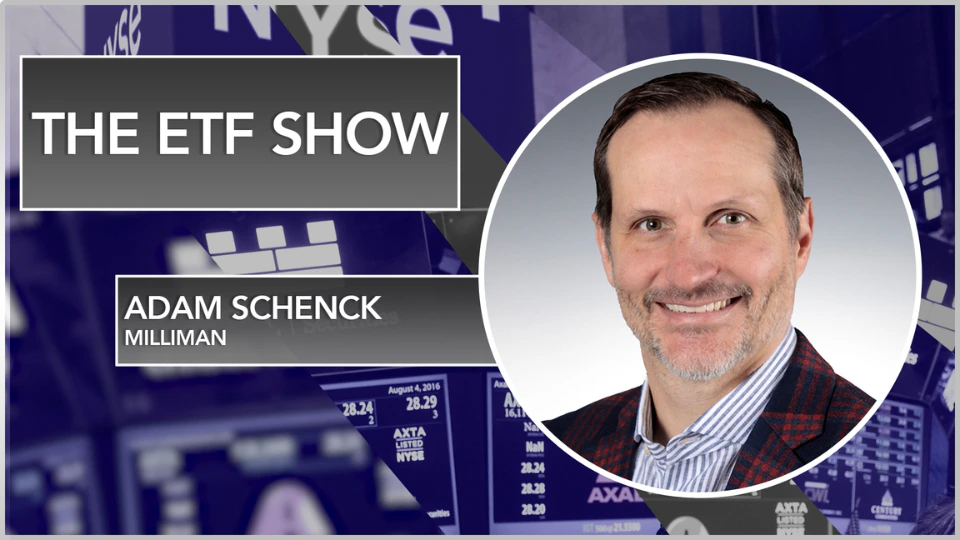
The ETF Show - Investors Can Fight Healthcare Inflation with Newly Launched ETFs
Adam Schenck, Principal and Managing Director of Fund Services at Milliman joined The ETF Show to discuss Milliman's first ETFs designed to hedge against rising healthcare inflation.


ETF Trends
ETF Industry KPIs April 20, 2026
The ETF Industry saw 14 New Launches, 1 Ticker Change and 16 closures last week.

Asset TV
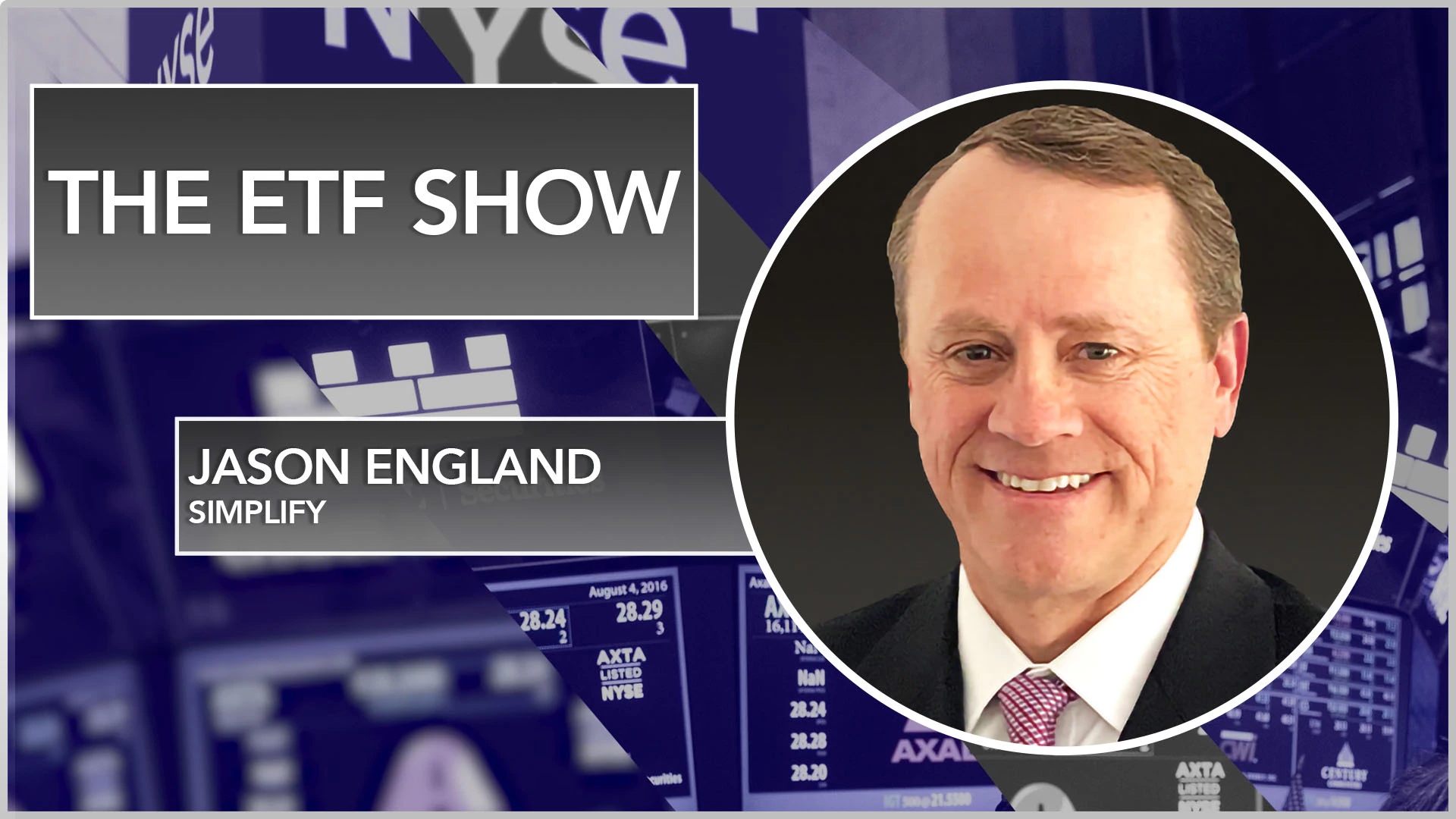
The ETF Show - Investors Run to Cash Alternatives as Markets Remain Volatile
Jason England, Portfolio Manager and Fixed Income Strategist from Simplify joined The ETF Show to discuss investor allocations to fixed income as markets continue on their rollercoaster ride.
ETF Trends
ETF Industry KPIs March 30, 2026
The ETF Industry saw 33 New Launches, 1 Ticker Change and 9 closures last week.
Browse all educational columns



Expert-Built ETF Portfolios, All in One Place
Don’t start from scratch. Discover ready-made ETF portfolios built by professionals to match different goals, timelines, and market views. Use them as inspiration or as a starting point for your own allocation.