Open Now: The Global ETF Survey Take the Survey →




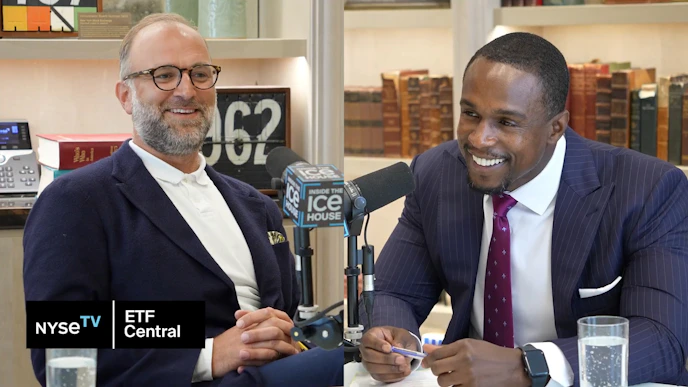
Kristof Gleich, President and CIO of Harbor Capital, joins Bilal Little on the ETF Central Podcast to share how he’s thinking about today’s markets. From active ETFs to global diversification and commodities, Gleich lays out Harbor’s playbook for the decade ahead.
Harbor’s Evolution: From Mutual Funds to Active ETFs
When Kristof Gleich took the reins as President and CIO at Harbor Capital, the firm was a traditional mutual fund shop. Fast forward seven years and Harbor is now deep in the active ETF game.
Gleich, with 25 years in markets under his belt, describes Harbor’s transformation as a necessary response to a rapidly evolving asset management industry. Their model centers on partnering with boutique managers from around the world, specialists in what they do best, and bringing them to U.S. investors.
Mutual funds were once the go-to for active strategies, but Gleich sees ETFs as the future. Harbor has been in the active ETF space for about four years and has already hit key milestones.
The shift was spurred by changing investor preferences for transparency, liquidity, and efficiency. All areas where ETFs shine.
Market Outlook: This Decade Is Different
Kristof isn’t shy about his big-picture views. The 2020s are not the 2010s. Markets are more volatile, inflation is back in the conversation, and being passive just won’t cut it anymore. He says we’re in a “late-cycle expansion,” which tends to favor risk assets.
But this time, the environment calls for selectivity, curation, and active management. Harbor is leaning into those themes with both feet.
What stands out is his insistence that long-term thinking and disciplined allocation are what truly pay off.
He has seen too many investors panic-sell during drawdowns, especially in April, only to miss out on the market’s recovery.
Diversification: The Home Country Bias Problem
One of Gleich’s recurring themes is that U.S. investors are too concentrated in domestic equities. That home country bias, while arguably justifiable given the strength of the U.S. market, leaves portfolios overly exposed to a narrow slice of global growth.
Harbor’s approach is to overweight international equities through active strategies. They are not just buying the index. For example, their International Compounders ETF, managed by Sea Worldwide in Copenhagen, targets about 30 of the best international companies, including some in emerging markets.
That level of curation, Gleich says, is crucial in markets like Europe where not every sector is worth owning.
Commodities: The Return of the Real Diversifier
Harbor launched their commodities ETF — the Harbor Commodity All-Weather Strategy ETF
The idea was simple. After decades of being unloved, commodities were due for a comeback. The 2000s were great for commodities. The 2010s were terrible.
But now, with inflation risk back on the radar and bonds no longer providing the diversification they used to, commodities look attractive again.
HGER is a rules-based ETF that dynamically allocates between commodities based on backwardation (positive carry) and contango (negative carry), inflation dynamics, and other macro signals. The fund is managed by Quantix, a boutique led by ex-Goldman Sachs commodity traders.
Kristof calls it “hedge fund quality money management in an ETF wrapper.”
The New Macro Playbook: Debt, Doves, and Deregulation
Gleich laid out a punchy framework for understanding today’s macro environment. He calls it the “three Ds”: Deregulation, Deficits, and Doves. The U.S. government, in his view, is betting on growing its way out of a debt problem.
That means running higher deficits, deregulating aggressively, and leaning on a dovish Fed. The implication? Commodities and real assets are set to benefit.
He believes we are heading toward a world of “shadow monetary policy,” where the bond market and Fed policy are increasingly out of sync. That, combined with fiscal expansion, sets up a strong case for inflation-hedging strategies.
AI, Big Tech, and the MAG 7
On the AI and big tech front, Gleich says the fundamentals remain strong despite recent corrections. Some investors got spooked, or as he puts it, "tourists" left the building. But those who stay focused on long-term cash flow will be rewarded.
The big players are still generating serious profits. If they can turn their massive AI-related capex into cash flow, the market will likely continue to reward them.
Harbor remains allocated to large-cap growth, where earnings growth is concentrated. While they have trimmed small cap exposure, they are not abandoning it altogether.
Smarter Small Caps: Profitability is Key
Speaking of small caps, Gleich highlighted Harbor’s AlphaEdge Small Cap Earners ETF
About 40 percent of the Russell 2000 generates no profits. This filter is essential.
The EBIT ETF tracks a custom index that avoids structural loss-makers and targets the high-quality segment of the small-cap space. It is designed to offer diversified exposure without the drag of unprofitable businesses.
As Gleich put it, small cap is not dead. But if he is going to invest, he wants companies that actually make money.
Fixed Income: Rethinking the 60/40 Portfolio
Gleich has sobering words for bond investors.
The golden age of fixed income is over. Bonds used to provide both income and protection. Today, they often move in tandem with equities, especially during inflation shocks.
He points to the return of “bond vigilantes,” market forces pushing back against reckless fiscal policy. In this new world, fixed income needs to be active.
Harbor favors strategies where managers can underwrite credit risk, avoid over-indebted issuers, and navigate the yield curve with precision.
He also stresses the need for realism.
Retirees can no longer rely on bonds the way they used to. But with the right manager and strategy, possibly in higher-yielding areas like private credit or loans, bonds can still play a role.
Bottom Line: Stay Active, Stay Global, Stay Real
Harbor’s strategy under Kristof Gleich is clear. Be intentional. Be active. Diversify globally. Invest with specialists. And most of all, don’t get caught chasing past performance.
Whether it is through high-conviction international equities, smart small-cap screens, dynamic commodity allocations, or tactical fixed income, the firm is focused on adapting to the new rules of the game.
As Gleich summed it up, if we cannot add value for our clients, then what are we doing?
Please note this article is for information purposes only and does not in any way constitute investment advice. It is essential that you seek advice from a registered financial professional prior to making any investment decision.
Mentioned ETFs



The ETF Industry Is Evolving Fast
From AI infrastructure to active strategies, the ETF landscape is shifting. Share your perspective in the 7th Annual Global ETF Survey and get exclusive early access to the final report.