NYSE CRTR Economy Event Watch the replay →



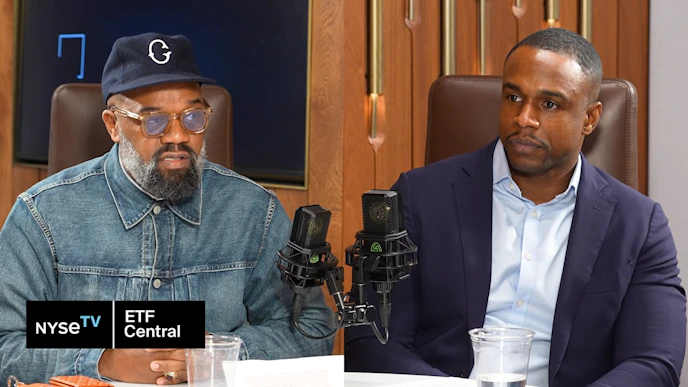
Bilal Little, Director of Exchange-Traded Funds at the NYSE and host of the ETF Central podcast, sits down with Team Epiphany Founder & CEO Coltrane Curtis to explore how brands win in modern culture by earning trust, mastering positioning, and turning influence into lasting impact.
From Bed-Stuy to Boardrooms
Coltrane Curtis doesn’t just run a marketing agency.
He inherited a philosophy. Raised in Bed-Stuy, Brooklyn, Curtis grew up watching his father build a multicultural marketing firm from their brownstone. That experience shaped everything: how he thinks about business, culture, and the role of influence.
When he launched Team Epiphany in 2004, he wasn’t trying to create “just another agency.” In fact, his father warned him against it. So Curtis built something different, an agency rooted not in campaigns, but in culture. Early on, they coined a phrase that would later explode across industries: “We influence influencers.”
At the time, “influencer marketing” wasn’t even a defined category. Curtis saw it before the rest of the world caught up, not as paid posts, but as access to the real architects of culture.
Influence vs. Paid Noise
Curtis draws a hard line between what influencer marketing was and what it’s become.
Today, most brands treat influencers as paid media channels. The approach is transactional, predictable, and often forgettable. But Curtis argues that true influence is about trust and cultural authority. It is about knowing who actually shapes taste, not just who has followers.
Team Epiphany operates at that deeper layer. They do not just place brands into culture. They help create it. And that distinction matters.
Because once you can create culture, you also have to protect it.
Stop Pushing and Start Getting Discovered
One of Curtis’s most compelling ideas is simple: the marketing funnel is broken.
Consumers today are too informed, too skeptical, and too connected to be pushed into buying. Instead, brands need to be discovered.
That shift changes everything.
Rather than blasting messages, Team Epiphany focuses on positioning brands within the ecosystems consumers already care about. What they aspire to, who they follow, and how they live. Curtis calls this aspirational marketing.
If a product aligns with what someone wants to become, it does not need to be forced. It gets pulled through the funnel naturally.
Culture Starts With People, Not Decks
Here is where Curtis breaks from traditional agency thinking. Talent matters more than credentials.
He personally sits in on every job interview, not to evaluate résumés, but to understand what candidates are into. Subcultures, passions, niche interests. These are the real assets.
Why? Because culture does not live in PowerPoint decks. It lives in people.
If a brand wants to tap into a niche, say goth fitness, Curtis wants someone on his team who actually lives that world. That insider perspective becomes a competitive advantage.
In his words: “Cool is a byproduct of being a nerd.”
The High-Low Reality of Modern Consumers
Curtis offers a sharp observation about today’s consumer behavior. People live in “high-low.”
They will wear designer boots with fast fashion. They will drink premium spirits, just not always in crystal glasses. Sometimes it is a red cup on the couch.
This disconnect is where many brands fail. They cling to idealized versions of consumption instead of embracing reality.
Curtis’s solution is to merge the two worlds.
He imagines campaigns that blend luxury and everyday behavior, like reimagining a red cup through a high-end design lens. It is not about lowering the brand. It is about meeting consumers where they actually are.
Celebrity Isn’t Strategy
One of the biggest mistakes Curtis sees is over-reliance on celebrity.
Brands often treat celebrity as the strategy itself. Curtis flips that. Celebrity should support the strategy, not replace it.
A standout example is a campaign built around rapper Future.
Instead of a typical concert activation, Team Epiphany turned Future’s album Dirty Sprite 2 into a fully choreographed ballet at the Brooklyn Academy of Music. The goal was not just visibility. It was aspiration.
Most of the target audience had never attended a ballet. By blending hip-hop with high art, the campaign created a new cultural experience that felt exclusive, unexpected, and meaningful.
It went viral, but not because it tried to.
Storytelling Over Shortcuts
Curtis is a firm believer in long-form storytelling, even in an age of short attention spans.
While platforms push bite-sized content, he argues that educated consumers are the most influential consumers. The more context and story you provide, the more likely people are to advocate for your brand organically.
In other words, information becomes cultural currency.
Fixing the Data Problem
Even with great instincts, Curtis admits one challenge: proving insights with data.
Traditional tools like focus groups often fall short. They rely on participants who may not reflect real cultural influence.
So Team Epiphany built its own solution: a proprietary data platform called “Context,” developed with The Harris Poll. Instead of generic respondents, it taps into a network of culturally relevant individuals who contribute insights in exchange for meaningful outputs, not just cash.
The goal is simple. Better data leads to better insights, which leads to better work.
The Real Lesson: Positioning Is Everything
If there is one idea Curtis returns to again and again, it is positioning.
Inspired by the classic marketing book Positioning, he sees it as the foundation of everything, from branding to personal identity.
“You are always being positioned,” he explains. “And it is very hard to change.”
That applies to brands, careers, and even how you lace your sneakers. Every detail tells a story.
Advice for the Next Generation
Curtis keeps it blunt. Focus on hard skills.
Writing, critical thinking, and communication are non-negotiable. Trend awareness is great, but without the ability to process and articulate ideas, it does not matter.
His agency hires writers, thinkers, and people deeply embedded in culture, not just those who look the part.
Final Takeaway
Coltrane Curtis is not chasing trends. He is building systems that outlast them.
His playbook is clear:
- Respect the consumer
- Earn trust
- Build culture, do not borrow it
- Position everything with intention
Because in a world flooded with noise, the brands that win are not the loudest.
They are the ones people choose to discover.
Please note this article is for information purposes only and does not in any way constitute investment advice. It is essential that you seek advice from a registered financial professional prior to making any investment decision.
Topics
See all
This article does not have a tagged topic
Segments
See all
No specific market segments were tagged
Mentioned ETFs
No specific ETFs were tagged



Have you tried our ETF Compare tool?
Compare ETFs like a pro. Analyze fees, performance, exposure & holdings side-by-side.