Turn ETF ideas into real portfolios. Try the builder now →



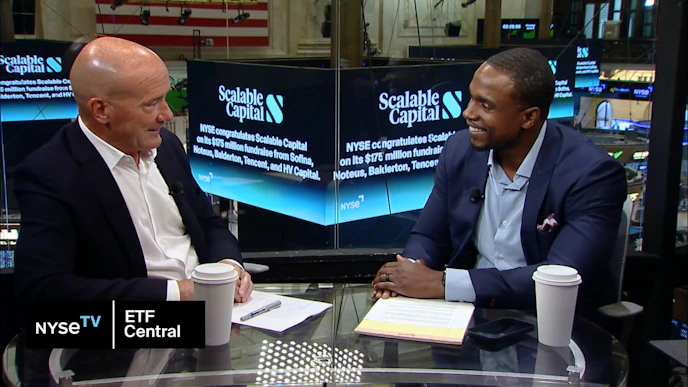
Tom Lydon, one of the most recognizable voices in ETFs, joins Bilal Little, Director of Exchange-Traded Funds at the New York Stock Exchange, on the ETF Central Podcast. What follows is part war story, part market insight, and part career advice for anyone looking to make waves in the ETF world.
Why Volatility Is Good for Families
Tom flips the script on market fear: volatility isn’t the villain, it’s essential. It builds resilience and creates opportunities, especially for young investors with decades ahead of them. He’s been through it all, from gut-punch corrections to euphoric rallies. His advice is simple: embrace volatility, and let time do the heavy lifting.
From ETF Pioneer to Industry Guide
After building ETF Trends and later VettaFi, Tom’s 20-plus years in the industry give him a unique lens on how ETFs evolved from humble index funds to today’s innovation hubs. The early land grab in passive strategies is over. Now it's about active management, standing out, and delivering something fresh.
He highlights white-label platforms like Tidal and Alpha Architect that help smaller firms bring ETF ideas to life without building from scratch. Innovation is everywhere, especially in fixed income, buffered strategies, and enhanced income products.
Crypto, Clients, and Competitive Pressures
Tom wasn’t shocked that crypto kept gaining attention, but he was surprised by how much capital continues to flow in. Meanwhile, fixed income ETFs are experiencing a renaissance. Firms like BondBloxx are breaking down the Treasury market into more tailored slices for investors who want flexibility and focus.
Buffered strategies and options-based ETFs are also attracting flows. Why? Because investors want participation without the rollercoaster.
Risk-managed products are no longer niche. They're essential.
Mutual Funds Are Losing Ground
Tom points to two industry shifts that could accelerate ETF dominance.
First, ETF share classes. These would let mutual fund investors access the same strategies in a more tax-efficient wrapper. Second, access within 401(k) plans, where ETFs are still curiously absent.
The problem isn't tech. It's institutional inertia and fee protection.
As Tom puts it, “If we could put a man on the moon in 1968, we can figure this out.”
Transparency Is the New Alpha
A major cultural hurdle for many legacy asset managers is transparency. Daily disclosure is standard in ETFs, but some portfolio managers resist it, fearing it gives away their "secret sauce." Tom’s blunt response: it doesn’t. Transparency builds trust, and if you can’t operate in the open, your edge probably isn’t real.
Firms that once dismissed ETFs are now entering defensively. They realize too late that ETFs are not just a wrapper. They’re the future.
Rebuilding the 60/40 Portfolio
Tom has long argued that the classic 60/40 portfolio needs an upgrade. Commodities, crypto, and alternatives can play meaningful roles in smoothing out performance and improving diversification. After exiting VettaFi, he retooled his own portfolio, focusing on income and tax efficiency through ETFs.
He encourages investors to avoid being full-time stock jockeys. If you want to pick stocks or chase hot themes, do it with a small slice. Let the core be steady and boring. That’s what works long term.
Too Many Tools, Not Enough Filters
The ETF ecosystem is overflowing with tools, models, and platforms. Tom thinks we’ve hit a tipping point. Advisors are overwhelmed. They’re running businesses, managing clients, and fending off endless sales pitches. At the end of the day, most advisors just want to know what other advisors are doing.
Peer learning through conferences, podcasts, and shared portfolios remains the most valuable source of insight. Especially in crowded spaces like buffered ETFs, where quality varies widely.
NEOs, Un-Retirement, and the Monthly Income Play
Tom’s post-VettaFi “retirement” didn’t last long. He joined NEOS Investments, a firm founded by the creators of QYLD. NEOS specializes in enhanced-income ETFs with options overlays, offering tax-efficient monthly income.
Tom calls it “mailbox money”. A growing priority for aging investors. And NEOS is doing it right. Not all options strategies are equal, and the firm's transparency and execution have helped it climb ETF league tables fast.
Investing in the Next Generation
Tom is passionate about building the pipeline. He praises firms like VanEck, which bring in dozens of interns each summer and even teach in-house courses.
He also supports initiatives like the Bogle Financial Literacy Foundation, which educates inner-city students and seeds Roth IRAs as part of the program.
His message is simple. The ETF industry has plenty of room for smart, driven young people. Whether through internships, certifications, or model portfolios, there are endless ways to learn and get involved.
The ETF Ecosystem Is the American Dream
Tom sees ETFs as a reflection of American values.
Anyone with a good idea, strong work ethic, and commitment can launch a fund and build something real. The rules are transparent, the market is efficient, and merit rises.
He’s quick to admit he never looked back after switching from mutual funds to ETFs in the early 2000s. And he has no plans to stop.
“I apologize to my wife for not retiring,” he says. “But I love this stuff too much.”
Please note this article is for information purposes only and does not in any way constitute investment advice. It is essential that you seek advice from a registered financial professional prior to making any investment decision.
Topics
See all
Segments
See all
No specific market segments were tagged
Mentioned ETFs



Build and Analyze Your ETF Portfolio Like a Pro
Create your own ETF portfolio in minutes and instantly see allocations, exposures, performance, and risk. Visualize diversification across asset classes, regions, and sectors. Stress-test ideas, compare benchmarks, and refine your strategy with professional-grade analytics.