Open Now: The Global ETF Survey Take the Survey →



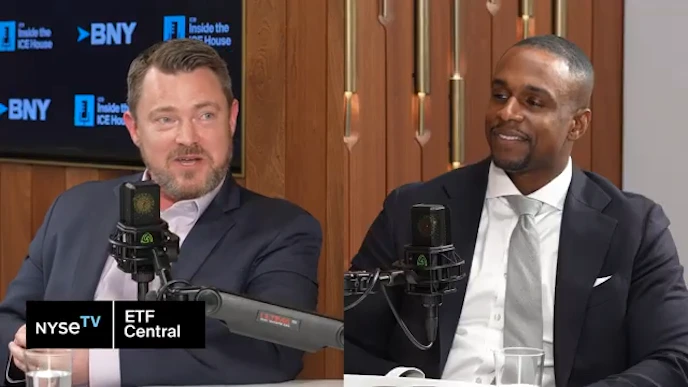
Bilal Little, Director of Exchange-Traded Funds at the NYSE and host of the ETF Central podcast, sits down with Chris Sullivan, president of Craft & Capital, to discuss how media, storytelling, and personality-driven content are reshaping the ETF industry. From the rise of YouTube finance creators to the growing importance of authentic communication, Sullivan explains why modern ETF success depends on far more than just building a great product.
For years, ETF marketing followed a relatively simple formula.
Build a differentiated product. Get it listed. Explain the portfolio construction. Hope advisors notice.
That playbook still matters, but according to Craft & Capital president Chris Sullivan, it’s no longer enough. In today’s media environment, the ETF firms winning attention are the ones pairing strong investment ideas with actual human personalities.
From Wall Street Journal to YouTube Finance
Sullivan has spent more than two decades inside financial communications. His firm, formerly known as McMillan Communications before rebranding to Craft & Capital in 2023, focuses exclusively on financial services clients across asset management, wealth management, fintech, banking, and ETFs.
And from his perspective, financial media has changed more in the last five years than the previous twenty combined.
Traditional outlets still matter. CNBC, Bloomberg, The Wall Street Journal, and financial trade publications remain influential. But they no longer fully control investor attention.
Instead, niche financial creators on YouTube, podcasts, newsletters, LinkedIn, and social platforms are becoming increasingly powerful distribution channels.
Sullivan pointed to financial YouTube creators with audiences of only 10,000 to 50,000 subscribers that consistently generate stronger engagement than massive institutional publications.
Why?
Because engaged audiences matter more than passive audiences.
Someone watching a 45-minute ETF breakdown on YouTube is often far more invested in the topic than someone casually scrolling headlines between meetings.
That shift has fundamentally changed how ETF firms need to think about communication.
The Rise of Personality-Led Investing Media
One of the strongest themes throughout the interview was the rise of “personality-led media.”
Sullivan argued that before the pandemic, ETF marketing was almost entirely product-centric. Firms focused on portfolio construction, factor exposure, sector positioning, or niche investment themes.
Today, the human element often matters just as much as the investment thesis itself.
Investors increasingly want to hear from real people with clear opinions, relatable communication styles, and authentic perspectives.
And frankly, that makes sense.
Most people would rather listen to a compelling portfolio manager explain markets conversationally than endure a robotic five-minute explanation filled with jargon and acronyms.
Sullivan didn’t dance around this reality. He openly said personality is often what sells.
That doesn’t mean substance disappears. Great ETFs still require strong ideas and differentiated strategies. But if nobody can communicate those ideas clearly, the product may never gain traction.
In other words, distribution now includes charisma.
Why “Media” Means Something Completely Different Now
One of the most useful parts of the conversation came when Sullivan broke down the difference between “owned media” and “earned media.”
Owned media refers to content firms control directly. Their blogs, webinars, outlooks, podcasts, videos, whitepapers, and newsletters all fall into that category.
Earned media refers to appearances and mentions on outside platforms. Journalist interviews, podcast features, television segments, newsletter placements, and third-party commentary all live there.
Historically, many firms treated those two buckets separately.
That no longer works.
Sullivan argued that modern firms need owned and earned media working together constantly. A company’s internal content should fuel external opportunities while earned media appearances should reinforce and amplify the brand narrative being built internally.
And importantly, audiences often don’t distinguish much between the two anymore.
People simply want trustworthy information.
If a portfolio manager consistently appears knowledgeable and authentic across multiple channels, trust compounds regardless of where the content originates.
Why ETF Firms Need Better Storytelling
Sullivan admitted he once hated the word “storytelling.”
Now he fully embraces it.
That evolution reflects a broader truth across finance. Good products rarely sell themselves anymore.
Many ETF issuers know their strategies intimately but struggle to explain them outside their own internal bubble. They often speak in language tailored to one specific audience, usually financial advisors, without realizing those same messages may completely miss retail investors or institutional allocators.
Sullivan’s job is helping firms reframe those narratives for different audiences.
That may mean simplifying technical concepts.
It may mean emphasizing practical portfolio applications.
Or it may simply mean teaching executives how to communicate more naturally.
Because attention spans today are brutally short.
If an ETF executive needs 20 minutes to explain something that could be communicated in two, the audience is already gone.
The Biggest Mistake ETF Issuers Make
Sullivan also highlighted one of the biggest operational problems firms face when trying to grow through media exposure.
They underestimate the commitment required.
Many firms hire PR agencies expecting to outsource visibility entirely. Sullivan said that approach almost never works.
Successful media strategies require active executive participation and complete organizational buy-in.
That means leadership teams must make themselves available for interviews, respond quickly to opportunities, trust the communications process, and stay aligned internally on messaging.
Otherwise, momentum disappears quickly.
Sullivan described the frustration of securing strong media opportunities only for clients to respond slowly or disengage entirely.
In modern media cycles, delays kill visibility.
The firms growing fastest are usually the ones prepared to move immediately.
Why Early Positioning Matters More Than Ever
Another fascinating point involved timing.
According to Sullivan, Craft & Capital often begins working with ETF issuers before products are even officially filed.
That early involvement matters because media strategy can’t be bolted on after launch.
ETF firms need alignment between product design, distribution strategy, branding, spokesperson development, and communication positioning from day one.
For larger issuers, the challenge looks different.
Established firms often hit visibility plateaus where audiences no longer understand what differentiates them. In those situations, Sullivan’s team focuses on introducing new spokespeople, expanding communication depth, and refining narratives around evolving product lineups.
Because eventually every successful ETF firm faces the same question:
Why should investors pay attention to you instead of everyone else?
AI Is Changing the Rules Again
Toward the end of the discussion, the conversation shifted toward AI and the future of financial communication.
While the transcript cuts off before Sullivan fully unpacked his answer, the broader theme was already obvious throughout the interview.
Technology is accelerating everything.
Content creation is faster.
Distribution is faster.
Audience feedback is instant.
Competition for attention is relentless.
Which ironically makes authentic communication even more valuable.
Because as AI-generated content floods financial media, audiences may care less about perfect production quality and more about whether someone sounds credible, thoughtful, and real.
That’s where personality-driven communication becomes a competitive advantage.
And perhaps that’s the most important takeaway from the entire conversation:
The future of ETF marketing probably won’t belong to the firms with the loudest advertisements.
It’ll belong to the firms with the most trusted voices.
Please note this article is for information purposes only and does not in any way constitute investment advice. It is essential that you seek advice from a registered financial professional prior to making any investment decision.
Topics
See all
This article does not have a tagged topic
Segments
See all
No specific market segments were tagged
Mentioned ETFs
No specific ETFs were tagged



Build and Analyze Your ETF Portfolio Like a Pro
Create your own ETF portfolio in minutes and instantly see allocations, exposures, performance, and risk. Visualize diversification across asset classes, regions, and sectors. Stress-test ideas, compare benchmarks, and refine your strategy with professional-grade analytics.