Create, analyze, optimize your ETF portfolio. Start now →



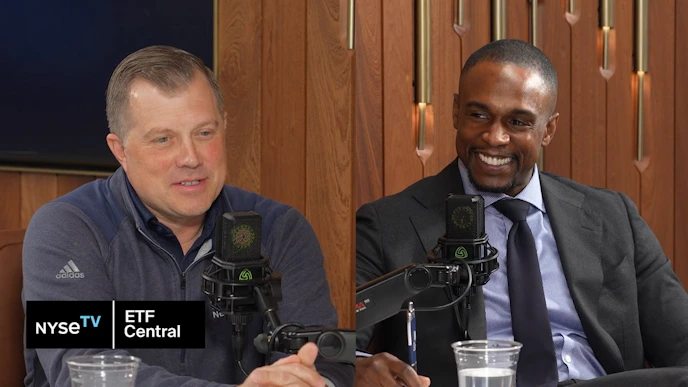
Brian Moran, Founder and CEO of FLX Networks, joins Bilal Little on ETF Central to discuss how his platform is modernizing the connection between asset managers and wealth managers through digitization and workflow automation. Moran explains how FLX has evolved into a two-sided network that helps both sides operate more efficiently in an increasingly complex, fiduciary-driven environment. He highlights how technology, partnerships, and AI are reshaping distribution, client engagement, and growth strategies across the industry.
The Startup Idea That Started With Frustration
Most startup stories involve a founder spotting a massive market opportunity. Brian Moran’s story is a little different. After spending more than two decades inside asset management, he became increasingly frustrated by the countless manual processes that slowed down communication between asset managers and wealth management firms.
Moran wasn’t a software engineer or career technologist. By his own description, he was an operator—someone who spent years working in sales, leadership, and distribution roles. That experience gave him a front-row seat to the inefficiencies that everyone accepted as “just the way things work.”
In January 2019, the idea for Flex Networks was born. By March, Moran had drafted a business plan on his iPhone. Later that year, he launched the company with a vision of bringing gig-economy style connectivity to the world of asset and wealth management.
Bringing the Amazon Experience to Financial Services
The core concept behind Flex was surprisingly simple: make business relationships easier to manage digitally.
Moran looked at everyday consumer behavior for inspiration. People search Zillow before calling a real estate agent. They use banking apps before visiting a branch. Increasingly, they even consult AI tools before talking to a professional. Consumers naturally start with self-service and bring in human expertise only when necessary.
Financial services, however, remained heavily dependent on emails, spreadsheets, phone calls, and manual workflows. Moran believed many of those processes could be digitized, automated, and streamlined.
Flex Networks was designed to connect asset managers and wealth managers through a shared digital network, reducing friction and making information exchange more efficient. What began as a marketplace for asset managers eventually evolved into something much broader.
An Unexpected Pivot
Like many successful startups, Flex did not end up exactly where it started.
Initially, Moran focused on helping asset managers access services, technology, and data that would improve their ability to work with wealth management firms. But as Flex gained traction, something unexpected happened: wealth managers became just as interested in the platform as asset managers.
When wealth management firms saw the technology, they immediately recognized its value. They saw opportunities to improve communication with hundreds of asset managers simultaneously, simplify event management, streamline due diligence, and centralize information sharing.
That realization transformed Flex from a one-sided solution into a two-sided network. Today, both asset managers and wealth managers join the platform as members, creating a connected ecosystem where workflows can move far more efficiently.
The Hidden Challenge Asset Managers Often Miss
One of Moran’s more interesting observations concerns what asset managers underestimate when launching products.
His answer isn’t technology or distribution. It’s working capital.
Launching an investment product today requires sustained investment over a long period. Success rarely happens in months. The sales cycle in modern wealth management often resembles a private equity J-curve, where significant effort and capital are required before meaningful results emerge.
At the same time, Moran believes many firms overestimate the power of relationships alone. Relationships remain critical, but in an increasingly fiduciary-driven environment, friendships and professional connections cannot replace product quality, due diligence, pricing, or suitability.
His point is practical: relationships may open doors, but they do not guarantee outcomes.
Why Advisors Need More Help Than Ever
The advisory business has changed dramatically over the past two decades.
Years ago, advisors were often compensated through transactional brokerage activity. Today, many advisors operate under fiduciary standards and are compensated based on growing and retaining assets under management.
That shift has fundamentally changed how advisors spend their time.
Rather than sitting behind a desk executing transactions, advisors are increasingly focused on building relationships, educating clients, and delivering a superior experience. Moran argues that technology should support those goals, not distract from them.
To help advisors, Flex centralizes asset manager content, thought leadership, and resources in a single location. The company also offers access to services that can help advisors deepen client relationships and improve engagement.
One notable example is Flex Tuition Rewards, a program that allows advisors to provide clients with college tuition discounts through a reward-point system. The initiative reflects Moran’s broader philosophy: create tools that strengthen advisor-client relationships rather than simply adding another piece of technology.
Building Through Listening
Moran credits much of Flex’s growth to a willingness to listen.
Instead of rigidly adhering to the original business plan, the company stayed flexible and paid close attention to feedback from members. That feedback helped shape product development, uncover new opportunities, and guide strategic pivots.
Partnerships also played a major role. Moran highlighted the importance of working with established industry players, including Broadridge, which became both a strategic partner and investor. Those relationships helped Flex accelerate innovation while expanding the value delivered to members.
AI, Opportunity, and the Founder Mindset
Looking ahead, Moran sees artificial intelligence as the most important force shaping the future of the business. While he acknowledges concerns around AI, he believes its greatest value lies in making people more effective and allowing them to focus on uniquely human activities such as relationship building and trust development.
Perhaps the most memorable lesson from the conversation, however, had little to do with technology.
Moran described two ways of approaching challenges: the “if only” mindset and the “at least” mindset. Founders who dwell on “if only” focus on obstacles and missed opportunities. Founders who embrace “at least” focus on progress, learning, and the privilege of building something new.
For a company built on solving inefficiencies, that philosophy feels fitting. Flex Networks exists because one industry veteran stopped asking why things worked the way they did—and started asking how they could work better.
Please note this article is for information purposes only and does not in any way constitute investment advice. It is essential that you seek advice from a registered financial professional prior to making any investment decision.
Topics
See all
This article does not have a tagged topic
Segments
See all
No specific market segments were tagged
Mentioned ETFs
No specific ETFs were tagged



Build and Analyze Your ETF Portfolio Like a Pro
Create your own ETF portfolio in minutes and instantly see allocations, exposures, performance, and risk. Visualize diversification across asset classes, regions, and sectors. Stress-test ideas, compare benchmarks, and refine your strategy with professional-grade analytics.