Keep tabs on your favorite ETFs with a personalized weekly tracker. Create a Watchlist now →



Small-Cap Biotech ETFs: High-Risk, High-Reward Opportunities
Small-cap biotech ETFs focus on early-stage companies, offering explosive upside potential but higher risks compared to market-cap weighted competitors.


Keep up with what matters in ETFs
Get timely ETF insights, market trends, and top ideas straight to your inbox.
Your newsletter subscriptions with us are subject to ETF Central's Privacy Policy and Terms and Conditions.
Not all biotech ETFs are built the same. While the largest funds lean heavily on established giants, a handful sit at the opposite end of the spectrum, focused on small-cap names where fortunes can swing wildly.
The lifecycle of a typical biotech stock explains why. A company raises capital through an IPO, then uses the proceeds to fund preclinical research and clinical trials across phases 1, 2, and 3.
Along the way, most need to raise more money, which dilutes existing shareholders. Failure at any stage can lead to steep losses. But if a drug makes it all the way to FDA approval, the upside can be enormous, sometimes delivering tenfold returns.
Most mainstream biotech ETFs want no part of that rollercoaster. None makes this clearer than the $5.7 billion iShares Biotechnology ETF
For investors who want exposure to the binary, boom-or-bust potential of early-stage biotech, IBB might feel too conservative. The good news is that the growth of the ETF market means you do not need to handpick individual moonshots. Several ETFs now target the small-cap biotech niche directly. Here are three worth noting.
Get data on 14,000+ ETFs
Access Trackinsight's reliable and comprehensive data with 500M+ points on 14,000+ ETFs.
SPDR S&P Biotech ETF XBI-1.61%
XBI is one of the most popular ways to invest in smaller biotech stocks, with $5.4 billion in assets under management. It has long served as the more volatile counterpart to IBB by equal weighting every biotech company in the S&P Total Market Index. That currently means 127 holdings, each receiving the same allocation and reset every quarter.
This structure creates a persistent buy-low, sell-high effect. When a stock falls, its weight increases at the next rebalance, forcing the fund to add exposure. When a stock rallies, its weight is trimmed back. For a sector defined by hype cycles and binary events, that discipline can capture gains from small and mid-cap biotech, whether or not the underlying moves are justified by fundamentals.
Overall, XBI is a well-constructed fund that has built a strong following. It trades with excellent liquidity, reflected in a 30-day median bid-ask spread of just 0.01%, and it even has weekly options for active traders. With an expense ratio of 0.35%, it also comes in slightly cheaper than IBB at 0.44%.
Virtus LifeSci Biotech Clinical Trials ETF BBC-3.11%
BBC takes a more targeted approach than XBI. Rather than equal-weighting the entire biotech industry, it focuses specifically on clinical-stage companies.
Clinical stage biotechs differ from commercial ones in that they have not yet received FDA approval or brought a product to market. Their playbook typically involves advancing through preclinical research and then phases 1, 2, and 3 clinical trials.
Funding often comes from grants, partnerships, or more commonly shareholder dilution. The upside is significant: if a therapy succeeds, the company can be acquired or see explosive gains. Even progress between phases can drive major price swings.
BBC tracks the LifeSci Biotechnology Clinical Trials Index, which exclusively targets this group. Like XBI, it equal weights its holdings, but it only rebalances semi-annually. That schedule is important in biotech, since catalysts rarely follow a tidy quarterly calendar, and letting winners run can capture more upside.
The challenge is performance. BBC’s 10-year annualized return is -5.83%, and its five-year return sits at -14.67%. To be fair, this reflects a difficult stretch for the industry, marked by layoffs, a funding crunch, and regulatory uncertainty. Still, it highlights the downside risk when most clinical-stage companies fail to deliver.
BBC has just $157 million in assets under management, far less than XBI, which speaks to its higher risk profile and less diversified appeal. Its 0.79% expense ratio is also steep, and liquidity is thinner, with a 30-day median bid-ask spread of 0.22%.
ALPS Medical Breakthroughs ETF SBIO-2.14%
Competing with BBC is SBIO, which also targets clinical-stage biotech companies but through a more selective lens. It tracks the S-Network Medical Breakthroughs Index, designed to capture firms in Phase II or Phase III clinical trials. These later stages differ meaningfully from Phase I.
Phase I trials are small and focus mainly on safety and dosage. Phase II expands to larger patient groups, testing both safety and preliminary efficacy. Phase III is larger still, often involving thousands of patients, and seeks definitive evidence of effectiveness and side-effect monitoring before a company can apply for FDA approval.
By concentrating on Phase II and III, SBIO narrows in on firms where the data is more advanced and the potential payoff more tangible. SBIO also imposes market cap limits, only including companies between $200 million and $5 billion. This filters out microcap names that often carry outsized risks and weeds out larger firms that no longer offer the same explosive upside.
Performance for SBIO has been rough, but still better than BBC’s. Over 10 years, SBIO has posted an annualized return of -0.83%, and over five years, -5.71%. Those numbers are far from encouraging, yet they reflect a broader biotech sector that has struggled for years.
Unlike some niche funds, SBIO isn’t in danger of shutting down. It has $85.6 million in assets under management, comfortably above the $50 million threshold often seen as a closure risk. It’s also refreshingly cheaper than BBC, with an expense ratio of 0.50%, a far more reasonable cost for such a specialized strategy.
Please note that this article reflects the author’s personal views and does not represent the opinions of the publication or its affiliates. It is for informational purposes only and does not constitute investment advice. It is essential to seek guidance from a registered financial professional before making any investment decisions.

Latest ETF News
See all ETF newsCould Water ETFs Be the Next AI Bottleneck Trade?

What is a Boomer Candy ETF?

ETF Comparison: NEOS Nasdaq-100 High Income ETF (QQQI) Versus Goldman Sachs Nasdaq-100 Premium Income ETF (GPIQ)





 Advantages of ETFs over Mutual Funds1/6
Lower Costs
In this guide, we'll explore the advantages of ETFs over mutual funds, giving you valuable insights into why ETFs have gained significant popularity among investors like yourself.
Leveraged ETFs: Unlocking the Potential for Amplified Returns1/6
Understanding Leveraged ETFs
Explore leveraged ETFs: potential for amplified returns & risks. 5 ETFs to consider across equities, commodities & fixed income.
What is a Leveraged ETF?1/6
Introducing Leveraged and Inverse ETFs
In this guide, we'll dive into the world of leveraged ETFs, exploring their definition, mechanics, potential risks, and rewards.
Recent educational content

ETF Trends
ETF Industry KPIs September 8, 2026
This week’s KPI data overview highlights key metrics and trends shaping the ETF landscape.

ETF Trends
ETF Industry KPIs August 31, 2026
This week’s KPI data overview highlights key metrics and trends shaping the ETF landscape.
ETF Trends
ETF Industry KPIs August 24, 2026
This week’s KPI data overview highlights key metrics and trends shaping the ETF landscape.
What’sTheFund
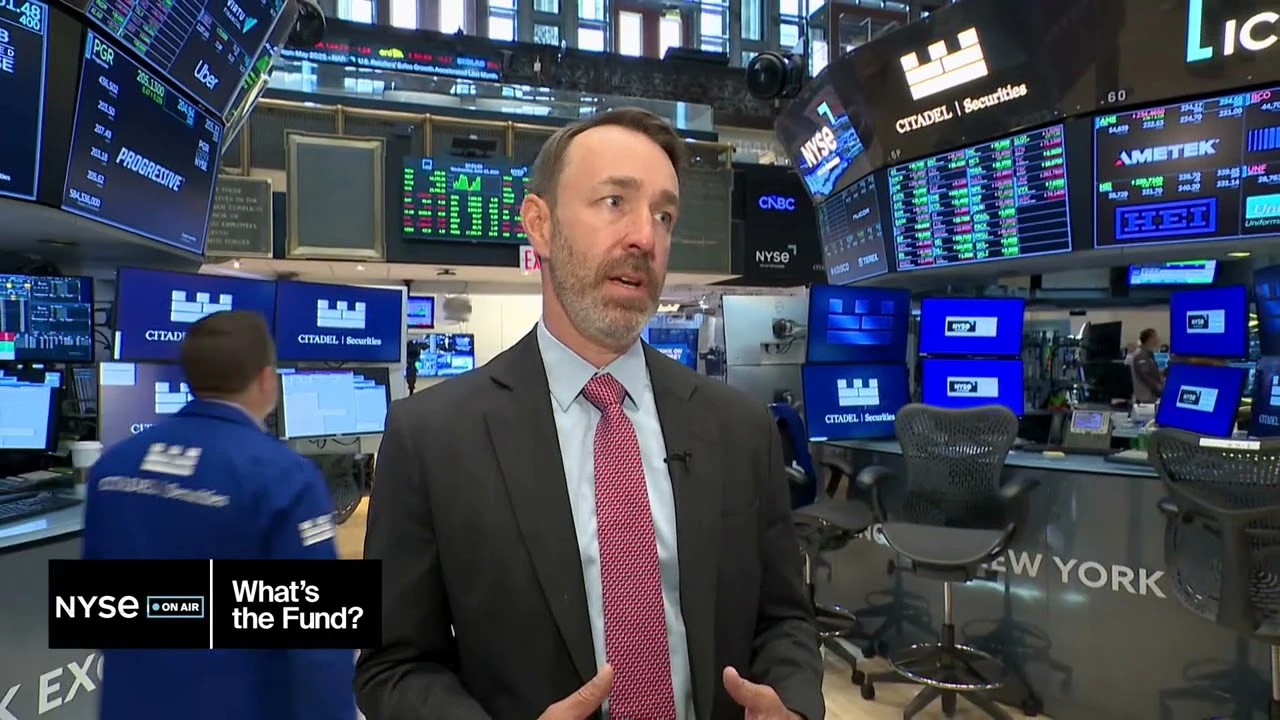
What's the Fund | Ocean Park Diversified Income ETF (DUKZ)
James St Aubin, Chief Investment Officer at Ocean Park Asset Management, discuss the DUKZ ETF, exposing investors to the whole spectrum of asset classes in the fixed income markets, through their rules-based process.

Browse all educational columns



Expert-Built ETF Portfolios, All in One Place
Don’t start from scratch. Discover ready-made ETF portfolios built by professionals to match different goals, timelines, and market views. Use them as inspiration or as a starting point for your own allocation.