Explore professionally built ETF model portfolios. Discover now →



Investing in Sector ETFs: Consumer Discretionary, Technology, Communications
What you need to know about the three cyclical sectors in the S&P 500.


Keep up with what matters in ETFs
Get timely ETF insights, market trends, and top ideas straight to your inbox.
Your newsletter subscriptions with us are subject to ETF Central's Privacy Policy and Terms and Conditions.
In our previous article on sector rotation, we explored how different market sectors respond uniquely to economic cycles. A key takeaway we highlighted in a follow-up article was the role of "defensive sectors"—consumer staples, healthcare, and utilities. These sectors are less sensitive to economic fluctuations, often performing well even when other sectors are facing challenges.
In this article, we’ll highlight the role of "cyclical sectors"—specifically consumer discretionary, technology, and communications.
These sectors are known for their volatility and their ability to deliver substantial gains during periods of economic expansion. However, they also bear the brunt during economic downturns, often being among the first to feel the impacts when a recession looms.
Moreover, it's worth noting that the "Magnificent Seven" stocks—Apple, Microsoft, Nvidia, Meta Platforms, Amazon, Tesla, and Alphabet—all originate from these three sectors. These behemoths not only dominate their respective fields but also significantly influence the broader market dynamics.
Here's a deeper look into each of these cyclical sectors, utilizing their respective SPDR Select Sector ETFs to paint a clearer "big picture" view of their dynamics and potential.
Like what you're reading?
Stay in the loop — get the latest ETF insights: trends, analysis, and expert picks.
Technology
Technology has been the standout performer over the last decade, making it the sector with the highest weight in the S&P 500, currently standing at 32% as of August 20.
Within the Technology Select Sector SPDR Fund
- Software & Services: Microsoft Corp, Salesforce Inc, Adobe Inc, Oracle Corp, and Accenture PLC Class A dominate this group. Companies like Microsoft are pivotal in developing AI applications, exemplified by their investment in OpenAI and the launch of Copilot.
- Technology Hardware & Equipment: Nvidia Corp, Apple Inc, Broadcom Inc, Advanced Micro Devices, and Cisco Systems Inc make up this group. Nvidia is crucial for AI infrastructure with its H100 chips powering advanced AI applications.
It's important to note that XLK is market cap weighted, meaning industry giants like Nvidia and Microsoft each hold about 21% of the portfolio. This makes XLK particularly sensitive to their performance.
With a beta of 1.24, it's about a quarter more volatile than the broader market. However, it remains a very tax-efficient holding, offering a 0.64% 30-day SEC yield.
Consumer Discretionary
The consumer discretionary sector is undeniably one of the most diverse and vibrant sectors, spanning an array of industry groups from automobiles and components to consumer durables and apparel, as well as consumer services and discretionary distribution and retail.
Diving deeper, it covers a broad spectrum including hotels, restaurants, e-commerce, casinos, footwear, textiles, leisure products, and automobiles. Breaking down the top 10 holdings of the Consumer Discretionary Select Sector SPDR Fund
- Automobiles and Components: Tesla Inc leads this group, emphasizing the sector's strong tilt toward innovative auto manufacturing.
- Consumer Durables and Apparel: Companies like Nike Inc. and TJX Companies Inc. showcase a focus on apparel and high-quality consumer goods that span across various demographics.
- Consumer Services: Key players include McDonald's Corp and Booking Holdings Inc., representing the robust service aspect of the sector.
- Discretionary Distribution and Retail: Amazon.com Inc and Home Depot Inc are giants in this group, where retail and distribution meet large-scale consumer demand.
It's fascinating to note that companies typically associated with technology, like Amazon and Tesla, fall under consumer discretionary. Amazon, while known for AWS, still draws substantial revenue from e-commerce. Tesla, often viewed as a clean energy or AI innovator, primarily generates income through electric vehicle sales.
This classification highlights that sectors are determined by where companies derive the majority of their revenues, explaining why a predominantly retail company like Walmart is categorized under consumer staples. However, this is not static – a company can change GICS sectors if its nature shifts.
As with XLK, investors in XLY should be mindful of the concentration risk with Amazon and Tesla making up 37% of the sector's top holdings and prepare for the inherent volatility, underscored by a beta of 1.27, indicating significant sensitivity to market movements.
Communications
The communications sector wonderfully illustrates the evolution from traditional industry to modern digital platforms—it's a mix of century-old telecommunications companies and today's internet giants that dominate our digital interactions.
In the Communications Services Select Sector SPDR® Fund
- Telecommunication Services: This group includes stalwarts like AT&T Inc. and Verizon Communications Inc., which have been the backbone of traditional communication for decades, providing essential voice and data services.
- Media & Entertainment: Here, we find modern communication giants like Meta Platforms Inc and Alphabet Inc (both Class A and C shares), alongside media and entertainment leaders such as Netflix Inc and Electronic Arts Inc.
Interestingly, companies like Alphabet and Meta, often touted as tech giants due to their investments in AI and technology infrastructure, are categorized here because their primary functions revolve around facilitating communication. Whether it's through social networking or search engines, their tools and platforms are fundamentally about connecting people.
For investors in XLC, the ETF's composition reflects a market-cap-weighted approach, leading to significant concentration at the top—over 40% of the ETF is dominated by Meta and Alphabet's shares.
This concentration, along with a narrow portfolio focus, contributes to a beta of 1.27, indicating high sensitivity to market movements and a potential for substantial volatility.
Please note this article is for information purposes only and does not in any way constitute investment advice. It is essential that you seek advice from a registered financial professional prior to making any investment decision.
Latest ETF News
See all ETF newsCould Water ETFs Be the Next AI Bottleneck Trade?

What is a Boomer Candy ETF?

ETF Comparison: NEOS Nasdaq-100 High Income ETF (QQQI) Versus Goldman Sachs Nasdaq-100 Premium Income ETF (GPIQ)





 Advantages of ETFs over Mutual Funds1/6
Lower Costs
In this guide, we'll explore the advantages of ETFs over mutual funds, giving you valuable insights into why ETFs have gained significant popularity among investors like yourself.
Leveraged ETFs: Unlocking the Potential for Amplified Returns1/6
Understanding Leveraged ETFs
Explore leveraged ETFs: potential for amplified returns & risks. 5 ETFs to consider across equities, commodities & fixed income.
What is a Leveraged ETF?1/6
Introducing Leveraged and Inverse ETFs
In this guide, we'll dive into the world of leveraged ETFs, exploring their definition, mechanics, potential risks, and rewards.
Recent educational content

ETF Trends
ETF Industry KPIs September 8, 2026
This week’s KPI data overview highlights key metrics and trends shaping the ETF landscape.

ETF Trends
ETF Industry KPIs August 31, 2026
This week’s KPI data overview highlights key metrics and trends shaping the ETF landscape.
ETF Trends
ETF Industry KPIs August 24, 2026
This week’s KPI data overview highlights key metrics and trends shaping the ETF landscape.
What’sTheFund
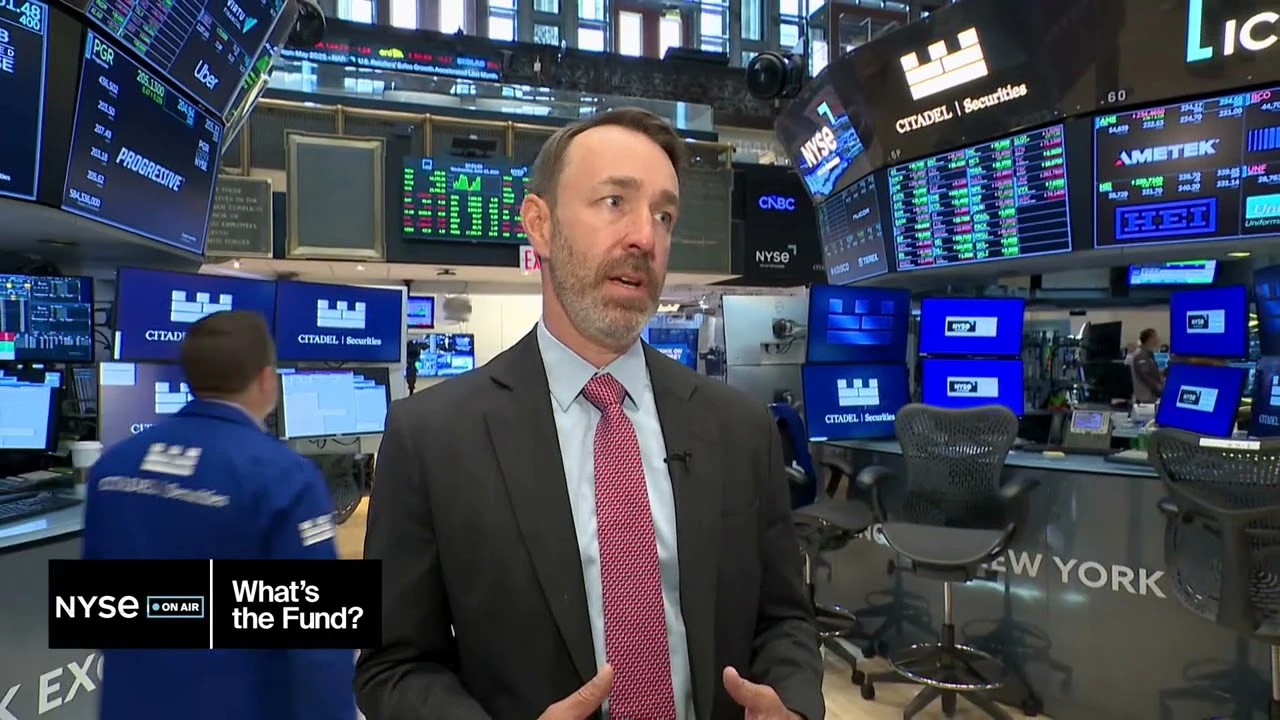
What's the Fund | Ocean Park Diversified Income ETF (DUKZ)
James St Aubin, Chief Investment Officer at Ocean Park Asset Management, discuss the DUKZ ETF, exposing investors to the whole spectrum of asset classes in the fixed income markets, through their rules-based process.

Browse all educational columns



Expert-Built ETF Portfolios, All in One Place
Don’t start from scratch. Discover ready-made ETF portfolios built by professionals to match different goals, timelines, and market views. Use them as inspiration or as a starting point for your own allocation.