Explore professionally built ETF model portfolios. Discover now →



Investing in Sector ETFs: What is Sector Rotation?
Here's a crash course on how to implement a sector investing strategy via SPDR ETFs.


Keep up with what matters in ETFs
Get timely ETF insights, market trends, and top ideas straight to your inbox.
Your newsletter subscriptions with us are subject to ETF Central's Privacy Policy and Terms and Conditions.
SPDR's lineup of 11 "Select Sector" ETFs, each corresponding to a GICS sector represented in the S&P 500, is not only highly popular with billions in AUM but also extremely affordable with a 0.09% expense ratio.
On their website, SPDR also provides numerous great ideas for how to use these ETFs, including portfolio customization, tax-loss harvesting, and hedging.
However, the strategy you may have heard of most from financial pundits is "sector rotation." This year, the theme is 'tech is in, real estate is out,' but that's not always the case. Here's exactly what sector rotation means and a look at a unique SPDR ETF that puts it into play.
Like what you're reading?
Stay in the loop — get the latest ETF insights: trends, analysis, and expert picks.
How sector rotation works
Sector rotation is an active, top-down strategy – but what does this mean?
An active strategy means it involves frequent buying and selling of assets based on the investor's judgments rather than a passive strategy, which typically follows a fixed index.
A top-down strategy focuses on macroeconomic factors to make investment decisions, starting with the big picture of the economy and then drilling down to sectors and industries.
The strategy is based on the premise that there are observable, repeatable, and consistent phases in the macroeconomic cycle. Each of the distinct 11 stock market sectors responds differently to these phases, either historically favorably or unfavorably.
For instance, defensive sectors with inelastic demand, like healthcare, utilities, and consumer staples, tend to outperform during economic downturns or recessions. This is because their products and services remain in demand regardless of the economic climate.
Conversely, cyclical sectors like consumer discretionary and technology tend to perform well during economic expansions when consumer spending and business investments are on the rise.
There is no universal way to implement sector rotation. Some funds use quantitative models driven by momentum, sentiment, or valuation signals, whereas others rely on qualitative analysis. Most strategies combine both approaches to some extent. The key is to anticipate and stay ahead of economic changes, making sector rotation a tactical strategy.
Given the frequent adjustments and high turnover involved in sector rotation, using ETFs with low bid-ask spreads and expense ratios can help keep costs low compared to assembling your own basket of sector-specific stocks.
Are there sector rotation ETFs?
If you have your own sector rotation methodology, you can easily mix and match different SPDR Select Sector ETFs to implement it. However, if you trust the professionals and want a hands-off approach, there's an option for that too—the SPDR SSGA US Sector Rotation ETF
For a 0.7% expense ratio, this ETF aims to outperform the S&P 500 Index by tactically allocating among the 11 Select Sector ETFs. The fund uses both quantitative and qualitative analysis, along with a risk budget, to make its allocations.
XLSR has a high turnover rate, rebalancing every month but adjusting as needed depending on market conditions. As of July 2, 2024, the ETF is poised to capitalize on continued economic expansion and bullish market momentum. It has the highest weights in technology at 43%, followed by industrials at 19% and financials at 15% - all three of which are cyclical sectors.
Unfortunately, since its inception in April 2019 to May 31, 2024, XLSR has underperformed the S&P 500 Index, with a 12.1% annualized return compared to 14.44% for the index. This underperformance highlights the risks of actively managed funds and the impact of high expense ratio;
What's next?
As part of our mission to bring you comprehensive ETF educational content, we'll be continuing this sector investing primer with a series covering all 11 SPDR Select Sector ETFs. This series aims to provide you with introductory knowledge on each sector, helping you understand their unique characteristics and investment potential. Stay tuned as these will be released one by one over the coming weeks!
Please note this article is for information purposes only and does not in any way constitute investment advice. It is essential that you seek advice from a registered financial professional prior to making any investment decision.
Segments
See all
Mentioned ETFs
Further reading

Latest ETF News
See all ETF newsETF Comparison: NEOS Nasdaq-100 High Income ETF (QQQI) Versus Goldman Sachs Nasdaq-100 Premium Income ETF (GPIQ)

Which Real Estate ETFs Pay the Highest Yields?






 Advantages of ETFs over Mutual Funds1/6
Lower Costs
In this guide, we'll explore the advantages of ETFs over mutual funds, giving you valuable insights into why ETFs have gained significant popularity among investors like yourself.
Leveraged ETFs: Unlocking the Potential for Amplified Returns1/6
Understanding Leveraged ETFs
Explore leveraged ETFs: potential for amplified returns & risks. 5 ETFs to consider across equities, commodities & fixed income.
What is a Leveraged ETF?1/6
Introducing Leveraged and Inverse ETFs
In this guide, we'll dive into the world of leveraged ETFs, exploring their definition, mechanics, potential risks, and rewards.
Recent educational content

ETF Trends
ETF Industry KPIs August 31, 2026
This week’s KPI data overview highlights key metrics and trends shaping the ETF landscape.

ETF Trends
ETF Industry KPIs August 24, 2026
This week’s KPI data overview highlights key metrics and trends shaping the ETF landscape.
What’sTheFund
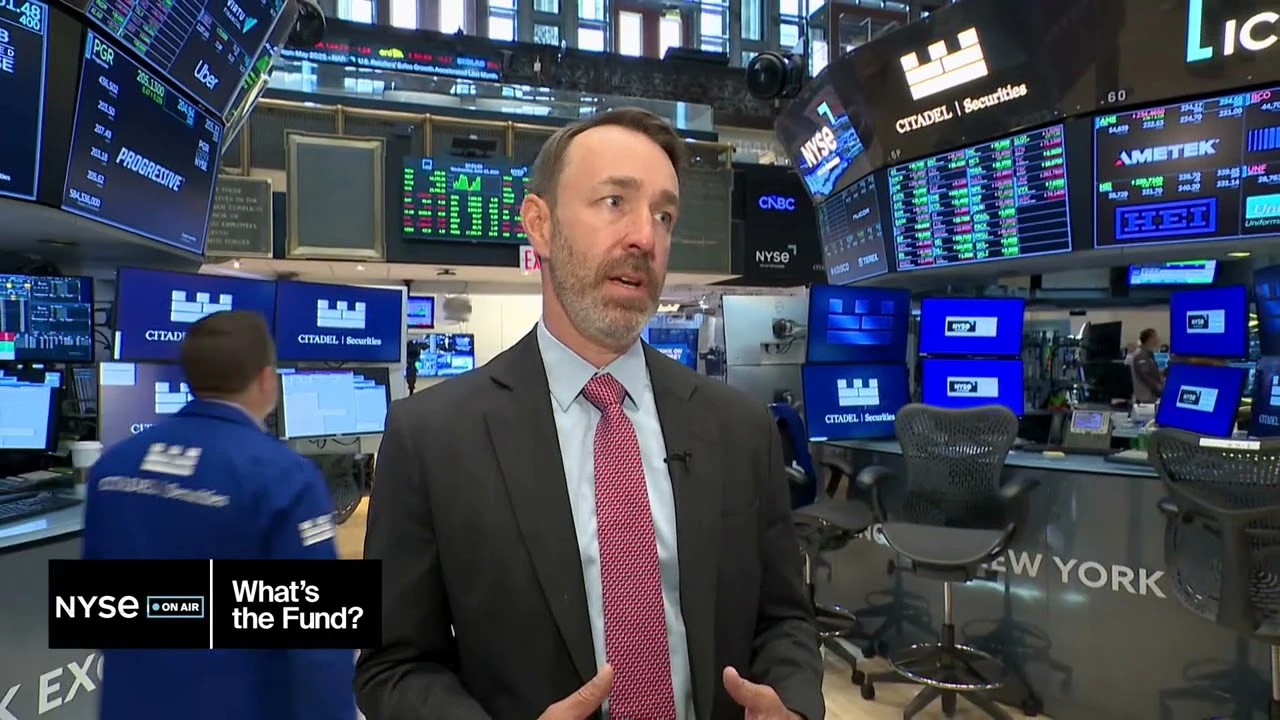
What's the Fund | Ocean Park Diversified Income ETF (DUKZ)
James St Aubin, Chief Investment Officer at Ocean Park Asset Management, discuss the DUKZ ETF, exposing investors to the whole spectrum of asset classes in the fixed income markets, through their rules-based process.

ETF Takeaway
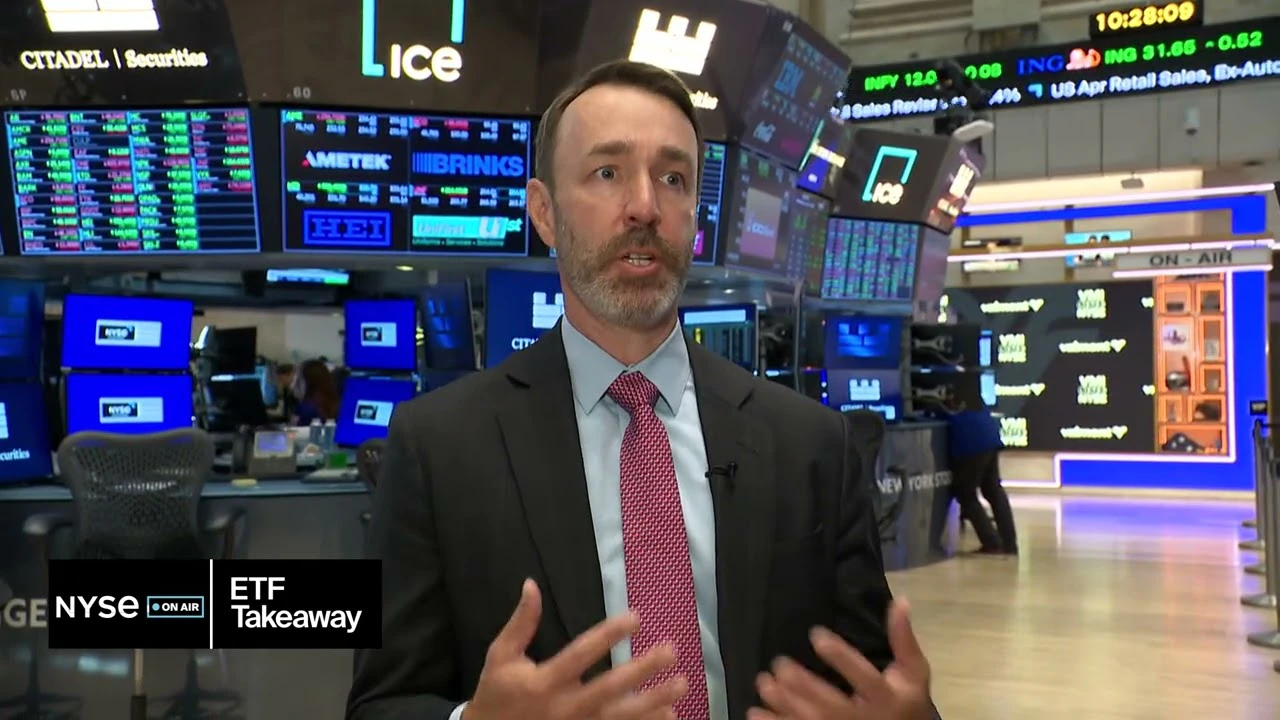
ETF Takeaway: Ocean Park Diversified Income ETF (DUKZ)
James St Aubin, Chief Investment Officer at Ocean Park Asset Management discusses the state of fixed income markets and how their DUKZ ETF, through their rules-based process, tactically allocates to 11 sectors of fixed income through underlying ETFs.
Browse all educational columns



Expert-Built ETF Portfolios, All in One Place
Don’t start from scratch. Discover ready-made ETF portfolios built by professionals to match different goals, timelines, and market views. Use them as inspiration or as a starting point for your own allocation.