Turn ETF ideas into real portfolios. Try the builder now →



ETF Model Portfolios: The Bitcoin Barbell
An unconventional allocation that tempers Bitcoin’s volatility by pairing it with traditional assets using newly available spot Bitcoin ETFs.


Keep up with what matters in ETFs
Get timely ETF insights, market trends, and top ideas straight to your inbox.
Your newsletter subscriptions with us are subject to ETF Central's Privacy Policy and Terms and Conditions.
It’s no secret that Bitcoin is volatile. Anyone who lived through the 2018 or 2022 crypto winters is familiar with how quickly sentiment can flip and how steep those declines can get.
Still, there is always a new wave of investors coming in, learning the hard way by selling into weakness and capitulating near the bottom. In crypto terms, “not going to make it.” ETF providers have taken notice. There has been no shortage of products designed to reshape Bitcoin’s risk and return profile.
Covered call strategies, for example, cap upside but convert a non-income-producing asset into one that can generate double-digit yields on a monthly or even weekly basis.
On the other end, firms like Calamos have introduced structured protection ETFs that offer capped upside participation alongside defined downside buffers, sometimes as high as 80%, 90%, or even 100% principal protection over a set outcome period.
My approach here is simpler. Instead of relying on derivatives or structured payoffs, the Bitcoin Barbell ETF portfolio aims to reshape risk through asset allocation. The idea is to pair a spot Bitcoin ETF with a Treasury bill ETF, combining one of the most volatile assets with one of the most stable.
This draws from the barbell strategy popularized by Nassim Nicholas Taleb, known for books like The Black Swan and Fooled by Randomness. His core argument is to avoid the fragile middle ground. Rather than taking moderate, often poorly compensated risks, you allocate to extremes: very safe assets on one side and high-risk, high-upside opportunities on the other.
If you have experience in fixed income, the concept should feel familiar. Portfolio managers often barbell duration or credit quality, balancing short-term, high-quality bonds with longer-duration or riskier exposures to manage overall risk.
Here, the same idea is applied using ETFs, pairing Bitcoin with Treasury bills. The result is a portfolio that looks unconventional on paper but can behave very differently in practice. Using ETF Central’s model portfolio tool, here’s how to put it together and what the data shows.
Get data on 14,000+ ETFs
Access Trackinsight's reliable and comprehensive data with 500M+ points on 14,000+ ETFs.
90% in Treasury Bills
Despite all the noise around U.S. fiscal health, from credit rating downgrades to rising national debt and concerns about foreign demand, Treasury bills remain the benchmark for so-called risk-free returns.
That is because they are backed by the full faith and credit of the U.S. government and sit at the very front of the yield curve, where interest rate and credit risks are minimal.
Treasury bills are short-term debt instruments with maturities of one year or less. Unlike longer-term Treasury bonds, they do not pay semi-annual coupons. Instead, they are issued at a discount and mature at face value, with the difference representing the investor’s return.
When packaged into an ETF, particularly at the very short end of the curve, the result is a relatively stable net asset value. It is not fixed, but it tends to move in a very tight range, reflecting the low duration and rapid turnover of the underlying holdings.
A good example is the iShares 0-3 Month Treasury Bond ETF
SGOV currently offers a 3.54% 30-day SEC yield after fees, broadly in line with prevailing short-term interest rates. In this portfolio, it serves as the stable anchor, providing liquidity, income, and a source of capital to rebalance into Bitcoin during drawdowns.
10% in Bitcoin
For the Bitcoin allocation, you could go direct by purchasing and holding the asset through a crypto exchange or cold storage. The challenge is operational. Rebalancing, custody, and execution are not as straightforward compared to traditional securities.
That is where spot Bitcoin ETFs can be useful. They provide a simple, brokerage-friendly way to gain exposure without dealing with wallets or private keys.
The largest and most widely adopted option is the iShares Bitcoin Trust ETF
The structure is simple. The ETF holds Bitcoin directly with a custodian and aims to track its price during market hours. From a trading standpoint, it is highly liquid, with a 0.03% 30-day median bid-ask spread and significant trading volume.
Another notable feature is that IBIT was among the first spot Bitcoin ETFs to have listed options, adding an additional layer of flexibility for more advanced investors.
In this portfolio, Bitcoin represents the high-risk, high-upside side of the barbell, while Treasury bills provide stability and rebalancing capital on the other end.
Putting it together
To test this out, I plugged a 90% allocation to SGOV and 10% to IBIT into ETF Central’s model portfolio tool, using a monthly rebalancing frequency.
The first thing that stands out is cost. The weighted average expense ratio comes in at just 0.106%. That is before any brokerage commissions or potential tax implications from the monthly rebalancing, both of which are worth keeping in mind depending on how you implement this.
For comparison, I used the Compass Crypto Reference Index Bitcoin in U.S. dollars as the benchmark, essentially representing a pure Bitcoin exposure. The backtest period is naturally limited by IBIT’s launch date, but even over this shorter window, the results are quite revealing.
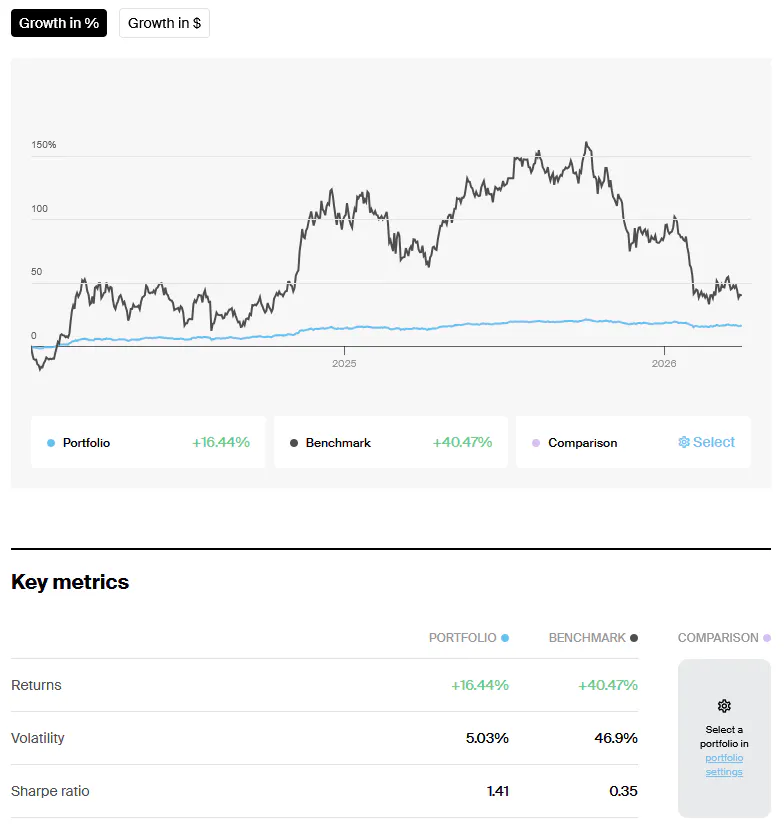
Holding Bitcoin outright would have delivered a 40.47% cumulative return versus 16.44% for the barbell portfolio. That gap is expected. You are giving up upside by holding 90% in Treasury bills.
Where things get interesting is on the risk side. Volatility drops dramatically, from 46.9% for Bitcoin down to just 5.03% for the portfolio. That leads to a much stronger risk-adjusted return, with a Sharpe ratio of 1.41 compared to just 0.35 for Bitcoin.
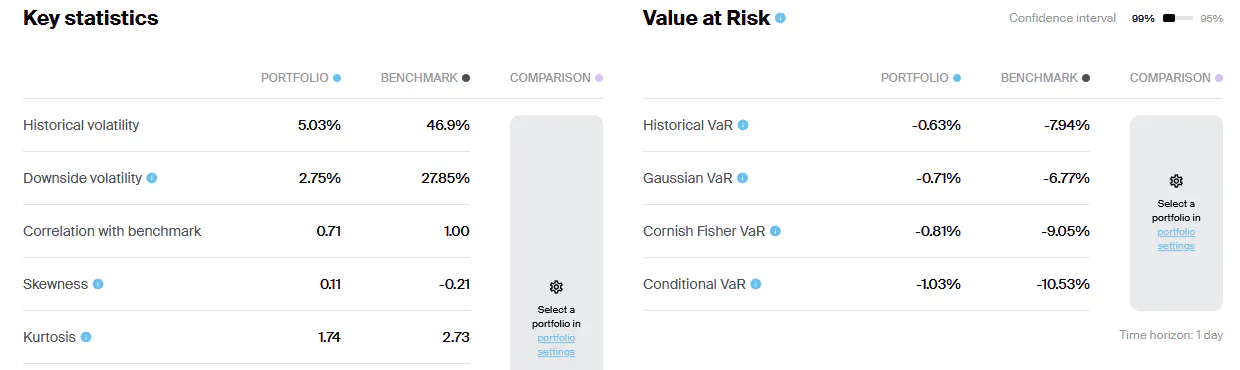
Across multiple risk measures, the improvements are consistent. Downside volatility is materially reduced. Value at risk metrics, whether measured historically, through Gaussian assumptions, or more advanced methods, are all lower. Skewness and kurtosis, which measure the asymmetry of returns and the likelihood of tail events, are also dampened, indicating a smoother distribution of outcomes.
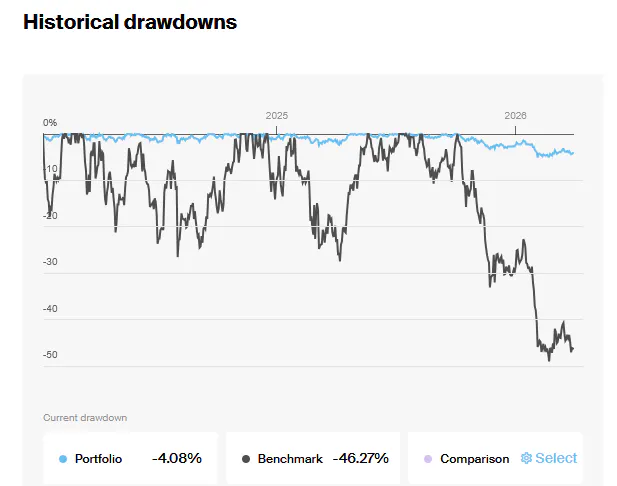
You can also see this in the drawdown profile. The barbell structure holds up far better during periods of stress, with shallower and shorter drawdowns compared to holding Bitcoin outright.
This is not a portfolio designed to maximize returns. If your goal is to fully capture Bitcoin’s upside, this will lag. But as a side allocation, it offers a more controlled way to gain exposure to a highly volatile asset.
For investors looking to ease into Bitcoin, or those who prioritize a risk-first approach, this is a practical way to apply time-tested portfolio construction principles to a very modern asset class.
Please note this article is for information purposes only and does not in any way constitute investment advice. It is essential that you seek advice from a registered financial professional prior to making any investment decision.

Latest ETF News
See all ETF newsETF Model Portfolios: The Geopolitical Risk Thematic Hedge

ETF Model Portfolios: The Boglehead Couch Potato




 Advantages of ETFs over Mutual Funds1/6
Lower Costs
In this guide, we'll explore the advantages of ETFs over mutual funds, giving you valuable insights into why ETFs have gained significant popularity among investors like yourself.
Leveraged ETFs: Unlocking the Potential for Amplified Returns1/6
Understanding Leveraged ETFs
Explore leveraged ETFs: potential for amplified returns & risks. 5 ETFs to consider across equities, commodities & fixed income.
What is a Leveraged ETF?1/6
Introducing Leveraged and Inverse ETFs
In this guide, we'll dive into the world of leveraged ETFs, exploring their definition, mechanics, potential risks, and rewards.
Recent educational content

ETF Trends
ETF Industry KPIs September 8, 2026
This week’s KPI data overview highlights key metrics and trends shaping the ETF landscape.

ETF Trends
ETF Industry KPIs August 31, 2026
This week’s KPI data overview highlights key metrics and trends shaping the ETF landscape.
ETF Trends
ETF Industry KPIs August 24, 2026
This week’s KPI data overview highlights key metrics and trends shaping the ETF landscape.
What’sTheFund
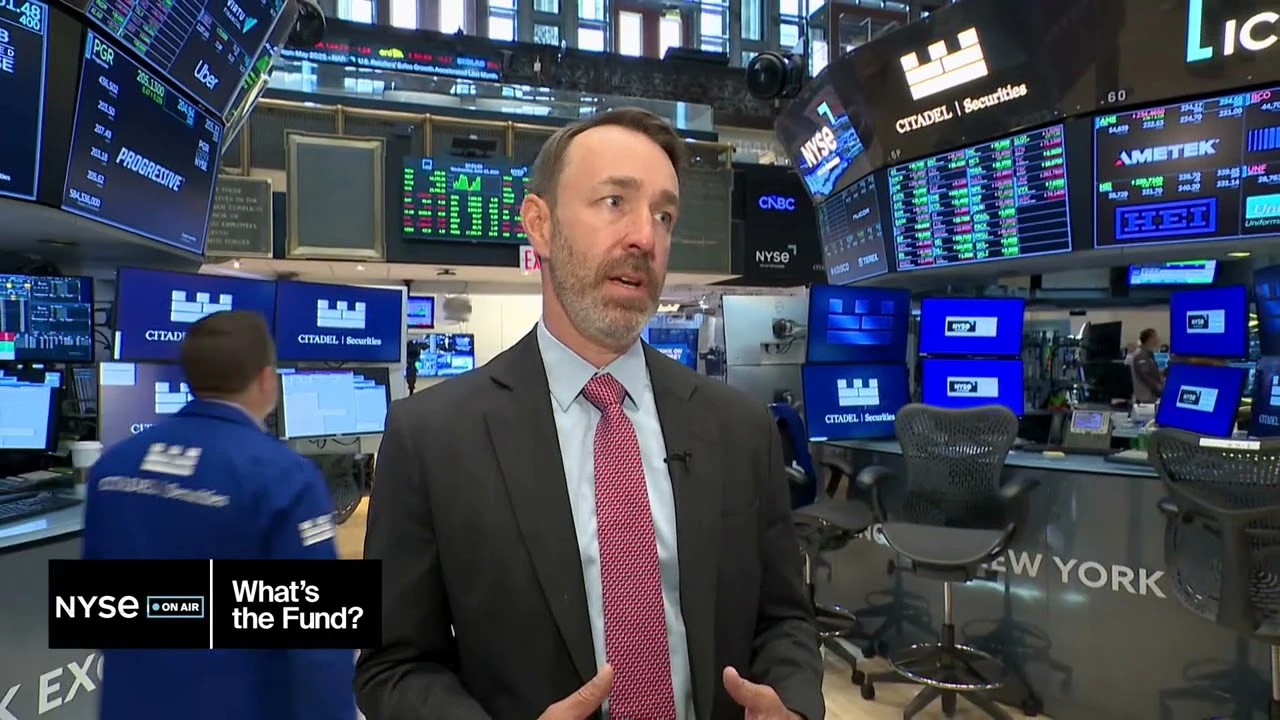
What's the Fund | Ocean Park Diversified Income ETF (DUKZ)
James St Aubin, Chief Investment Officer at Ocean Park Asset Management, discuss the DUKZ ETF, exposing investors to the whole spectrum of asset classes in the fixed income markets, through their rules-based process.

Browse all educational columns



Active Trader Report: Use of Leveraged & Inverse ETFs Way Up
Direxion partnered with Compound Insights and Vanda to explore what’s driving the evolution of active trading — and how active traders are using leveraged and inverse funds across equities, single stocks, commodities, and volatility.