Explore professionally built ETF model portfolios. Discover now →



Why Vanguard's Total World Stock ETF is the Ultimate Passive Investment
This global equity ETF offers maximum diversification at a low-cost.


Keep up with what matters in ETFs
Get timely ETF insights, market trends, and top ideas straight to your inbox.
Your newsletter subscriptions with us are subject to ETF Central's Privacy Policy and Terms and Conditions.
The results of the latest SPIVA scorecard from S&P Dow Jones Indices has been updated with returns up to December 31st, 2022, and it looks like passive indexing is still beating active management by a broad margin. For the U.S. market, 93.40% of large-cap funds have underperformed the S&P 500 index over the last 15 years. However, the one-year return gap is significantly narrower at 51.08%.
The same dynamics can be observed in international markets too. In Japan, just 13.82% of large-cap funds outperformed the S&P/TOPIX 150 index. European funds returned a similar result, with 87.81% of them underperforming the S&P Europe 350 index. Even emerging markets like the Middle East fared poorly, with just 8.57% of funds outperforming the S&P Pan Arab Composite index.
While active funds have their uses and can certainly outperform over shorter time periods (especially during volatile markets like 2022), the data continues to show passive funds outperforming, largely due to their low costs, minimal turnover, and high diversification. Among the passive ETFs available, I think there's one worth highlighting: the Vanguard Total World Stock ETF (VT).
Like what you're reading?
Stay in the loop — get the latest ETF insights: trends, analysis, and expert picks.
When passive indexing turns active
The market might not be perfectly efficient, but it comes fairly close. In today's interconnected and fast-paced economy, very few retail, let alone professional investors have the resources, knowledge, or skills to consistently eke out alpha over a long period of time.
For many investors, the alternative is to invest passively, by tracking benchmark indexes provided by external organizations like MSCI or S&P. ETFs that track these indexes tend to be low-cost, incur minimal turnover, and are subject to fewer biases than stock picking due to their rigorous nature.
However, the problem of which index to choose becomes a problem. Should an investor overweight a U.S. stock index? Tilt towards value indexes? What proportion of each market cap, geography, and style should they hold in relation to each other? Many investors fret over these considerations.
All of these decisions are inherently active – they rely on the investor's judgment when it comes to investment selection and allocation. In other words, the decision to overweight, say, a Canadian equity index is still very much an active management decision, despite the underlying investment being passive.
Investors grappling with these problems tend to commit behavioral mistakes – chasing performance, trying to time the market, or panic selling. All of these factors contribute to why the average investor's returns consistently lag the returns posted by the funds they buy.
Why buying VT alleviates this issue
VT is what I call an "agnostic investment" – by that, I mean investors who buy it do not have to bet on a specific equity geography, style, sector, or market cap outperforming to achieve the optimal level of return. This is due to its high level of diversification.
Recall the concept of the "market portfolio", a theoretical construct that includes every investable asset possible in the world, with each weighted proportionately. If we applied this concept to just equities, we would arrive at an investment like VT.
The ETF tracks the FTSE Global All Cap Index, which holds over 9,523 market-cap weighted equities spanning all sectors and both growth/ value styles from U.S., international developed, and emerging markets. For a 0.07% expense ratio, investors can quite literally index the world.
Here's the other interesting part – VT is dynamic. Right now, the ETF is approximately 60% U.S. stocks, 30% developed, and 10% emerging markets, but this can change. As the world's economy progresses and nations rise and fall, the proportions of VT will shift too, so there's no need for prediction.
This feature alleviates one of the biggest behavioral problems faced by retail investors: the tendency to chase past performance. With VT, there's no need to bet on which country will outperform. By investing in it, you have the best shot of receiving the global market's average return net of fees.
While some investors might not want to settle for "average", I'd like to point out that over the last 10 years, VT has returned an annualized 8.19%. While it may swing up and down like most equity funds do, there's an inherent peace of mind: an investment in VT is a bet on the world's economy.
Plus, there's nothing wrong with "average" returns. As Vanguard founder John Bogle once remarked: "Gunning for average is your best shot at finishing above average."
Please note this article is for information purposes only and does not in any way constitute investment advice. It is essential that you seek advice from a registered financial professional prior to making any investment decision.
Segments
See all
Mentioned ETFs
Further reading
Latest ETF News
See all ETF newsCould Water ETFs Be the Next AI Bottleneck Trade?

What is a Boomer Candy ETF?

ETF Comparison: NEOS Nasdaq-100 High Income ETF (QQQI) Versus Goldman Sachs Nasdaq-100 Premium Income ETF (GPIQ)




 Advantages of ETFs over Mutual Funds1/6
Lower Costs
In this guide, we'll explore the advantages of ETFs over mutual funds, giving you valuable insights into why ETFs have gained significant popularity among investors like yourself.
Leveraged ETFs: Unlocking the Potential for Amplified Returns1/6
Understanding Leveraged ETFs
Explore leveraged ETFs: potential for amplified returns & risks. 5 ETFs to consider across equities, commodities & fixed income.
What is a Leveraged ETF?1/6
Introducing Leveraged and Inverse ETFs
In this guide, we'll dive into the world of leveraged ETFs, exploring their definition, mechanics, potential risks, and rewards.
Recent educational content

ETF Trends
ETF Industry KPIs September 8, 2026
This week’s KPI data overview highlights key metrics and trends shaping the ETF landscape.

ETF Trends
ETF Industry KPIs August 31, 2026
This week’s KPI data overview highlights key metrics and trends shaping the ETF landscape.
ETF Trends
ETF Industry KPIs August 24, 2026
This week’s KPI data overview highlights key metrics and trends shaping the ETF landscape.
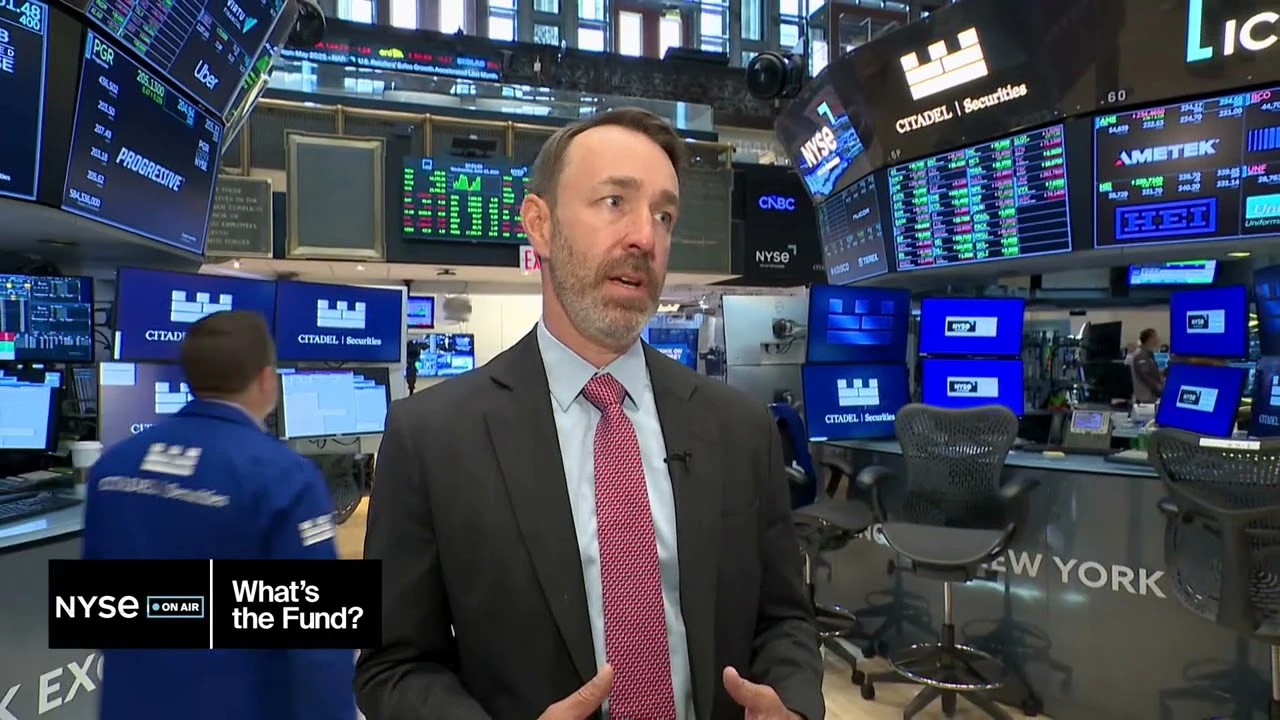
What’sTheFund
What's the Fund | Ocean Park Diversified Income ETF (DUKZ)
James St Aubin, Chief Investment Officer at Ocean Park Asset Management, discuss the DUKZ ETF, exposing investors to the whole spectrum of asset classes in the fixed income markets, through their rules-based process.

Browse all educational columns



Expert-Built ETF Portfolios, All in One Place
Don’t start from scratch. Discover ready-made ETF portfolios built by professionals to match different goals, timelines, and market views. Use them as inspiration or as a starting point for your own allocation.