Turn ETF ideas into real portfolios. Try the builder now →



Uptick to inflows in high-yield bond ETFs
The past three months has seen a resurgence in flows to US high-yield bond ETFs. We consider the attractiveness of this asset class.


Keep up with what matters in ETFs
Get timely ETF insights, market trends, and top ideas straight to your inbox.
Your newsletter subscriptions with us are subject to ETF Central's Privacy Policy and Terms and Conditions.
Recent months have seen a marked resurgence in flows to US high-yield bond ETFs. Between September 9 to December 9, $5.4B of investor capital moved into the 53 funds in the category (as defined by ETF Central) with inflows of $2.7B in the past month alone. Given this turnaround in flow activity - cumulative outflows across US high-yield bond ETFs currently stand at -$4.7B year-to-date - we take a closer look at what’s behind this renewed interest and possible implications for investors.
Like what you're reading?
Stay in the loop — get the latest ETF insights: trends, analysis, and expert picks.
Short primer to high-yield bond ETFs
First, it is important to iron out what high-yield bonds are, and their investment characteristics. Most investors think of bonds as “safe” investments that are held to protect their invested capital, while simultaneously providing a fixed return. This may be true for government bonds or bonds issued by high-quality borrowers, however for lower-quality borrowers, there is less certainty as to the actual return received from bonds issued.
Companies often issue bonds to fund business activities, whether that be a growth project or an acquisition. Depending on the nature of the issuer of these bonds, they will receive a credit rating that essentially captures the likelihood that a company will be able to repay their bonds and interest. The lower the credit rating of a company, the higher the interest rate they must pay to compensate for the risk that their investors are taking on. Companies that generate stable and predictable cash flows and carry little debt will receive a higher credit rating, while companies with volatile cash flows and/or carry a lot of debt will receive a lower credit rating. Below a certain threshold of credit ratings, some bonds are considered “high-yield” because of their inherent riskiness and higher interest rate.
High-yield bond ETFs have a higher interest rate and potential return, however, they also have greater default risk.
For more information on selecting a bond ETF, the article "does your choice of Bond ETF matter?" makes for a great read.
Why are investors interested in high-yield bond ETFs?
Turning back to the main question – what are the implications of these inflows to high-yield bond ETFs?
The uptick to inflows within this asset class suggests that investors are willing to put more capital at risk. This has been spurred by lower-than-expected inflation data, which is leading investors to sense that the Fed’s tightening may be slowing down. Furthermore, with all the uncertainty many investors have been sitting on cash, waiting for every/any positive datapoint in order to begin deploying cash into riskier investments.
High-yield spreads have continued to widen since the beginning of 2022 – indicating lower prices and selling pressure on this asset class. These spreads still remain fairly wide, which shows that there may still be upside in the asset class. However, if inflation data ends up reversing its trend and moves in the wrong direction, this could cause spreads to widen again.
While this causes concern for short-term traders, long-term investors with a high-risk tolerance could consider increasing high-yield bond exposure due to its relatively attractive valuation (based on the growing ability of companies to manage costs and service debt) and potential for excess portfolio income and capital appreciation.
ETFs can provide a cost-effective way for investors to gain broad-based exposure to high-yield bonds, particularly given the enhanced transparency and liquidity features of the ETF structure when compared to investing in individual fixed-income securities for example. ETF Central’s fund screener is a great tool for selecting a fund that aligns with your investment objectives, alternatively the following funds could be of interest:
iShares Broad USD High Yield Corporate Bond ETF (USHY)
Provides exposure to US high-yield corporate bonds by tracking the ICE BofAML US High Yield Constrained Index.
- Expense Ratio: 0.22%
- AUM: $9.2B
- 1mo Flows: +$749M
- 1mo Performance: +3.3%
Xtrackers USD High Yield Corporate Bond ETF (HYLB)
Provides exposure to US high-yield corporate bonds by tracking the Solactive USD High Yield Corporates Total Market Index.
- Expense Ratio: 0.20%
- AUM: $4.2B
- 1mo Flows: +$362M
- 1mo Performance: +3.5%
Invesco Senior Loan ETF (BKLN)
Provides exposure to leveraged loans within the US based on the Morningstar LSTA US Leveraged Loan 100 Index.
- Expense Ratio: 0.66%
- AUM: $4.1B
- 1mo Flows: +$116M
- 1mo Performance: +1.2%
Data as of December 9, 2022.
Please note this article is for information purposes only and does not constitute investment advice.
Topics
See all
Segments
See all
Mentioned ETFs
Further reading

Latest ETF News
See all ETF newsMoneyShow Chart of the Day 9/4/26: Don't Just Watch Oil. Watch THESE.


Chart of the Day 8/14/26: The Great "Hot Money" Migration

MoneyShow Chart of the Day 7/29/26: Now, THAT's What I Call Market Rotation!

MoneyShow Chart of the Day 7/16/26: Good News/Bad News on Inflation (and the Fed)




 Advantages of ETFs over Mutual Funds1/6
Lower Costs
In this guide, we'll explore the advantages of ETFs over mutual funds, giving you valuable insights into why ETFs have gained significant popularity among investors like yourself.
Leveraged ETFs: Unlocking the Potential for Amplified Returns1/6
Understanding Leveraged ETFs
Explore leveraged ETFs: potential for amplified returns & risks. 5 ETFs to consider across equities, commodities & fixed income.
What is a Leveraged ETF?1/6
Introducing Leveraged and Inverse ETFs
In this guide, we'll dive into the world of leveraged ETFs, exploring their definition, mechanics, potential risks, and rewards.
Recent educational content

ETF Trends
ETF Industry KPIs September 8, 2026
This week’s KPI data overview highlights key metrics and trends shaping the ETF landscape.

ETF Trends
ETF Industry KPIs August 31, 2026
This week’s KPI data overview highlights key metrics and trends shaping the ETF landscape.
ETF Trends
ETF Industry KPIs August 24, 2026
This week’s KPI data overview highlights key metrics and trends shaping the ETF landscape.
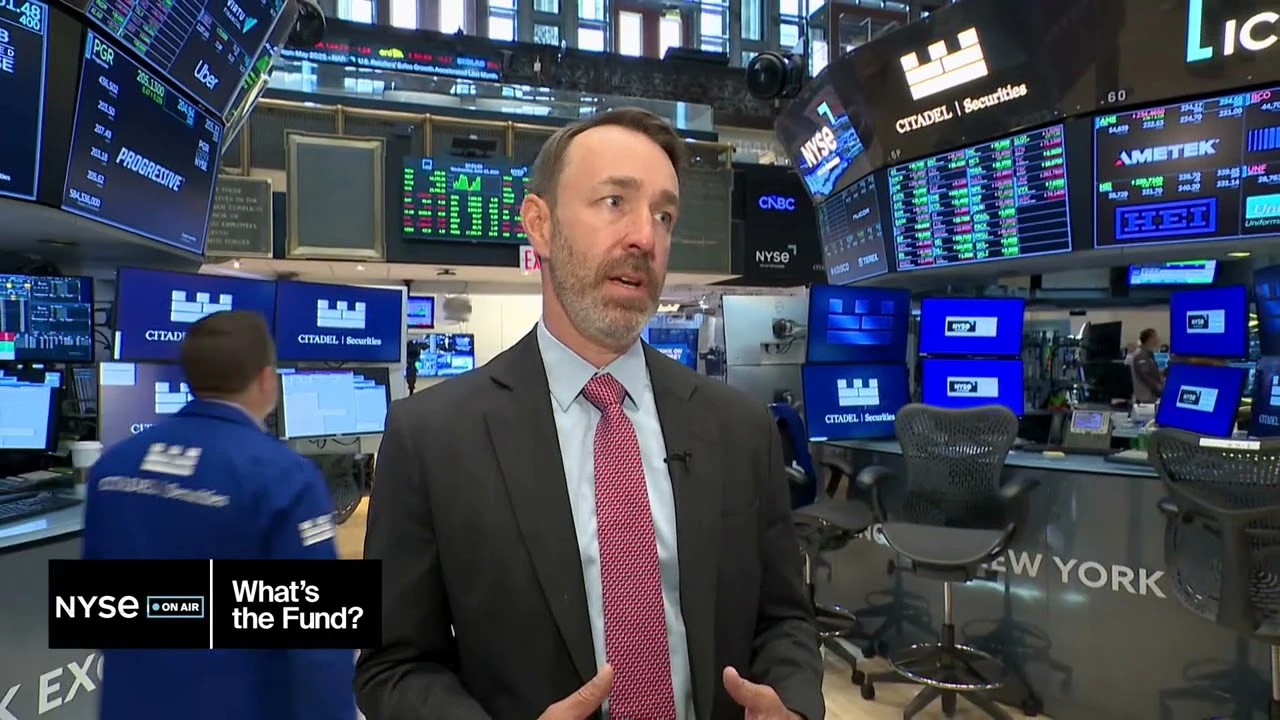
What’sTheFund
What's the Fund | Ocean Park Diversified Income ETF (DUKZ)
James St Aubin, Chief Investment Officer at Ocean Park Asset Management, discuss the DUKZ ETF, exposing investors to the whole spectrum of asset classes in the fixed income markets, through their rules-based process.

Browse all educational columns



Expert-Built ETF Portfolios, All in One Place
Don’t start from scratch. Discover ready-made ETF portfolios built by professionals to match different goals, timelines, and market views. Use them as inspiration or as a starting point for your own allocation.