Create, analyze, optimize your ETF portfolio. Start now →



Top 3 growth ETFs of 2022
Growth stocks have taken a beating recently, but these funds could offer a good way to bet on a revival.


Keep up with what matters in ETFs
Get timely ETF insights, market trends, and top ideas straight to your inbox.
Your newsletter subscriptions with us are subject to ETF Central's Privacy Policy and Terms and Conditions.
The U.S. stock market strongly outperformed over the last decade thanks to its high concentration of growth stocks.These are stocks expected by the market to increase their revenues and earnings faster on average compared to sector peers.
Often, growth stocks tend to outperform when interest rates are low, and the cost of capital is cheap. This allows them to make aggressive investments in research & development and sales & marketing, often taking on significant debts and costs in an attempt to scale up operations.
Growth stocks can often be characterized by high price-to-earnings, price-to-book, and price-to-sales ratios, high return on equity, and often pay little to no dividends as they prefer to reinvest spare cash. Over the last decade, growth stocks have largely come from the U.S. tech sector.
Historically, growth stocks have outperformed and underperformed the broader market on a cyclical basis, with greater volatility in the form of higher highs and lower lows:
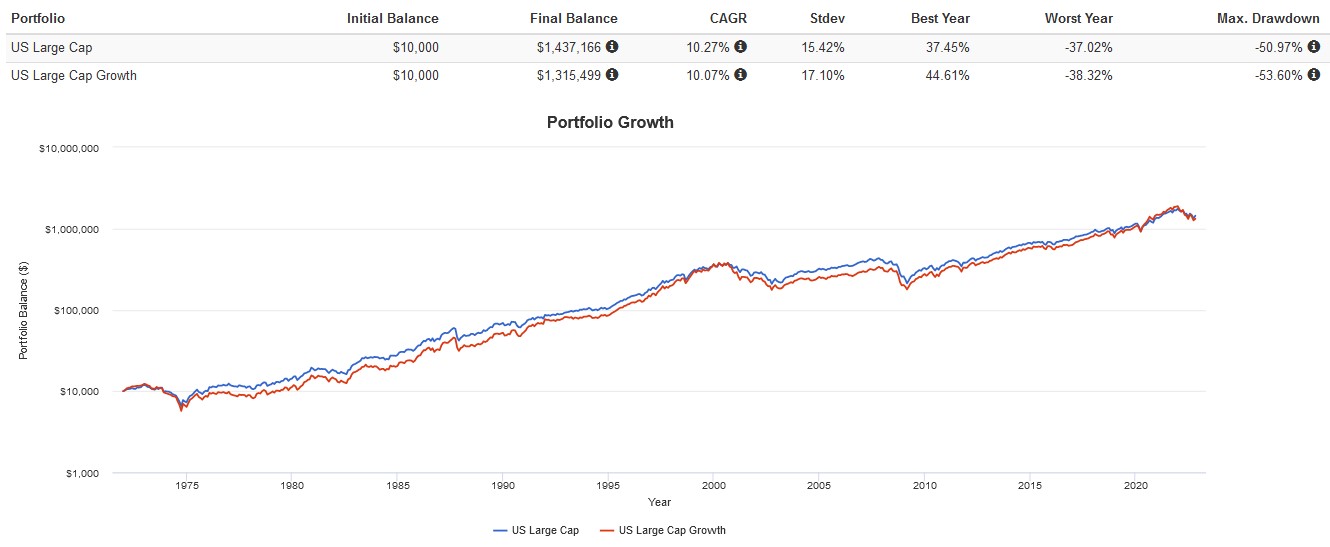

Investors interested in overweighting growth stocks, called a growth "tilt" can do so via various passive and actively managed growth ETFs. Keep in mind that a growth tilt can underperform for extended periods of time and incur high tracking error relative to a benchmark. Investors who overweight growth must be able to tolerate higher-than-average volatility.
Like what you're reading?
Stay in the loop — get the latest ETF insights: trends, analysis, and expert picks.
Vanguard Growth ETF (VUG)
VUG is passively managed and tracks the CRSP US Large Cap Growth Index, which holds a total of 249 securities. A good way to think about VUG is as the "growth" half of the U.S. large-cap market segment. With an average earnings growth rate of 26.9% and return on equity of 32.9%, VUG provides decent exposure to growth stocks. Because it has a 30-day SEC yield of 0.69%, the ETF can be a decent tax-efficient holding in a taxable brokerage account. As expected, 46% of the VUG is concentrated in the technology sector, with consumer discretionary coming in second. Both sectors are highly sensitive to macroeconomic variables and have suffered strongly in 2022 as interest rates and inflation rose. Like many Vanguard products, VUG costs a low expense ratio of just 0.04%.
Invesco NASDAQ 100 ETF (QQQM)
QQQM is Invesco's cheaper counterpart to its popular Invesco QQQ ETF (QQQ). Both ETFs track the NASDAQ 100 index, which holds 101 non-financial companies listed on the NASDAQ exchange. The main difference is that QQQM is slightly cheaper with an expense ratio of 0.15% vs. 0.20%. The NASDAQ 100 is known for being heavy in tech stocks and growth stocks. While it has outperformed over the last decade, the index suffered three consecutive years of 30% or higher losses between 2000 – 2002, drew down by over 40% in 2008, and is down -29% year-to-date in 2022. During the period between 2009 and 2021 however, the NASDAQ 100 returned an annualized 23.22%, aided by falling interest rates and a booming economy.
iShares Russell 1000 Growth ETF (IWF)
Both VUG and QQQM are composed entirely of large and mega-cap stocks. Investors who also wish to include some mid and small-cap growth stocks can buy IWF, which tracks the Russell 1000 Growth Index. This index holds a total of 515 equities, 13% of which are mid-caps and 1.24% small-caps. While this approach might appear to be more diversified, the small proportion of mid and small caps is unlikely to change the risk/return profile of IWF much. Much of the ETF is still dominated by large-cap technology stocks, which comprise 43.63% of the ETF. In terms of fees, IWF is more expensive than QQQM and VUG with an expense ratio of 0.18%.
Please note this article is for information purposes only and does not constitute investment advice.
Mentioned ETFs
Further reading

Latest ETF News
See all ETF newsWhat is a Boomer Candy ETF?

ETF Comparison: NEOS Nasdaq-100 High Income ETF (QQQI) Versus Goldman Sachs Nasdaq-100 Premium Income ETF (GPIQ)
Which Real Estate ETFs Pay the Highest Yields?





 Advantages of ETFs over Mutual Funds1/6
Lower Costs
In this guide, we'll explore the advantages of ETFs over mutual funds, giving you valuable insights into why ETFs have gained significant popularity among investors like yourself.
Leveraged ETFs: Unlocking the Potential for Amplified Returns1/6
Understanding Leveraged ETFs
Explore leveraged ETFs: potential for amplified returns & risks. 5 ETFs to consider across equities, commodities & fixed income.
What is a Leveraged ETF?1/6
Introducing Leveraged and Inverse ETFs
In this guide, we'll dive into the world of leveraged ETFs, exploring their definition, mechanics, potential risks, and rewards.
Recent educational content

ETF Trends
ETF Industry KPIs September 8, 2026
This week’s KPI data overview highlights key metrics and trends shaping the ETF landscape.

ETF Trends
ETF Industry KPIs August 31, 2026
This week’s KPI data overview highlights key metrics and trends shaping the ETF landscape.
ETF Trends
ETF Industry KPIs August 24, 2026
This week’s KPI data overview highlights key metrics and trends shaping the ETF landscape.
What’sTheFund
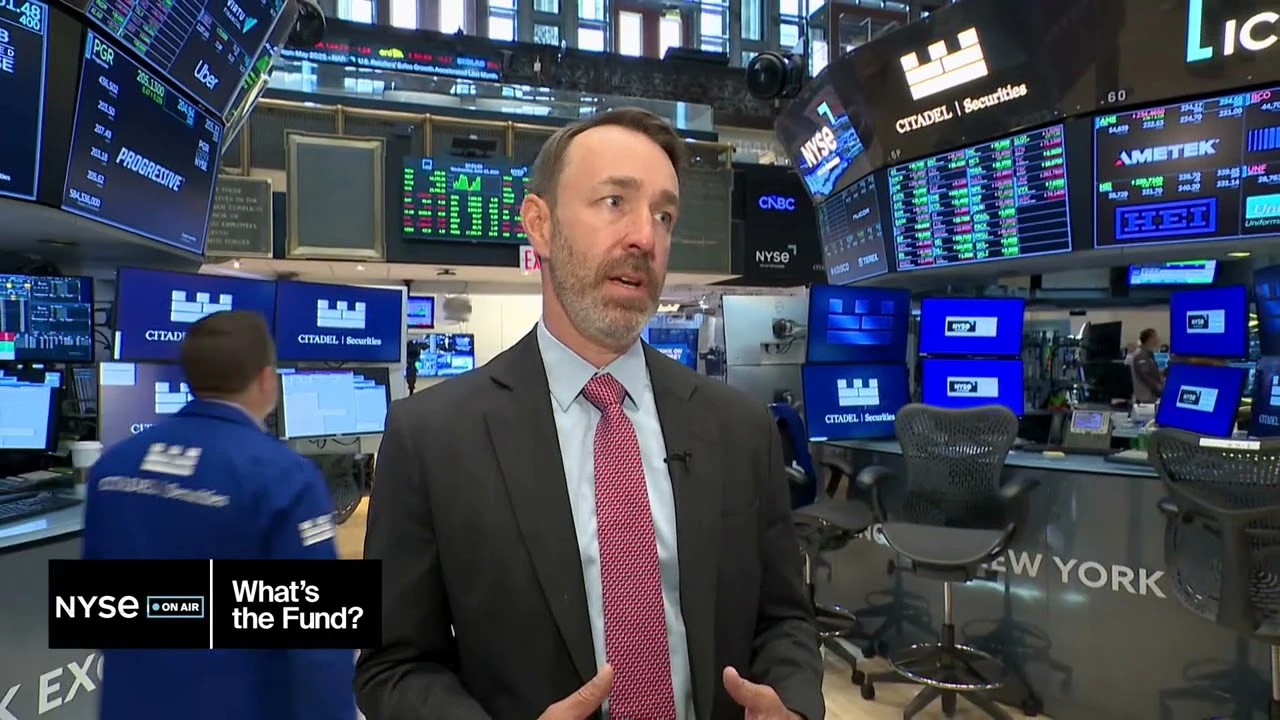
What's the Fund | Ocean Park Diversified Income ETF (DUKZ)
James St Aubin, Chief Investment Officer at Ocean Park Asset Management, discuss the DUKZ ETF, exposing investors to the whole spectrum of asset classes in the fixed income markets, through their rules-based process.

Browse all educational columns



Build and Analyze Your ETF Portfolio Like a Pro
Create your own ETF portfolio in minutes and instantly see allocations, exposures, performance, and risk. Visualize diversification across asset classes, regions, and sectors. Stress-test ideas, compare benchmarks, and refine your strategy with professional-grade analytics.