Create, analyze, optimize your ETF portfolio. Start now →



Three Things You Need to Know Before Investing in an Active ETF
Actively managed ETFs are cheaper and more popular than ever. Here are some key terms to understand before buying one.


Keep up with what matters in ETFs
Get timely ETF insights, market trends, and top ideas straight to your inbox.
Your newsletter subscriptions with us are subject to ETF Central's Privacy Policy and Terms and Conditions.
Actively managed ETFs are experiencing rapid growth. As of September 3rd, the ETF Central screener lists 1,495 active ETFs and 51 active semi-transparent ones, reflecting a surge in investor interest. Additionally, these funds are becoming increasingly cost-effective, with fees dropping as low as 0.08% to compete with traditional index ETFs.
Unlike the opaque, black-box mutual funds of previous generations, today’s active ETFs benefit from enhanced transparency and investor-friendly regulations, making them more accessible and understandable than ever.
However, for investors more accustomed to passive funds, active ETFs present some unique characteristics that are essential to understand before diving in. This isn’t a reason to avoid them but rather an opportunity to get educated. Here’s what you need to know.
Get data on 14,000+ ETFs
Access Trackinsight's reliable and comprehensive data with 500M+ points on 14,000+ ETFs.
Active share
When considering an actively managed ETF, it’s essential to determine if it’s truly providing a different exposure compared to a benchmark index. After all, if you’re paying for active management, you want to ensure you’re getting your money’s worth. This is where the metric called “active share” comes into play.
Active share quantifies how much an ETF’s holdings differ from its benchmark index. Not all active ETFs disclose this metric, but the better ones often do.
For example, the Principal U.S. Mega-Cap ETF
So, what does this mean for investors? The rule of thumb is simple: the higher the active share, the more the portfolio deviates from the benchmark. If you want true active management, higher is better.
For instance, an active share of 55.68% indicates that over half of the ETF’s holdings differ from the benchmark, which suggests a meaningful deviation. In contrast, an active share of 25% would imply that the ETF is much closer to the index, while 75% would indicate a significant difference.
There isn’t a hard and fast rule, but generally, an active share above 50% is desirable for those seeking true active management.
On the topic of affordability, USMC also exemplifies the trend of active ETFs becoming more cost-effective, with a 0.12% net expense ratio. This is lower than a passively managed index ETF equivalent in the mega-cap blend category, such as the Invesco S&P 500 Top 50 ETF
Turnover rate
All ETFs experience turnover, but active ETFs typically see higher turnover rates than their passive counterparts. Now, turnover itself isn’t inherently good or bad for ETFs—it’s just something to be aware of and monitor over time.
To assess turnover, many ETFs will disclose this metric, but you can also find it on third-party financial sites. For instance, a 25% turnover rate means that a quarter of the ETF’s holdings were replaced over the year. A 100% turnover rate implies the entire portfolio was traded within a year. For comparison, a passive ETF like the SPDR S&P 500 ETF
Historically, for mutual funds, high turnover was often a drawback because it typically led to more frequent capital gains distributions, which could negatively impact investors’ tax situations. However, ETFs have a unique in-kind creation/redemption mechanism that mitigates this.
Regardless, the key takeaway is that an active ETF’s turnover rate can give you insight into whether the fund’s strategy aligns with your investment preferences.
For example, value-focused ETFs like the Alpha Architect U.S. Quantitative Value ETF
On the other hand, consider the curious case of the Voya Corporate Leaders® Trust Fund Series B, which isn’t an ETF but a unit investment trust (UIT). This fund outperformed the S&P 500 for much of its life despite virtually zero turnover—changes occurred only due to corporate actions like spinoffs, bankruptcies, or mergers.
So, which is better? It’s hard to say definitively, but the important point is to ensure you’re comfortable with the turnover level of any active ETF you’re considering.
Benchmark selection
The core goal of an active ETF is to outperform a passively managed index benchmark that offers equivalent exposure. Essentially, if you opt out of active management and choose a passive index ETF, instead, that benchmark is what your active ETF should ideally beat.
Fund managers have some flexibility in selecting benchmarks. Non-exhaustive factors to consider include the market segment the ETF targets, the specific investment strategy, and the benchmark’s construction methodology.
For example, a fund focused on U.S. large-cap stocks might select the S&P 500 as a benchmark, but if it has a growth tilt, it might instead opt for the Russell 1000 Growth Index. But as an investor, it’s crucial to conduct your own research and test active ETFs against your different benchmarks.
Let’s say you’re considering an active small-cap ETF that has historically outperformed its benchmark, the Russell 2000 index. This might seem promising, but it’s essential to dig deeper.
For example, you might use the S&P SmallCap 600 Index instead of the Russell 2000. The S&P SmallCap 600 has outperformed the Russell 2000 historically, partly because of its additional profitability screeners and the absence of a predictable annual reconstitution that can be easily front-run by other investors.
If you run this backtest and find that the active small-cap ETF underperforms the S&P SmallCap 600, this could indicate that you would have been better off not paying the extra fees for active management and simply investing in an S&P SmallCap 600 Index fund, which typically has a much lower expense ratio.
The takeaway here is that benchmark selection matters. Trust the fund’s literature, but always verify independently. Don’t just accept the chosen benchmark at face value.
Please note this article is for information purposes only and does not in any way constitute investment advice. It is essential that you seek advice from a registered financial professional prior to making any investment decision.
Latest ETF News
See all ETF newsCould Water ETFs Be the Next AI Bottleneck Trade?

What is a Boomer Candy ETF?

ETF Comparison: NEOS Nasdaq-100 High Income ETF (QQQI) Versus Goldman Sachs Nasdaq-100 Premium Income ETF (GPIQ)





 Advantages of ETFs over Mutual Funds1/6
Lower Costs
In this guide, we'll explore the advantages of ETFs over mutual funds, giving you valuable insights into why ETFs have gained significant popularity among investors like yourself.
Leveraged ETFs: Unlocking the Potential for Amplified Returns1/6
Understanding Leveraged ETFs
Explore leveraged ETFs: potential for amplified returns & risks. 5 ETFs to consider across equities, commodities & fixed income.
What is a Leveraged ETF?1/6
Introducing Leveraged and Inverse ETFs
In this guide, we'll dive into the world of leveraged ETFs, exploring their definition, mechanics, potential risks, and rewards.
Recent educational content

ETF Trends
ETF Industry KPIs September 8, 2026
This week’s KPI data overview highlights key metrics and trends shaping the ETF landscape.

ETF Trends
ETF Industry KPIs August 31, 2026
This week’s KPI data overview highlights key metrics and trends shaping the ETF landscape.
ETF Trends
ETF Industry KPIs August 24, 2026
This week’s KPI data overview highlights key metrics and trends shaping the ETF landscape.
What’sTheFund
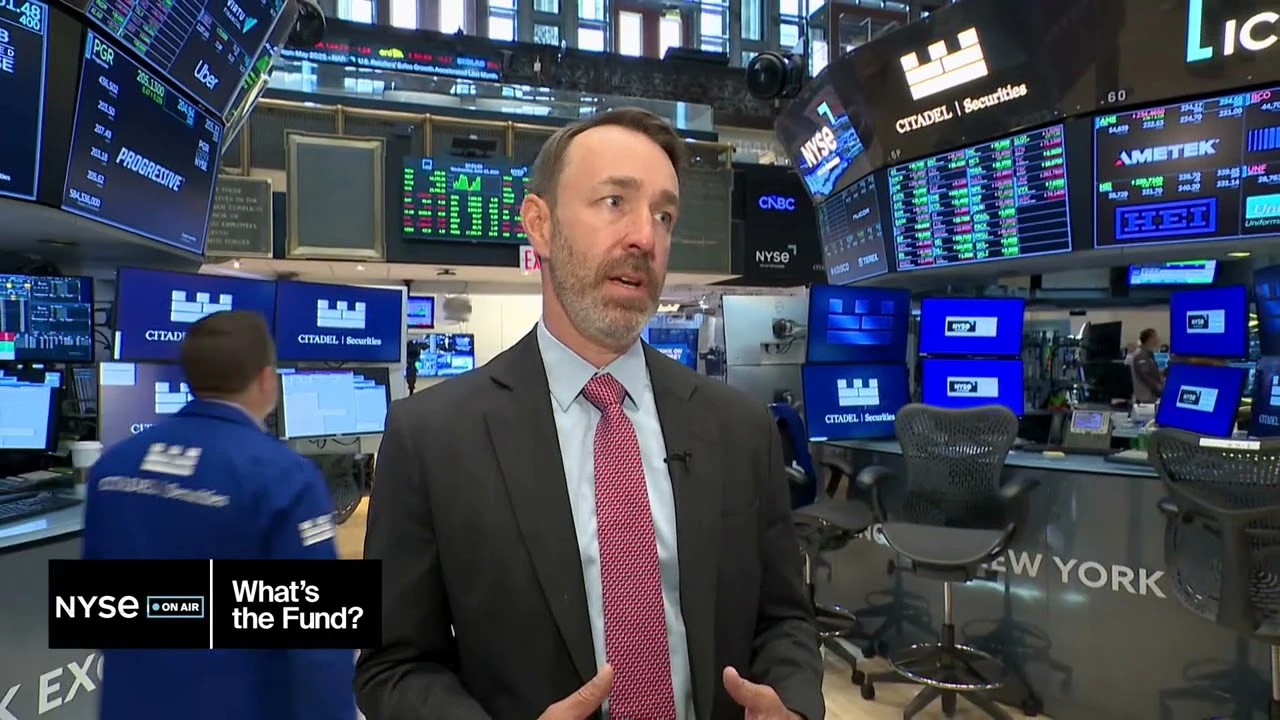
What's the Fund | Ocean Park Diversified Income ETF (DUKZ)
James St Aubin, Chief Investment Officer at Ocean Park Asset Management, discuss the DUKZ ETF, exposing investors to the whole spectrum of asset classes in the fixed income markets, through their rules-based process.

Browse all educational columns



Expert-Built ETF Portfolios, All in One Place
Don’t start from scratch. Discover ready-made ETF portfolios built by professionals to match different goals, timelines, and market views. Use them as inspiration or as a starting point for your own allocation.