Turn ETF ideas into real portfolios. Try the builder now →



Regional Bank ETFs Slide Again as Moody's Downgrades Credit Ratings
The development marks another bearish turn for regional bank prospects after numerous collapses earlier this year.


Keep up with what matters in ETFs
Get timely ETF insights, market trends, and top ideas straight to your inbox.
Your newsletter subscriptions with us are subject to ETF Central's Privacy Policy and Terms and Conditions.
In yet another significant blow to the banking sector, Moody's ratings agency announced a downgrade of credit ratings for 10 regional and mid-tier banks on Monday, August 7th. Additionally, six major financial institutions now face a gloomy outlook with Moody's negative perspective.
Driving these decisions are heightened funding costs, dwindling loan growth, and profitability strains evident in banks' Q2 earnings reports, further exacerbated by the Federal Reserve's streak of 11 consecutive rate hikes that have taken interest rates to 22-year highs.
These developments are distressing for the banking sector, particularly after the unforeseen closures of Silvergate Bank, Silicon Valley Bank, and First Republic Bank throughout March and April 2023. To add to the woes, Fitch Ratings recently revised the U.S. Long-Term Foreign-Currency Issuer Default Rating (IDR) from 'AAA' to 'AA+' on August 1st, 2023.
For ETF investors navigating this evolving landscape, understanding the implications of these downgrades is crucial. Here's a comprehensive summary of Moody's recent actions and some insights into how regional bank ETFs have been impacted.
Get data on 14,000+ ETFs
Access Trackinsight's reliable and comprehensive data with 500M+ points on 14,000+ ETFs.
Six Key Takeaways from the Moody's bank downgrade
As the U.S. banking landscape undergoes significant shifts, it's imperative for ETF investors to stay ahead of the curve. To aid in your understanding, I've distilled the recent Moody's bank downgrade into six pivotal points to know:
- Ratings Adjustments: Moody's has reduced the ratings of 10 banks, including notable names like Bank of New York Mellon, U.S. Bancorp, and State Street. They also shifted their outlook to negative for 11 banks, with Fifth Third Bancorp, Capital One, and Citizens Financial among them. Pinnacle Financial, M&T Bank, and a few other smaller institutions also received downgrades.
- Bank Performance Concerns: Analysts at Moody's identified increasing profitability pressures in many banks' Q2 results, which they believe will hamper the banks' capability to produce internal capital.
- Economic Climate Predictions: Moody's anticipates a mild U.S. recession around early 2024, coupled with declining asset quality from previously stable levels.
- Commercial Real Estate Vulnerabilities: Moody's also notes a heightened risk associated with certain banks' commercial real estate portfolios.
- Monetary Policy and Interest Rate Challenges: Moody's believes that as unconventional monetary policies wrap up, system-wide deposits are expected to decrease. Rising interest rates are likely to reduce the value of fixed-rate assets.
- Unrealized Losses Threat: Moody's warned that banks holding significant unrealized losses, which aren't captured in capital ratios, might face confidence issues in the current high-interest-rate environment.
Regional bank ETFs again in the crosshairs
The repercussions of Moody's recent banking downgrades aren't limited to individual financial institutions. Regional bank ETFs, which bundle the fortunes of several banks into a single investable asset, are particularly vulnerable to such broad sector shifts.
By market close on Tuesday August 8th, the SPDR S&P Regional Banking ETF (KRE), the iShares U.S. Regional Banks ETF (IAT), and the Invesco KBW Regional Banking ETF (KBWR) were down around -1.28%%, -1.15%, and -1.64% respectively.
The recent Moody's banking downgrades, along with the bank failures of Spring 2023 have shed light on the inherent vulnerability of regional bank ETFs to sector-specific risks that are becoming more pronounced, especially when concentration in a few holdings is present.
Bank ETFs often include many of the same names that have seen ratings reductions or altered outlooks, and thus, any turbulence in these banks' fortunes can ripple through to the ETFs that hold them, causing unanticipated losses for investors seeking a rebound from the prior months.
For example, US Bancorp, one of the downgraded banks accounts for 13.52% of IAT alone by weight as of August 7th, 2023. Negative outlook banks like Fifth Third Bancorp and Citizen's Financial Group Inc. account for 4.32% and 3.73% of IAT respectively
Therefore, the downgrade of US Bancorp is particularly concerning for holders of IAT, given its substantial presence in the ETF. Likewise, banks with a negative outlook such as Fifth Third Bancorp and Citizen's Financial Group Inc. also add layers of risk, albeit with a lesser weightage.
The most heavily affected ETF was the Direxion Daily Regional Banks Bull 3X Shares (DPST), which offers three times daily leveraged exposure to the return of the S&P Regional Banks Select Industry Index. This ETF fell by -3.70% on Tuesday August 8th by market close.
Leveraged sector-specific ETFs therefore present a whole new level of exposure. The sharp intra-day fall in DPST underscores the elevated risks associated with leveraged investment strategies during sector-wide disturbances.
Please note this article is for information purposes only and does not in any way constitute investment advice. It is essential that you seek advice from a registered financial professional prior to making any investment decision.
Latest ETF News
See all ETF newsMoneyShow Chart of the Day 9/4/26: Don't Just Watch Oil. Watch THESE.


Chart of the Day 8/14/26: The Great "Hot Money" Migration

MoneyShow Chart of the Day 7/29/26: Now, THAT's What I Call Market Rotation!

MoneyShow Chart of the Day 7/16/26: Good News/Bad News on Inflation (and the Fed)




 Advantages of ETFs over Mutual Funds1/6
Lower Costs
In this guide, we'll explore the advantages of ETFs over mutual funds, giving you valuable insights into why ETFs have gained significant popularity among investors like yourself.
Leveraged ETFs: Unlocking the Potential for Amplified Returns1/6
Understanding Leveraged ETFs
Explore leveraged ETFs: potential for amplified returns & risks. 5 ETFs to consider across equities, commodities & fixed income.
What is a Leveraged ETF?1/6
Introducing Leveraged and Inverse ETFs
In this guide, we'll dive into the world of leveraged ETFs, exploring their definition, mechanics, potential risks, and rewards.
Recent educational content

ETF Trends
ETF Industry KPIs September 8, 2026
This week’s KPI data overview highlights key metrics and trends shaping the ETF landscape.

ETF Trends
ETF Industry KPIs August 31, 2026
This week’s KPI data overview highlights key metrics and trends shaping the ETF landscape.
ETF Trends
ETF Industry KPIs August 24, 2026
This week’s KPI data overview highlights key metrics and trends shaping the ETF landscape.
What’sTheFund
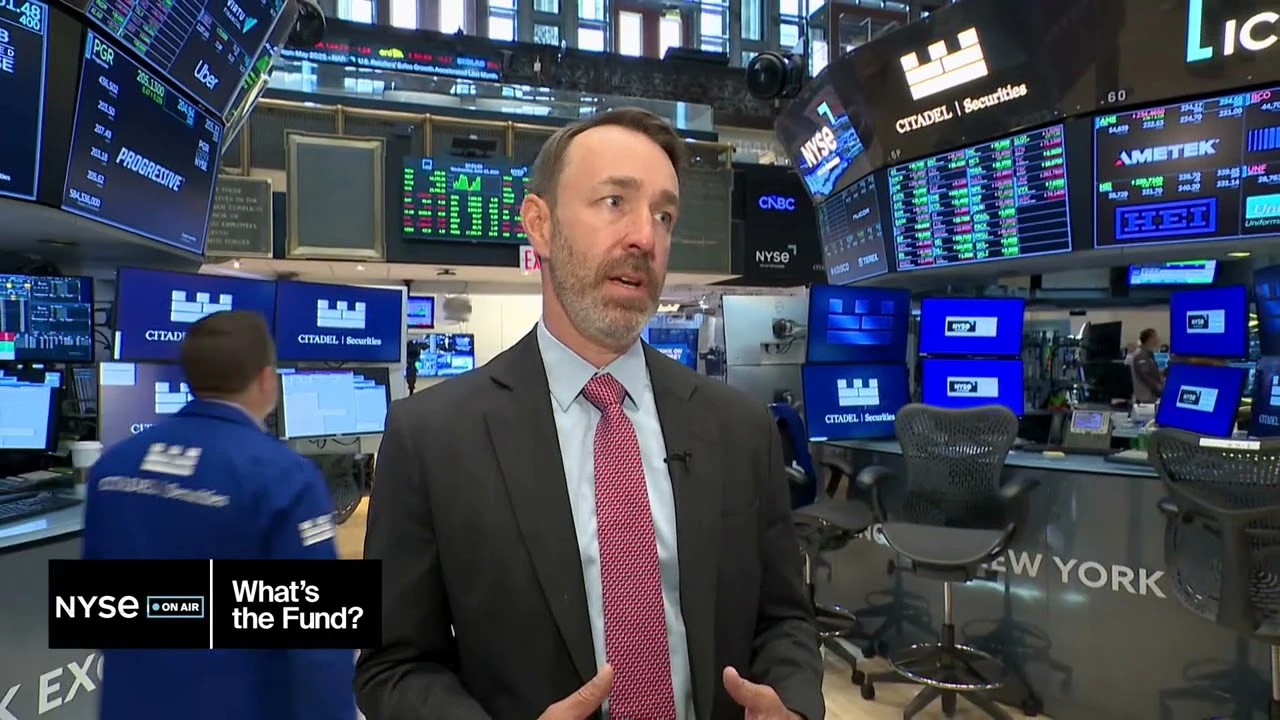
What's the Fund | Ocean Park Diversified Income ETF (DUKZ)
James St Aubin, Chief Investment Officer at Ocean Park Asset Management, discuss the DUKZ ETF, exposing investors to the whole spectrum of asset classes in the fixed income markets, through their rules-based process.

Browse all educational columns



Build and Analyze Your ETF Portfolio Like a Pro
Create your own ETF portfolio in minutes and instantly see allocations, exposures, performance, and risk. Visualize diversification across asset classes, regions, and sectors. Stress-test ideas, compare benchmarks, and refine your strategy with professional-grade analytics.