Create, analyze, optimize your ETF portfolio. Start now →



Treasury ETFs Tumble After Fitch Downgrades Ratings for U.S. Government Debt
Here's what ETF investors need to know following the unprecedented move from Fitch to downgrade ratings for U.S. government debt.


Keep up with what matters in ETFs
Get timely ETF insights, market trends, and top ideas straight to your inbox.
Your newsletter subscriptions with us are subject to ETF Central's Privacy Policy and Terms and Conditions.
On Tuesday, August 1st, Fitch Ratings delivered another setback to the beleaguered U.S. Treasury market. In an announcement from their London office, Fitch downgraded the U.S. Long-Term Foreign-Currency Issuer Default Rating (IDR) to 'AA+' from 'AAA'.
This announcement comes as a significant development, especially in the wake of a year marked by substantial losses in the U.S. Treasury market as interest rates rose rapidly throughout 2022. The decision by Fitch is expected to have far-reaching implications not only for government bonds but also for various financial markets and instruments.
Today's analysis will delve into the details of the downgrade, illuminating the broad underlying reasons and the potential impacts on the market. It will also highlight some affected Exchange Traded Funds (ETFs) on both the bull and bear sides of potential trades that may arise from this new landscape.
Furthermore, this article will provide insights and options for investors seeking diversification to international government bonds, a strategy that could mitigate risks and potentially offer new opportunities in this uncertain economic environment.
Like what you're reading?
Stay in the loop — get the latest ETF insights: trends, analysis, and expert picks.
Summary of the Fitch Ratings Downgrade
The decision by Fitch to downgrade the United States' credit rating is multi-faceted and has several key components, reflecting a combination of economic, fiscal, and governance factors.
The expected fiscal deterioration by Fitch over the next three years reflects a high and growing government debt burden. They also highlight that repeated political standoffs over the debt limit have eroded market confidence in the government's fiscal management.
Fitch also believes that the erosion of governance standards in the last two decades has also played a role, particularly with regard to fiscal and debt matters. Repeated political standoffs and a complex budgeting process have contributed to successive debt increases, and there has been limited progress in tackling long-term challenges such as social security and Medicare costs due to an aging population.
In addition, Fitch expects the general government deficit to rise, reflecting weaker federal revenues, new spending initiatives, and higher interest burdens. Despite cuts to non-defense discretionary spending, Fitch thinks the near-term impact of these savings will only offer a modest improvement to the fiscal outlook. Fitch also expects the debt-to-GDP ratio, although reduced from pandemic highs, to rise further, significantly exceeding the median levels for both 'AA' and 'AAA' rated countries.
Fitch also highlights some unaddressed medium-term fiscal challenges, such as higher interest rates that will increase the interest service burden, an aging population and rising healthcare costs that will further strain finances, and political pressure to make tax cuts permanent which could result in higher deficits.
Finally, Fitch also forecasts a mild recession by the end of 2023 and slowing GDP growth. The ratings agency also expects that the Federal Reserve's ongoing interest rate hikes and reductions in holdings of mortgage-backed securities and U.S. Treasuries will further tighten financial conditions.
In summary, the recent downgrade reflects Fitch's concerns about the U.S. government's poor handling of its finances, particularly regarding debt, spending, and political decision-making. Fitch clearly forecasts challenges ahead, which could have wide-ranging implications for both the American economy and the global financial system.
Leveraged and Inverse Treasury ETFs: Betting on Both Sides
In the face of the recent downgrade for the U.S. Treasury market, leveraged and inverse Treasury ETFs can provide investors with tools to bet on both the bull and bear cases.
Two such ETFs that might be of interest are the Direxion Daily 20+ Year Treasury Bull 3X Shares (TMF) and the Direxion Daily 20+ Year Treasury Bear 3X Shares (TMV).
For investors who believe that Treasury bonds will rally, TMF offers a leveraged bet, tripling the daily performance of its underlying index. This can provide outsized returns if Treasurys rise in value, but it also carries higher risks if the market moves in the opposite direction.
Conversely, for those who expect Treasury bonds to decline in value, TMV offers a way to profit from that view. TMV aims to deliver three times the inverse of the daily performance of its underlying index, essentially allowing investors to bet against long-term Treasury bonds.
Covered Call Treasury ETFs: Getting Paid While Waiting
For investors uncertain about the direction of the Treasury market and anticipating potential volatility without a clear trend, a different approach might be using covered call Treasury ETFs.
A suitable example here is the iShares 20+ Year Treasury Bond BuyWrite Strategy ETF (TLTW). TLTW uses a covered call strategy, which involves holding the iShares 20+ Year Treasury Bond ETF (TLT) and selling call options on it.
This can generate additional income for investors through the premiums collected from selling the options. If the market moves sideways and the options expire worthless, the investor effectively "gets paid while they wait."
This strategy benefits from higher volatility and provides a source of steady income, even if the underlying bonds don't appreciate in value. However, it also limits the upside potential if Treasury bonds rally strongly, as the gains would be capped by the sold call options.
Diversifying to International Government Bonds
As U.S. Treasury bonds face challenges, diversification into international government bonds can offer potential advantages and expose investors to a different set of market dynamics.
Different countries enact various monetary policies leading to distinct interest rate cycles. While the U.S. may be in a tightening phase with rising interest rates, other countries might be lowering interest rates or keeping them stable. This variation allows for opportunities in foreign bond markets that move independently from U.S. interest rates, which can potentially offer better returns or lower volatility.
Credit quality also varies globally. International bonds provide exposure to a spectrum of countries with different credit profiles, which can help investors manage risks or seek potential rewards. By carefully selecting bonds from countries with stable or improving credit ratings, investors can add a level of robustness to their portfolio.
Finally, investing in international government bonds inherently involves exposure to foreign currencies. These currency fluctuations can add an additional layer of risk to the investment. However, they also create opportunities for gains if the investor's home currency weakens, offering another way to potentially enhance returns.
When it comes to investing in developed markets, one vehicle to consider is the iShares International Treasury Bond ETF (IGOV). It offers broad exposure to a wide array of government bonds from developed countries at an affordable 0.35% expense ratio.
For investors willing to tap into the potential growth of emerging markets and accept the associated risks, the Vanguard Emerging Markets Government Bond ETF (VWOB) could be a suitable choice. Like many Vanguard ETFs, VWOB comes in at a reasonable expense ratio of 0.20%.
Please note this article is for information purposes only and does not in any way constitute investment advice. It is essential that you seek advice from a registered financial professional prior to making any investment decision.

Latest ETF News
See all ETF newsMoneyShow Chart of the Day 9/4/26: Don't Just Watch Oil. Watch THESE.


Chart of the Day 8/14/26: The Great "Hot Money" Migration

MoneyShow Chart of the Day 7/29/26: Now, THAT's What I Call Market Rotation!

MoneyShow Chart of the Day 7/16/26: Good News/Bad News on Inflation (and the Fed)




 Advantages of ETFs over Mutual Funds1/6
Lower Costs
In this guide, we'll explore the advantages of ETFs over mutual funds, giving you valuable insights into why ETFs have gained significant popularity among investors like yourself.
Leveraged ETFs: Unlocking the Potential for Amplified Returns1/6
Understanding Leveraged ETFs
Explore leveraged ETFs: potential for amplified returns & risks. 5 ETFs to consider across equities, commodities & fixed income.
What is a Leveraged ETF?1/6
Introducing Leveraged and Inverse ETFs
In this guide, we'll dive into the world of leveraged ETFs, exploring their definition, mechanics, potential risks, and rewards.
Recent educational content

ETF Trends
ETF Industry KPIs September 8, 2026
This week’s KPI data overview highlights key metrics and trends shaping the ETF landscape.

ETF Trends
ETF Industry KPIs August 31, 2026
This week’s KPI data overview highlights key metrics and trends shaping the ETF landscape.
ETF Trends
ETF Industry KPIs August 24, 2026
This week’s KPI data overview highlights key metrics and trends shaping the ETF landscape.
What’sTheFund
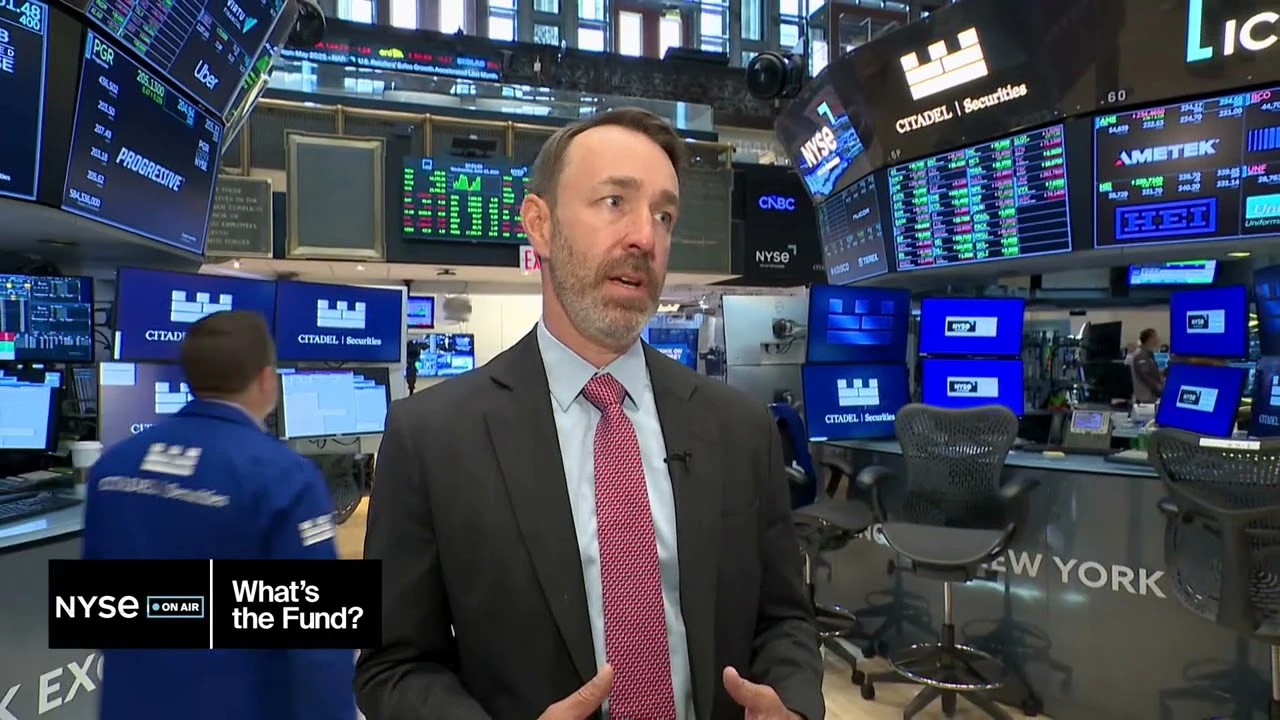
What's the Fund | Ocean Park Diversified Income ETF (DUKZ)
James St Aubin, Chief Investment Officer at Ocean Park Asset Management, discuss the DUKZ ETF, exposing investors to the whole spectrum of asset classes in the fixed income markets, through their rules-based process.

Browse all educational columns



Expert-Built ETF Portfolios, All in One Place
Don’t start from scratch. Discover ready-made ETF portfolios built by professionals to match different goals, timelines, and market views. Use them as inspiration or as a starting point for your own allocation.