From idea to ETF portfolio in minutes. Build yours now →



ProShares Launches 2x Leveraged and Short Spot Bitcoin ETFs
These ETFs are not for the faint of heart. Here's how they work and the possible risks.


Keep up with what matters in ETFs
Get timely ETF insights, market trends, and top ideas straight to your inbox.
Your newsletter subscriptions with us are subject to ETF Central's Privacy Policy and Terms and Conditions.
Following the landmark launch of 11 spot Bitcoin ETFs on January 11, 2024, the market for Bitcoin-related products has significantly expanded.
A particularly notable addition to this field came from ProShares, which introduced the ProShares Ultra Bitcoin ETF (
While leveraged Bitcoin futures ETFs, such as the VolatilityShares' 2x Bitcoin Strategy ETF (
This development marks an exciting and potentially risky addition to the array of Bitcoin investment vehicles. Here's an overview of how these innovative ETFs function and the potential risks involved.
Like what you're reading?
Stay in the loop — get the latest ETF insights: trends, analysis, and expert picks.
How BITU and SBIT ETFs work
This means if the Bloomberg Bitcoin Index rises by 1% on a given day, BITU is designed to produce a 2% gain, while SBIT would aim for a 2% loss. Conversely, if the index falls by 1%, BITU would seek to deliver a 2% loss, and SBIT a 2% gain.
This mechanism of inverse exposure in SBIT (and leveraged exposure in BITU) is primarily achieved through the use of financial instruments called swaps, with Nomura acting as the counterparty. The underlying asset for these swaps is the iShares Bitcoin Trust (
Swaps were likely chosen over other derivatives or cash margin due to their flexibility and efficiency in achieving the desired leveraged or inverse outcomes without the need for the ETF to hold large amounts of cash or physically own the asset.
However, investors should note the cost associated with these innovative strategies. Both BITU and SBIT carry an expense ratio of 0.95%, which aligns with ProShares' existing lineup of leveraged ETFs.
Risks of BITU & SBIT ETFs
As with any leveraged ETFs, it's crucial to understand that the target leverage of BITU and SBIT is designed to be accurate on a daily basis only.
This means that over periods longer than a day, returns and losses can compound in unpredictable ways, especially when combined with the high volatility inherent to Bitcoin and the leverage targets of these ETFs.
Bitcoin's volatility is notable, with an annualized standard deviation of 77.65% from 2014 to the present. This inherent volatility increases the risk of sharp losses in leveraged products.
For example, a 50% intra-day drop in Bitcoin's price could potentially lead to the liquidation of BITU, while a similar surge could have the same effect on SBIT.
However, it's worth noting that while Bitcoin experienced a maximum drawdown of -73.81% from January 2018 to January 2019, this decline occurred over several months.
The daily reset mechanism of a hypothetical leveraged Bitcoin ETF at the time would have theoretically prevented a total wipeout due to this gradual decline, but investors would likely have still faced significant losses, possibly necessitating a reverse split to adjust the share price.
Use cases for BITU and SBIT ETFs
I believe the most prudent use of BITU and SBIT lies in their application as day or swing trading tools. These ETFs provide a unique opportunity for traders to engage with Bitcoin's price movements through the liquidity and convenience of a traditional stock trading account.
Before the introduction of leveraged Bitcoin ETFs, those looking to make leveraged plays on Bitcoin typically had to navigate futures markets or use margin on cryptocurrency exchanges.
One of the significant advantages of using a leveraged Bitcoin ETF is the elimination of the risk of a margin call. Your maximum loss is capped at the total investment in the shares purchased, making it simpler to manage risk.
Finally, position sizing becomes straightforward as well—traders can simply buy the number of shares they are comfortable with, aligning with their risk tolerance and trading strategy.
Please note this article is for information purposes only and does not in any way constitute investment advice. It is essential that you seek advice from a registered financial professional prior to making any investment decision.


Latest ETF News
See all ETF newsMoneyShow Chart of the Day 9/4/26: Don't Just Watch Oil. Watch THESE.


Chart of the Day 8/14/26: The Great "Hot Money" Migration

MoneyShow Chart of the Day 7/29/26: Now, THAT's What I Call Market Rotation!

MoneyShow Chart of the Day 7/16/26: Good News/Bad News on Inflation (and the Fed)




 Advantages of ETFs over Mutual Funds1/6
Lower Costs
In this guide, we'll explore the advantages of ETFs over mutual funds, giving you valuable insights into why ETFs have gained significant popularity among investors like yourself.
Leveraged ETFs: Unlocking the Potential for Amplified Returns1/6
Understanding Leveraged ETFs
Explore leveraged ETFs: potential for amplified returns & risks. 5 ETFs to consider across equities, commodities & fixed income.
What is a Leveraged ETF?1/6
Introducing Leveraged and Inverse ETFs
In this guide, we'll dive into the world of leveraged ETFs, exploring their definition, mechanics, potential risks, and rewards.
Recent educational content

ETF Trends
ETF Industry KPIs September 8, 2026
This week’s KPI data overview highlights key metrics and trends shaping the ETF landscape.

ETF Trends
ETF Industry KPIs August 31, 2026
This week’s KPI data overview highlights key metrics and trends shaping the ETF landscape.
ETF Trends
ETF Industry KPIs August 24, 2026
This week’s KPI data overview highlights key metrics and trends shaping the ETF landscape.
What’sTheFund
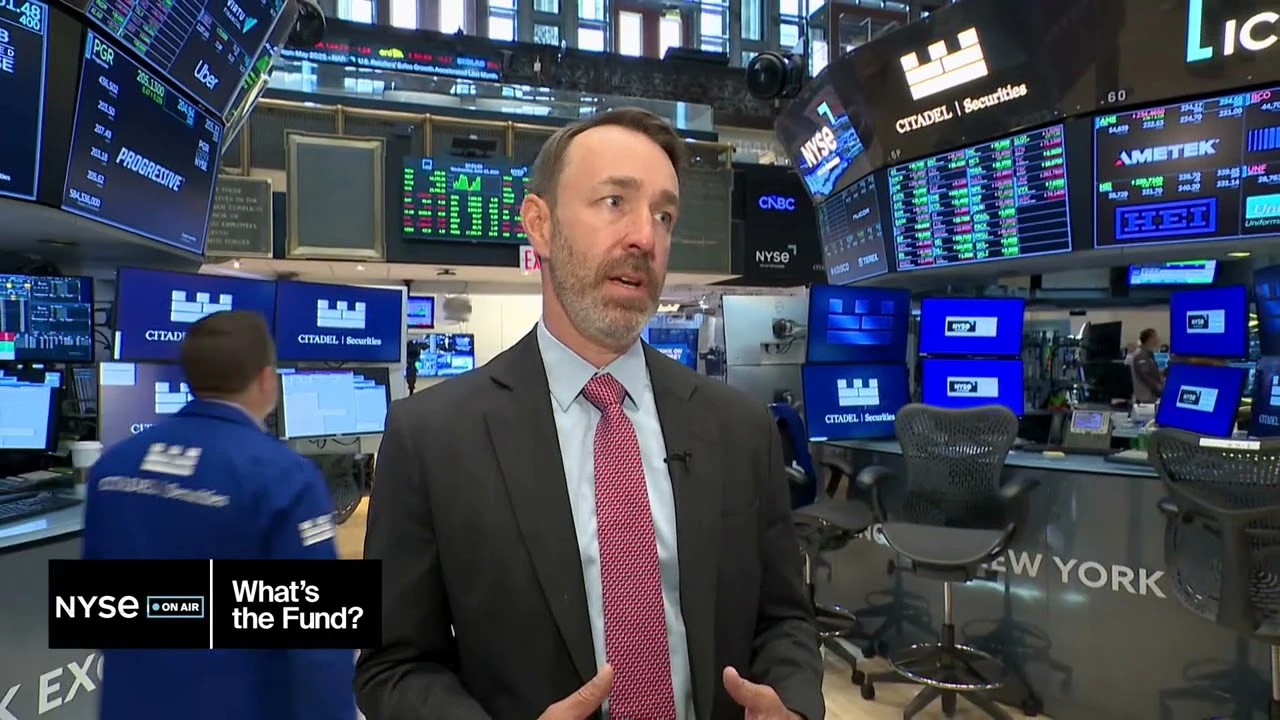
What's the Fund | Ocean Park Diversified Income ETF (DUKZ)
James St Aubin, Chief Investment Officer at Ocean Park Asset Management, discuss the DUKZ ETF, exposing investors to the whole spectrum of asset classes in the fixed income markets, through their rules-based process.

Browse all educational columns



Expert-Built ETF Portfolios, All in One Place
Don’t start from scratch. Discover ready-made ETF portfolios built by professionals to match different goals, timelines, and market views. Use them as inspiration or as a starting point for your own allocation.