Explore professionally built ETF model portfolios. Discover now →



PIMCO transfers actively managed BOND ETF to NYSE trading floor
BOND is now the first active ETF to be traded on the NYSE floor.


Keep up with what matters in ETFs
Get timely ETF insights, market trends, and top ideas straight to your inbox.
Your newsletter subscriptions with us are subject to ETF Central's Privacy Policy and Terms and Conditions.
PIMCO, a leader in active fixed-income strategies recently transferred the PIMCO Active Bond Exchange-Traded Fund (BOND) from the NYSE's electronic trading system, Arca, to the actual exchange trading floor. This is in contrast to all existing NYSE ETFs which trade on Arca.
Key to this change is the additional presence and support of a Designated Market Maker, or DMM on the trading floor. According to the NYSE, the role of a DMM is to maintain "fair and orderly markets" for assigned securities. Other obligations include:
- Facilitating price discovery throughout the trading day by matching incoming orders using algorithms or manually.
- Adding liquidity, smoothing out volatility, and providing price improvements.
Actively managed fixed-income ETFs like BOND have attracted stronger inflows in 2022 compared to prior years as investors sought relief from rising rates and inflation. While most investors still hold passive aggregate bond ETFs, some actively managed ETFs like BOND have historically outperformed. Let's break down BOND and see what makes it tick.
Like what you're reading?
Stay in the loop — get the latest ETF insights: trends, analysis, and expert picks.
Why go active for bonds?
According to PIMCO, the median active bond fund has outperformed its passive peers by around 48 basis points (0.48%) per year over a trailing 10-year period. This is in contrast to equities, where the majority of actively managed funds have underperformed their counterparts.
According to a whitepaper from Fidelity, skilled active fixed-income managers can trade around changes in interest rates, volatility, and the credit environment that passive fixed income funds must otherwise accept and bear the brunt of.
The theory is that active management works for bonds primarily because skilled managers can exploit inefficiencies in the highly complex and diverse fixed income market. Compared to equities, bonds trade over the counter, which can result in lower transparency, poorer liquidity, and wider spreads.
Because passive bond ETFs must seek to match the risk and returns of a benchmark index, they're constrained to pre-set, static criteria for fixed income sector exposures, issuers, credit quality, maturity, duration, seniority, and yield curve exposure.
In contrast, active bond ETFs can target each of the criteria mentioned above based on their own outlook, much like how "smart beta" equity funds overweight certain risk factors. This can help them outperform during periods of high market volatility or economic uncertainty.
PIMCO's BOND ETF
BOND focuses on holding higher-quality, intermediate-duration bonds. Unlike passive bond index ETFs like the popular iShares Core U.S. Aggregate Bond ETF, BOND is able to select fixed-income securities from outside of its benchmark, the Bloomberg U.S. Aggregate Index.
BOND's portfolio is highly diversified, holding a mixture of Treasurys, mortgage-backed securities, investment-grade corporate bonds, and smaller allocations to international developed and emerging market bonds, as well as high-yield bonds.
Overall, BOND has an effective duration of 6.12 years, making it intermediate in terms of interest rate sensitivity. Currently, the ETF has an estimated yield to maturity of 6.38 as of November 14th. Unlike aggregate bond ETFs, there is a lower government and AAA-rated debt allocation.
Since its inception, BOND has outperformed both its benchmark and AGG on a total return basis:
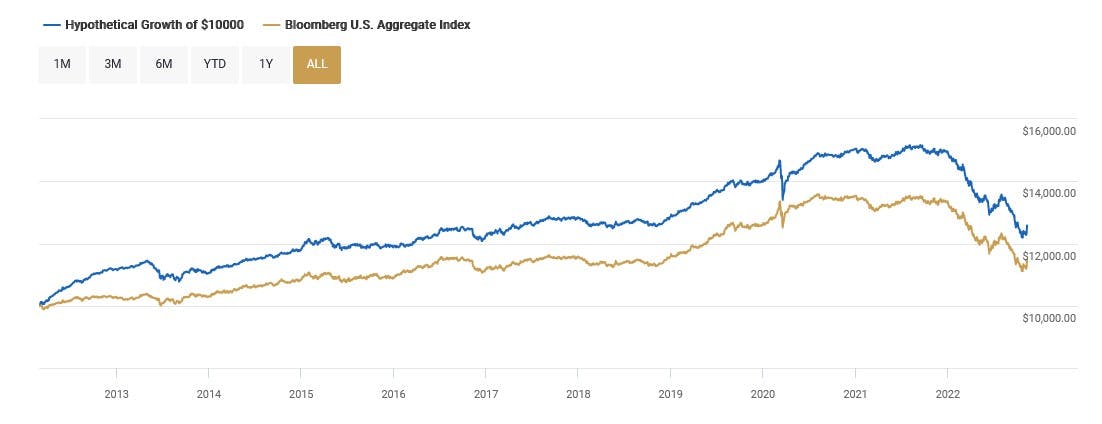
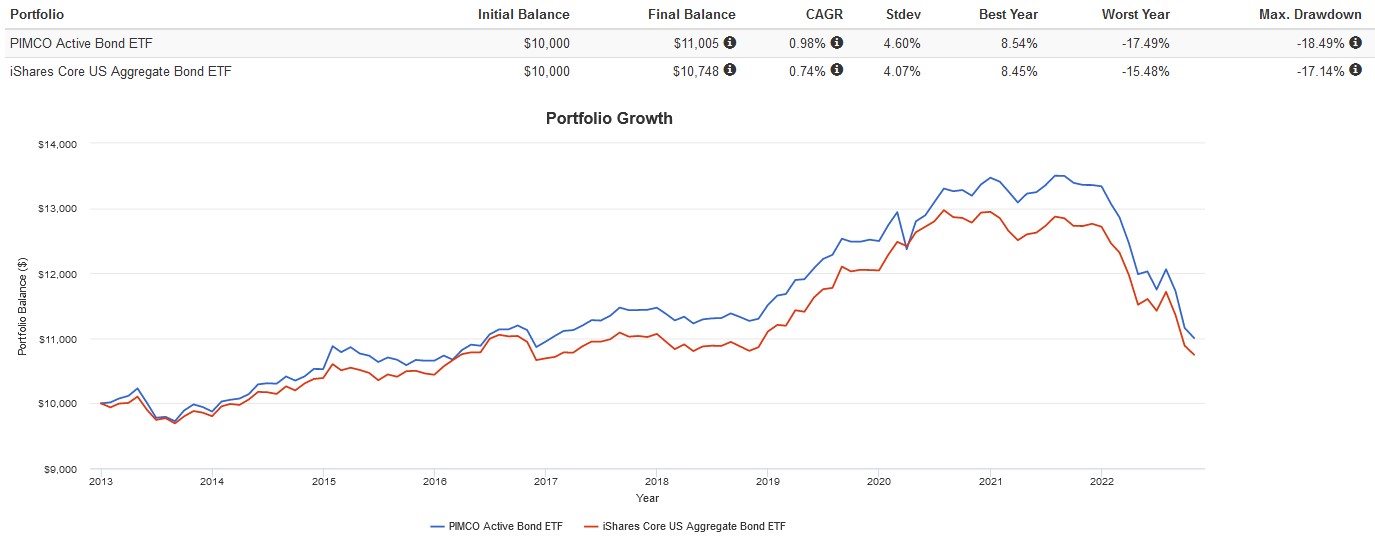
A notable exception was in 2022, where BOND sharply underperformed. Personally, I don't think rising rates were the culprit here, as AGG had a similar duration of 6.29 years but lost less.
I think AGG suffered lower drawdowns because it had a higher proportion of AAA-rated Treasurys and agency bonds, which were less affected by the turmoil in equity markets. In comparison BOND has a higher allocation of lower credit quality holdings.
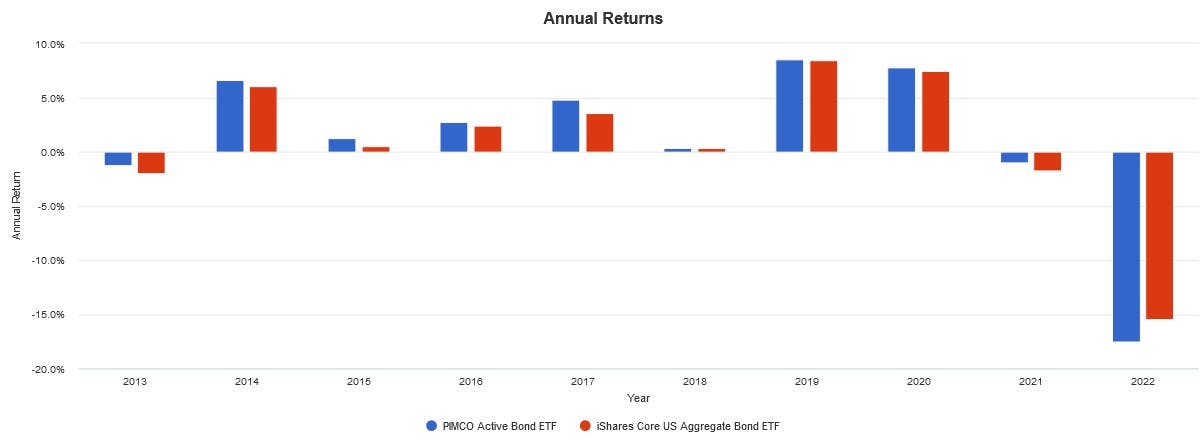
BOND has also outperformed AGG over various rolling periods:

This outperformance is net of any fees, which BOND charges more compared to passively managed ETFs due to its active management. Currently, BOND charges an expense ratio of 0.55%, compared to AGG at 0.03%. Higher expense ratios eat up most gross outperformance by active ETFs, so it's impressive that BOND has consistently outperformed net of fees even with a high expense ratio.
Please note this article is for information purposes only and does not constitute investment advice.
Segments
See all
Mentioned ETFs
No specific ETFs were tagged
Further reading

Latest ETF News
See all ETF newsMoneyShow Chart of the Day 9/4/26: Don't Just Watch Oil. Watch THESE.


Chart of the Day 8/14/26: The Great "Hot Money" Migration

MoneyShow Chart of the Day 7/29/26: Now, THAT's What I Call Market Rotation!

MoneyShow Chart of the Day 7/16/26: Good News/Bad News on Inflation (and the Fed)




 Advantages of ETFs over Mutual Funds1/6
Lower Costs
In this guide, we'll explore the advantages of ETFs over mutual funds, giving you valuable insights into why ETFs have gained significant popularity among investors like yourself.
Leveraged ETFs: Unlocking the Potential for Amplified Returns1/6
Understanding Leveraged ETFs
Explore leveraged ETFs: potential for amplified returns & risks. 5 ETFs to consider across equities, commodities & fixed income.
What is a Leveraged ETF?1/6
Introducing Leveraged and Inverse ETFs
In this guide, we'll dive into the world of leveraged ETFs, exploring their definition, mechanics, potential risks, and rewards.
Recent educational content

ETF Trends
ETF Industry KPIs September 8, 2026
This week’s KPI data overview highlights key metrics and trends shaping the ETF landscape.

ETF Trends
ETF Industry KPIs August 31, 2026
This week’s KPI data overview highlights key metrics and trends shaping the ETF landscape.
ETF Trends
ETF Industry KPIs August 24, 2026
This week’s KPI data overview highlights key metrics and trends shaping the ETF landscape.
What’sTheFund
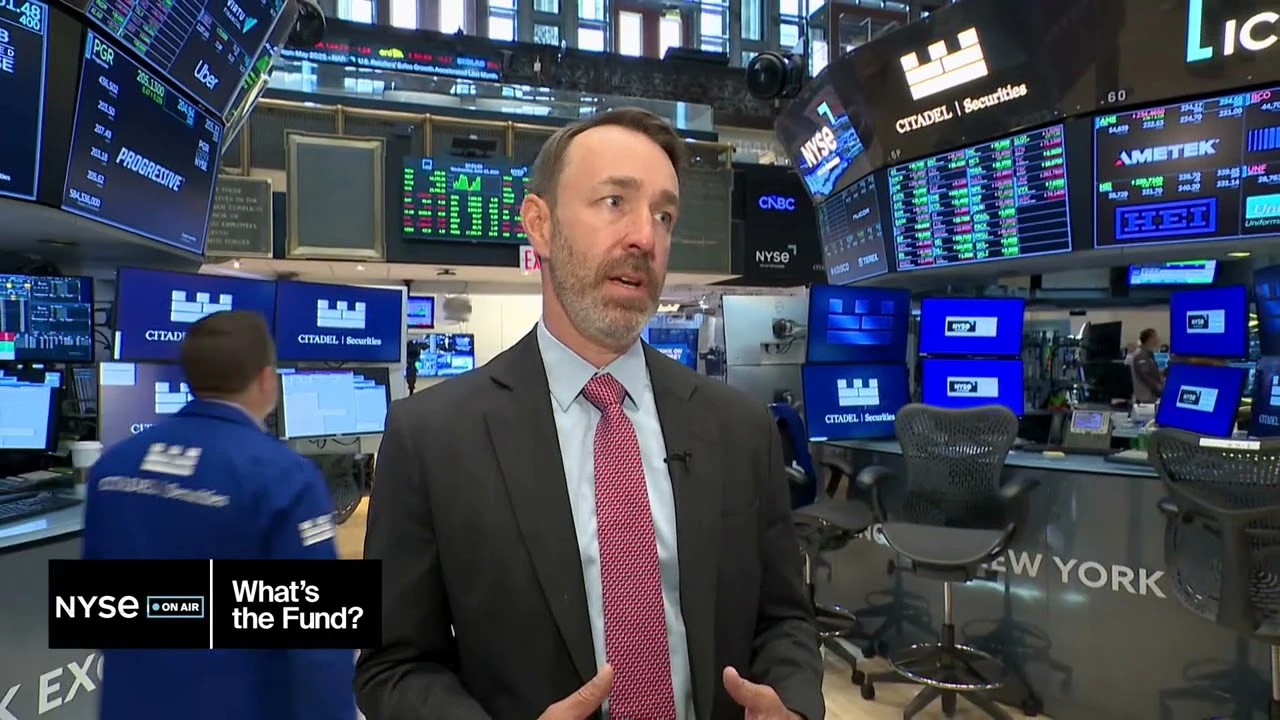
What's the Fund | Ocean Park Diversified Income ETF (DUKZ)
James St Aubin, Chief Investment Officer at Ocean Park Asset Management, discuss the DUKZ ETF, exposing investors to the whole spectrum of asset classes in the fixed income markets, through their rules-based process.

Browse all educational columns



Build and Analyze Your ETF Portfolio Like a Pro
Create your own ETF portfolio in minutes and instantly see allocations, exposures, performance, and risk. Visualize diversification across asset classes, regions, and sectors. Stress-test ideas, compare benchmarks, and refine your strategy with professional-grade analytics.