Turn ETF ideas into real portfolios. Try the builder now →



How Innovator's "Managed Floor" ETFs Can Fit Into a 40/30/30 Portfolio
Options strategies can be a potent addition to the alternatives sleeve of a diversified portfolio.


Keep up with what matters in ETFs
Get timely ETF insights, market trends, and top ideas straight to your inbox.
Your newsletter subscriptions with us are subject to ETF Central's Privacy Policy and Terms and Conditions.
Structured products, once a staple of high-net-worth portfolios in the mid-1990s, are experiencing a resurgence through modern ETFs utilizing options strategies.
Today, various ETFs utilize options to effectively establish "guardrails," limiting the volatility and potential drawdowns investors might face—essentially providing a mathematical buffer to smooth out the range of possible investment outcomes.
Among those at the forefront of this innovation is Innovator ETFs, renowned for their "Defined Outcome," "Accelerated," and "Buffer" ETFs. Recently, Innovator has teamed up with Parametric, a firm celebrated for its sophisticated investment strategies and portfolio management solutions, to introduce a new series of "Managed Floor" ETFs.
These ETFs are designed to complement a diversified portfolio, particularly fitting into what's being termed as a modern 40/30/30 portfolio—split among equities, fixed income, and alternatives. Here's what you need to know.
Like what you're reading?
Stay in the loop — get the latest ETF insights: trends, analysis, and expert picks.
The limitations of the 60/40 portfolio
The 60/40 portfolio, combining 60% stocks and 40% bonds, has been a foundation of investment strategy, lauded for its simplicity and effectiveness. This balance is designed to sit near the "efficient frontier," which is the ideal balance of maximum return for a given level of risk.
Historically, this mix leveraged the often-low correlation between stocks and bonds—stocks provide growth potential while bonds typically offer safety and income, balancing out volatility during stock market downturns.
However, the traditional 60/40 strategy encountered significant challenges in 2022. As interest rates rose sharply to combat high inflation, the relationship between stocks and bonds shifted.
Bonds, typically seen as safe havens during stock market turmoil, began moving in tandem with stocks due to their sensitivity to interest rates, effectively increasing the portfolio's risk without the expected offsetting stability.
The result was a dramatic -20.83% drawdown for the classic 60/40 blend, surpassing losses seen during the 1987 Black Monday crash and the initial COVID-19 market reaction, though still less severe than the 2008 financial crisis or the dot-com bubble burst.


To fortify against such scenarios, diversifying beyond stocks and bonds to include assets like commodities or real estate might help. However, these alternatives also depend on maintaining historical correlations, which may not always hold, suggesting the need for even more innovative diversification strategies.
Options to the rescue
The appeal of using options as a protective strategy lies in their ability to provide predictable outcomes, unlike traditional asset classes that rely on historical correlations for risk management.
This method introduces a mathematical certainty to potential losses and gains, setting explicit boundaries on portfolio performance regardless of market direction.
Enter Innovator's trio of "Managed Floor" ETFs, each designed to incorporate options to safeguard against steep declines while maintaining significant upside potential:
- Innovator Equity Managed Floor ETF SFLR-0.54%
- Innovator Nasdaq-100 Managed Floor ETF QFLR-0.76%
- Innovator U.S. Small-Cap Managed Floor ETF RFLR-0.87%
Each fund is based on a different reference asset—large-caps for SFLR, the Nasdaq-100 for QFLR, and small-caps for RFLR, with all charging a uniform expense ratio of 0.89%.
To shield investors from downturns, these ETFs employ a strategy of purchasing put options that are 10% out of the money, refreshed quarterly. To offset the cost of these puts, the funds also sell bi-weekly laddered call options.
This systematic approach aims to limit maximum losses to a range of 7-15% across the ETFs while still allowing for 70-80% upside capture relative to their respective indices.
This method results in a 'convex payoff profile'—a structured approach that benefits from both sharp market increases and decreases, offering crisis protection and the potential for upside.

The 40/30/30 Portfolio
Instead of sticking to the traditional 60/40 equity and bond split, the "40/30/30" portfolio presents a more nuanced approach to modern investing challenges, particularly in volatile market environments. Here's how it breaks down:
- 40% Equity Sleeve: This segment can blend low-cost passive index funds with select active or factor-based strategies. The goal here is to capture broad market returns while also taking advantage of potential alpha from more targeted investment approaches.
- 30% Fixed Income: This portion can still utilize traditional aggregate bond index funds for stability, but there's room to include actively managed fixed income strategies. Active bond management might be particularly useful in navigating the complexities of changing interest rates and credit landscapes.
- 30% Alternatives Sleeve: Traditionally, alternatives might include assets like commodities or real estate, but this revised portfolio suggests a strategic use of defined outcome ETFs. Products like Innovator's Managed Floor ETFs can be employed here to hedge against downside risks while still participating in market upsides through structured options strategies.
Please note this article is for information purposes only and does not in any way constitute investment advice. It is essential that you seek advice from a registered financial professional prior to making any investment decision.
Latest ETF News
See all ETF newsCould Water ETFs Be the Next AI Bottleneck Trade?

What is a Boomer Candy ETF?

ETF Comparison: NEOS Nasdaq-100 High Income ETF (QQQI) Versus Goldman Sachs Nasdaq-100 Premium Income ETF (GPIQ)





 Advantages of ETFs over Mutual Funds1/6
Lower Costs
In this guide, we'll explore the advantages of ETFs over mutual funds, giving you valuable insights into why ETFs have gained significant popularity among investors like yourself.
Leveraged ETFs: Unlocking the Potential for Amplified Returns1/6
Understanding Leveraged ETFs
Explore leveraged ETFs: potential for amplified returns & risks. 5 ETFs to consider across equities, commodities & fixed income.
What is a Leveraged ETF?1/6
Introducing Leveraged and Inverse ETFs
In this guide, we'll dive into the world of leveraged ETFs, exploring their definition, mechanics, potential risks, and rewards.
Recent educational content

ETF Trends
ETF Industry KPIs September 8, 2026
This week’s KPI data overview highlights key metrics and trends shaping the ETF landscape.

ETF Trends
ETF Industry KPIs August 31, 2026
This week’s KPI data overview highlights key metrics and trends shaping the ETF landscape.
ETF Trends
ETF Industry KPIs August 24, 2026
This week’s KPI data overview highlights key metrics and trends shaping the ETF landscape.
What’sTheFund
What's the Fund | Ocean Park Diversified Income ETF (DUKZ)
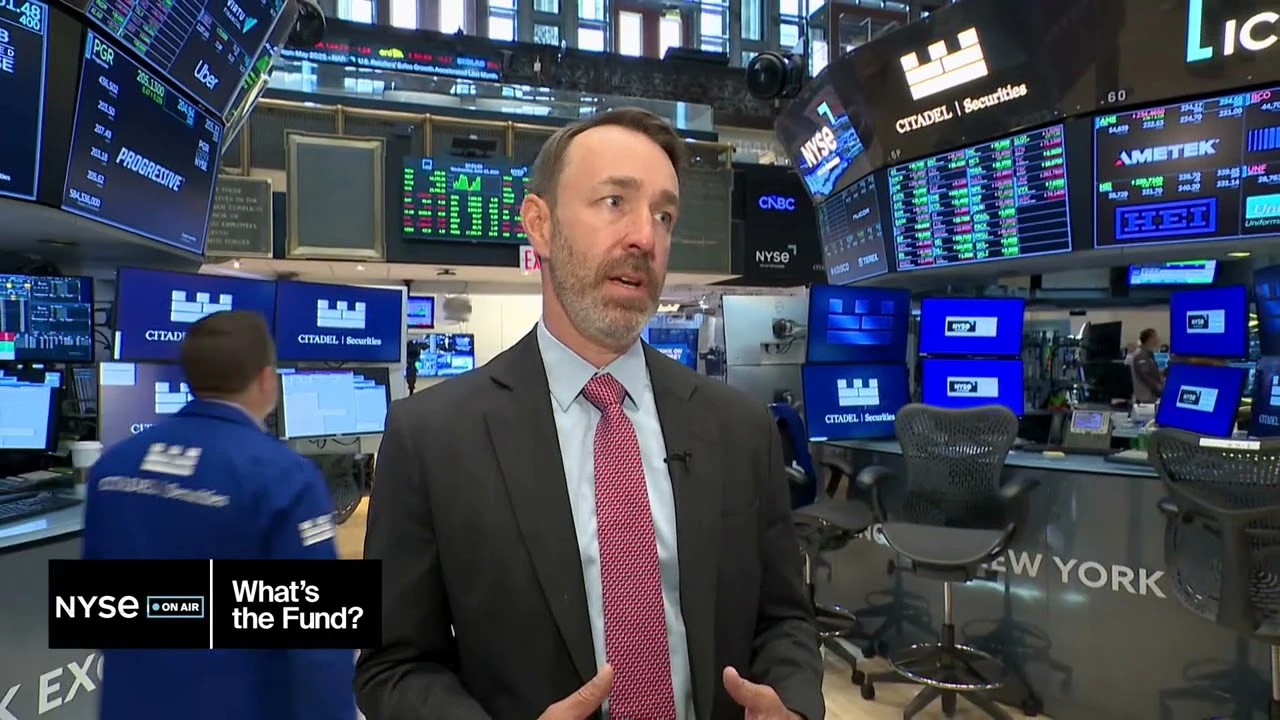
James St Aubin, Chief Investment Officer at Ocean Park Asset Management, discuss the DUKZ ETF, exposing investors to the whole spectrum of asset classes in the fixed income markets, through their rules-based process.

Browse all educational columns



Expert-Built ETF Portfolios, All in One Place
Don’t start from scratch. Discover ready-made ETF portfolios built by professionals to match different goals, timelines, and market views. Use them as inspiration or as a starting point for your own allocation.