Open Now: The Global ETF Survey Take the Survey →



Global X launches new sector covered call ETFs
Sector covered call ETFs offer investors increased flexibility while enhancing income potential.


Keep up with what matters in ETFs
Get timely ETF insights, market trends, and top ideas straight to your inbox.
Your newsletter subscriptions with us are subject to ETF Central's Privacy Policy and Terms and Conditions.
Global X is a well-known ETF provider that primarily focuses on thematic growth and income-oriented funds. For the latter, their suite of index covered call funds such as the Global X NASDAQ 100 Covered Call ETF have become highly popular thanks to their high yields.
Recently, Global X announced the launch of three new sector-based covered call ETFs. All ETFs have a gross expense ratio of 0.66%, which Global X has waived to 0.60% until March 2024.
- Global X Financials Covered Call & Growth ETF (FYLG)
- Global X Health Care Covered Call & Growth ETF (HYLG)
- Global X Information Technology Covered Call & Growth ETF (TYLG)
Investor demand for covered call strategies this year has been high, as many traditional income-generating investments like REITs and corporate bonds fell due to rising rates. Global X's release came at a good time and will likely garner strong inflows from their existing investor base and new income-focused investors. Let's look at the new Global X funds and assess their use cases and risks.
Get data on 14,000+ ETFs
Access Trackinsight's reliable and comprehensive data with 500M+ points on 14,000+ ETFs.
How the new sector covered call ETFs work
All three ETFs aim to replicate the stocks held in the SPDR Select Sector indexes, each of which tracks a specific market-cap weighted sector represented in the S&P 500. In this case, the new Global X ETFs will track stocks from the financials, healthcare, and information technology Select Sectors.
Being able to break down covered call ETFs into sectors is interesting. Historically, each of these sectors has performed differently under various economic conditions. For example, healthcare tends to outperform in recessions and technology tends to outperform when interest rates fall.
Putting a covered call overlay over the sector allows sector investors to harness volatility for increased income potential, or vice-versa allows income investors to tilt towards a sector of their choice. Either way, investors get increased versatility and another tool in their toolbox.
All of the new sector ETFs actually track a new index, the Cboe S&P (insert sector) Select Sector Half BuyWrite Index.This means that covered calls are only sold on 50% of the ETF's underlying holdings. The calls sold are at-the-money with a month until expiry.
I like this approach because it doesn't excessively cap the ETF's upside potential. Some covered call ETFs sell calls on 100% of the ETF's underlying assets. While this maximizes the premium and thus income potential, it reduces total returns drastically.
Use cases and risks
I think these ETFs are best suited for investors who are implementing a sector rotation strategy or tilt in their portfolio, but desire lower volatility and more consistent income potential while still participating in some upside return. I think it's a better way to define a target level of risk and return.
The big benefit here is convenience. Buying one of these ETFs and paying Global X a 0.60% expense ratio every year is probably less than the hassle of buying individual Select Sector ETFs yourself and manually selling and rolling options.
Global X's portfolio team will do it in a systematic manner, which will likely outperform retail investors trying to select the right strikes and expiry dates, calculate options delta and implied volatility, and minimize bid-ask spreads. There's less room for error and more economy of scale.
The ETFs will also likely have lower downside risk compared to their vanilla sector ETF counterparts. This is because the premium received from selling calls can help offset some losses. It's not the most effective hedge, but covered call ETFs have displayed lower drawdowns so far this year.
As with all covered call ETFs, the main risk is underperformance during bull markets. During these conditions, the sold options will likely expire in-the-money, causing the underlying shares to get called away at the strike, capping total returns.
This is to be expected and should be accounted for in your investment objectives before you consider buying a covered call ETF. If consistent income isn’t a need, then these ETFs might not be ideal for you. Regardless, the new Global X ETFs certainly have their niche and I expect strong inflows to pour in.
Please note this article is for information purposes only and does not constitute investment advice.

Latest ETF News
See all ETF newsMoneyShow Chart of the Day 7/16/26: Good News/Bad News on Inflation (and the Fed)


MoneyShow Chart of the Day 7/1/26: The H1 Scorecard – and What Comes Next

MoneyShow Chart of the Day 6/22/26: Are World Cup Videos Helping US Companies Clean Up?

MoneyShow Chart of the Day 6/3/26: AI. AI. AI. (And a Handful of Other Stocks, Too)




 Advantages of ETFs over Mutual Funds1/6
Lower Costs
In this guide, we'll explore the advantages of ETFs over mutual funds, giving you valuable insights into why ETFs have gained significant popularity among investors like yourself.
Leveraged ETFs: Unlocking the Potential for Amplified Returns1/6
Understanding Leveraged ETFs
Explore leveraged ETFs: potential for amplified returns & risks. 5 ETFs to consider across equities, commodities & fixed income.
What is a Leveraged ETF?1/6
Introducing Leveraged and Inverse ETFs
In this guide, we'll dive into the world of leveraged ETFs, exploring their definition, mechanics, potential risks, and rewards.
Recent educational content

ETF Trends
ETF Industry KPIs July 20, 2026
This week’s KPI data overview highlights key metrics and trends shaping the ETF landscape.

ETF Trends
ETF Industry KPIs July 13, 2026
This week’s KPI data overview highlights key metrics and trends shaping the ETF landscape.
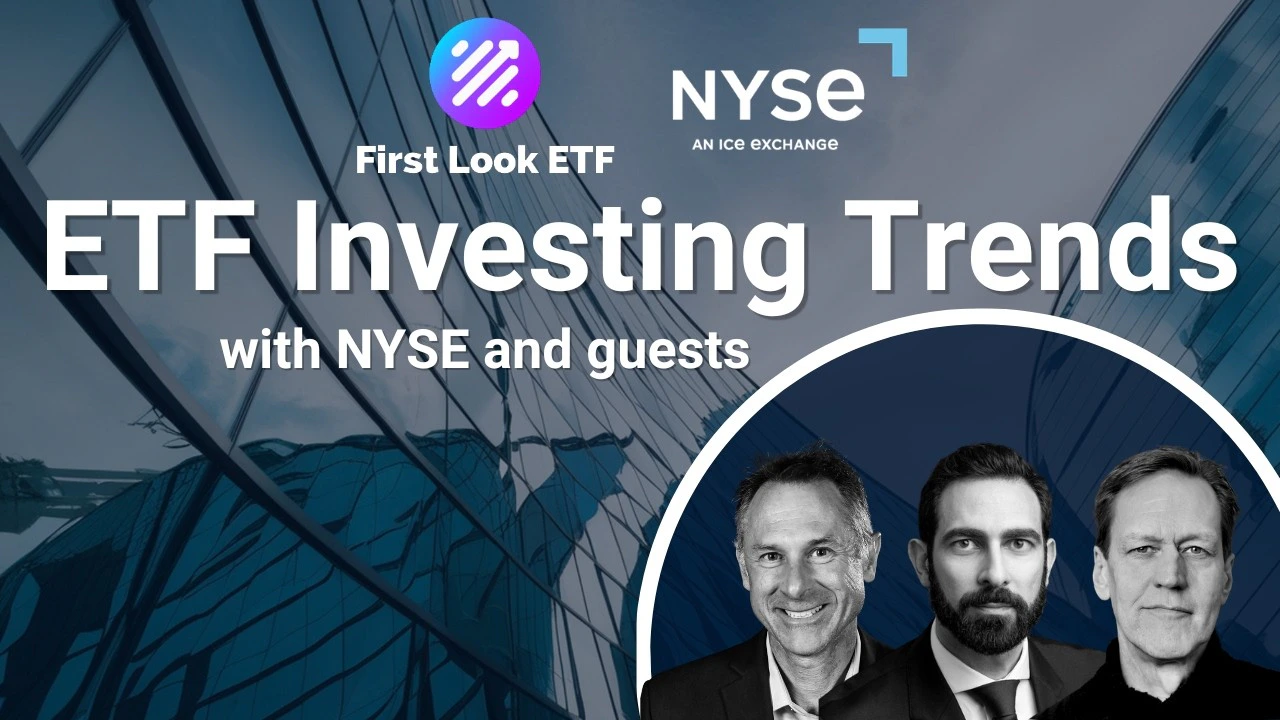
First Look ETF
First Look ETF: Cash Deployment, Bond, and Hedged ETFs
In this season 6 episode of First Look ETF, Stephanie Stanton examines the latest ETF marketplace trends with NYSE and guests.

ETF Trends
ETF Industry KPIs July 6, 2026
This week’s KPI data overview highlights key metrics and trends shaping the ETF landscape.
Browse all educational columns



Expert-Built ETF Portfolios, All in One Place
Don’t start from scratch. Discover ready-made ETF portfolios built by professionals to match different goals, timelines, and market views. Use them as inspiration or as a starting point for your own allocation.