From idea to ETF portfolio in minutes. Build yours now →



ETF Wars: Attack of the JEPI Clones
Numerous fund managers have now filed for or launched competitors to JEPI. Here's what you need to know as a potential investor.


Keep up with what matters in ETFs
Get timely ETF insights, market trends, and top ideas straight to your inbox.
Your newsletter subscriptions with us are subject to ETF Central's Privacy Policy and Terms and Conditions.
In previous articles, I've analyzed the JPMorgan Equity Premium Income ETF (
JEPI's popularity endures; according to the latest data from the ETF Central Screener, JEPI stands unrivaled as the largest actively managed ETF, boasting the highest assets under management (AUM).
This prominence hasn’t gone unnoticed. JEPI's resounding success and popularity have made it the envy of the ETF world, inciting a flood of imitators from competing firms.
To give some context, earlier in June, I dissected the prospectuses filed by Goldman Sachs, which signaled their intent to launch their own versions to rival JEPI.
However, the market dynamics have taken an even more interesting turn. The battle for supremacy in this space has intensified considerably, underscored by BlackRock's recent foray.
On September 26th, the firm unveiled the BlackRock Advantage Large Cap Income ETF (

Like what you're reading?
Stay in the loop — get the latest ETF insights: trends, analysis, and expert picks.
Unpacking the new JEPI competitor
I'm calling BALI a JEPI-esque clone because it has many striking similarities to JEPI, namely:
- BALI is actively managed, selecting stocks based on a "systematic" strategy. JEPI is also actively managed, selecting stocks according to JPMorgan's "proprietary" strategy.
- BALI charges a 0.35% expense ratio, the same as JEPI.
- BALI looks to provide exposure to large-cap U.S. stocks selected for lower volatility, similar to the objectives JEPI uses.
- BALI also looks to produce higher than average monthly income via a covered call overlay like JEPI does.
- However, the fund isn’t an exact imitator – BlackRock has implemented some notable differences, which include:
- BALI's current portfolio of 98 holdings is much more top-heavy, whereas JEPI's larger portfolio of 135 holdings is more evenly weighted.
- The sector weightings are different too. BALI is heavily concentrated in the technology sector at 34.88% of its exposure, whereas JEPI's exposure is much more evenly weighted between consumer staples, financials, healthcare, industrials, and technology.
- JEPI uses equity-linked notes (ELNS) to gain exposure to the risks/returns of a covered call strategy on the S&P 500 index, whereas BALI directly sells S&P 500 index call options and buys S&P 500 index futures.
How this changes the derivative income landscape
JEPI's dominant stature in this ETF niche is undeniable, with an asset chest swelling to approximately $28.96 billion as of October 10th, 2023.
Competitors, irrespective of the clout they wield (BlackRock being a case in point), have a steep climb ahead to match JEPI's brand power. This recognition has burgeoned so much that dedicated online communities, like the r/JEPI subreddit, discuss it ardently.
A quick rewind to recent history provides context. The derivative income space has witnessed a surge, probably fueled by the 2022 bear market wherein these strategies emerged triumphant.
In an environment characterized by rising stock/bond correlations, investors have cast their nets wider, hunting for diversification avenues. Covered call strategies fit this bill, pairing diversification with the lure of handsome yields.
This landscape's latest entrants are not just strategizing on returns but also taking a direct shot at a common pain point—fees. The criticism of high fees on actively managed ETFs is well-documented. However, both JEPI and BALI have countered this by pegging their expense ratio at 0.35%.
Notably, this isn't just competitive—it actually undercuts some established sector and industry index ETFs, showcasing their aggressive stance in the market.
Please note this article is for information purposes only and does not in any way constitute investment advice. It is essential that you seek advice from a registered financial professional prior to making any investment decision.

Latest ETF News
See all ETF newsMoneyShow Chart of the Day 9/4/26: Don't Just Watch Oil. Watch THESE.


Chart of the Day 8/14/26: The Great "Hot Money" Migration

MoneyShow Chart of the Day 7/29/26: Now, THAT's What I Call Market Rotation!

MoneyShow Chart of the Day 7/16/26: Good News/Bad News on Inflation (and the Fed)




 Advantages of ETFs over Mutual Funds1/6
Lower Costs
In this guide, we'll explore the advantages of ETFs over mutual funds, giving you valuable insights into why ETFs have gained significant popularity among investors like yourself.
Leveraged ETFs: Unlocking the Potential for Amplified Returns1/6
Understanding Leveraged ETFs
Explore leveraged ETFs: potential for amplified returns & risks. 5 ETFs to consider across equities, commodities & fixed income.
What is a Leveraged ETF?1/6
Introducing Leveraged and Inverse ETFs
In this guide, we'll dive into the world of leveraged ETFs, exploring their definition, mechanics, potential risks, and rewards.
Recent educational content

ETF Trends
ETF Industry KPIs September 8, 2026
This week’s KPI data overview highlights key metrics and trends shaping the ETF landscape.

ETF Trends
ETF Industry KPIs August 31, 2026
This week’s KPI data overview highlights key metrics and trends shaping the ETF landscape.
ETF Trends
ETF Industry KPIs August 24, 2026
This week’s KPI data overview highlights key metrics and trends shaping the ETF landscape.
What’sTheFund
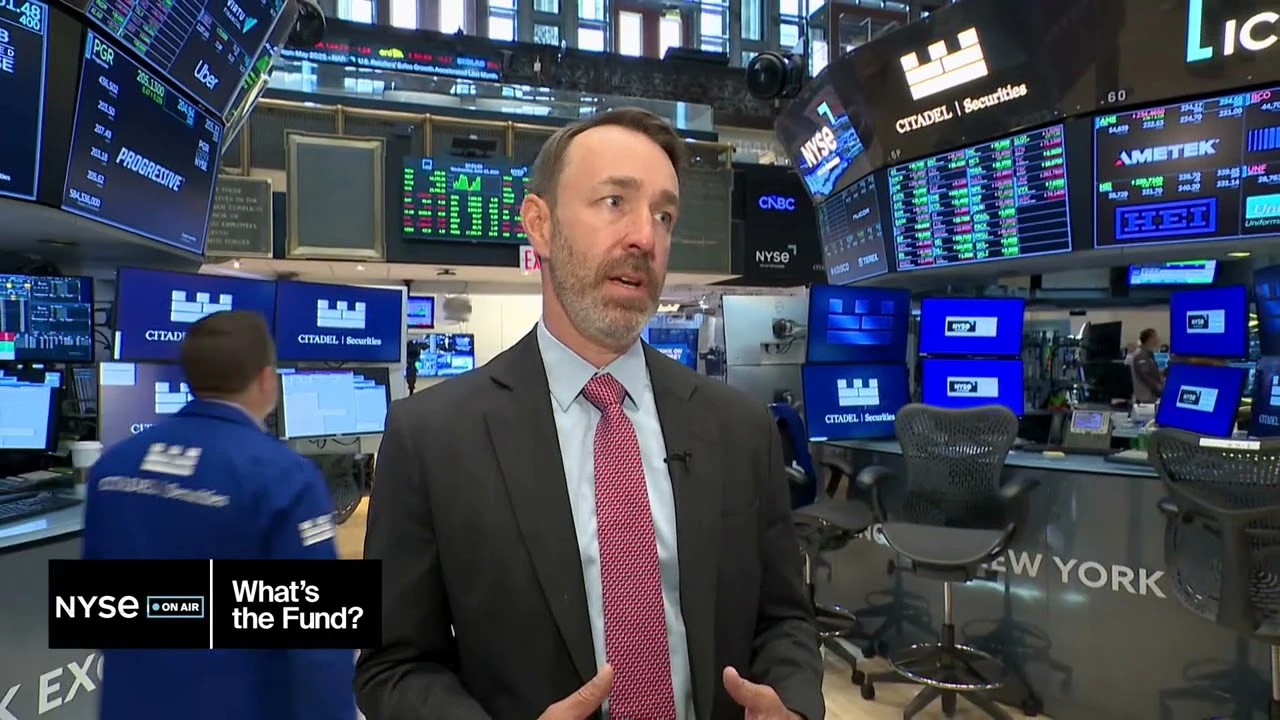
What's the Fund | Ocean Park Diversified Income ETF (DUKZ)
James St Aubin, Chief Investment Officer at Ocean Park Asset Management, discuss the DUKZ ETF, exposing investors to the whole spectrum of asset classes in the fixed income markets, through their rules-based process.

Browse all educational columns



Expert-Built ETF Portfolios, All in One Place
Don’t start from scratch. Discover ready-made ETF portfolios built by professionals to match different goals, timelines, and market views. Use them as inspiration or as a starting point for your own allocation.