Keep tabs on your favorite ETFs with a personalized weekly tracker. Create a Watchlist now →



Goldman Sachs Files Prospectuses for Competitor to JEPI ETF
The bank's prospective offering will square off against JPMorgan's highly popular actively managed derivative income ETF.


Keep up with what matters in ETFs
Get timely ETF insights, market trends, and top ideas straight to your inbox.
Your newsletter subscriptions with us are subject to ETF Central's Privacy Policy and Terms and Conditions.
One of the most popular ETFs among investors throughout 2022 was the JPMorgan Equity Premium Income ETF (JEPI), and for a good reason. By the end of the year, JEPI fell by just -3.54% in value, cushioned by its high double-digit dividend yield throughout the year as its actively managed, derivative income strategy paid off in spades.
Thanks to this, the ETF saw unprecedented inflows throughout last year, and currently sits at around $26.5 billion in assets under management, or AUM. According to the ETF Central Screener, this makes JEPI the largest actively managed ETF on the U.S. market as of the present. Just over the last month, JEPI took in around $1 billion worth of inflows.
JEPI's success hasn't gone unnoticed on the institutional side either. On June 1st, 2023, Goldman Sachs filed a preliminary prospectus to offer a direct JEPI competitor, called the Goldman Sachs U.S. Equity Premium Income ETF (ticker to be determined).
Here's all you need to know about JEPI and how this proposed new ETF will stack up against it.
Like what you're reading?
Stay in the loop — get the latest ETF insights: trends, analysis, and expert picks.
JEPI explained
JEPI differs from your average covered call ETF in quite a few ways. Firstly, the ETF's stock selection process is actively managed. Instead of replicating a benchmark index like the S&P 500, JEPI employs a proprietary methodology to identify undervalued and less volatile stocks within the S&P 500.
The resulting portfolio of 134 defensive holdings currently leans towards value-oriented, dividend-paying, large-cap stocks in sectors such as consumer staples, finance, healthcare, and industrial. Once again, the process of how JEPI selects these stocks is a bit of a black box.
Furthermore, JEPI uniquely relies on equity-linked notes (ELNs). This reliance stems from the fact that, although JEPI derives income from covered call options on the S&P 500 index, it can't write these options itself as it doesn't hold all the reference S&P 500 stocks completely.
The use of ELNs allows JEPI to synthetically mimic the risks and returns of an out-of-the-money covered call options overlay on the S&P 500 index. This method, however, introduces some counterparty risk - there's a chance that the counterparty for the ELN may default on due payments.
What's notable about JEPI is its very reasonable expense ratio, which currently clocks in at 0.35%. This is significantly lower than covered call ETF competitors from firms like Global X, and very attractive compared to the usual fees charged by actively managed ETFs.
As of June 12th, 2023, JEPI is paying a 30-day SEC yield of 8.07%, with a 12-month rolling dividend yield of 11.04%. This has been one of the ETF's biggest draws for income-hungry investors.
How Goldman's proposed ETF works
The filing for the Goldman Sachs U.S. Equity Premium Income ETF is fairly bare-bones and doesn't offer a lot of details, but the following can be gleaned:
- The ETF will invest at least 80% of its net assets in equities selected from its benchmark (most likely the S&P 500). However, the ETF is actively managed and will not seek to replicate its benchmark index. Higher portfolio turnover is expected. 20% of the ETF's net assets may be invested in instruments not part of the above.
- The ETF will also invest in FLexible EXchange® Options (FLEX Options), which allow for greater customization of exercise prices and expiration dates.
- The ETFs strategy is centered around selling call options on a variable percentage of the equity investments' market value in its portfolio, AKA a covered call strategy.
- Each month, the percentage of the options overlay is revised, and it is expected that the ETF will sell call options amounting to between 25% and 75% of the portfolio value.
- Additional income sources may include dividend payments from the ETF's equity investments.
- The goal of the ETF is to produce higher-than-average monthly distributions at a relatively stable rate with performance mirroring the majority of the returns associated with its benchmark.
- The ETF is expected to outperform under certain market conditions due to the options premiums received (high-volatility, rangebound market), but could underperform during bull markets when the underlying portfolio appreciates significantly and is capped by the options sold.
- The ETF is able to take a temporary defensive position to respond to adverse market or political conditions. This means allocating up to 100% of its assets in high-quality U.S. government issued securities or commercial paper.
- From this, we can see that the major differences between JEPI and the proposed Goldman Sachs ETF is a reliance on FLEX Options instead of ELNs and the ability to take a temporary defensive position. The stock selection strategy will also vary as well, but I don't expect Goldman Sachs to disclose their "secret sauce". Regardless, I think this ETF is worth keeping an eye on if it comes to fruition.
Please note this article is for information purposes only and does not in any way constitute investment advice. It is essential that you seek advice from a registered financial professional prior to making any investment decision.

Latest ETF News
See all ETF newsCould Water ETFs Be the Next AI Bottleneck Trade?

What is a Boomer Candy ETF?

ETF Comparison: NEOS Nasdaq-100 High Income ETF (QQQI) Versus Goldman Sachs Nasdaq-100 Premium Income ETF (GPIQ)





 Advantages of ETFs over Mutual Funds1/6
Lower Costs
In this guide, we'll explore the advantages of ETFs over mutual funds, giving you valuable insights into why ETFs have gained significant popularity among investors like yourself.
Leveraged ETFs: Unlocking the Potential for Amplified Returns1/6
Understanding Leveraged ETFs
Explore leveraged ETFs: potential for amplified returns & risks. 5 ETFs to consider across equities, commodities & fixed income.
What is a Leveraged ETF?1/6
Introducing Leveraged and Inverse ETFs
In this guide, we'll dive into the world of leveraged ETFs, exploring their definition, mechanics, potential risks, and rewards.
Recent educational content

ETF Trends
ETF Industry KPIs September 8, 2026
This week’s KPI data overview highlights key metrics and trends shaping the ETF landscape.

ETF Trends
ETF Industry KPIs August 31, 2026
This week’s KPI data overview highlights key metrics and trends shaping the ETF landscape.
ETF Trends
ETF Industry KPIs August 24, 2026
This week’s KPI data overview highlights key metrics and trends shaping the ETF landscape.
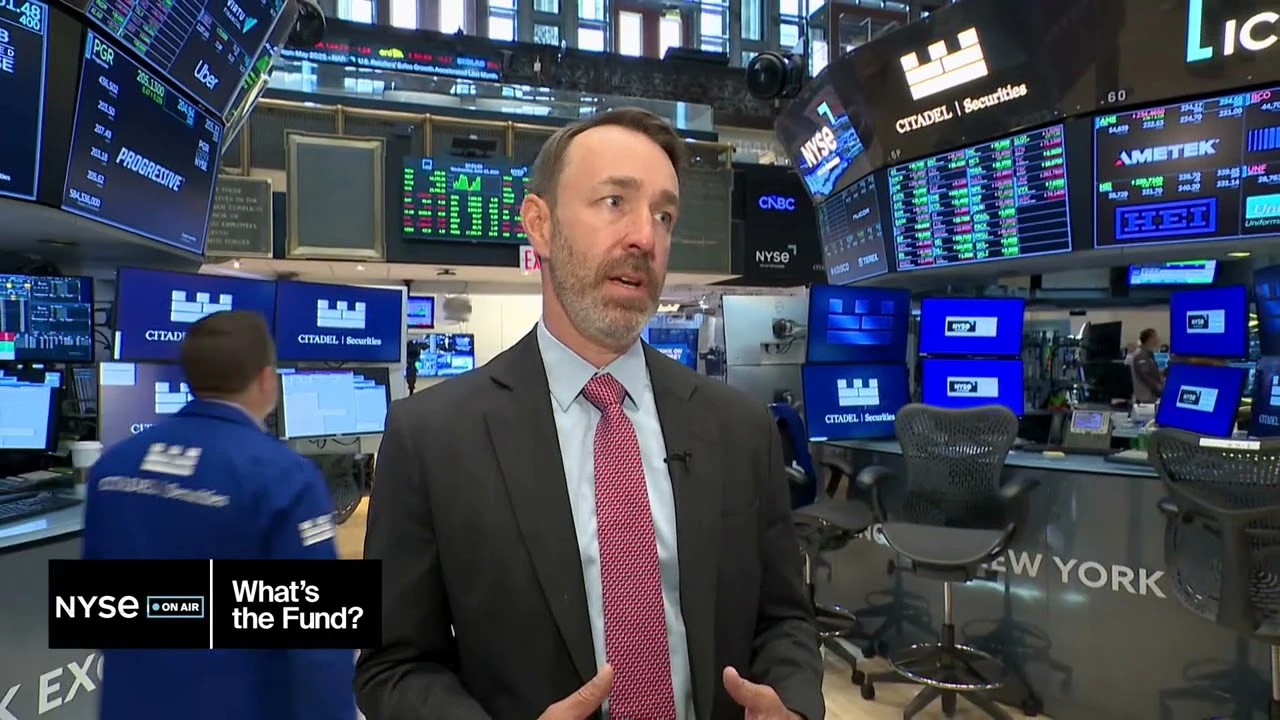
What’sTheFund
What's the Fund | Ocean Park Diversified Income ETF (DUKZ)
James St Aubin, Chief Investment Officer at Ocean Park Asset Management, discuss the DUKZ ETF, exposing investors to the whole spectrum of asset classes in the fixed income markets, through their rules-based process.

Browse all educational columns



Active Trader Report: Use of Leveraged & Inverse ETFs Way Up
Direxion partnered with Compound Insights and Vanda to explore what’s driving the evolution of active trading — and how active traders are using leveraged and inverse funds across equities, single stocks, commodities, and volatility.