ETF model portfolios designed for real investor needs. Discover →



ETF Model Portfolios: The Anti-Inflation and Rising Interest Rate Allocation
This four-ETF model portfolio targets asset classes that may be better positioned for a combination of persistent inflation and rising interest rates.

Keep up with what matters in ETFs
Get timely ETF insights, market trends, and top ideas straight to your inbox.
Your newsletter subscriptions with us are subject to ETF Central's Privacy Policy and Terms and Conditions.
I'm getting a sense of déjà vu from 2022’s bear market. Inflation is proving persistent, interest rates are heading higher and the bond market is once again adjusting to the possibility that monetary policy may remain restrictive for longer.
The Consumer Price Index was up 3.4% year over year in August, with higher energy costs playing an important role as disruptions around the Strait of Hormuz pushed oil prices higher. Those pressures have increasingly worked their way through transportation and other parts of the economy.
Then, on September 16, the Federal Reserve unanimously raised the federal funds rate by 25 basis points to a target range of 3.75% to 4.00%. It was the first hike since 2023, breaking the long stretch of pauses that had characterized 2026. The Fed cited still-elevated inflation alongside resilient domestic spending, strong productivity and robust capital investment.
And policymakers may not be finished. Sixteen of 18 Fed officials currently project at least one additional increase before the end of 2026. At the same time, longer-term borrowing costs have been moving sharply higher. The benchmark 10-year Treasury yield recently crossed 5%, reaching its highest level since 2007.
In light of that backdrop, I think there are ways to construct a portfolio specifically designed to be more resistant to the combination of rising interest rates and persistent inflation. To borrow the terminology popularized by Ray Dalio and Bridgewater Associates, the inspiration is an "all-weather" approach.
That means starting from the top down. Rather than trying to identify individual ETFs that might outperform, first identify the macroeconomic environment and then deductively map which asset classes are best positioned for those conditions.
The traditional all-weather concept often takes this further through risk parity, adjusting position sizes so that different asset classes contribute more evenly to overall portfolio volatility. That's not particularly easy for the average do-it-yourself investor, or even many advisors, to implement and maintain. Risk estimates used to size those allocations can also be inherently backward-looking.
I think there's a simpler way to apply the basic idea here: an equal-weight allocation across four ETFs representing four distinct assets that, for different reasons, may be comparatively resilient when inflation and interest rates are both rising. That's the basis for today's ETF model portfolio using inflation-linked government bonds, broad commodities, infrastructure equities and floating-rate credit.
Like what you're reading?
Stay in the loop — get the latest ETF insights: trends, analysis, and expert picks.
Vanguard Short-Term Inflation-Protected Securities ETF (VTIP)
The first 25% goes into Treasury Inflation-Protected Securities, or TIPS. Unlike conventional Treasuries, their principal value adjusts with changes in the Consumer Price Index. Because the coupon rate is applied to that inflation-adjusted principal, interest payments can rise when inflation increases. At maturity, investors receive the greater of the inflation-adjusted principal or the original principal amount.
That makes TIPS an intuitive inflation hedge, but there's an important catch. Higher inflation frequently leads the Fed to raise interest rates, and TIPS remain bonds with interest-rate sensitivity. Going too far out on the maturity curve can therefore become counterproductive because rising real yields can push prices lower even as the inflation adjustment helps.
That's why I want to keep duration relatively short with the Vanguard Short-Term Inflation-Protected Securities ETF
VTIP's current 30-day SEC yield is 2.19%, but that number shouldn't be interpreted as its complete potential return from inflation protection. The SEC yield doesn't incorporate future inflation adjustments to TIPS principal, so actual distributions and returns can differ as CPI changes.
Invesco Optimum Yield Diversified Commodity Strategy No K-1 ETF PDBC
The next 25% goes directly to commodities. Commodities can have a particularly useful role in an inflation-focused portfolio because energy, agricultural products and other raw materials feed directly or indirectly into consumer prices.
I don't want to make a concentrated bet on oil, gold, copper or any other individual commodity, though. Each carries substantial idiosyncratic risks related to supply, inventories, geopolitics, weather and industry-specific demand. Instead, I want broad exposure across energy, precious metals, industrial metals and agricultural commodities. Because many of these assets aren't practical for an ETF to physically store, that means using futures.
My pick is the Invesco Optimum Yield Diversified Commodity Strategy No K-1 ETF
Its "Optimum Yield" methodology is also important. Rather than mechanically rolling every position into the nearest available futures contract, the strategy evaluates contracts farther along the futures curve when replacing expiring positions. That can help manage the drag from contango, where longer-dated futures cost more than contracts approaching expiration.
iShares U.S. Infrastructure ETF IFRA
TIPS and commodities can provide useful inflation sensitivity, but I also want productive assets capable of generating earnings and participating in economic growth.
I originally considered real estate for this allocation. Some real estate investment trusts have leases with inflation escalators and can pass higher costs through to tenants. The problem is that a broad REIT allocation also brings exposure to highly cyclical and interest-rate-sensitive areas that I don't necessarily want in this particular portfolio.
I prefer infrastructure. Midstream energy networks, regulated utilities and transportation infrastructure can exhibit something resembling toll-booth economics, where owners collect revenue as customers use essential assets. Many infrastructure businesses also have contractual, regulated or pricing mechanisms that can help revenues adjust as costs and inflation rise.
For that allocation, I'm using the iShares U.S. Infrastructure ETF
State Street Blackstone Senior Loan ETF SRLN
Finally, I want floating-rate exposure. Given that another quarter of the portfolio is anchored by U.S. government-backed TIPS, I'm comfortable accepting more credit risk here in exchange for a higher yield.
Senior loans are typically loans made to below-investment-grade companies and generally occupy a senior secured position in the borrower's capital structure. If a company defaults, these lenders generally have claims on pledged collateral and rank ahead of unsecured bondholders and equity holders in the repayment waterfall. That can support higher recovery rates, although it certainly doesn't eliminate the possibility of losses.
Their other useful characteristic here is that interest rates float. Senior loans are generally priced at a contractual spread over a short-term benchmark, historically LIBOR and now predominantly the Secured Overnight Financing Rate (SOFR). When that benchmark increases, the coupon can reset higher.
For this allocation, I'm using the State Street Blackstone Senior Loan ETF
SRLN currently has a 6.54% 30-day SEC yield. That higher income comes with meaningful credit risk because much of the underlying portfolio is below investment grade. If the economy deteriorates and defaults increase, credit losses and widening spreads can outweigh the benefits of higher short-term rates.
But in an environment where rates rise without a severe deterioration in corporate credit, floating coupons can reset upward while the fund continues collecting its underlying credit spreads. That's precisely the type of exposure I want for the final quarter of this anti-inflation, rising-rate allocation.
Putting It All Together
Using ETF Central's model portfolio tool, I combined VTIP, PDBC, IFRA and SRLN at equal 25% weights with quarterly rebalancing. The resulting portfolio has a weighted-average expense ratio of 0.4425%. For comparison, I benchmarked it against a conventional 60/40 portfolio consisting of 60% in the S&P 500 Total Return Index and 40% in the Bloomberg U.S. Aggregate Bond Total Return Index.
The available backtest begins in September 2021, which is admittedly a favorable starting point for an anti-inflation, rising-rate strategy. It captures the inflation surge and aggressive Federal Reserve tightening cycle that followed, precisely the environment this portfolio is designed to navigate.
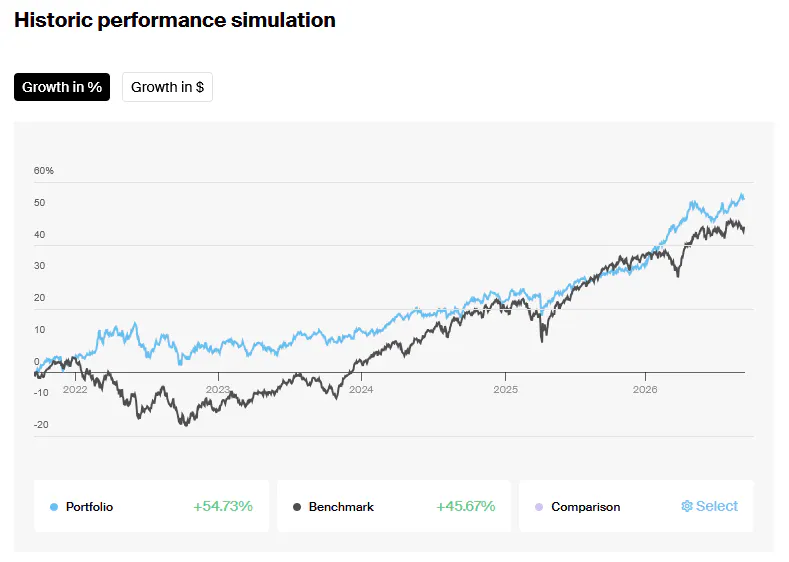
Over that common period, the model portfolio produced a higher annualized return with lower volatility than the 60/40 benchmark. Combining those two characteristics also resulted in a higher Sharpe ratio, meaning investors were compensated with more return per unit of risk taken.
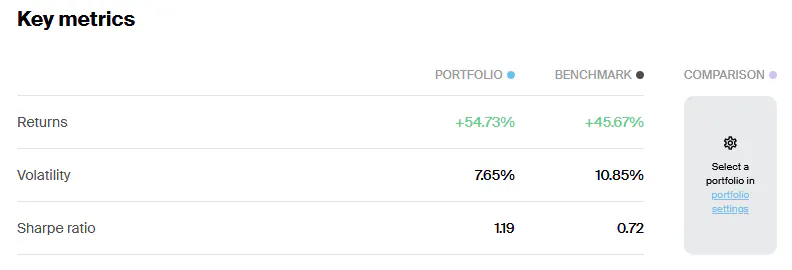
Where the strategy particularly distinguished itself was 2022. Stocks and conventional bonds declined together as inflation remained elevated and rapidly rising interest rates pressured valuations across both asset classes. The model portfolio, by contrast, finished the year positive. Commodities benefited from inflationary pressures, floating-rate loans avoided much of the duration damage suffered by conventional bonds, and short-term TIPS provided direct inflation sensitivity.
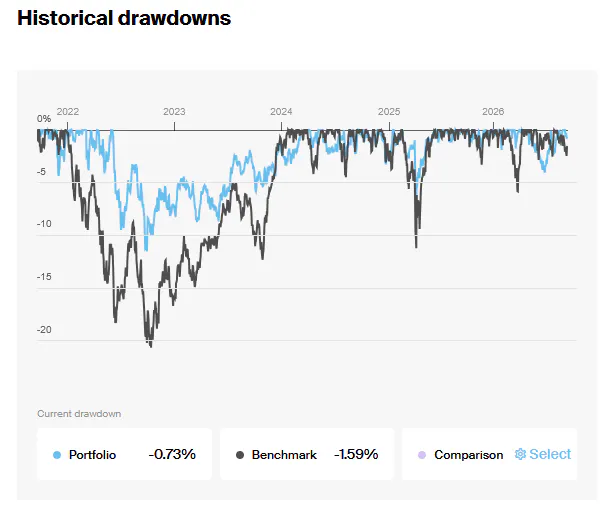
That year also illustrates why diversification by macroeconomic exposure can matter. A 60/40 portfolio owns two different asset classes, but both can be vulnerable to the same underlying shock when unexpectedly high inflation forces interest rates sharply higher.
However, the trade-off became clearer in the years that followed. As markets shifted toward a strong growth environment led heavily by artificial intelligence-related equities, this portfolio lagged. That's not surprising given that it has relatively little exposure to the mega-cap technology companies responsible for a substantial portion of the stock market's gains.
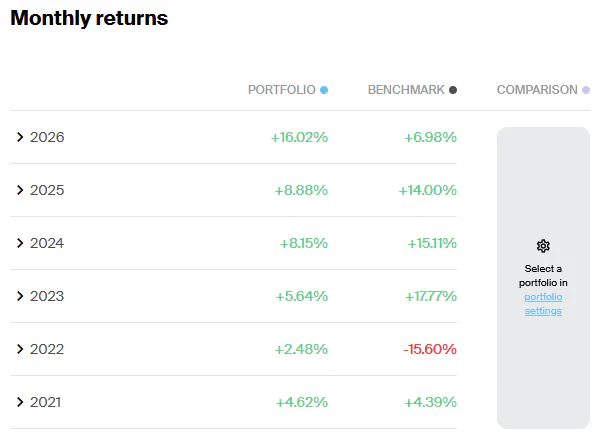
If inflation moderates and rates decline while growth stocks continue outperforming, I'd expect this allocation to lag a conventional stock-heavy portfolio. But if the current combination of stubborn inflation and rising rates persists, its mix of short-term TIPS, commodities, infrastructure and floating-rate credit gives each quarter of the portfolio a distinct reason to potentially hold up better.
For that reason, I wouldn't use this mix as a replacement for a conventional diversified core portfolio. I see it more as a satellite allocation, essentially a side portfolio designed to diversify against a specific macroeconomic regime.
Please note that this article reflects the author’s personal views and does not represent the opinions of the publication or its affiliates. It is for informational purposes only and does not constitute investment advice. It is essential to seek guidance from a registered financial professional before making any investment decisions.

Latest ETF News
See all ETF newsETF Model Portfolios: The Geopolitical Risk Thematic Hedge

ETF Model Portfolios: The Boglehead Couch Potato





 Advantages of ETFs over Mutual Funds1/6
Lower Costs
In this guide, we'll explore the advantages of ETFs over mutual funds, giving you valuable insights into why ETFs have gained significant popularity among investors like yourself.
Leveraged ETFs: Unlocking the Potential for Amplified Returns1/6
Understanding Leveraged ETFs
Explore leveraged ETFs: potential for amplified returns & risks. 5 ETFs to consider across equities, commodities & fixed income.
What is a Leveraged ETF?1/6
Introducing Leveraged and Inverse ETFs
In this guide, we'll dive into the world of leveraged ETFs, exploring their definition, mechanics, potential risks, and rewards.
Recent educational content

ETF Trends
ETF Industry KPIs September 28, 2026
This week’s KPI data overview highlights key metrics and trends shaping the ETF landscape.

ETF Trends
ETF Industry KPIs September 22, 2026
This week’s KPI data overview highlights key metrics and trends shaping the ETF landscape.

First Look ETF
First Look ETF: Income, Corporate Arbitrage, and Growth and Value Investing
First Look ETF September 2026: iCapital, Mast Investments and North Square unpack new ETFs targeting monthly income, merger arbitrage and complementary growth and value exposure.

ETF Trends
ETF Industry KPIs September 14, 2026
This week’s KPI data overview highlights key metrics and trends shaping the ETF landscape.
Browse all educational columns



Expert-Built ETF Portfolios, All in One Place
Don’t start from scratch. Discover ready-made ETF portfolios built by professionals to match different goals, timelines, and market views. Use them as inspiration or as a starting point for your own allocation.