Keep tabs on your favorite ETFs with a personalized weekly tracker. Create a Watchlist now →



ETF Central Guide: Understanding the Different Types of Bitcoin ETFs
Bitcoin ETFs aren’t limited to spot variants. Investors can also use covered calls, futures, or leverage.


Keep up with what matters in ETFs
Get timely ETF insights, market trends, and top ideas straight to your inbox.
Your newsletter subscriptions with us are subject to ETF Central's Privacy Policy and Terms and Conditions.
According to the ETF Central screener, searching for “Bitcoin” as of Dec. 18 uncovered 39 options. Sure, most of these are the new spot Bitcoin ETFs that launched in January of this year, but there’s more variety than meets the eye.
Some Bitcoin ETFs are designed to produce income, others provide leveraged or inverse exposure, and a few offer unique strategies blending multiple asset classes.
And the Bitcoin ETF universe is only getting started. Notably, Calamos, an alternative investment manager known for its expertise in options strategies, is filing for four Bitcoin buffer ETFs. These funds aim to limit losses to 20% over defined yearly outcome periods, with each ETF starting in a different month and featuring capped upside potential.
Here’s how you can tell them apart and an overview of the main features of each type of Bitcoin ETF.
Like what you're reading?
Stay in the loop — get the latest ETF insights: trends, analysis, and expert picks.
Spot Bitcoin ETFs
Let’s use the Bitwise Bitcoin ETF
However, it’s important to note that spot Bitcoin ETFs are not investment companies registered under the Investment Company Act of 1940 (the “1940 Act”) and therefore aren’t afforded its protections. This structure mirrors what we see in many gold ETFs, which are organized as grantor trusts.
Spot Bitcoin ETFs typically store their reserves with a digital asset custodian in cold wallets for added security, moving Bitcoin to hot wallets only as needed to facilitate ETF creation and redemption. In the case of BITB, the custodian is Coinbase Custody Trust Co., LLC.
One notable limitation: spot Bitcoin ETFs are restricted by the SEC to cash creation and redemption processes rather than in-kind transfers. This can introduce higher operational costs and potential tracking error.
Expense ratios for these ETFs are reasonable. For instance, BITB charges a 0.2% fee. Some ETFs also offer temporary fee waivers at launch, such as BITB’s waiver on the first $1 billion in AUM for six months, though this has since expired.
Who should use these ETFs? Spot Bitcoin ETFs are ideal for advisors and retail investors looking for stock-like exposure to Bitcoin, particularly in tax-sheltered accounts where direct ownership of Bitcoin may be difficult to implement.
Bitcoin Futures ETFs
Before spot Bitcoin ETFs debuted in January 2024, the ETF industry found a workaround through Bitcoin futures ETFs, which are still available today. The best-known example is the ProShares Bitcoin Strategy ETF
Instead, their portfolios consist of money market instruments like Treasury securities used as collateral to gain exposure to CME Bitcoin futures contracts and occasionally S&P CME Bitcoin Futures Daily Roll Index swaps with counterparties like Societe Generale.
How are futures ETFs different from spot Bitcoin ETFs? While their prices typically track Bitcoin closely, they can diverge due to the roll process. This happens because futures contracts expire monthly, forcing the ETF to “roll” into new contracts.
If the futures curve is in contango (future contracts are priced higher than spot), this roll process introduces inefficiencies that can erode returns over time.
These funds are also much more expensive than spot ETFs. For example, BITO charges a 0.95% expense ratio, nearly five times higher than most spot Bitcoin ETF fees.
One quirk of Bitcoin futures ETFs like BITO: they can produce high yields. Because all ETFs registered under the Investment Company Act of 1940 must distribute nearly all taxable income, BITO’s income often comes from gains on futures contracts or swap agreements, leading to sizable monthly payouts.
Who should use these ETFs? Bitcoin futures ETFs can be useful for tax-loss harvesting if you’re holding spot Bitcoin ETFs or for investors seeking Bitcoin-linked exposure with the potential for high monthly income distributions.
Covered Call Bitcoin ETFs
Bitcoin futures aren’t the only way to generate Bitcoin-linked income – you can also sell options, specifically covered calls.
Why use this strategy? One key factor in options pricing is the volatility of the underlying asset: the higher the volatility, the higher the option premiums. And Bitcoin, as one of the most volatile assets out there, creates substantial income potential.
The Roundhill Bitcoin Covered Call Strategy ETF
I say synthetic because YBTC doesn’t hold IBIT shares directly; instead, it establishes a synthetic stock position by combining a long call and a short put. From there, it sells covered calls against this position to generate income. This approach, sometimes called a “poor man’s covered call,” allows for tax efficiency while reducing upfront capital requirements.
Of course, covered calls cap the ETF’s upside potential, but Roundhill makes this trade-off transparent. On its website, the fund clearly lists the strike prices, notional exposure, expiry dates, and remaining upside potential for its call options.
The result is exceptionally high income. As of now, YBTC offers a massive 40.75% distribution rate. This metric annualizes the most recent payout and divides it by the ETF’s net asset value (NAV). While currently paid monthly, Roundhill has announced that YBTC will switch to weekly distributions starting in January.
Who should use this ETF? YBTC is designed for income-hungry investors with a high-risk tolerance. It’s a way to diversify income streams beyond traditional dividend stocks, bonds, or REITs – but be prepared for significant volatility and capped upside
Leveraged / Inverse Bitcoin ETFs
Finally, if the previous options aren’t risky enough for you, there are leveraged and inverse Bitcoin ETFs like the ProShares Ultra Bitcoin ETF
What do they do? These ETFs target daily 2x and -2x returns of the Bloomberg Bitcoin Index, respectively. BITU lets you magnify gains (and losses) with 2x exposure, while SBIT allows you to bet against Bitcoin with -2x exposure. They offer a way to achieve amplified Bitcoin-linked returns without directly using margin or futures contracts.
How do they achieve this? Both ETFs primarily rely on derivatives – mainly swaps – to meet their daily targets. Currently, these swaps include contracts tied to IBIT with counterparties like Goldman Sachs, Barclays, and Nomura. There’s also some use of CME Bitcoin futures to fine-tune exposure.
Of course, these ETFs come with a laundry list of risks. For one, leveraged ETFs face the risk of total closure if Bitcoin experiences a 50% drawdown in a single day (or close to it), wiping out leveraged positions.
Counterparty risk from swaps is also a concern, as failure to deliver could leave the fund exposed. Additionally, the unpredictable effects of daily compounding make these funds unsuitable for holding longer than a day. Lastly, they’re expensive – both BITU and SBIT charge a hefty 0.95% expense ratio.
Who should use these ETFs? Short-term traders only. These are tactical tools for experienced investors seeking amplified or inverse Bitcoin exposure, and they’re not designed for buy-and-hold strategies.
This article is for informational purposes only and does not in any way constitute investment advice. The author may express their own opinions, which may not represent the opinions of ETF Central or its affiliated partners. It is essential that you seek advice from a registered financial professional prior to making any investment decisions.


Latest ETF News
See all ETF newsCould Water ETFs Be the Next AI Bottleneck Trade?

What is a Boomer Candy ETF?

ETF Comparison: NEOS Nasdaq-100 High Income ETF (QQQI) Versus Goldman Sachs Nasdaq-100 Premium Income ETF (GPIQ)





 Advantages of ETFs over Mutual Funds1/6
Lower Costs
In this guide, we'll explore the advantages of ETFs over mutual funds, giving you valuable insights into why ETFs have gained significant popularity among investors like yourself.
Leveraged ETFs: Unlocking the Potential for Amplified Returns1/6
Understanding Leveraged ETFs
Explore leveraged ETFs: potential for amplified returns & risks. 5 ETFs to consider across equities, commodities & fixed income.
What is a Leveraged ETF?1/6
Introducing Leveraged and Inverse ETFs
In this guide, we'll dive into the world of leveraged ETFs, exploring their definition, mechanics, potential risks, and rewards.
Recent educational content

ETF Trends
ETF Industry KPIs September 8, 2026
This week’s KPI data overview highlights key metrics and trends shaping the ETF landscape.

ETF Trends
ETF Industry KPIs August 31, 2026
This week’s KPI data overview highlights key metrics and trends shaping the ETF landscape.
ETF Trends
ETF Industry KPIs August 24, 2026
This week’s KPI data overview highlights key metrics and trends shaping the ETF landscape.
What’sTheFund
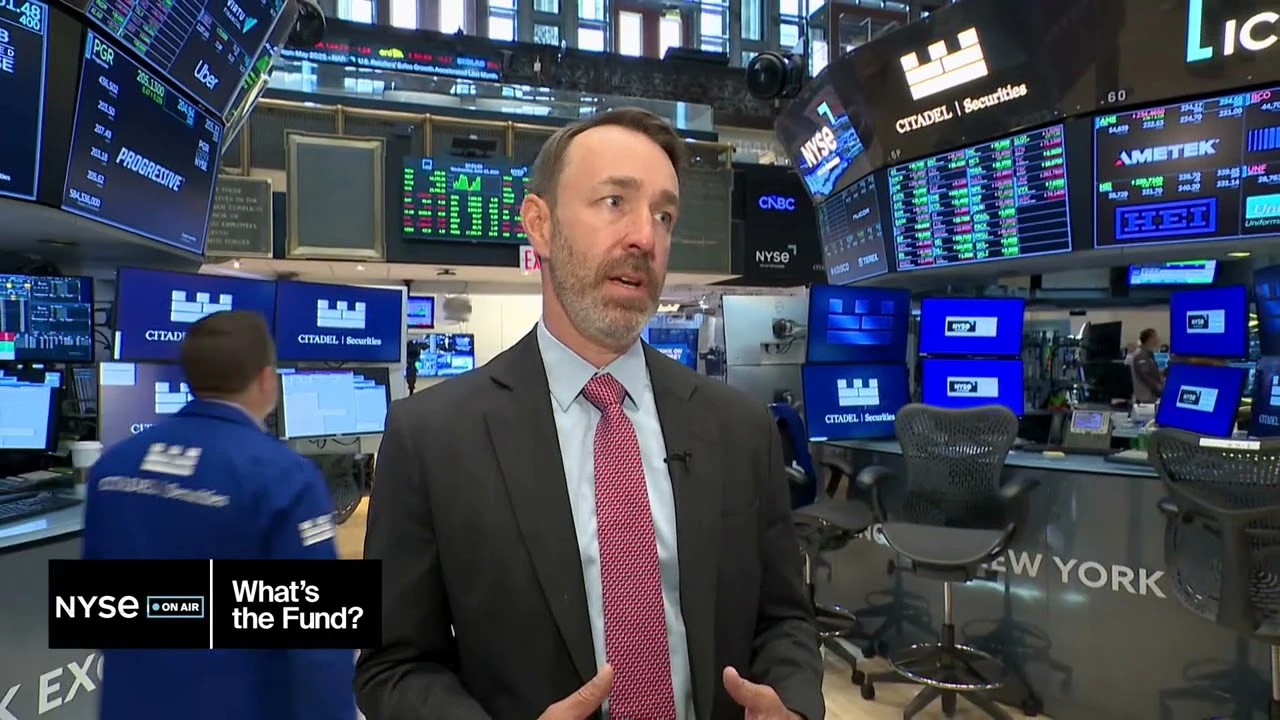
What's the Fund | Ocean Park Diversified Income ETF (DUKZ)
James St Aubin, Chief Investment Officer at Ocean Park Asset Management, discuss the DUKZ ETF, exposing investors to the whole spectrum of asset classes in the fixed income markets, through their rules-based process.

Browse all educational columns



Active Trader Report: Use of Leveraged & Inverse ETFs Way Up
Direxion partnered with Compound Insights and Vanda to explore what’s driving the evolution of active trading — and how active traders are using leveraged and inverse funds across equities, single stocks, commodities, and volatility.