Create, analyze, optimize your ETF portfolio. Start now →



Crypto ETFs Roar Back as U.S. Inflows Surge 13-Fold in August
CoinDesk’s Joshua de Vos breaks down the big flows, big winners, and bold moves in August's crypto ETF market.

Keep up with what matters in ETFs
Get timely ETF insights, market trends, and top ideas straight to your inbox.
Your newsletter subscriptions with us are subject to ETF Central's Privacy Policy and Terms and Conditions.
U.S.-domiciled crypto ETFs took in $5.82 billion in August, up from just $429.0 million in July, according to TrackInsight. That represents a thirteenfold increase in a single month and a sharp reversal from June, when the same market recorded $4.46 billion in net outflows.
Assets under management climbed 32.6%, from $98.5 billion to $130.7 billion by month-end. The U.S. also accounted for 95.5% of all global crypto ETF inflows during August, reinforcing its dominance of the listed digital-asset market.
Bitcoin provided much of the momentum, rising 25.04% over the month. Yet most of that move was concentrated in just three sessions. Between August 19 and 21, Bitcoin jumped from roughly $64,700 to $78,300, before stabilizing in the high-$70,000 range. ETF subscriptions accelerated in the days following the breakout, helping reinforce the move rather than lead it.
Like what you're reading?
Stay in the loop — get the latest ETF insights: trends, analysis, and expert picks.
Ether punches above its weight
Ether ETFs continued to attract disproportionately strong demand relative to their size.
The category drew $1.75 billion in August against $20.6 billion in assets, equivalent to around 8.5% of closing AUM. The comparable figure for Bitcoin ETFs was just 2.7%.
That marked the second consecutive month in which Ether outpaced Bitcoin on a flows-to-assets basis. The relative gap was even wider in July, when Ether funds collected $318.7 million compared with $243.0 million for Bitcoin, despite the Ether category holding only around one-seventh of the assets.
Elsewhere, blended crypto index products captured little of the rally, while leveraged long products remained in net redemption. That combination suggests August demand was driven more by investors establishing directional exposure than by traders increasing leverage.
The month also brought another expansion of the listed crypto universe. Grayscale converted its long-running Zcash trust into an NYSE Arca-listed product on August 25, giving U.S. investors listed exposure to a privacy-focused digital asset.
BlackRock captures the bulk of new assets
Flows were highly concentrated at the fund level.
The iShares Bitcoin Trust (IBIT) and iShares Ethereum Trust (ETHA) together captured 71% of all U.S. crypto ETF inflows in August. IBIT alone now accounts for 39.6% of global crypto ETP assets, highlighting just how concentrated the market has become around a small number of flagship products.
Fidelity's Bitcoin ETF and the Grayscale Bitcoin Mini Trust followed among the month's largest recipients of capital. At the same time, $188.7 million exited the legacy Grayscale Bitcoin Trust, extending the fee-driven migration toward lower-cost alternatives that has characterized the market since spot Bitcoin ETFs launched.
There were also signs that competition is moving beyond simple spot exposure.
Inverse Bitcoin and Ether products attracted capital even as leveraged long products suffered redemptions. Meanwhile, staking-enabled products emerged near the top of the flow rankings. The iShares staked Ether product and Bitwise's Solana equivalent together gathered close to $300 million, suggesting that yield could become the next major battleground among U.S. crypto ETF issuers.
The global market is increasingly U.S.-centric
The geographic split was equally striking.
Europe and APAC together attracted less than $236 million of inflows against a combined asset base of roughly $18.5 billion. By the end of August, U.S.-domiciled products accounted for 84.3% of global crypto ETF assets.
That concentration matters. During periods of U.S.-led weakness, international markets have sometimes absorbed capital and softened the global flow picture. In August, however, U.S. demand was so dominant that activity elsewhere barely registered at the global level.
A rally driven by positioning, not leverage
The mechanics behind August's rally were just as important as the headline performance.
When the debasement narrative accelerated on August 19, the resulting squeeze liquidated roughly $2.7 billion of bearish positions in a single day, a record event in which around 92% of liquidations were shorts.
Positioning had already hinted at that imbalance. U.S. inverse crypto products had been attracting assets as the Treasury expanded its buyback program, leaving the market vulnerable to a sharp reversal.
Forced short covering helped ignite the initial move. ETF subscriptions then followed and helped sustain it.
Crucially, perpetual futures funding remained at or below neutral levels throughout the rally. That suggests the shorts that were forced out were not immediately replaced by aggressive leveraged longs.
September will show whether the reset can hold
The current setup bears some resemblance to 2024, when spot Bitcoin ETFs pulled part of the traditional halving-cycle momentum forward by opening institutional access ahead of the supply event.
August may represent a similar pull-forward against the four-year crypto cycle. The difference is that leverage has yet to build meaningfully behind the move, removing one of the more familiar warning signs of a late-cycle market.
Zcash offers another example of demand arriving before product expansion. Its sharp August performance makes the new listed product look more like a response to existing investor interest than the catalyst for it.
That leaves September with a simple question: was August the start of a broader repositioning into crypto ETFs, or merely a powerful reaction to a crowded market caught on the wrong side of the trade?
Data Sources:
TrackInsight (All ETF and ETP Data): https://www.trackinsight.com/services/data-services
CoinDesk (XBX, CD20, CD80, Centralised Exchange Data): https://indices.coindesk.com/indices; https://www.coindesk.com/price
Disclaimer: Trackinsight considers flows from an ETF's perspective, treating the fund's first AUM upon listing as its initial inflow, which may differ from other sources that account for pre-listing activity or conversions.
Please note this article is for information purposes only and does not in any way constitute investment advice. It is essential that you seek advice from a registered financial professional prior to making any investment decision.


Latest ETF News
See all ETF news

 Advantages of ETFs over Mutual Funds1/6
Lower Costs
In this guide, we'll explore the advantages of ETFs over mutual funds, giving you valuable insights into why ETFs have gained significant popularity among investors like yourself.
Leveraged ETFs: Unlocking the Potential for Amplified Returns1/6
Understanding Leveraged ETFs
Explore leveraged ETFs: potential for amplified returns & risks. 5 ETFs to consider across equities, commodities & fixed income.
What is a Leveraged ETF?1/6
Introducing Leveraged and Inverse ETFs
In this guide, we'll dive into the world of leveraged ETFs, exploring their definition, mechanics, potential risks, and rewards.
Recent educational content

ETF Trends
ETF Industry KPIs September 8, 2026
This week’s KPI data overview highlights key metrics and trends shaping the ETF landscape.

ETF Trends
ETF Industry KPIs August 31, 2026
This week’s KPI data overview highlights key metrics and trends shaping the ETF landscape.
ETF Trends
ETF Industry KPIs August 24, 2026
This week’s KPI data overview highlights key metrics and trends shaping the ETF landscape.
What’sTheFund
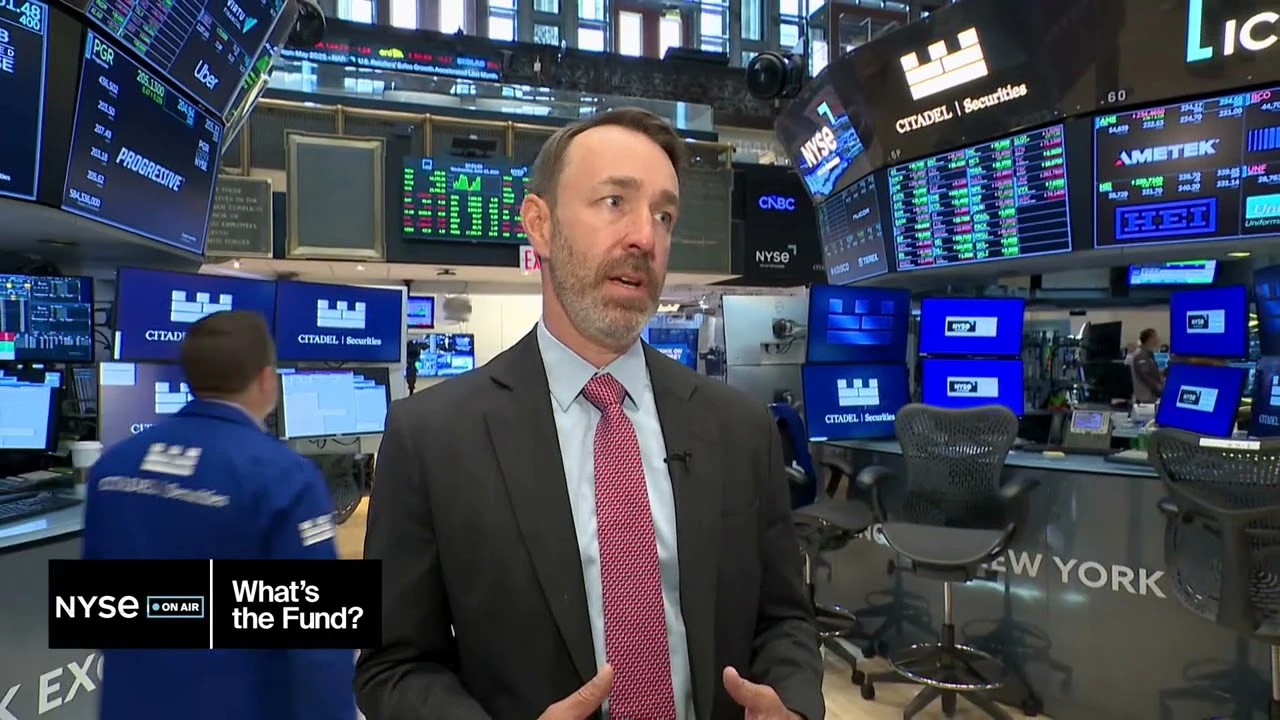
What's the Fund | Ocean Park Diversified Income ETF (DUKZ)
James St Aubin, Chief Investment Officer at Ocean Park Asset Management, discuss the DUKZ ETF, exposing investors to the whole spectrum of asset classes in the fixed income markets, through their rules-based process.

Browse all educational columns



Expert-Built ETF Portfolios, All in One Place
Don’t start from scratch. Discover ready-made ETF portfolios built by professionals to match different goals, timelines, and market views. Use them as inspiration or as a starting point for your own allocation.