Turn ETF ideas into real portfolios. Try the builder now →



Cannabis and U.S. Politics
2024 represents a historical moment where both Republican and Democratic Presidential candidates have embraced some level of substantial cannabis reform.


Keep up with what matters in ETFs
Get timely ETF insights, market trends, and top ideas straight to your inbox.
Your newsletter subscriptions with us are subject to ETF Central's Privacy Policy and Terms and Conditions.
As cannabis legalization becomes a popular issue, especially during an election year across the United States, we increasingly see the political divide between Democrats and Republicans narrow on cannabis as both parties adopt a historically pro-cannabis stance. This will play a critical role in shaping the future of cannabis-related industries—and by extension, investment opportunities.
Like what you're reading?
Stay in the loop — get the latest ETF insights: trends, analysis, and expert picks.
Democrats: Advocating for Federal Legalization
The Democratic Party favors the legalization and decriminalization of cannabis at both state and federal levels. Many Democratic lawmakers support comprehensive cannabis reform, pushing for the removal of cannabis from the Controlled Substances Act and for the expungement of past criminal records related to cannabis offenses. The party has embraced cannabis legalization as a matter of criminal justice reform, social equity, and economic opportunity. However, the Biden Administration has faced criticism and his cannabis agenda has been slow to achieve its promises. One of his main points of action has been pushing for cannabis be rescheduled, while the process is currently underway and on track, it currently will not be completed under his term. For a more detailed look into rescheduling and the process, look at our previous article DOJ’s Cannabis Rescheduling Proposal: What It Means for Investors for more information.
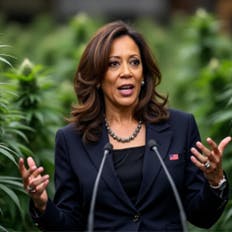
Vice President and democratic nominee Kamala Harris has remained relatively quiet on most of her policies but has taken to social media platforms like X stating, “Nobody should have to go to jail for smoking weed. We must continue to change our nation’s approach to marijuana while reforming the justice system so it finally lives up to its name.” Despite Harris’s tenure as district attorney in San Francisco, convicting 1,900 for cannabis offenses, her support for cannabis legalization emerged alongside a shift in her political role working as the Vice President of the Biden Administration. Harris was the leading sponsor of the MORE Act in the U.S. Senate, a bill that would remove cannabis from the Controlled Substances Act through descheduling. The latest version of that bill has more than 90 co-sponsors in Congress today. Her recent comments signal the party's broader aim to overhaul the justice system while paving the way for a more robust and regulated cannabis industry.
Republicans: A More States-Rights Focus
Republicans tend to be more divided on cannabis legalization, with many favoring a cautious, states-rights approach. While some Republicans support medical cannabis and limited decriminalization, a significant faction remains opposed to full federal legalization, citing concerns about public health, safety, and law enforcement.

Former President and current republican nominee Donald Trump has expressed evolving views on the issue, seeming to support leaving cannabis regulations up to states. While in office, he ended a rider provision in his fiscal year 2021 budget plan that protected states with legal medical marijuana from Justice Department interference but said, “I support states’ rights... If they vote for it, they vote for it. But I think, from a federal standpoint, we’re going to see what happens.” However, three years later, Trump recently threw his weight behind Amendment 3, a proposed constitutional amendment that aims to legalize recreational marijuana for those 21 years and older in Florida, saying, “As I have previously stated, I believe it is time to end needless arrests and incarcerations of adults for small amounts of marijuana for personal use. We must also implement smart regulations, while providing access for adults, to safe, tested product. As a Floridian, I will be voting YES on Amendment 3 this November. As President, we will continue to focus on research to unlock the medical uses of marijuana to a Schedule 3 drug, and work with Congress to pass common sense laws, including safe banking for state authorized companies, and supporting states rights to pass marijuana laws, like in Florida, that work so well for their citizens”. His shift towards pro-cannabis policies reflects the broader acceptance of cannabis among Republicans and supporting reform at the federal level for rescheduling and safe banking.
Voter Support for Federal Reform
It's no surprise that both parties are increasingly embracing cannabis, as it's a widely popular issue among Americans and could provide a political advantage in a close race.
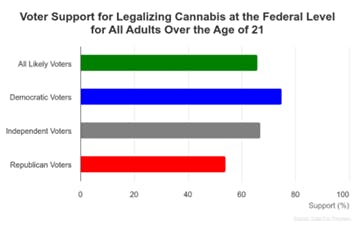
Voter support for federal cannabis reform is strong across party lines, with recent polling from Data for Progress showing that 66% of Americans favor legalizing marijuana at the federal level for adults over 21. The breakdown of support highlights a wide political consensus: 75% of Democrats back legalization, along with 67% of Independents and even 54% of Republicans. This broad approval underscores a shifting public attitude toward cannabis and puts increasing pressure on lawmakers to address the issue, as more voters view federal legalization as a matter of personal freedom, economic opportunity, and criminal justice reform.
The Role of Federal Rescheduling
2024 represents a historical moment where both Republican and Democratic presidential candidates have embraced some level of substantial cannabis reform. Currently, cannabis is classified as a Schedule I substance under the Controlled Substances Act, alongside drugs like heroin. Both Democrats and some Republicans have expressed interest in rescheduling or descheduling cannabis, which would make it easier to conduct research, provide medical treatments, and offer more regulatory clarity for businesses.
From an investment perspective, a pro-cannabis stance opens the door to greater market expansion. If either party succeeds in advancing federal legalization, cannabis companies will benefit from easier access to banking services, capital markets, and interstate commerce, significantly reducing operational risks. For investors, this could translate into a broader selection of investment opportunities, increased liquidity, and improved valuations for cannabis ETFs.
Potential Impact of Positive Cannabis Reform:
- Less Tax, More Money for Businesses: Rescheduling would reduce some important barriers faced by cannabis companies, such as banking restrictions and tax burdens under Section 280E of the tax code, which to put in perspective, state-legal cannabis companies were forced to pay more than $1.8 billion in excess taxes compared to non-cannabis businesses in 2022.
- Domino Effects: A unified legal framework could reduce the regulatory uncertainty that currently plagues the industry, encouraging institutional investment and further boosting potential growth and softening negative volatility in cannabis investments. Rescheduling cannabis from Schedule I to Schedule III would be a major step toward normalizing the industry for investors. It could pave the way for regulatory changes like the SAFER Banking Act, providing protections for banks and financial institutions handling cannabis-related activities. Even without dedicated legislation, rescheduling might lead the U.S. Treasury to update the FinCEN guidelines, reducing regulatory uncertainty and encouraging more institutional investment, which could boost growth and reduce volatility in the cannabis market
- Increased Investment Access: Federal legalization could lead to the listing of U.S.-based cannabis companies on major stock exchanges, attracting more investors and enhancing the liquidity of cannabis ETFs.
- Global Growth Potential: As more countries legalize cannabis, international expansion could drive revenue growth and add diversification, offering further upside potential. We have already seen new laws to allow for cannabis access in every continent outside of Antarctica. Expanding cannabis markets in Europe, Latin America, Australia, and Asia are particularly encouraging, as regulatory frameworks evolve and consumer demand increases, creating new opportunities for industry leaders.
Long-Term Outlook: Navigating Political Uncertainty
Despite previous political hurdles in the U.S., the long-term prospects for the cannabis industry remain strong. As public support for legalization grows and more states adopt cannabis-friendly policies, the pressure on federal lawmakers to enact meaningful reform continues to mount. Global trends toward legalization further strengthen the industry’s potential, opening up new markets and investment opportunities. While short-term volatility is expected, the industry's underlying fundamentals and ongoing regulatory shifts offer a new horizon for long-term investors.
A way to gain exposure to the cannabis sector in a diversified way is through ETFs, spreading risk across multiple companies and regions by providing access to companies operating in multiple legal markets, reducing the risk posed by U.S. political gridlock, offering greater investor access and bolstering investment opportunities. Rescheduling helps legitimize MSOs operations which had previously deterred many institutional investors from actively investing in them.
The opinions expressed in this publication are those of the authors and are subject to change. They do not purport to reflect the opinions or views of ETF Central or its members. ETF Central does not guarantee the accuracy, completeness, or reliability of the information provided.
Segments
See all
Mentioned ETFs
No specific ETFs were tagged
Further reading
Latest ETF News
See all ETF newsLosers Of Q2 2026 REIT Earnings Season


Winners of Q2 2026 REIT Earnings Season


ETF Creation Windows Matter More Than You Think


Why the Time of Day Matters When Trading an ETF

The Leveraged ETF Question Nobody Is Asking


 Advantages of ETFs over Mutual Funds1/6
Lower Costs
In this guide, we'll explore the advantages of ETFs over mutual funds, giving you valuable insights into why ETFs have gained significant popularity among investors like yourself.
Leveraged ETFs: Unlocking the Potential for Amplified Returns1/6
Understanding Leveraged ETFs
Explore leveraged ETFs: potential for amplified returns & risks. 5 ETFs to consider across equities, commodities & fixed income.
What is a Leveraged ETF?1/6
Introducing Leveraged and Inverse ETFs
In this guide, we'll dive into the world of leveraged ETFs, exploring their definition, mechanics, potential risks, and rewards.
Recent educational content
What’sTheFund
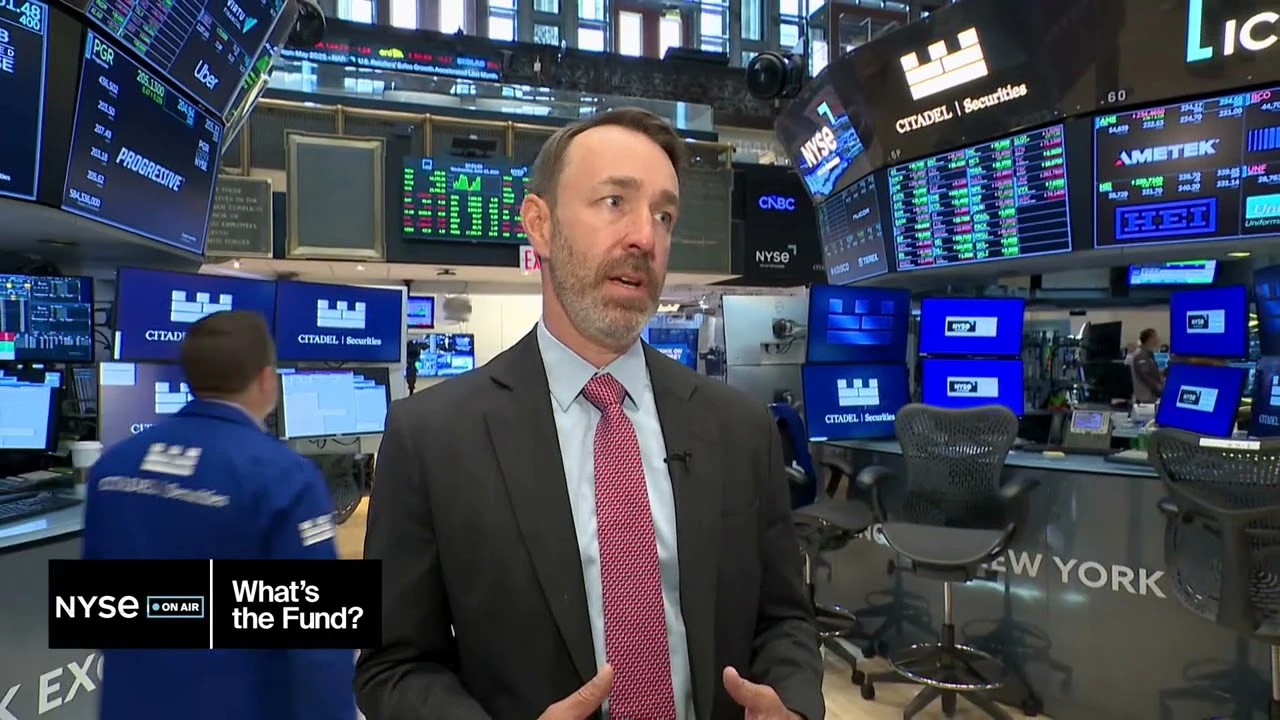
What's the Fund | Ocean Park Diversified Income ETF (DUKZ)
James St Aubin, Chief Investment Officer at Ocean Park Asset Management, discuss the DUKZ ETF, exposing investors to the whole spectrum of asset classes in the fixed income markets, through their rules-based process.

ETF Takeaway
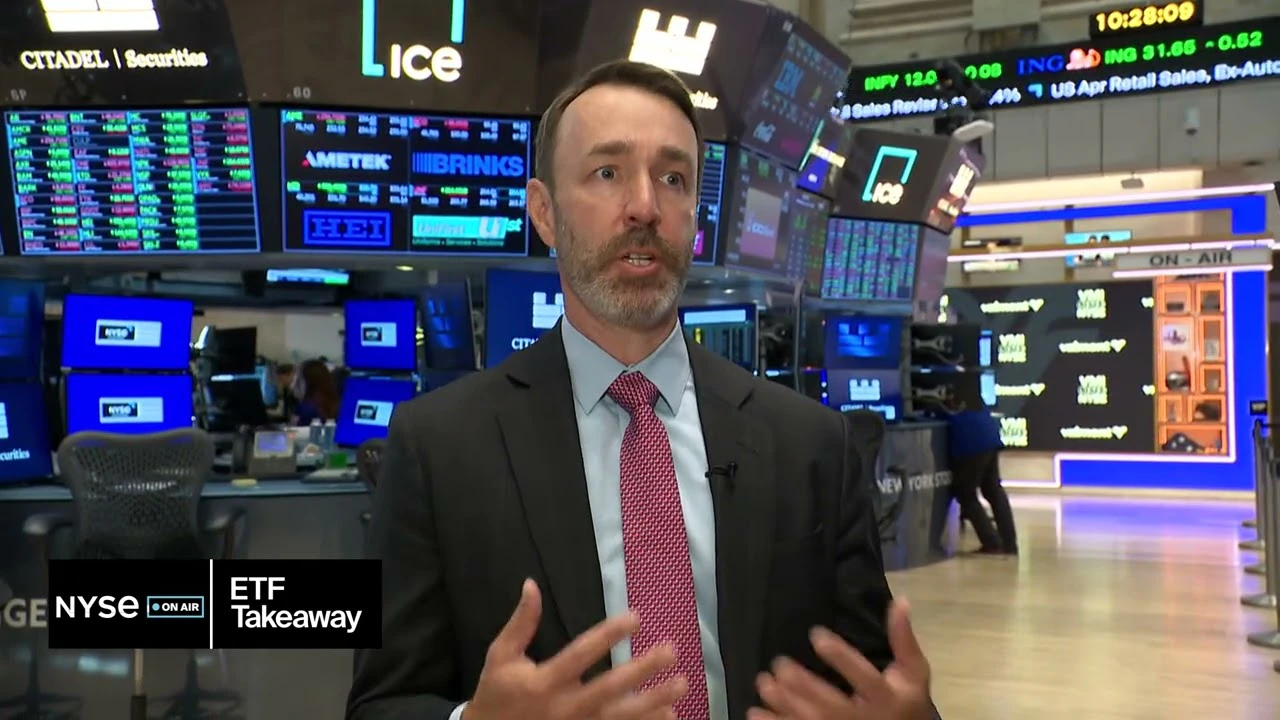
ETF Takeaway: Ocean Park Diversified Income ETF (DUKZ)
James St Aubin, Chief Investment Officer at Ocean Park Asset Management discusses the state of fixed income markets and how their DUKZ ETF, through their rules-based process, tactically allocates to 11 sectors of fixed income through underlying ETFs.

ETF Trends
ETF Industry KPIs August 17, 2026
This week’s KPI data overview highlights key metrics and trends shaping the ETF landscape:


First Look ETF
First Look ETF: Cycle Aware Investing & Next-Gen Nicotine Shifts
In this season 6 episode of First Look ETF, Stephanie Stanton examines the latest ETF marketplace trends with NYSE and guests.

Browse all educational columns



Have you tried our ETF Compare tool?
Compare ETFs like a pro. Analyze fees, performance, exposure & holdings side-by-side.