From idea to ETF portfolio in minutes. Build yours now →



A Year of PRSD: Blending Public and Private Credit with Short Duration
Twelve months in, PRSD offers private credit exposure through a short-duration portfolio designed to limit sensitivity to changing interest rates.


Keep up with what matters in ETFs
Get timely ETF insights, market trends, and top ideas straight to your inbox.
Your newsletter subscriptions with us are subject to ETF Central's Privacy Policy and Terms and Conditions.
On February 26, 2026, we covered the one-year anniversary of the State Street IG Public & Private Credit ETF
State Street Investment Management didn't stop with PRIV. Against a challenging macro backdrop characterized by elevated fixed-income volatility, the firm launched the State Street Short Duration IG Public and Private Credit ETF
PRSD came to market with a lower 0.45% expense ratio compared with PRIV's 0.55%. But the differences go well beyond fees. Its portfolio is constructed around a shorter-duration mandate, giving investors another way to access both public and private investment-grade credit while limiting sensitivity to changes in interest rates.
Rather than simply replicating PRIV at a lower fee, PRSD approaches the same broad opportunity set with a different interest-rate profile. One year in, we're taking a comprehensive look at what makes PRSD tick, how its public and private credit exposure is constructed, and what separates it from its older and larger sibling.
Like what you're reading?
Stay in the loop — get the latest ETF insights: trends, analysis, and expert picks.
What Is PRSD and How Does it Work?
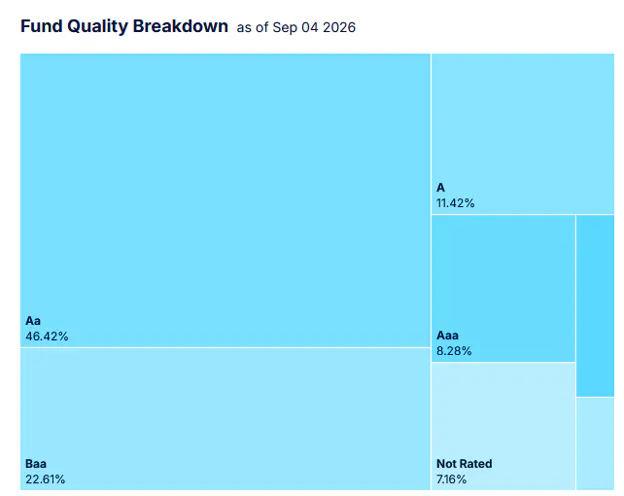
PRSD is an actively managed ETF focused primarily on investment-grade debt securities. Investment grade generally means a credit rating of BBB/Baa or higher, indicating that rating agencies view the issuer as having a comparatively lower risk of default than below-investment-grade borrowers.
Source: State Street Investment Management
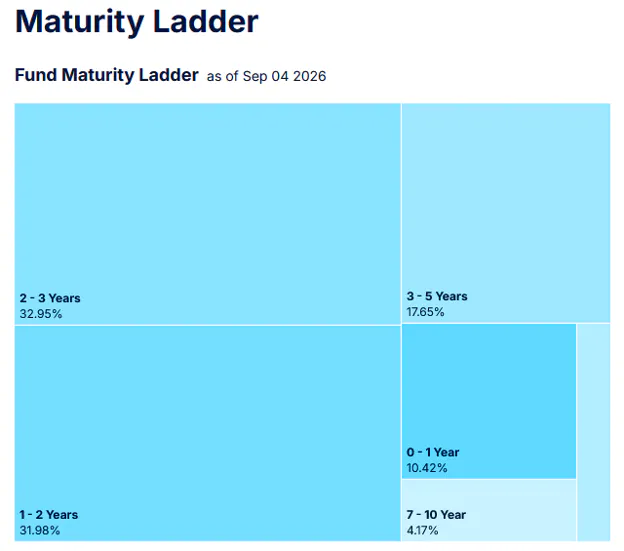
The defining feature is right in the fund's name: short duration. PRSD targets a duration between one and three years, limiting how sensitive its portfolio should be to changes in interest rates. Duration measures that sensitivity in years.
Source: State Street Investment Management
As of September 4, PRSD had an option-adjusted duration of 1.96 years. All else being equal, that implies the portfolio's value would be expected to fall by approximately 1.96% if interest rates rose by one percentage point, or rise by approximately 1.96% if rates fell by one percentage point. In practice, other factors such as changing credit spreads can also affect bond prices.
That's considerably less rate sensitivity than its larger sibling, PRIV, which had a duration of 5.85 years. A comparable one-percentage-point move in rates would imply roughly three times as much price sensitivity for PRIV, all else being equal.
PRSD may therefore appeal to investors who want investment-grade public and private credit exposure but are less willing to make a large directional bet on interest rates. The trade-off is that shorter duration also means less potential price appreciation if rates fall substantially.
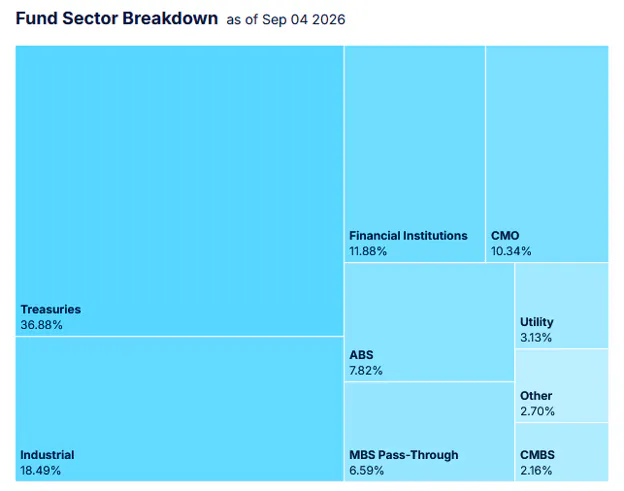
For its public debt allocation, State Street combines top-down macroeconomic analysis with bottom-up security selection. In practice, that means the managers first evaluate broader conditions such as economic growth, monetary policy, interest rates and credit spreads to determine where they want exposure.
They then analyze individual issuers and securities to decide which bonds offer the most attractive risk-and-return characteristics within those areas.
Source: State Street Investment Management
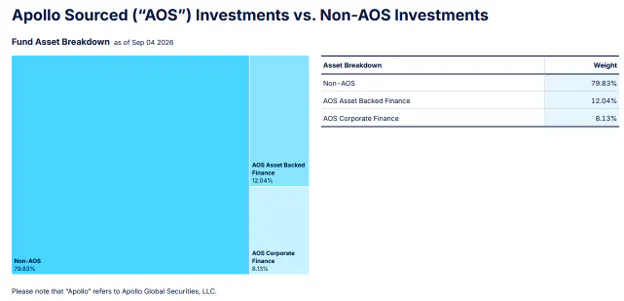
The more unusual part of PRSD is its private credit allocation. The fund generally expects to allocate between 10% and 35% of its portfolio to private investments, which may be sourced through Apollo Global Securities.
Unlike the publicly traded bonds making up most of the portfolio, these investments provide exposure to privately originated credit opportunities that most ETF investors wouldn't ordinarily encounter directly.
Source: State Street Investment Management
Those holdings are also where PRSD becomes considerably more interesting than a conventional short-duration corporate bond ETF. So, let's take a closer look at what they actually are.
What Are PRSD’s Private Asset Holdings?
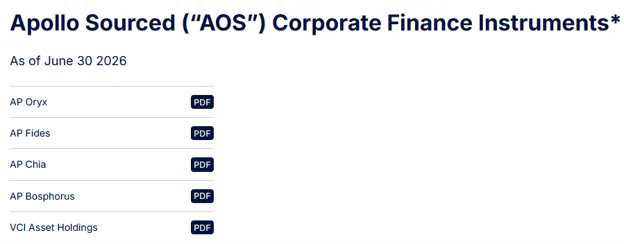
As of June 30, PRSD's private credit allocation included several Apollo-sourced corporate finance and asset backed finance instruments. While the names don't tell investors much on their own, the assets backing them are tied to recognizable companies and infrastructure.
Source: State Street Investment Management
AP Oryx – Vale Oman Distribution Center: This investment is tied to Vale, one of the world's largest iron ore producers. Apollo acquired a 50% interest in Vale's Oman Distribution Center, a major deep-water port and iron ore processing and distribution hub serving the Middle East and Asia. PRSD holds privately rated investment-grade senior notes issued by AP Oryx, originally carrying a 6.10% fixed coupon.
AP Fides – Air France-KLM Flying Blue: This investment is linked to Flying Blue, the loyalty program used by Air France and KLM. Apollo invested €1.5 billion in the entity holding the program's trademarks and many of its commercial partner contracts. Cash flows are supported by recurring payments from Air France-KLM and third-party partners. PRSD's privately rated investment-grade senior notes were issued with a 6.00% fixed coupon.
AP Chia – bp's TANAP interest: This financing is backed by an interest connected to the Trans Anatolian Pipeline, which carries natural gas from Azerbaijan toward European markets. Apollo invested roughly $1 billion for a 25% preferred interest in the bp subsidiary holding bp's 12% stake in the pipeline. TANAP generates contracted U.S.-dollar revenue through fixed-price, ship-or-pay agreements. PRSD's privately rated investment-grade senior notes were issued with a 7.25% fixed coupon.
AP Bosphorus – Ziraat Bank payment flows: This investment is tied to Ziraat Bank, Turkey's largest bank by assets. The notes are secured by U.S. dollar- and euro-denominated payment flows that Ziraat receives from sources such as overseas remittances and international trade. Those payments are captured offshore, providing additional protection from risks such as capital controls and currency convertibility. The structure received a private investment-grade BBB- rating, three notches above Ziraat's BB- credit rating, and carried a 6.40% floating coupon at issuance.
VCI Asset Holdings 2 – SpaceX GPU lease: This financing provides a particularly timely example of private credit. Apollo supplied $3.5 billion of first-lien debt to help Valor Compute Infrastructure purchase $5.4 billion of graphics processing units (GPUs), which are being leased to SpaceX for five years. The GPUs sit in a special-purpose vehicle and SpaceX guarantees the lease following its acquisition of xAI. PRSD's privately rated investment-grade senior secured notes carried a 7.375% fixed coupon at issuance and mature in 2031.
Together, these holdings show the variety available within private investment-grade credit. PRSD's private allocation spans infrastructure, intellectual property, cross-border payment flows and equipment financing, that generally aren't available to investors through the public bond market.
PRSD by the Numbers
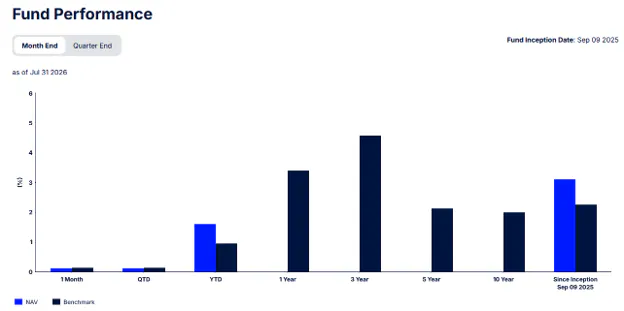
PRSD's first year provides some early evidence of how the strategy has performed in practice. As of July 31, 2026, the fund had returned 1.61% year to date at net asset value (NAV), ahead of the 0.96% return from its performance benchmark, the Bloomberg U.S. Aggregate 1-3 Year Bond Index. For income investors, PRSD had a 4.42% 30-day SEC yield as of September 4, with distributions paid monthly.
Source: State Street Investment Management
The inclusion of private assets also hasn't prevented the ETF itself from trading with reasonable liquidity. PRSD had a 30-day median bid-ask spread of 0.08%, giving investors the intraday tradability expected from an ETF despite part of the underlying portfolio consisting of privately originated securities.
There are additional risks to consider. Private credit can be harder to value and less liquid than publicly traded bonds, while PRSD relies partly on Apollo to source its private investments. Credit risk remains present even though the mandate focuses on investment-grade securities, and the fund's short duration means it would likely participate less in a major bond rally if interest rates fell sharply. At 0.45%, its expense ratio is also higher than those of straightforward short-term investment-grade bond index ETFs.
For investors looking to do something different with a short-term bond allocation, however, PRSD offers an interesting alternative. It combines a conventional portfolio of publicly traded investment-grade debt with access to private transactions that would otherwise be difficult for individual investors to obtain, while retaining daily liquidity, intraday trading and the other structural benefits of an ETF.
One year in, PRSD remains smaller than PRIV, but it also serves a different purpose. For investors who want public and private investment-grade credit exposure without taking nearly six years of duration risk, its combination of a 4.42% SEC yield, 1.96-year duration and 0.45% expense ratio makes a reasonable case for consideration alongside traditional short-duration bond funds.
Please note that this article reflects the author’s personal views and does not represent the opinions of the publication or its affiliates. It is for informational purposes only and does not constitute investment advice. It is essential to seek guidance from a registered financial professional before making any investment decisions.

Latest ETF News
See all ETF newsBeyond Traditional Bonds: A Dynamic Approach to Income with this DoubleLine ETF


Looking for Broad Commodity Exposure in a Single ETF? Meet NBCM

How the NBOS ETF Balances Stability and Growth


 Advantages of ETFs over Mutual Funds1/6
Lower Costs
In this guide, we'll explore the advantages of ETFs over mutual funds, giving you valuable insights into why ETFs have gained significant popularity among investors like yourself.
Leveraged ETFs: Unlocking the Potential for Amplified Returns1/6
Understanding Leveraged ETFs
Explore leveraged ETFs: potential for amplified returns & risks. 5 ETFs to consider across equities, commodities & fixed income.
What is a Leveraged ETF?1/6
Introducing Leveraged and Inverse ETFs
In this guide, we'll dive into the world of leveraged ETFs, exploring their definition, mechanics, potential risks, and rewards.
Recent educational content

ETF Trends
ETF Industry KPIs September 8, 2026
This week’s KPI data overview highlights key metrics and trends shaping the ETF landscape.

ETF Trends
ETF Industry KPIs August 31, 2026
This week’s KPI data overview highlights key metrics and trends shaping the ETF landscape.
ETF Trends
ETF Industry KPIs August 24, 2026
This week’s KPI data overview highlights key metrics and trends shaping the ETF landscape.
What’sTheFund
What's the Fund | Ocean Park Diversified Income ETF (DUKZ)
James St Aubin, Chief Investment Officer at Ocean Park Asset Management, discuss the DUKZ ETF, exposing investors to the whole spectrum of asset classes in the fixed income markets, through their rules-based process.

Browse all educational columns



Active Trader Report: Use of Leveraged & Inverse ETFs Way Up
Direxion partnered with Compound Insights and Vanda to explore what’s driving the evolution of active trading — and how active traders are using leveraged and inverse funds across equities, single stocks, commodities, and volatility.