Global ETF Survey Is Live! 600+ ETF Professionals Weigh In. See Results →



A Year of PRIV. The ETF Trying to Bridge Public and Private Credit
Twelve months on, $850M of proof that private credit can live inside an ETF.


Keep up with what matters in ETFs
Get timely ETF insights, market trends, and top ideas straight to your inbox.
Your newsletter subscriptions with us are subject to ETF Central's Privacy Policy and Terms and Conditions.
When SPDR SSGA IG Public & Private Credit ETF (PRIV) launched in February 2025, it arrived with a question baked into its design.
Can you bring parts of private credit into an ETF wrapper without losing what investors expect from an ETF?
One year later, that question matters more, not less.
Income is back, but “easy income” is still scarce. Businesses still need capital. Banks still lend, but they do not set the terms of every deal the way they once did.
That space between demand for financing and the capacity of traditional lenders is where private credit has grown from an institutional specialty into a market that investors can no longer ignore.
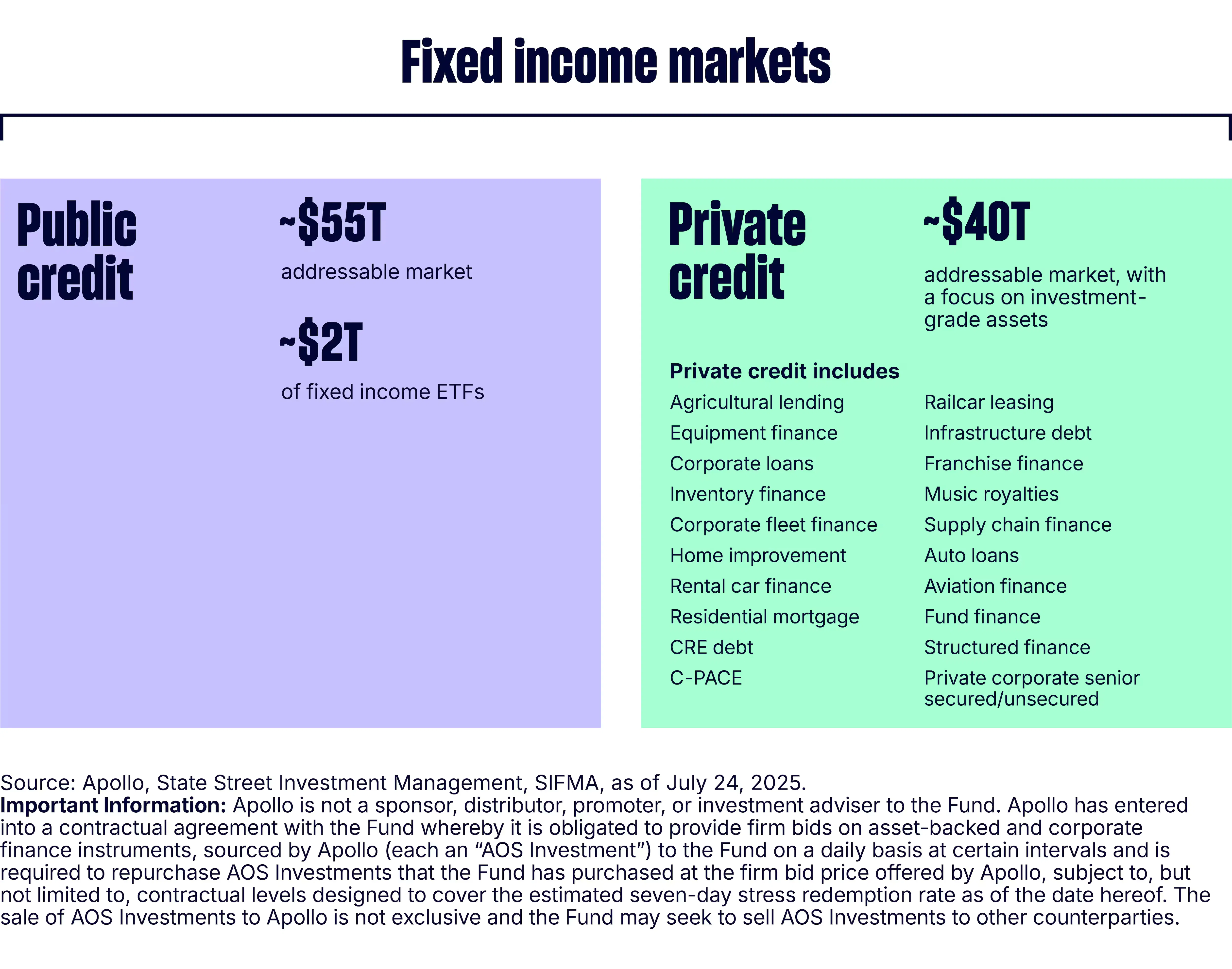
PRIV’s anniversary is a good moment to step back and look at the bigger story behind the ticker.
Global ETF Survey 2026 is Live!
With 1,790 new products launched by July 2026, choosing is harder than ever. Our Global ETF Survey 2026, built on 620 professional investors and allocators, shows how active, fixed income, options-based and thematic ETFs are reshaping fund selection.
Private credit. The simplest way to understand it
Most people picture “credit” as a bank loan. You apply, the bank checks your file, the approval takes time, and the terms are largely standardized.
Private credit works differently.
It is a loan negotiated directly between a borrower and a non-bank lender, with terms built for that specific situation.
Think of it less like shopping for a product off the shelf, and more like drafting a contract together.
That contract matters because private credit is often built around features public markets do not easily provide.
Borrowers can ask for speed, flexibility, and tailored structures.
Lenders can ask for protections, collateral, and covenants that set clear guardrails around what the borrower can and cannot do while the loan is outstanding.
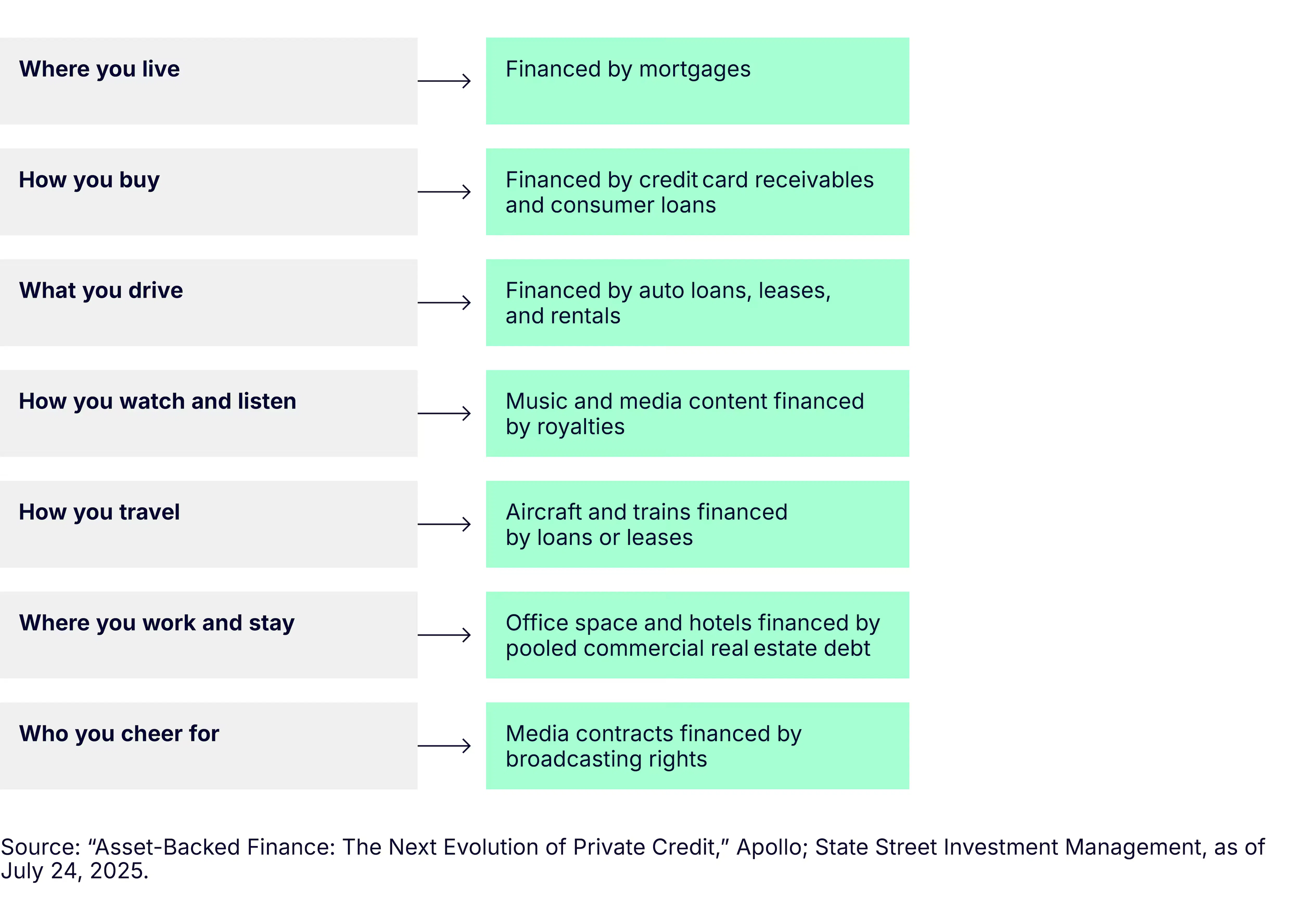
And the universe is much wider than the classic “middle-market direct lending” stereotype.
A major branch is asset-based finance, where loans are backed by collateral that can range from real estate and aircraft to machinery, consumer finance pools, and even royalties.
Why the market keeps shifting toward private credit
This is not just a yield story, even though yield is part of it.
Start with the borrower side.
Companies increasingly want financing that matches their business reality, not the other way around.
They may want a structure designed around cash-flow timing, collateral, or a specific strategic plan. They may also prefer debt to equity to avoid diluting ownership.
Now add the banking backdrop.
Since the Great Financial Crisis, higher capital requirements and stricter regulation have made some lending less attractive for banks.
The result is not that banks disappeared, but that non-bank lenders gained room to grow.
Finally, look at the investor side.
Private credit has historically attracted institutional money seeking income and diversification, with the added appeal that many deals are floating-rate and covenant-heavy.
Briarcliffe Bellwether, Annual institutional investor survey 2025.
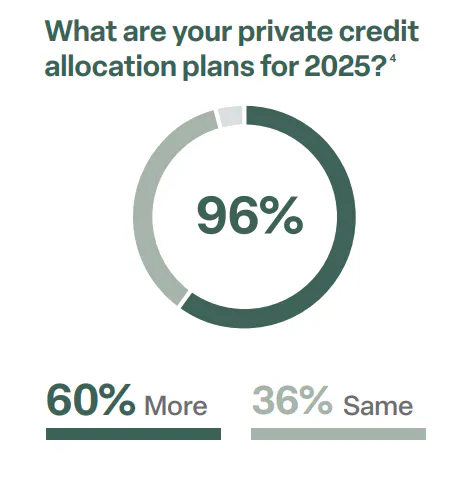
That combination can look compelling when public markets feel crowded or highly correlated.
Of course, trade-offs come with the territory.
Private credit can demand more due diligence, and liquidity can behave very differently than a public bond that trades continuously with transparent pricing.
Why packaging private credit into an ETF is such a big industry test
For years, private markets were largely accessed through interval funds, private funds, or closed-end funds, each with its own liquidity constraints.
ETFs changed investor habits. People expect daily trading, transparency, and clean mechanics.
That is why the recent push to bring private exposures into ETFs has triggered such a heated debate.
The industry is effectively trying to translate a private-market engine into a public-market vehicle without breaking either one.
PRIV is one of the headline attempts to do this on the credit side, rather than the private equity side.
How PRIV works. The headline, then the mechanics
The headline is straightforward.
PRIV is actively managed and, under normal circumstances, invests at least 80% of its net assets in investment-grade debt securities across a blend of public credit and private credit.
The mechanics are where it gets interesting.
Private credit exposure is expected to generally range between 10% and 35% of the portfolio, but it can move outside that range depending on portfolio manager discretion and market conditions.
The fund’s opportunity set is broad, spanning everything from government-related bonds and corporate bonds to securitized credit instruments like RMBS, CMBS, ABS, and CLOs.
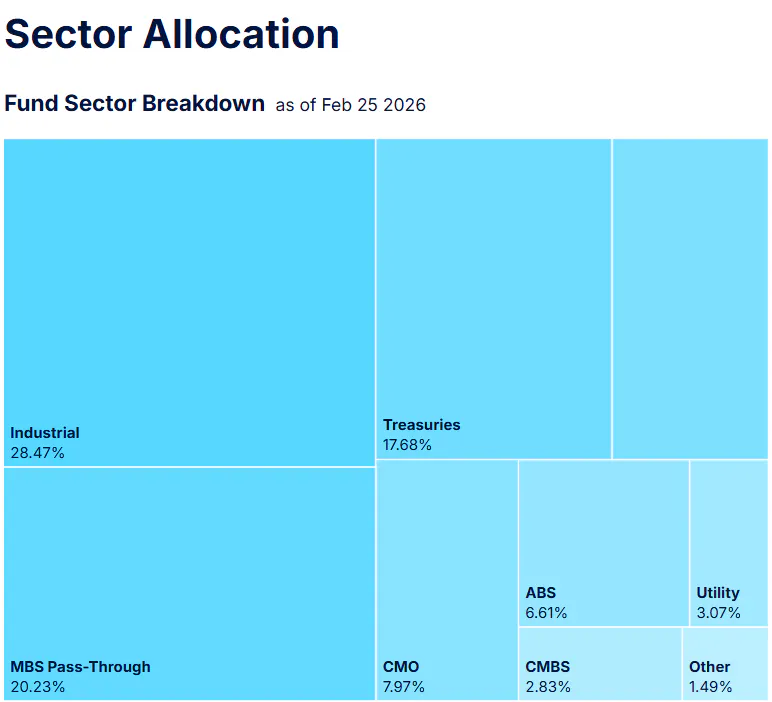
It can also use derivatives to manage duration, currency, and credit exposures.
The part most investors will focus on is the liquidity design.
Apollo has contractually agreed to provide intra-day, firm, executable bids on Apollo-sourced private credit instruments held by the fund, and is obligated to repurchase those instruments under the agreement.
That does not make private credit “liquid like Treasuries.”
But it is a structural feature meant to reduce the classic mismatch fear of holding private instruments inside a daily-traded ETF.
One year in. What the early traction suggests
PRIV’s early trajectory has been shaped by performance and growing investor demand.
Since inception, the fund has outperformed its benchmark, the Bloomberg U.S. Aggregate Bond Index by 104 basis points¹.
And then there are the flows.
After a muted start, likely reflecting the learning curve around private credit in an ETF format, the fund has reportedly gathered $742 million over the past month and now holds more than $850 million in assets, not a bad birthday gift for its first year.
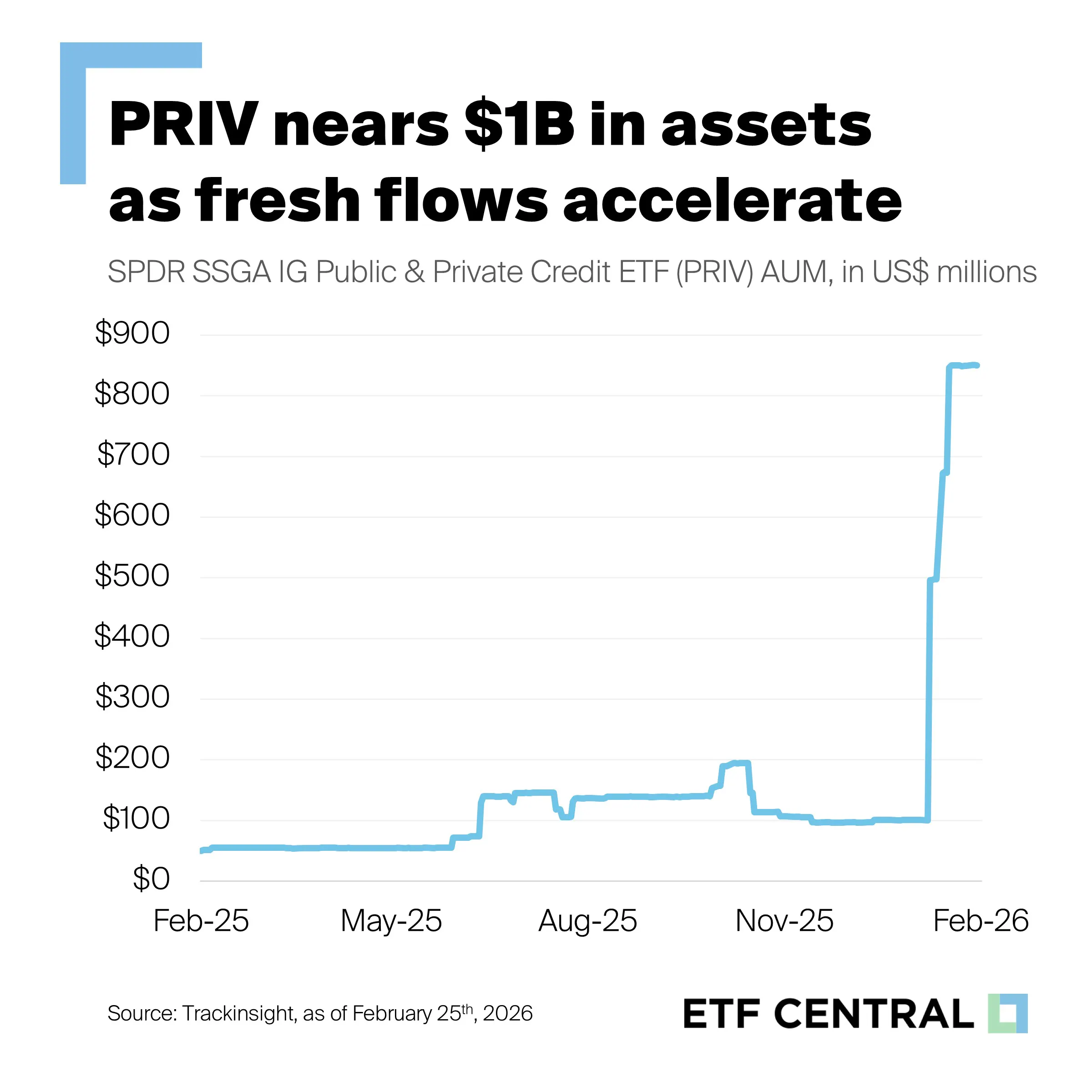
And this time, the gift goes both ways.
Effective February 26, 2026, State Street reduced the total annual operating expenses for PRIV from 0.70% to 0.55%, according to updated fund filings, lowering the cost of access.
Should you buy PRIV?
At its core, PRIV is about access.
Private credit has usually meant longer lockups and more complex entry points.
An ETF does not change the underlying loans, but it changes how investors can hold them. Daily trading, clear reporting, and a familiar structure make the exposure easier to incorporate into a traditional portfolio.
Income is a clear part of the appeal.
By allocating across both public investment-grade bonds and privately negotiated credit, the strategy aims to capture a yield profile that can sit above standard core bond benchmarks.
The flexibility to move across sectors and structures gives the manager more room to source income than a purely index-driven approach.
There is also a portfolio construction angle.
Private credit is structured differently from public bonds, with negotiated terms, collateral, and covenants.
That can lead to return patterns that do not always move in lockstep with traditional fixed income, offering a different source of diversification when public markets become more correlated.
The trade-offs are not hidden.
Liquidity is the key consideration whenever less liquid instruments sit inside a daily-traded vehicle.
Credit quality and underwriting discipline matter just as much as they would in any private lending strategy.
The ETF wrapper improves access and transparency, but it does not eliminate risk.
So where does it fit.
For some investors, PRIV may serve as a complement to core bond exposure rather than a replacement. For others, it represents a way to broaden fixed income allocations without stepping outside the ETF ecosystem.
One year after launch, the relevance is less about novelty and more about direction. The line between public and private credit is becoming less rigid, and funds like PRIV sit right at that intersection.
Footnotes
1: SPDR® SSGA IG Public & Private Credit ETF fund page, as of January 31, 2026.
Please note that this article reflects the author’s personal views and does not represent the opinions of the publication or its affiliates. It is for informational purposes only and does not constitute investment advice. It is essential to seek guidance from a registered financial professional before making any investment decisions.
Topics
See all
Segments
See all
Mentioned ETFs
Further reading


Latest ETF News
See all ETF newsxETFs Launches NECK to Focus on the Physical Bottlenecks Behind the AI Buildout


Jensen Launches JQTY ETF With a Strict 10-Year Profitability Test





 Advantages of ETFs over Mutual Funds1/6
Lower Costs
In this guide, we'll explore the advantages of ETFs over mutual funds, giving you valuable insights into why ETFs have gained significant popularity among investors like yourself.
Leveraged ETFs: Unlocking the Potential for Amplified Returns1/6
Understanding Leveraged ETFs
Explore leveraged ETFs: potential for amplified returns & risks. 5 ETFs to consider across equities, commodities & fixed income.
What is a Leveraged ETF?1/6
Introducing Leveraged and Inverse ETFs
In this guide, we'll dive into the world of leveraged ETFs, exploring their definition, mechanics, potential risks, and rewards.
Recent educational content

First Look ETF
First Look ETF: Income, International, and Cash Flow ETFs
In this season 6 episode of First Look ETF, Stephanie Stanton @etfguide examines the latest ETF marketplace trends with NYSE and guests.


ETF Trends
ETF Industry KPIs October 5, 2026
This week’s KPI data overview highlights key metrics and trends shaping the ETF landscape.

ETF Trends
ETF Industry KPIs September 28, 2026
This week’s KPI data overview highlights key metrics and trends shaping the ETF landscape.
ETF Trends
ETF Industry KPIs September 22, 2026
This week’s KPI data overview highlights key metrics and trends shaping the ETF landscape.