Ready-made ETF portfolios built for real investor needs. Explore now →



3 food and beverage ETFs for hungry investors
These ETFs provide access to companies and commodities involved in the food & beverage industry.


Keep up with what matters in ETFs
Get timely ETF insights, market trends, and top ideas straight to your inbox.
Your newsletter subscriptions with us are subject to ETF Central's Privacy Policy and Terms and Conditions.
A "common sense" strategy used by many retail investors is "investing in what you use." Drink Coke? Buy shares of Coca-Cola (KO). Like Pepsi instead? Buy shares of PepsiCo (PEP). Have a Costco membership and enjoy their $1.50 hotdog combo? Buy shares of Costco (COST).
This strategy isn't as ridiculous as it seems, especially when it comes to the food & beverage (F&B) industry. In particular, F&B companies that belong to the consumer staples sector tend to outperform during recessionary conditions owing to their relatively inelastic demand.
Here's a specific example: one of the best-performing stocks in 2022 - a year marked by rising rates, high inflation, layoffs, a war in Europe, and a falling stock market - was Campbell Soup (CPB). CPB is actually up over 28% year-to-date as of December 20th. Take that, fancy tech stocks.

Investors looking for exposure to F&B stocks can therefore use consumer staples ETFs, but that comes with a catch. With these ETFs, you're also getting exposure to household product companies like Clorox (CLX) and tobacco companies like Philipp Morris (PM).
A great alternative is a dedicated thematic ETF that targets the F&B industry. This approach has the possibility of also including some F&B stocks that fall into the consumer discretionary sector, such as Mcdonald's (MCD). Let's take a look at some of the best ETFs for F&B stocks.
Like what you're reading?
Stay in the loop — get the latest ETF insights: trends, analysis, and expert picks.
First Trust Nasdaq Food & Beverage ETF (FTXG)
FTXG tracks the proprietary Nasdaq US Smart Food & Beverage Index, which screens its holdings based on a multi-factor weighting methodology. First, the index selects the 30 most liquid U.S. F&B stocks and ranks them based on volatility (trailing 12-month price fluctuation), value (cash flow to price) and growth (three, six, nine, and 12-month average price appreciation).
A score is then assigned to each stock based on how it ranked for each of the three aforementioned factors. Then, the stocks are weighted according to their scores, with caps to prevent single stocks from dominating the ETF. FTXG is rebalanced quarterly and reconstituted annually. Even though it follows an index, FTXG comes with a higher expense ratio of 0.60%.
With dividends reinvested, FTXG is actually up 10.22% year-to-date as of December 20th, strongly outperforming the S&P 500 index and its broader, passively managed competitor, the Consumer Staples Select Sector SPDR ETF (XLP) which returned 1.95%. My theory is that F&B companies were better poised to deal with inflation than other consumer staples industries like tobacco or home products.
Invesco Dynamic Food & Beverage ETF (PBJ)
I love creative ETF ticker names, and PBJ is a prime example. The ticker tells you exactly what this ETF is about – investing in F&B companies. Like FTXG, PBJ follows an index, but takes a quasi-active, factor-based management approach. The ETF will only hold 30 U.S. F&B companies at a time, which are selected based on their price momentum, earnings momentum, quality, and value.
In terms of performance, PBJ has returned 8.27% year-to-date with dividends reinvested, virtually the same as FTXG. However, since FTXG's inception in 2017, both ETFs have performed virtually identically, returning 7.51% versus 7.52% for FTXG and PBJ respectively. PBJ did eke out lower volatility with a standard deviation of 14.32% versus 15.33%, but that difference is so small that it could be noise.
Looking at PBJ's top holdings, we see familiar names like General Mills (GIS), Archer-Daniels-Midland (ADM), Campbell Soup (CPB), PepsiCo (PEP), and Keurig Dr. Pepper (KDP). There are differences in their weightings, and PBJ actually excludes Coca-Cola (KO) for some reason, but overall PBJ could be a great tax-loss harvesting partner for FTXG given their similar historical performance.
Direxion Breakfast Commodities Strategy ETF (BRKY)
Commodities ETFs either run the gamut from broadly diversified baskets of different underlying commodities or concentrated plays on a certain one. An ETF that meets somewhere in the middle is BRKY, which tracks the S&P GSCI Dynamic Roll Breakfast (OJ 5% Capped) Index. As the name suggests, this ETF tracks the performance of breakfast-related commodities.
What investors eat for breakfast depends on where they live, and this ETF has a decidedly American focus. Currently, BRKY only holds futures contracts for corn, coffee, lean hogs, orange juice frozen concentrate, sugar, and wheat. Each commodity is weighted in BRKY by its global market concentration, with the exception of orange juice which is capped at 5%.
Currently, most of BRKY's portfolio is held in corn futures (40.14%), followed by wheat (26.76%), lean hogs (10.87%), sugar (9.96%), coffee (6.47%), and orange juice (5.79%). I think BRKY is best used as a tactical trading tool given that most commodity futures ETFs make for poor long-term holds due to contango. The ETF currently costs an expense ratio of 0.70%.
Please note this article is for information purposes only and does not in any way constitute investment advice. It is essential that you seek advice from a registered financial professional prior to making any investment decision.

Latest ETF News
See all ETF newsCould Water ETFs Be the Next AI Bottleneck Trade?

What is a Boomer Candy ETF?

ETF Comparison: NEOS Nasdaq-100 High Income ETF (QQQI) Versus Goldman Sachs Nasdaq-100 Premium Income ETF (GPIQ)





 Advantages of ETFs over Mutual Funds1/6
Lower Costs
In this guide, we'll explore the advantages of ETFs over mutual funds, giving you valuable insights into why ETFs have gained significant popularity among investors like yourself.
Leveraged ETFs: Unlocking the Potential for Amplified Returns1/6
Understanding Leveraged ETFs
Explore leveraged ETFs: potential for amplified returns & risks. 5 ETFs to consider across equities, commodities & fixed income.
What is a Leveraged ETF?1/6
Introducing Leveraged and Inverse ETFs
In this guide, we'll dive into the world of leveraged ETFs, exploring their definition, mechanics, potential risks, and rewards.
Recent educational content

ETF Trends
ETF Industry KPIs September 8, 2026
This week’s KPI data overview highlights key metrics and trends shaping the ETF landscape.

ETF Trends
ETF Industry KPIs August 31, 2026
This week’s KPI data overview highlights key metrics and trends shaping the ETF landscape.
ETF Trends
ETF Industry KPIs August 24, 2026
This week’s KPI data overview highlights key metrics and trends shaping the ETF landscape.
What’sTheFund
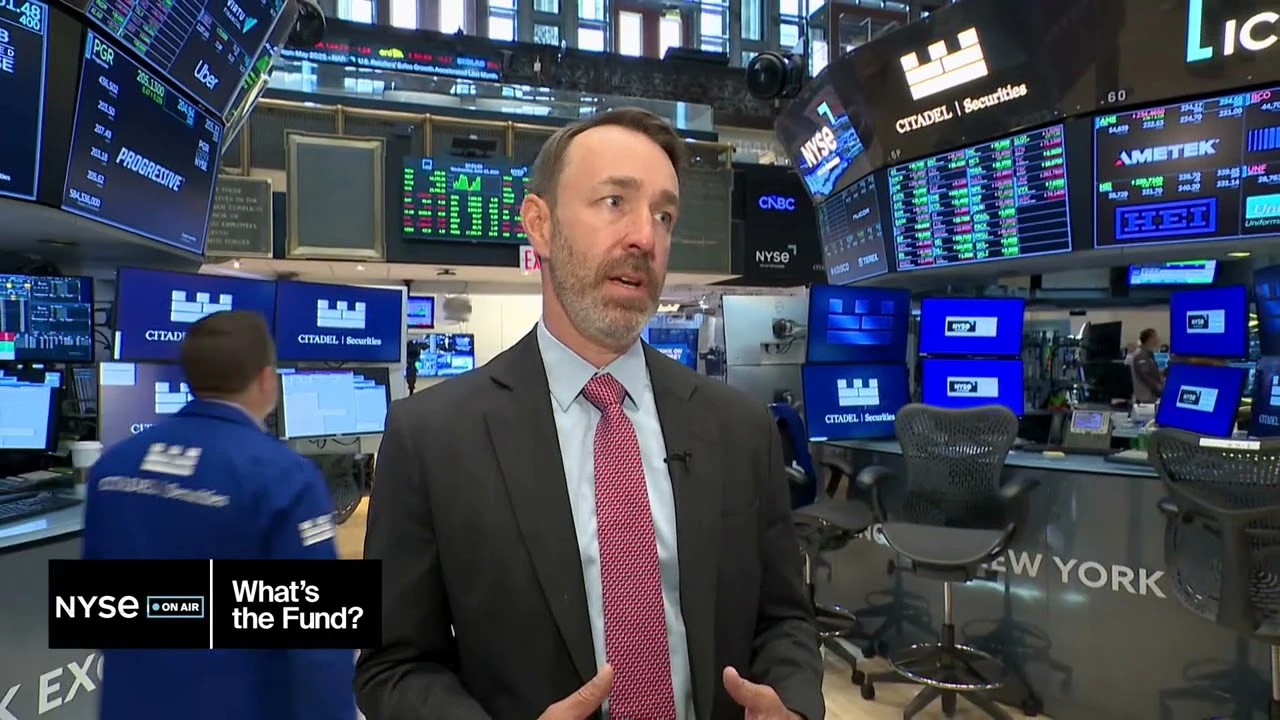
What's the Fund | Ocean Park Diversified Income ETF (DUKZ)
James St Aubin, Chief Investment Officer at Ocean Park Asset Management, discuss the DUKZ ETF, exposing investors to the whole spectrum of asset classes in the fixed income markets, through their rules-based process.

Browse all educational columns



Build and Analyze Your ETF Portfolio Like a Pro
Create your own ETF portfolio in minutes and instantly see allocations, exposures, performance, and risk. Visualize diversification across asset classes, regions, and sectors. Stress-test ideas, compare benchmarks, and refine your strategy with professional-grade analytics.