Explore professionally built ETF model portfolios. Discover now →



3 Cash-Like ETFs for Sleeping Well at Night
These ETFs may be particularly suitable for investors with a low risk tolerance.


Keep up with what matters in ETFs
Get timely ETF insights, market trends, and top ideas straight to your inbox.
Your newsletter subscriptions with us are subject to ETF Central's Privacy Policy and Terms and Conditions.
When it comes to managing risk in ETF investing, I typically focus on three key factors:
- Standard Deviation: Think of this as a measure of how wildly the value of your investment can swing. If you're holding an ETF where the price jumps around a lot from day to day or month to month, that's a high standard deviation.
- Maximum Drawdown: This tells you about the maximum loss from peak to trough during a specific period. It's crucial because it shows the historical worst-case scenario for an investment. If an ETF dropped by 30% during a market downturn before recovering, that's its maximum drawdown…so far.
- Closure Risk: This is less about market risk and more about the viability of the ETF itself. Consider how Russian equity ETFs had to liquidate following the invasion of Ukraine or how certain niche ETFs, like those shorting VIX futures failed spectacularly. These are extreme cases where investors faced total or significant capital loss due to the ETF closing down.
However, if you find yourself lying awake at night worrying about these things, you might want to consider a simpler approach to gauge risk: the "does it keep me awake at night" litmus test. Essentially, if concerns about your investments are disrupting your sleep, it's time to reassess your risk level.
Typically, to mitigate such concerns, investors might look towards ultra-safe options like Treasury bill ETFs—for instance, the iShares 0-3 Month Treasury Bond ETF
But aside from these traditional choices, there are other ETFs that might help you sleep better at night due to their low-risk profiles. Here are three that I personally like.
Get data on 14,000+ ETFs
Access Trackinsight's reliable and comprehensive data with 500M+ points on 14,000+ ETFs.
Amplify Samsung SOFR ETF SOF
SOF stands out as a highly unique, actively managed ETF that specifically tracks the Secured Overnight Financing Rate (SOFR).
SOFR is crucial because it's the benchmark rate used for dollar-denominated derivatives and loans, replacing the older LIBOR. It represents the cost of borrowing cash overnight collateralized by U.S. Treasury securities.
When you invest in SOF, you're essentially placed in the position of lending cash overnight, secured by these high-quality government securities.
A typical holding in SOF might look like "SOF REPO 05/07/24 5.35% 05/07/2024." This indicates a repurchase agreement that matures on May 7, 2024, with a yield of 5.35%.
In simpler terms, SOF invests in very short-term instruments that are akin to overnight loans backed by Treasuries, which are considered very safe.
Currently, SOF offers a 5.22% 30-day SEC yield and provides monthly distributions, all for a low expense ratio of 0.20%.
WisdomTree Floating Rate Treasury Fund USFR+0.08%
If you're concerned about navigating a "higher for longer" interest rate environment, or even potential additional rate hikes, USFR could be a viable tool.
This ETF holds Floating Rate Notes (FRNs), which are unique because they pay a variable interest rate, which is typically set as a spread over the yield of the most recently issued 3-month Treasury Bills.
What does this mean for you? Essentially, FRNs like those held in USFR offer protection against rising interest rates. Since the payout adjusts with changes in short-term rates, your investment is shielded from the typical erosion in value that fixed-rate bonds face when rates climb.
Plus, these securities come with the robust credit rating of U.S. Treasuries, adding a layer of security. Currently, USFR boasts a 5.32% 30-day SEC yield as of May 7th and offers monthly distributions, all for a low expense ratio of 0.15%.
Alpha Architect 1-3 Month Box ETF BOXX+0.05%
For investors who prefer not to receive monthly distributions—particularly in a taxable account where these payouts might be a drag on total returns— BOXX offers an innovative solution.
This unique ETF uses a synthetic options-based strategy known as a "box spread" to replicate the total return of 1–3-month Treasury Bills, effectively transforming what would typically be interest income into capital appreciation.
In options trading, a box spread strategy creates a position that acts much like a bond. Essentially, you're dealing with the difference between what you pay and what you receive for certain options. This strategy includes buying a combination of bull call and bear put spreads.
Theoretically, this should yield a risk-free profit when the options expire. The returns you get from these spreads are similar to what you'd expect from short-duration Treasury Bills.
BOXX's performance chart historically shows a steadily upward, sawtooth pattern that reflects the stable, low-volatility returns associated with T-Bill investments.
Currently, investors can expect an average yield to options expiration of 5.73%, which is a measure of total return. The expense ratio for BOXX is also quite reasonable at 0.1949%.
Please note this article is for information purposes only and does not in any way constitute investment advice. It is essential that you seek advice from a registered financial professional prior to making any investment decision.

Latest ETF News
See all ETF newsCould Water ETFs Be the Next AI Bottleneck Trade?

What is a Boomer Candy ETF?

ETF Comparison: NEOS Nasdaq-100 High Income ETF (QQQI) Versus Goldman Sachs Nasdaq-100 Premium Income ETF (GPIQ)





 Advantages of ETFs over Mutual Funds1/6
Lower Costs
In this guide, we'll explore the advantages of ETFs over mutual funds, giving you valuable insights into why ETFs have gained significant popularity among investors like yourself.
Leveraged ETFs: Unlocking the Potential for Amplified Returns1/6
Understanding Leveraged ETFs
Explore leveraged ETFs: potential for amplified returns & risks. 5 ETFs to consider across equities, commodities & fixed income.
What is a Leveraged ETF?1/6
Introducing Leveraged and Inverse ETFs
In this guide, we'll dive into the world of leveraged ETFs, exploring their definition, mechanics, potential risks, and rewards.
Recent educational content

ETF Trends
ETF Industry KPIs September 8, 2026
This week’s KPI data overview highlights key metrics and trends shaping the ETF landscape.

ETF Trends
ETF Industry KPIs August 31, 2026
This week’s KPI data overview highlights key metrics and trends shaping the ETF landscape.
ETF Trends
ETF Industry KPIs August 24, 2026
This week’s KPI data overview highlights key metrics and trends shaping the ETF landscape.
What’sTheFund
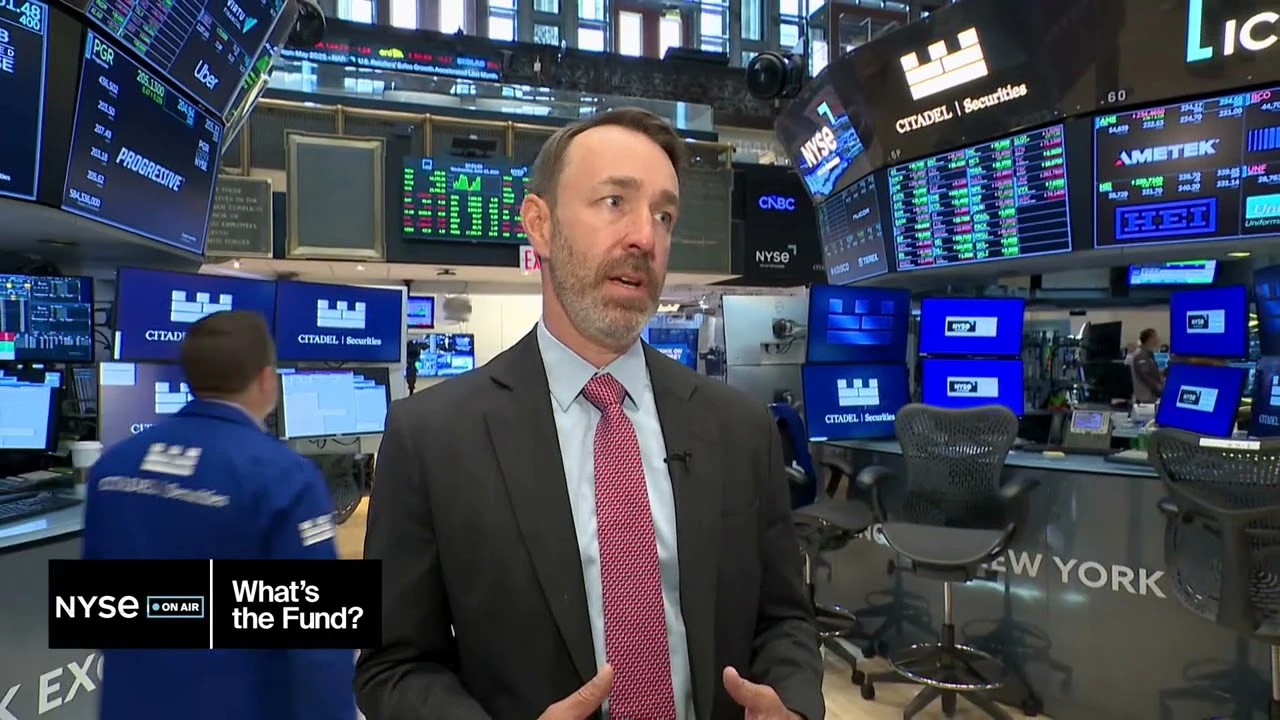
What's the Fund | Ocean Park Diversified Income ETF (DUKZ)
James St Aubin, Chief Investment Officer at Ocean Park Asset Management, discuss the DUKZ ETF, exposing investors to the whole spectrum of asset classes in the fixed income markets, through their rules-based process.

Browse all educational columns



Expert-Built ETF Portfolios, All in One Place
Don’t start from scratch. Discover ready-made ETF portfolios built by professionals to match different goals, timelines, and market views. Use them as inspiration or as a starting point for your own allocation.