Turn ETF ideas into real portfolios. Try the builder now →



Your 401(k)’s Favorite Active Mutual Fund Might Be Available as an ETF - Here’s a Look at Two of the Best
Semi-transparent ETFs are bringing some of active management’s most popular mutual funds to a broader audience—accessible to retail investors on virtually any brokerage platform.


Keep up with what matters in ETFs
Get timely ETF insights, market trends, and top ideas straight to your inbox.
Your newsletter subscriptions with us are subject to ETF Central's Privacy Policy and Terms and Conditions.
If you’ve ever looked at your 401(k) lineup and wished there were a cheaper, more tax-efficient way to invest in some of those active mutual funds—there’s a chance that now you can.
As the list of asset managers filing for ETF share classes of their existing mutual fund lineups grows longer by the week, some firms have found a workaround of sorts: semi-transparent ETFs.
Thanks to this ETF structure, a handful of high-profile active strategies have made the leap into ETFs without fully opening their books to the market.
From a regulatory standpoint, these ETFs are different. You’ll often see a disclaimer along the lines of:

Like what you're reading?
Stay in the loop — get the latest ETF insights: trends, analysis, and expert picks.
What is a Semi-Transparent ETF?
A semi-transparent ETF is designed to strike a balance between two competing priorities.
On one side is the ETF structure itself, which depends on daily creation and redemption of shares to keep trading efficient and aligned with net asset value (NAV).
On the other side is the active manager’s desire to keep their strategy proprietary—protecting it from front-running or copycat funds.
To make both sides work, issuers developed a workaround: the tracking basket.
Instead of disclosing the full portfolio every day like traditional ETFs, semi-transparent ETFs publish a collection of securities that is either similar to or partially representative of the fund’s actual holdings.
It might include some of the same individual stocks or use broader proxies, like sector or style ETFs, to approximate the fund’s exposures (for example, a large-cap growth ETF if the underlying fund skews in that direction).
The tracking basket allows authorized participants to continue facilitating daily share creation and redemption, keeping the ETF’s trading mechanics functional—even if the full holdings are not visible to the public.
To assess how closely the tracking basket aligns with the actual fund holdings, issuers disclose a metric called “Tracking Basket Weight Overlap”.
This shows the percentage weight overlap between the tracking basket published at the end of the prior business day and the fund’s actual holdings used to calculate NAV. The higher the overlap, the closer the tracking basket is to the real portfolio.
Unlike standard ETFs, which update full portfolio holdings daily on their websites, semi-transparent ETFs typically only report their holdings quarterly or monthly. The trade-off is less transparency and potentially wider bid-ask spreads, especially during periods of high volatility or market dislocation.
While the structure allows managers to protect their alpha, it can also result in reduced secondary market liquidity when market conditions become stressed.
Fidelity Blue Chip Growth ETF FBCG+0.83%
FBCG is one of the largest active semi-transparent ETFs on the market, with just under $4 billion in assets under management. It mirrors the investment strategy used by the long-running Fidelity® Blue Chip Growth Fund (FBGRX), which has been managed by Sonu Kalra since 2009.
FBGRX has a strong long-term track record, having outperformed the S&P 500 over the trailing 10-, 5-, 3-, and 1-year periods. Its current portfolio has significant overlap with the Nasdaq-100, holding familiar names like Apple, Microsoft, NVIDIA, Amazon, and Meta, along with positions in Visa and Mastercard.
However, its active share—a measure of how different a fund is from its benchmark—is relatively low at 37.14%, which has led to some criticism that the fund closely resembles an index-tracking strategy, or “closet indexing.”
In recent years, Fidelity has made FBGRX more accessible to retail investors by lowering the minimum investment requirement and cutting the expense ratio to 0.47%. The main drawback has been its large capital gains distributions, which often occur in September, due to the need to sell securities to meet redemptions in the mutual fund structure.
FBCG, on the other hand, benefits from the ETF model’s in-kind creation and redemption process. Even though it’s semi-transparent, the fund doesn’t need to sell portfolio holdings to meet investor redemptions, which helps minimize capital gains events.
The result: a current distribution yield of just 0.12%, with recent September and December payouts consisting solely of dividend income. However, this tax efficiency comes at a cost—FBCG’s expense ratio is 0.59%, higher than its mutual fund counterpart.
T. RowePrice Dividend Growth ETF TDVG+0.69%
The T. Rowe Price Dividend Growth Fund (PRDGX) has long been a staple in many 401(k) plans, offering a large-cap equity strategy focused on companies with strong and growing dividends.
While its track record and consistency have made it popular, it isn’t cheap. The fund charges a 0.64% expense ratio and tends to deliver sizable year-end capital gains distributions—mostly long-term, but still a potential tax hit for investors outside of tax-advantaged accounts.
For those looking for a lower-cost, more tax-efficient version of the same strategy, there’s the T. Rowe Price Dividend Growth ETF (TDVG). Managed by the same portfolio manager, Thomas Huber, TDVG comes in at a lower 0.50% expense ratio.
The ETF also benefits from the structure’s in-kind redemption mechanism, which has helped it avoid sizable capital gains distributions. Liquidity has been reasonable as well, with a 30-day median bid/ask spread of just 0.07%.
Both TDVG and PRDGX hold a balanced basket of blue-chip names, including Microsoft, Apple, Visa, JPMorgan Chase, General Electric, and Walmart. PRDGX, in particular, maintains a relatively high active share of 64.25%, suggesting meaningful deviations from the benchmark and a true active approach.
This article is for informational purposes only and does not in any way constitute investment advice. The author may express their own opinions, which may not represent the opinions of ETF Central or its affiliated partners. It is essential that you seek advice from a registered financial professional prior to making any investment decisions.
Latest ETF News
See all ETF newsCould Water ETFs Be the Next AI Bottleneck Trade?

What is a Boomer Candy ETF?

ETF Comparison: NEOS Nasdaq-100 High Income ETF (QQQI) Versus Goldman Sachs Nasdaq-100 Premium Income ETF (GPIQ)





 Advantages of ETFs over Mutual Funds1/6
Lower Costs
In this guide, we'll explore the advantages of ETFs over mutual funds, giving you valuable insights into why ETFs have gained significant popularity among investors like yourself.
Leveraged ETFs: Unlocking the Potential for Amplified Returns1/6
Understanding Leveraged ETFs
Explore leveraged ETFs: potential for amplified returns & risks. 5 ETFs to consider across equities, commodities & fixed income.
What is a Leveraged ETF?1/6
Introducing Leveraged and Inverse ETFs
In this guide, we'll dive into the world of leveraged ETFs, exploring their definition, mechanics, potential risks, and rewards.
Recent educational content

ETF Trends
ETF Industry KPIs September 8, 2026
This week’s KPI data overview highlights key metrics and trends shaping the ETF landscape.

ETF Trends
ETF Industry KPIs August 31, 2026
This week’s KPI data overview highlights key metrics and trends shaping the ETF landscape.
ETF Trends
ETF Industry KPIs August 24, 2026
This week’s KPI data overview highlights key metrics and trends shaping the ETF landscape.
What’sTheFund
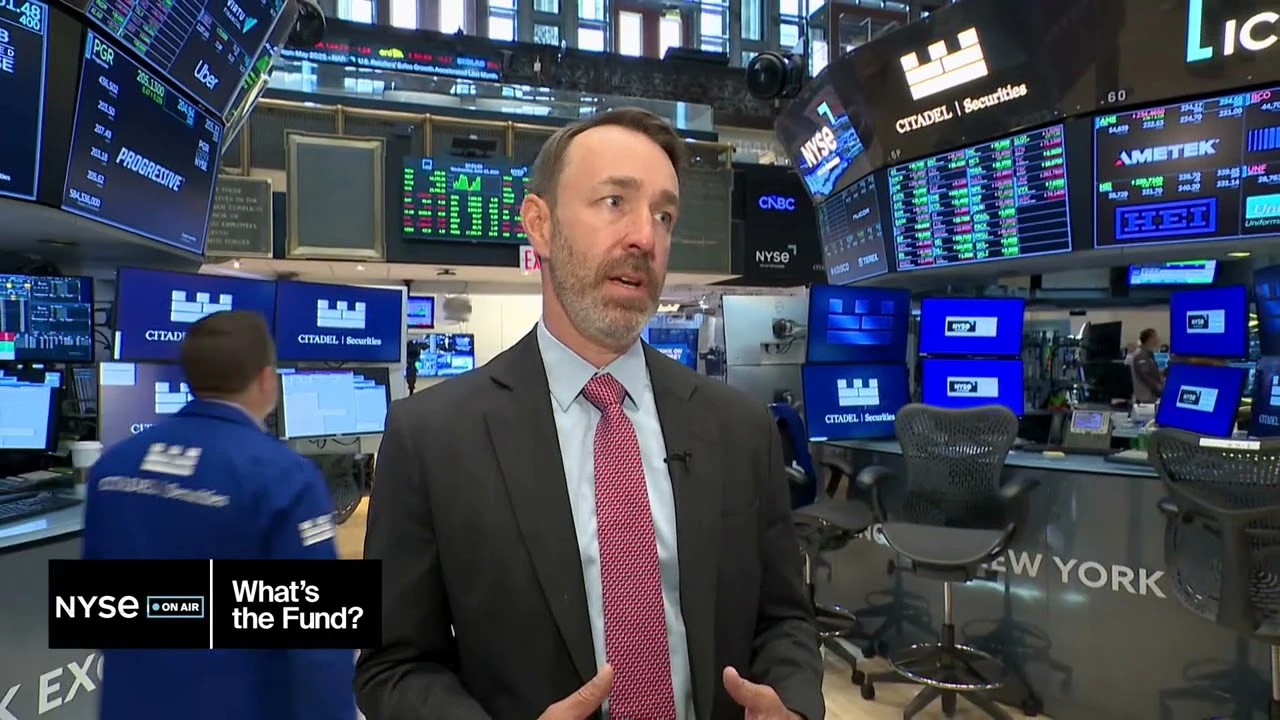
What's the Fund | Ocean Park Diversified Income ETF (DUKZ)
James St Aubin, Chief Investment Officer at Ocean Park Asset Management, discuss the DUKZ ETF, exposing investors to the whole spectrum of asset classes in the fixed income markets, through their rules-based process.

Browse all educational columns



Active Trader Report: Use of Leveraged & Inverse ETFs Way Up
Direxion partnered with Compound Insights and Vanda to explore what’s driving the evolution of active trading — and how active traders are using leveraged and inverse funds across equities, single stocks, commodities, and volatility.