Create, analyze, optimize your ETF portfolio. Start now →



Why the Xtrackers US 0-1 Year Treasury ETF (TRSY) is Ideal for Cash Management
With competitive yields and daily liquidity, TRSY offers an affordable, high-quality, and low-risk way to park cash without sitting idle.


Keep up with what matters in ETFs
Get timely ETF insights, market trends, and top ideas straight to your inbox.
Your newsletter subscriptions with us are subject to ETF Central's Privacy Policy and Terms and Conditions.
At its most recent meeting, the Federal Open Market Committee voted to cut the federal funds rate by 25 basis points, bringing the target range to 4.00%–4.25%.
The statement accompanying the decision noted that economic growth had moderated, job gains slowed, and inflation remained “somewhat elevated.” Policymakers emphasized heightened uncertainty around the outlook and rising downside risks to employment, signaling a cautious stance.
One direct consequence of this pivot is that cash management considerations are changing. As rates fall, yields on short-term securities move lower in tandem, reducing the return advantage that cash-like instruments have enjoyed over the past two years.
Still, as the bond bear market of 2022 reminded investors, cash remains an essential component of portfolio construction, serving as both a source of and a buffer against drawdowns. Holding idle cash, however, is inefficient.
Instead, the Xtrackers US 0-1 Year Treasury ETF
Here are a few reasons why TRSY stands out as a superior modern cash management tool compared with other popular short-term instruments.
Like what you're reading?
Stay in the loop — get the latest ETF insights: trends, analysis, and expert picks.
TRSY Versus Certificate of Deposit (CD)
CDs are time deposits offered by banks, typically paying a fixed rate of interest over a set term. They’re insured by the Federal Deposit Insurance Corporation (FDIC) up to applicable limits, which makes them a safe place to park cash. If you manage to lock in a favorable rate, it doesn’t matter if broader interest rates fall during your term, as you’ll keep earning the agreed-upon yield.
The drawback, however, is that CDs sacrifice flexibility. If you need to access your funds early, say to rebalance into equities during a market pullback or to cover expenses without realizing a loss elsewhere, you’ll pay a penalty by forfeiting some or all of the interest earned.
TRSY avoids this problem entirely. As an ETF, it trades intraday like a stock, offering immediate liquidity. Because it holds a basket of short-term U.S. Treasuries, it maintains a 30-day median bid-ask spread of just 0.07%, providing efficient execution even for larger orders.
Moreover, TRSY benefits from the ETF creation and redemption process, which helps keep its market price closely aligned with its underlying net asset value. As of October 7, TRSY traded at only a 0.02% premium to NAV, a sign of strong market efficiency and low slippage risk for investors.
TRSY Versus Money Market Funds
Many investors continue to park idle cash in money market funds, which aim to maintain a fixed net asset value (NAV) of $1 per share. This stability holds unless the fund “breaks the buck,” meaning its underlying assets decline enough in value that the fund can no longer maintain the $1 NAV.
The ultimate safety of a money market fund depends on what it holds: prime funds invest in short-term corporate paper and bank obligations, while government funds stick to Treasuries and agency securities, offering higher stability but typically lower yields.
The problem is that popularity and inertia have allowed fees on many of these funds to remain stubbornly high. For example, the $135 billion Fidelity® Money Market Fund (SPRXX) charges an expense ratio of 0.42%, while the Schwab Prime Advantage Money Fund – Investor (SWVXX) costs 0.34%.
Those numbers may seem small, but because money market funds already deliver modest yields and offer no potential for price appreciation, every basis point of expense directly erodes total return.
TRSY was designed with this in mind. With a net expense ratio of just 0.06%, it’s significantly more cost-efficient. On a $10,000 investment, that’s a $6 annual fee compared with $42 for SPRXX and $34 for SWVXX—roughly seven and six times higher, respectively.
Over time, that difference compounds, making TRSY a more efficient vehicle for investors who want their cash to earn something without being quietly chipped away by excessive fees.
TRSY Versus Ultra-Short Bond ETFs
Another popular option for investors looking to earn more than a money market fund or CD is ultra-short bond ETFs. These funds typically hold a mix of short-term investment-grade corporate bonds, asset-backed securities, and commercial paper.
At first glance, they appear attractive, often offering a modest yield pickup over Treasury-only ETFs. For example, while TRSY’s 30-day SEC yield currently stands at around 3.94%, many ultra-short bond ETFs advertise yields that are 50 basis points higher.
However, that comparison isn’t apples to apples. The extra yield comes from taking on credit risk. While the default risk on investment-grade bonds is still relatively low, it’s not zero. Corporate issuers can face downgrades or liquidity strains that U.S. Treasurys simply don’t.
Tax efficiency is another overlooked factor. Ultra-short bond ETFs generate some ordinary interest income, which is fully subject to both federal and state income taxes. In contrast, TRSY’s focus on U.S. Treasuries gives it a built-in advantage: its distributions are exempt from state and local taxes.
For investors living in high-tax states like California or New York, that exemption can make TRSY’s after-tax yield meaningfully higher than what headline numbers from ultra-short bond funds suggest.
The Final Word on TRSY
Even as rates trend lower, the case for TRSY remains strong:
- Compared with certificates of deposit, it offers superior liquidity with no penalties for early access.
- Against money market funds, it delivers comparable safety at a fraction of the cost, ensuring more of your yield stays in your pocket.
- Versus ultra-short bond ETFs, it avoids credit risk while preserving tax efficiency through state-tax-exempt Treasury income.
Together, these advantages make TRSY a simple, transparent, and cost-effective vehicle for cash management, one that continues to hold value even as yields compress and investors reassess how to make every dollar of idle cash work harder.
Please note that this article reflects the author’s personal views and does not represent the opinions of the publication or its affiliates. It is for informational purposes only and does not constitute investment advice. It is essential to seek guidance from a registered financial professional before making any investment decisions.
Segments
See all
Mentioned ETFs

Latest ETF News
See all ETF newsCould Water ETFs Be the Next AI Bottleneck Trade?

What is a Boomer Candy ETF?

ETF Comparison: NEOS Nasdaq-100 High Income ETF (QQQI) Versus Goldman Sachs Nasdaq-100 Premium Income ETF (GPIQ)





 Advantages of ETFs over Mutual Funds1/6
Lower Costs
In this guide, we'll explore the advantages of ETFs over mutual funds, giving you valuable insights into why ETFs have gained significant popularity among investors like yourself.
Leveraged ETFs: Unlocking the Potential for Amplified Returns1/6
Understanding Leveraged ETFs
Explore leveraged ETFs: potential for amplified returns & risks. 5 ETFs to consider across equities, commodities & fixed income.
What is a Leveraged ETF?1/6
Introducing Leveraged and Inverse ETFs
In this guide, we'll dive into the world of leveraged ETFs, exploring their definition, mechanics, potential risks, and rewards.
Recent educational content

ETF Trends
ETF Industry KPIs September 8, 2026
This week’s KPI data overview highlights key metrics and trends shaping the ETF landscape.

ETF Trends
ETF Industry KPIs August 31, 2026
This week’s KPI data overview highlights key metrics and trends shaping the ETF landscape.
ETF Trends
ETF Industry KPIs August 24, 2026
This week’s KPI data overview highlights key metrics and trends shaping the ETF landscape.
What’sTheFund
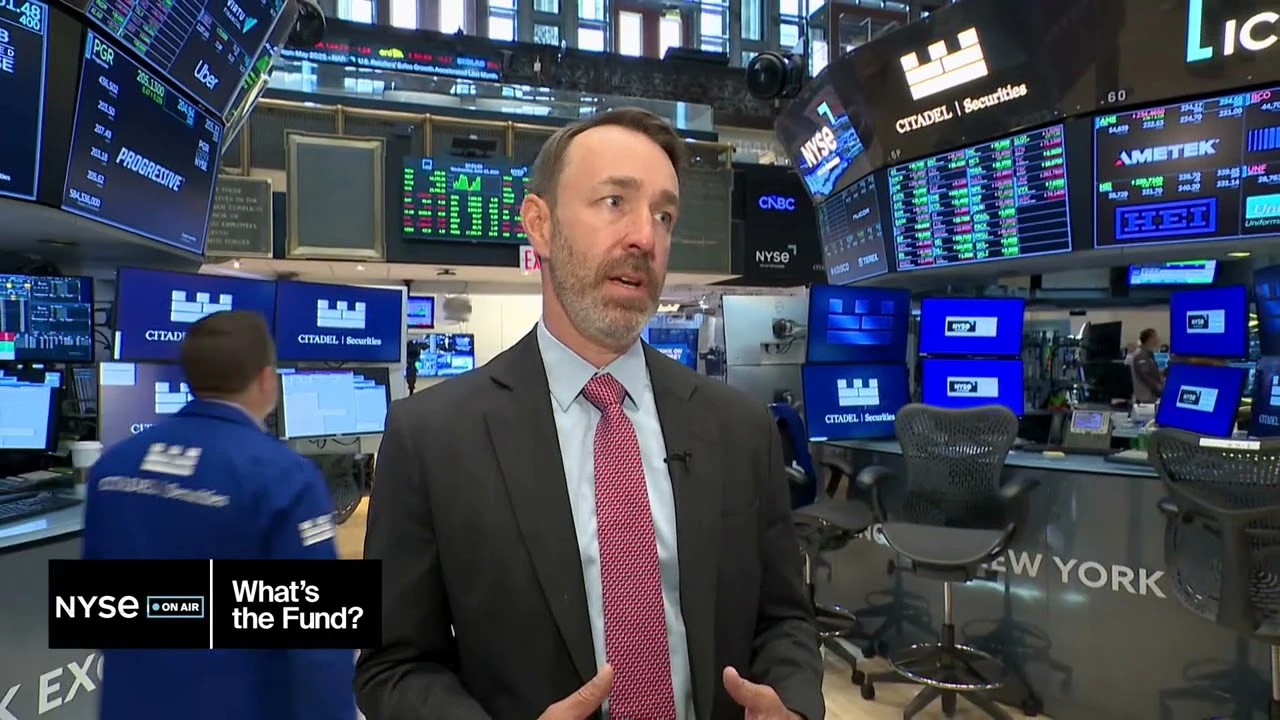
What's the Fund | Ocean Park Diversified Income ETF (DUKZ)
James St Aubin, Chief Investment Officer at Ocean Park Asset Management, discuss the DUKZ ETF, exposing investors to the whole spectrum of asset classes in the fixed income markets, through their rules-based process.

Browse all educational columns



Expert-Built ETF Portfolios, All in One Place
Don’t start from scratch. Discover ready-made ETF portfolios built by professionals to match different goals, timelines, and market views. Use them as inspiration or as a starting point for your own allocation.