Open Now: The Global ETF Survey Take the Survey →



Why ETF Execution Can Matter More Than the Fee You Pay
Nicholas Phillips delivers a clear look at ETF execution best practices, showing how timing, order type, and the education gap can shape real investment outcomes.


Keep up with what matters in ETFs
Get timely ETF insights, market trends, and top ideas straight to your inbox.
Your newsletter subscriptions with us are subject to ETF Central's Privacy Policy and Terms and Conditions.
As ETFs continue to expand across asset classes and investor types, the conversation around fees, tracking difference, and product innovation often overshadows one of the most important aspects of investor success: execution quality.
Execution — when, how, and through whom a trade is placed — can have a greater impact on total cost of ownership than the fund’s management fee itself.
Small inefficiencies in trade timing or order type can quietly erode returns, especially for investors new to the ETF structure.
The ETF Industry Is Evolving Fast
From AI infrastructure to active strategies, the ETF landscape is shifting. Share your perspective in the 7th Annual Global ETF Survey and get exclusive early access to the final report.
Timing the Trade: Know When the Market Knows the Price
The first rule of efficient ETF trading is simple: timing matters.
The opening and closing periods of the market are the most volatile times to trade any ETF.
During the first 15–20 minutes after the open, many underlying securities — particularly in international or thinly traded funds — have not yet started trading.
Until those markets are fully open, lead market makers (LMMs) quote wider spreads to account for uncertainty in the underlying basket.
Even the most liquid ETFs can temporarily trade several cents away from fair value during that period.
This dynamic varies by region.
For Europe-based ETFs, most underlying securities are already trading when the U.S. market opens, allowing for real-time price discovery.
Spreads tend to normalize quickly.
But for ETFs holding Asian, Middle Eastern, or African equities, the underlying markets are closed during U.S. hours.
In these cases, LMMs must rely on proxies and models — using futures, ADRs, sector correlations, and order flow to estimate where the basket would trade if the market were open.
Those fair-value models allow continuous quoting, but they also introduce greater uncertainty — and that’s why spreads are naturally wider, and depth is thinner, early in the U.S. session.
Once broader U.S. market liquidity develops and trading activity stabilizes, LMMs tighten quotes accordingly.
Investors should also exercise caution around major economic releases and Federal Reserve announcements.
Events such as CPI, non-farm payrolls, or FOMC statements can cause temporary dislocations in bond yields, currencies, and equity futures — all of which feed into ETF pricing models.
During those periods, LMMs may again widen spreads or reduce displayed size until volatility settles.
The bottom line: patience pays.
Whether it’s the open, a Fed release, or a volatile macro print, waiting for markets to absorb new information and normalize can save investors multiple basis points per trade — sometimes more than an ETF’s annual expense ratio.
Order Type: Control What You Can
Choosing the right order type is just as critical as timing.
Many new ETF investors rely on market orders, which guarantee execution — but not price. In the ETF ecosystem, that can be a costly mistake.
Market orders, especially at the open or close, can cross wide spreads or trade temporarily out of line with fair value. Using a limit order allows investors to define the maximum (or minimum) price they’re willing to pay, ensuring greater control and protecting against slippage.
Seasoned traders typically place limit orders within or just inside the NBBO, referencing the ETF’s intraday indicative value (IIV) as a guide. That simple discipline can save multiple basis points per trade, which compounds meaningfully over time.
Investor Education: The Mutual Fund Mindset Doesn’t Apply
As more investors transition from mutual funds to ETFs, education gaps around execution persist.
Mutual fund investors are accustomed to placing an order and getting end-of-day NAV — execution is standardized, and timing doesn’t matter.
ETFs are different.
They trade intraday, their liquidity is driven by the underlying basket, and execution choices directly impact outcomes.
I’ve seen investors place large limit orders well above the current market, thinking they’re ensuring execution — only to fill at prices far above fair value, losing entire percentage points of return in the process.
Understanding how ETFs trade — when spreads are tightest, how to use limit orders, and how underlying liquidity works — is essential.
That knowledge gap isn’t just theoretical; it costs investors money.
The Desk Matters: Equity Isn’t ETF
Another common misconception is that any equity trading desk can efficiently execute ETFs. In reality, ETF trading is its own discipline.
An equity desk is built for single-stock execution — transparent pricing, narrow spreads, and straightforward order flow. An ETF desk, by contrast, must understand primary and secondary market interaction, creation and redemption dynamics, and how to hedge or source liquidity efficiently.
Equity traders who lack ETF-specific knowledge may treat an ETF like a stock ticker — executing without considering the underlying basket or indicative value. That misunderstanding can result in poor fills and unnecessary costs.
Working with an ETF-specialized trading desk or directly through your issuer’s capital markets team ensures coordination with lead market makers (LMMs) and authorized participants (APs).
These teams understand when to source liquidity in-kind, when to use risk trades, and how to maintain execution efficiency even in volatile conditions.
The distinction matters: An equity desk trades a ticker; an ETF desk trades a structure.
Choosing a desk that understands that difference is one of the simplest ways to protect investor value.
Final Thoughts: Execution Is Education
ETF execution is often overlooked until it goes wrong. Yet efficient execution — trading at the right time, using the right order type, and working with the right desk — is one of the strongest indicators of a mature, well-functioning ETF ecosystem.
Issuers, advisors, and traders alike share a role in closing the education gap. As the industry grows more complex, helping investors understand how to trade ETFs properly is just as important as helping them choose which ETFs to own.
Good execution isn’t about beating the market — it’s about understanding it.
About the Author
Nicholas Phillips | President of ETF Capital Markets Advisors LLC
With over 25 years of experience in ETF market making and capital markets, Nicholas Phillips is recognized as a subject matter expert in the ETF industry. He started his career spending the first ten years as a lead market maker for SIG and Goldman Sachs. At the helm of MCAP LLC's ETF Desk, Nicholas built and scaled the division, enhancing its operations through innovative pricing and risk models, and robust relationships with market makers and issuers. His tenure at Van Eck Associates as Director of ETF Capital Markets further solidified his expertise, managing critical facets of operations and deepening connections within the trading community. Beyond market making, Nicholas is an avid content creator, sharing insights that demystify complex market dynamics. He is keen on exploring board member roles that benefit from his extensive background and forward-thinking approach to ETF strategies. His dual US/Ireland citizenship complements his global perspective, enriching his professional endeavors in diverse markets.
Disclaimer
Please note this article is for information purposes only and does not in any way constitute investment advice. It is essential that you seek advice from a registered financial professional prior to making any investment decision.


Latest ETF News
See all ETF news








 Advantages of ETFs over Mutual Funds1/6
Lower Costs
In this guide, we'll explore the advantages of ETFs over mutual funds, giving you valuable insights into why ETFs have gained significant popularity among investors like yourself.
Leveraged ETFs: Unlocking the Potential for Amplified Returns1/6
Understanding Leveraged ETFs
Explore leveraged ETFs: potential for amplified returns & risks. 5 ETFs to consider across equities, commodities & fixed income.
What is a Leveraged ETF?1/6
Introducing Leveraged and Inverse ETFs
In this guide, we'll dive into the world of leveraged ETFs, exploring their definition, mechanics, potential risks, and rewards.
Recent educational content

ETF Trends
ETF Industry KPIs July 13, 2026
This week’s KPI data overview highlights key metrics and trends shaping the ETF landscape.

First Look ETF
First Look ETF: Cash Deployment, Bond, and Hedged ETFs
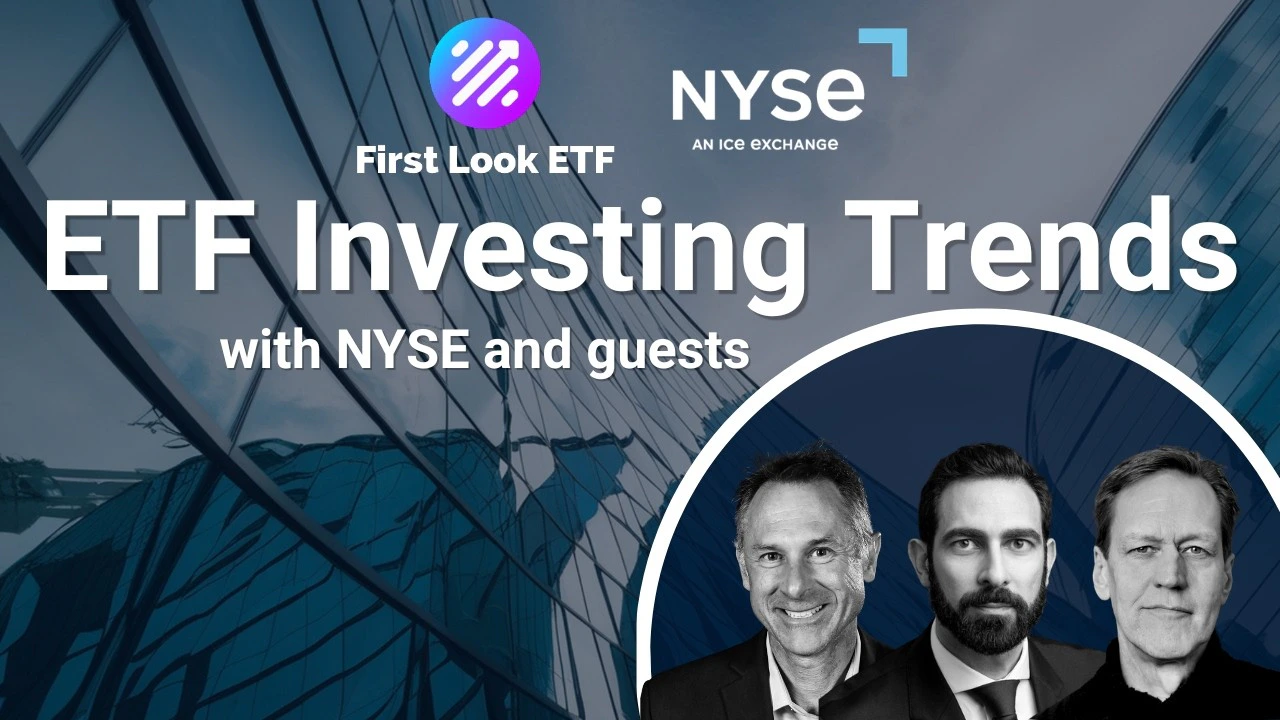
In this season 6 episode of First Look ETF, Stephanie Stanton examines the latest ETF marketplace trends with NYSE and guests.

ETF Trends
ETF Industry KPIs July 6, 2026
This week’s KPI data overview highlights key metrics and trends shaping the ETF landscape.
Asset TV
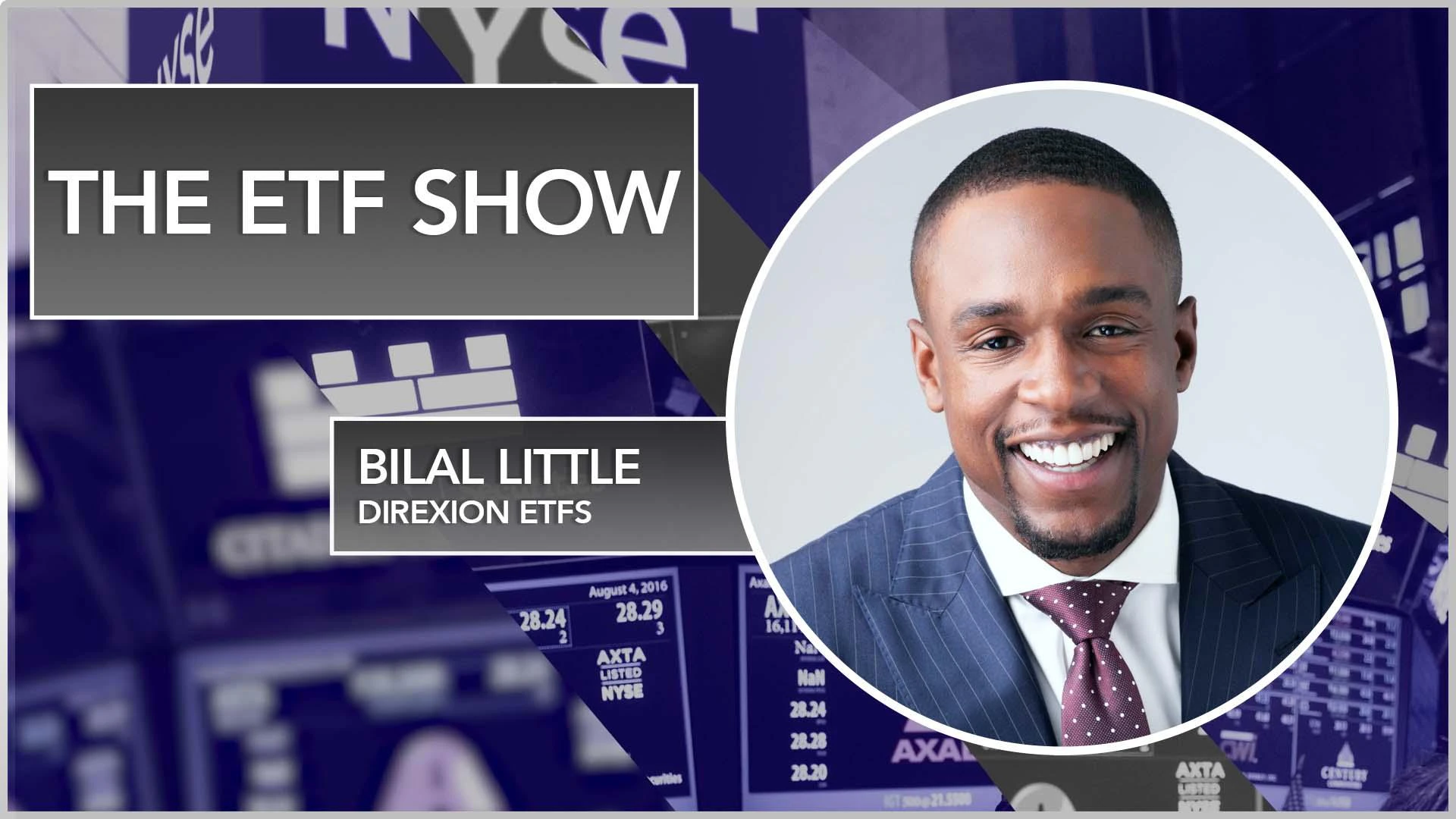
The ETF Show - The Evolution of Leveraged & Inverse ETFs
Leveraged and inverse ETFs have exploded in popularity over the past decade capturing more assets as retail traders seek to capture volatility.

Browse all educational columns



The ETF Industry Is Evolving Fast
From AI infrastructure to active strategies, the ETF landscape is shifting. Share your perspective in the 7th Annual Global ETF Survey and get exclusive early access to the final report.