NYSE CRTR Economy Event Watch the replay →



Why Diversifying Service Providers is Crucial for ETF Issuers' Success
Here’s why diversifying across market makers, authorized participants, and exchanges is key to ETF issuers' success.


Keep up with what matters in ETFs
Get timely ETF insights, market trends, and top ideas straight to your inbox.
Your newsletter subscriptions with us are subject to ETF Central's Privacy Policy and Terms and Conditions.
In the rapidly growing ETF market, the success of an ETF doesn’t just rely on its underlying assets or the strategy behind it. A significant part of ensuring the smooth operation and attractiveness of an ETF lies in the ecosystem surrounding it—particularly the Market Makers, Authorized Participants (APs), and Exchanges. For ETF issuers, diversifying across these key components can lead to tighter spreads, better liquidity, and overall improved market performance.
Like what you're reading?
Stay in the loop — get the latest ETF insights: trends, analysis, and expert picks.
The Critical Role of Market Makers
Ensuring Liquidity and Tight Spreads: Market makers are essential players in the ETF ecosystem, providing liquidity and ensuring that ETFs can be bought and sold with minimal price impact. They continuously quote both buy and sell prices, allowing for tighter spreads and better market efficiency. However, not all market makers are created equal. Each tends to specialize in certain areas—whether it’s domestic equities, international markets, fixed income, commodities, or even more complex instruments like options and swaps.
The Need for Diversification: By engaging with multiple market makers, ETF issuers can foster competition, which often leads to tighter spreads and better execution. Additionally, different market makers excel in various asset classes. For instance, one market maker might offer superior pricing and liquidity in international fixed income, while another might be more effective in managing commodities or derivatives. Engaging with a diversified group of market makers ensures that the ETF benefits from the strengths of each, ultimately leading to a more resilient and attractive product.
Authorized Participants (APs): The Backbone of ETF Liquidity
The Role of APs in ETF Creation and Redemption: Authorized Participants (APs) are crucial in maintaining the liquidity and pricing efficiency of ETFs. They are the entities responsible for creating and redeeming ETF shares, ensuring that the ETF’s market price remains close to its Net Asset Value (NAV). The more APs an ETF issuer engages with, the more robust the ETF’s liquidity and overall market health.
The Importance of Diversification Among APs: A recent conversation with a new ETF issuer underscored the importance of diversifying APs. The issuer had only engaged with one AP, which primarily catered to large creation units with high minimum fees. Additionally, not all market makers worked with this AP, making the product more expensive for investors and less attractive to market makers. This limited access for creation and redemption hampered the ETF’s overall market quality.
Furthermore, this ETF had not seen much traction in the market, and while there could be many factors at play, one critical factor is the ease with which participants can trade, create, and redeem shares with the least cost. When these processes are more cumbersome or expensive, it discourages market participation, reducing liquidity and increasing trading costs.
By diversifying APs, issuers increase the number of potential market maker partnerships, which can lead to more competition, tighter spreads, and better market quality. With a broader network of APs, the ETF can attract a wider range of market participants, enhancing liquidity and pricing efficiency.
The Strategic Importance of Diversifying Exchanges
The Role of Exchanges in the ETF Ecosystem: While there are three major U.S. exchanges, and several smaller ones, each offers unique advantages that can add significant value to an ETF’s success. Different exchanges may provide various benefits, such as partnerships in market making, advertising, or product marketing. Diversifying across exchanges allows issuers to leverage these benefits, enhancing their ETF’s visibility and market presence.
Safety and Redundancy: Having a diversified exchange presence also acts as a safety net in case of system failures—a scenario that has occurred in the past. By not relying solely on one exchange, issuers can ensure continuous trading and market access even if one platform experiences technical difficulties. This redundancy is crucial in maintaining investor confidence and ensuring smooth ETF operations.
Maximizing Benefits Across Exchanges: Furthermore, each exchange has its strengths. For example, one exchange might offer superior marketing opportunities, while another may provide better partnerships with market makers. By strategically diversifying across exchanges, issuers can maximize the benefits and support their ETF needs, from liquidity to visibility, ultimately driving the ETF’s success.
The Role of a Seasoned Capital Markets Expert in Navigating Diversification
Navigating the complexities of diversification within the ETF ecosystem requires more than just understanding the different players—it demands the expertise of a seasoned Capital Markets professional. These experts play a pivotal role in guiding issuers through the intricate landscape of market makers, APs, exchanges, and issuers. With a deep understanding of the nuances of each relationship, a Capital Markets expert can strategically align the right market makers with the right APs, ensuring optimal liquidity and execution. They also facilitate partnerships with multiple exchanges, leveraging each platform's unique strengths to enhance the ETF's visibility and trading efficiency. In essence, a seasoned Capital Markets expert acts as the architect of diversification within the ETF ecosystem, building a resilient and efficient operational structure that can withstand market volatility and capitalize on growth opportunities.
Conclusion: Building a Robust ETF Ecosystem
In the increasingly competitive ETF landscape, diversification within the ecosystem—across Market Makers, APs, and Exchanges—is a strategic move that can significantly enhance the performance and attractiveness of your ETFs. By fostering a broad network of relationships and spreading operations across multiple players in the market, issuers not only reduce risks but also open up opportunities for improved efficiency, tighter spreads, and better market access.
A seasoned Capital Markets expert is key in navigating these relationships, optimizing strategies, and ultimately contributing to the ETF’s long-term success. Their experience and insights are invaluable in ensuring that the ETF benefits from the best possible resources and relationships within the market, making it a more robust and resilient product.
About the Author
Nicholas Phillips | President of ETF Capital Markets Advisors LLC
With over 25 years of experience in ETF market making and capital markets, Nicholas Phillips is recognized as a subject matter expert in the ETF industry. He started his career spending the first ten years as a lead market maker for SIG and Goldman Sachs. At the helm of MCAP LLC's ETF Desk, Nicholas built and scaled the division, enhancing its operations through innovative pricing and risk models, and robust relationships with market makers and issuers. His tenure at Van Eck Associates as Director of ETF Capital Markets further solidified his expertise, managing critical facets of operations and deepening connections within the trading community. Beyond market making, Nicholas is an avid content creator, sharing insights that demystify complex market dynamics. He is keen on exploring board member roles that benefit from his extensive background and forward-thinking approach to ETF strategies. His dual US/Ireland citizenship complements his global perspective, enriching his professional endeavors in diverse markets.
Disclaimer
Please note this article is for information purposes only and does not in any way constitute investment advice. It is essential that you seek advice from a registered financial professional prior to making any investment decision.

Latest ETF News
See all ETF news

Why ETF Spreads Often Mislead Investors







 Advantages of ETFs over Mutual Funds1/6
Lower Costs
In this guide, we'll explore the advantages of ETFs over mutual funds, giving you valuable insights into why ETFs have gained significant popularity among investors like yourself.
Leveraged ETFs: Unlocking the Potential for Amplified Returns1/6
Understanding Leveraged ETFs
Explore leveraged ETFs: potential for amplified returns & risks. 5 ETFs to consider across equities, commodities & fixed income.
What is a Leveraged ETF?1/6
Introducing Leveraged and Inverse ETFs
In this guide, we'll dive into the world of leveraged ETFs, exploring their definition, mechanics, potential risks, and rewards.
Recent educational content
Asset TV
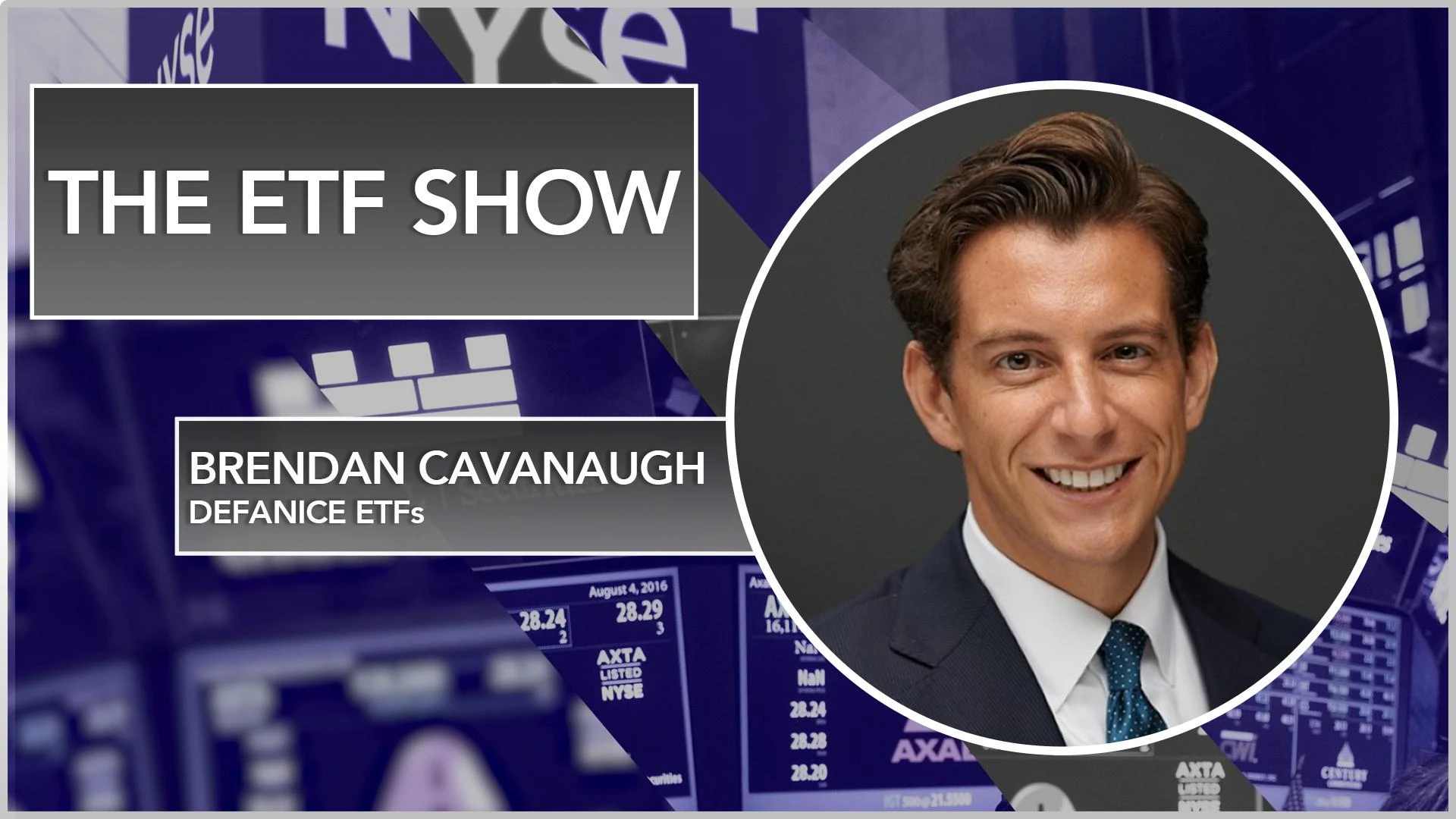
The ETF Show - New Autism-Impact ETF Launched
Defiance ETFs has launched the first ETF, $ASD, focused on the autism ecosystem, investing in companies that provide services, products, and research related to autism and neurodivergence.


ETF Trends
ETF Industry KPIs June 1, 2026
The ETF Industry saw 22 New Launches, 1 Ticker Change and 1 closure last week.

ETF Trends
ETF Industry KPIs May 20, 2026
The ETF Industry saw 44 New Launches, 3 Mutual Fund Conversions and 9 closures last week.
Asset TV
The ETF Show - Politics Becomes Investable Trade through ETFs
Dan Weiskopf, Senior Portfolio Manager at Tidal Financial Group spoke with the ETF Show about Subversive ETFs that help investors trade like politicians.
Browse all educational columns



The ETF Industry Is Evolving Fast
From AI infrastructure to active strategies, the ETF landscape is shifting. Share your perspective in the 7th Annual Global ETF Survey and get exclusive early access to the final report.