Open Now: The Global ETF Survey Take the Survey →



When the Benchmark Moves: How Sudden Index Changes Can Ripple Through ETFs
When benchmarks break rhythm, passive ETFs face their greatest test—reacting to the unplanned in a world built on predictability.


Keep up with what matters in ETFs
Get timely ETF insights, market trends, and top ideas straight to your inbox.
Your newsletter subscriptions with us are subject to ETF Central's Privacy Policy and Terms and Conditions.
Benchmarks serve as the blueprint for passive investing. Most of the time, they’re stable, methodical, and predictable—rebalanced quarterly or semi-annually with changes projected well in advance. But every so often, that blueprint is redrawn mid-cycle, leaving ETF managers and capital markets teams scrambling to adjust.
These sudden shifts can happen for a variety of reasons: mergers, bankruptcies, accounting fraud, or even geopolitical sanctions. And when they do, they reveal a key structural tension in the ETF ecosystem—what happens when a rules-based product is forced to react to something fundamentally unplanned?
Like what you're reading?
Stay in the loop — get the latest ETF insights: trends, analysis, and expert picks.
Where Passive Differs From Active
This is one of the clearest lines between passive and active strategies. Active managers aren’t beholden to a benchmark. They can choose to hold—or not hold—a security based on their own analysis, conviction, or risk controls.
Passive ETFs, on the other hand, are designed to track an index, which is typically governed by a strict methodology. These indices are created by reputable providers like S&P Dow Jones, MSCI, or FTSE Russell, and include guardrails meant to protect investors or optimize performance—such as minimum liquidity thresholds, float-adjusted caps, or country-specific restrictions.
But when an index changes outside of its normal schedule, ETFs have no choice but to follow. That means forced selling or buying, regardless of market conditions.
Rules vs. Discretion: The Structure Behind the Strategy
Most indices—especially those followed by large passive ETFs—are rules-based systems created to offer consistency and investor protections. These benchmarks often come with decades of historical performance, making them a known quantity in terms of methodology, transparency, and rebalancing behavior.
By contrast, active ETFs are typically built on the discretion of the portfolio manager or issuer. While this provides greater flexibility, particularly in avoiding distressed or controversial names, it also comes with trade-offs: fewer structural safeguards, and often a much shorter real-world track record. Many active strategies highlight backtested performance, but those tests are rarely neutral—they often rely on idealized entry and exit points that may not reflect real-world execution.
There are strengths and weaknesses to both approaches:
- Passive ETFs benefit from consistency and rule-based clarity—but are vulnerable to sudden benchmark-driven moves.
- Active ETFs offer adaptability—but rely heavily on the skill and discipline of the manager, with less objective historical context.
Investors need to do their own due diligence. No structure is immune to risk. Understanding how a fund operates—and how it reacts under pressure—is essential. Buyer beware.
What Triggers a Sudden Index Change?
While most index changes are announced well in advance, some scenarios require off-cycle changes:
- Corporate Actions: Mergers, takeovers, and spin-offs (e.g., Broadcom acquiring VMware) can lead to immediate index adjustments.
- Bankruptcies and Delistings: Companies like Bed Bath & Beyond or Lehman Brothers are removed when they become insolvent or are delisted.
- Accounting Scandals: Massive frauds like Enron, Luckin Coffee, or Sino-Forest Corporation force benchmark providers to react quickly to protect index integrity.
- Government Sanctions: In 2022, Russian securities were removed from major indices following sanctions and trading halts tied to the war in Ukraine.
These events typically fall outside the control of ETF issuers—and yet, they create immediate and unavoidable implications for fund structure, holdings, and trading.
Ripple Effects in ETFs
When a benchmark suddenly shifts, ETFs face a domino effect that can cause short-term dislocations:
- Forced Trading: Portfolio managers must quickly sell or buy affected names, often during periods of stress or illiquidity.
- Tracking Error: Rapid movements can create gaps between the ETF and its underlying index, especially if the market for the removed security is dysfunctional.
- Price Dislocation: Traders and hedge funds may try to front-run index deletions, creating momentum trading that pushes prices away from fair value.
- Losses for Market Makers and Investors: These dynamics can generate slippage, wider spreads, and price instability—especially when large amounts of passive capital are tied to the same security.
The larger the stock’s index ownership footprint, the greater the potential for volatility. This is particularly true when multiple ETFs and mutual funds are all forced to sell at once, often into an illiquid or distressed market.
The Lingering Impact of Distressed and Delisted Holdings
In some cases, when a company enters a period of distress—due to sanctions, fraud, delisting, or collapse—it may be halted from trading, sometimes permanently. While the name is no longer active in the market, it can remain in ETF portfolios for months or even years, creating ongoing accounting and operational burdens.
This is especially problematic when the position becomes illiquid, unpriceable, or legally restricted, which can happen during sanctions (e.g., Russia), accounting scandals (e.g., Enron or Sino-Forest), or protracted regulatory battles (e.g., Real Gold or certain Chinese ADRs). ETF issuers must then rely on manual fair value pricing, proxy valuations, and sometimes mark assets close to zero—all while continuing to report holdings and comply with NAV calculation rules. These positions become “zombie holdings”—not broken, but frozen—and they require constant oversight.
ETF liquidity can look clean on the screen — until a single name in the basket breaks the illusion.
As a market maker, I’ve traded ETFs that held companies like Real Gold and Sino-Forest, where the underlying stocks were suspended or facing major scrutiny. In these cases, baskets were sometimes “semi-settled” — executed under mutual agreement with the AP or counterparty that final terms would be adjusted once (or if) the suspended securities resumed trading. We typically priced these names using fair value estimates, not stale last trades, but there was always an element of risk and subjectivity. These positions could linger on our books for months or even years, tying up capital and operational resources. It's a powerful reminder that ETF liquidity isn’t just about screens and spreads — it's about what’s actually tradable when it matters.
Critically, these events don’t break the ETF. Shares still trade, and in many cases, the fund can continue creations and redemptions using custom baskets that exclude the impacted securities. But they do introduce friction: operational complexity, legal reviews, settlement delays, and NAV clarity issues that must be addressed by capital markets teams, custodians, and fund administrators.
For example:
- Many Russian ADRs are still technically held in funds like RSX and ERUS, even though they're untradeable and near-worthless.
- Sino-Forest Corporation, once a major holding in timber-related ETFs, remained in fund holdings long after its collapse due to fraud.
- Real Gold Mining Ltd., delisted following governance issues, left commodity and China-linked ETFs holding illiquid, low-value shares with little recourse.
These cases highlight the importance of structural preparedness, especially in passive funds that must hold what the index holds—even when markets say otherwise.
How Capital Markets Desks Navigate These Events
ETF capital markets teams and authorized participants (APs) play a critical role in managing these transitions. When benchmarks change unexpectedly, these desks coordinate with:
- Portfolio managers to rebalance baskets
- Market makers to manage risk in illiquid securities
- Exchanges and custodians to ensure clean settlement
In many cases, these professionals are the first to notice a discrepancy—whether it’s a security about to be removed, or one facing valuation uncertainty—and must act quickly to protect the fund and its investors.
Case Studies: Where This Played Out
- RSX (VanEck Russia ETF) – After sanctions in 2022, underlying Russian equities were removed from indices. RSX became untradeable, then suspended creations/redemptions, and eventually delisted.
- Enron (2001) – The rapid collapse triggered forced selling from index funds and ETFs, exacerbating investor losses and distorting market pricing.
- Luckin Coffee (2020) – Delisted after fabricating sales data, causing numerous China-focused and consumer ETFs to rebalance unexpectedly.
- Sino-Forest Corporation (2011) – Once a high-profile timber company, it was removed from forestry and commodity-linked ETFs following a major accounting scandal. Investigations revealed significant misreporting of assets, triggering forced selling and a sharp revaluation across the space.
- Real Gold Mining Ltd. (2011) – Following corporate governance issues and concerns about its Chinese operations, the company was delisted and removed from ETFs, creating pricing and settlement headaches for fund administrators.
Final Thoughts
Passive investing is built on predictability—but nothing in markets is ever truly static. When a benchmark moves outside the standard rebalance window, the rules still apply, and ETFs must respond.
Understanding these moments is key—not just for issuers and capital markets professionals, but for advisors and investors. They expose the fragile intersection of indexing, liquidity, and real-time markets, and why structural discipline matters more than ever in the modern ETF ecosystem.
About the Author
Nicholas Phillips | President of ETF Capital Markets Advisors LLC
With over 25 years of experience in ETF market making and capital markets, Nicholas Phillips is recognized as a subject matter expert in the ETF industry. He started his career spending the first ten years as a lead market maker for SIG and Goldman Sachs.
At the helm of MCAP LLC's ETF Desk, Nicholas built and scaled the division, enhancing its operations through innovative pricing and risk models, and robust relationships with market makers and issuers. His tenure at VanEck Associates as Director of ETF Capital Markets further solidified his expertise, managing critical facets of operations and deepening connections within the trading community.
Beyond market making, Nicholas is an avid content creator, sharing insights that demystify complex market dynamics. He is keen on exploring board member roles that benefit from his extensive background and forward-thinking approach to ETF strategies. His dual US/Ireland citizenship complements his global perspective, enriching his professional endeavors in diverse markets.
Disclaimer
Please note that this article reflects the author's personal views and does not represent the opinions of the publication or its affiliates. It is for informational purposes only and does not constitute investment advice. It is essential to seek guidance from a registered financial professional before making any investment decisions.


Latest ETF News
See all ETF news








 Advantages of ETFs over Mutual Funds1/6
Lower Costs
In this guide, we'll explore the advantages of ETFs over mutual funds, giving you valuable insights into why ETFs have gained significant popularity among investors like yourself.
Leveraged ETFs: Unlocking the Potential for Amplified Returns1/6
Understanding Leveraged ETFs
Explore leveraged ETFs: potential for amplified returns & risks. 5 ETFs to consider across equities, commodities & fixed income.
What is a Leveraged ETF?1/6
Introducing Leveraged and Inverse ETFs
In this guide, we'll dive into the world of leveraged ETFs, exploring their definition, mechanics, potential risks, and rewards.
Recent educational content

ETF Trends
ETF Industry KPIs July 13, 2026
This week’s KPI data overview highlights key metrics and trends shaping the ETF landscape.

First Look ETF
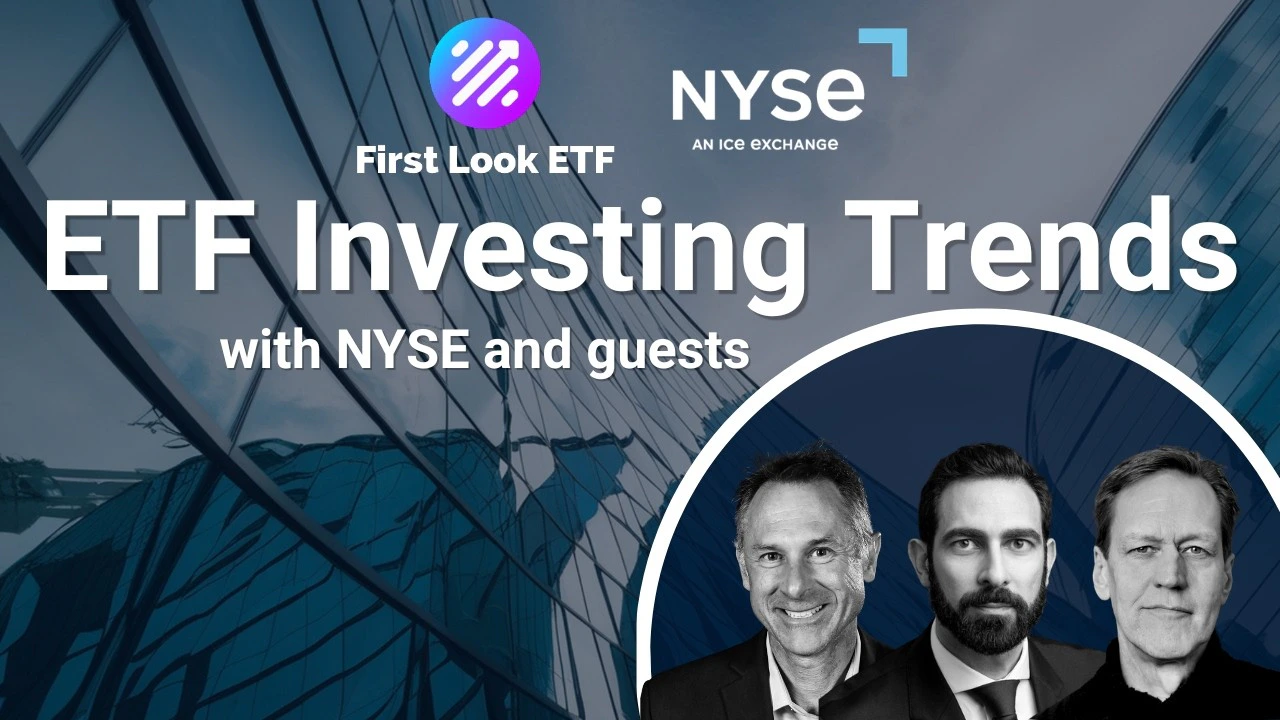
First Look ETF: Cash Deployment, Bond, and Hedged ETFs
In this season 6 episode of First Look ETF, Stephanie Stanton examines the latest ETF marketplace trends with NYSE and guests.

ETF Trends
ETF Industry KPIs July 6, 2026
This week’s KPI data overview highlights key metrics and trends shaping the ETF landscape.
Asset TV
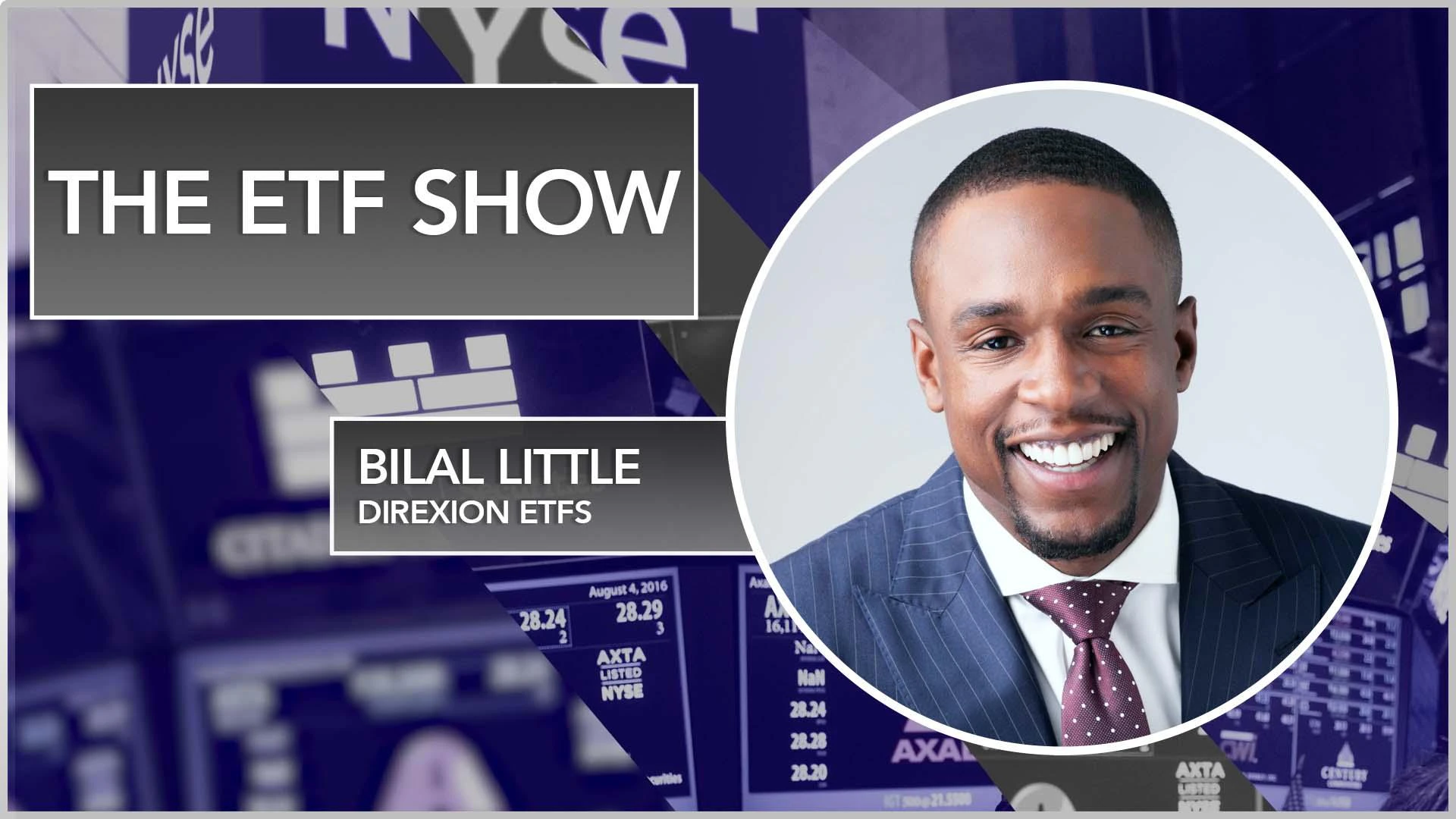
The ETF Show - The Evolution of Leveraged & Inverse ETFs
Leveraged and inverse ETFs have exploded in popularity over the past decade capturing more assets as retail traders seek to capture volatility.

Browse all educational columns



Expert-Built ETF Portfolios, All in One Place
Don’t start from scratch. Discover ready-made ETF portfolios built by professionals to match different goals, timelines, and market views. Use them as inspiration or as a starting point for your own allocation.