Open Now: The Global ETF Survey Take the Survey →



What To Watch This REIT Earnings Season
Real estate earnings season kicks into gear this week, and over the next month, we'll hear results from 175 equity REITs, 40 mortgage REITs, and dozens of housing industry companies.


Keep up with what matters in ETFs
Get timely ETF insights, market trends, and top ideas straight to your inbox.
Your newsletter subscriptions with us are subject to ETF Central's Privacy Policy and Terms and Conditions.
- REITs are "back in the doghouse" heading into the second-quarter earnings season, lagging the S&P 500 by 15 percentage points over the past quarter in hopes of imminent Fed rate cuts.
- In this report, we focus specifically on property-level fundamentals, previewing and forecasting REIT earnings performance based on an analysis of recent indicators across various sources.
- Notable "green shoots" include: 1) steady travel demand despite early-quarter confidence plunge; 2) stabilization in self-storage; 3) further strength in red-hot senior housing; and 4) stabilization in CRE debt markets.
- Weaker trends include: 1) stalling office leasing following a late-2024 rebound; 2) "pause" in logistics leasing amid tariff uncertainty; 3) flat multifamily and SFR rents after Q1 reacceleration; and 4) a measured cooldown from historically strong retail fundamentals.
The ETF Industry Is Evolving Fast
From AI infrastructure to active strategies, the ETF landscape is shifting. Share your perspective in the 7th Annual Global ETF Survey and get exclusive early access to the final report.
Real Estate Earnings Preview
Real estate earnings season kicks into gear this week, and over the next month, we'll hear results from 175 equity REITs, 40 mortgage REITs, and dozens of housing industry companies. After a relatively strong start to 2025, REITs are "back in the doghouse" heading into the second-quarter earnings season, lagging the S&P 500 by 15 percentage points over the past quarter as hopes of imminent Federal Reserve rate cuts have dimmed. Pressured by the rebound in the 10-Year Treasury Yields to near 4.50% - up from lows of around 4% early in the quarter - the Equity REIT Index has largely missed out on the post-Liberation Day rally that has sent the S&P 500 to fresh record highs. Remarkably, the last record high for the Equity REIT Index came on REITs, which remain over 20% below their last record high, which was seen all the way back on December 31, 2021. Remarkably, among the other 10 GICS equity sectors, 9 sectors have seen record highs this year, while the lone other - Materials - saw its most recent record high in mid-2024. This stumble has once again extended the accumulated underperformance gap of the Equity REIT Index versus the broader equity market to a staggering 50 percentage points since the initial start of the Fed's rate-hiking cycle in early 2022.

As analyzed in our State of REIT Nation report, however, valuations - not fundamentals - are responsible for the vast majority of this REIT underperformance, setting the stage for significant REIT outperformance in the quarters and years ahead as benchmark interest rates normalize. In this report, we focus specifically on these property-level fundamentals, previewing and forecasting REIT earnings performance based on an analysis of recent indicators across various sources. Notable favorable "green shoots" gleaned from recent data: 1) steady travel demand despite early-quarter confidence plunge; 2) long-awaited stabilization in self-storage fundamentals; 3) further strength in red-hot senior housing; and 4) signs of stabilization - and a rebound in lending activity - in CRE debt markets. Weaker trends include: 1) stalling office leasing following a late-2024 rebound; 2) "pause" in logistics leasing amid tariff uncertainty; 3) flat multifamily and SFR rents after Q1 reacceleration; and 4) a measured cooldown from historically strong retail fundamentals. Below, we compiled the real estate earnings calendar for Equity REITs, Homebuilders, and other key real estate industry players.
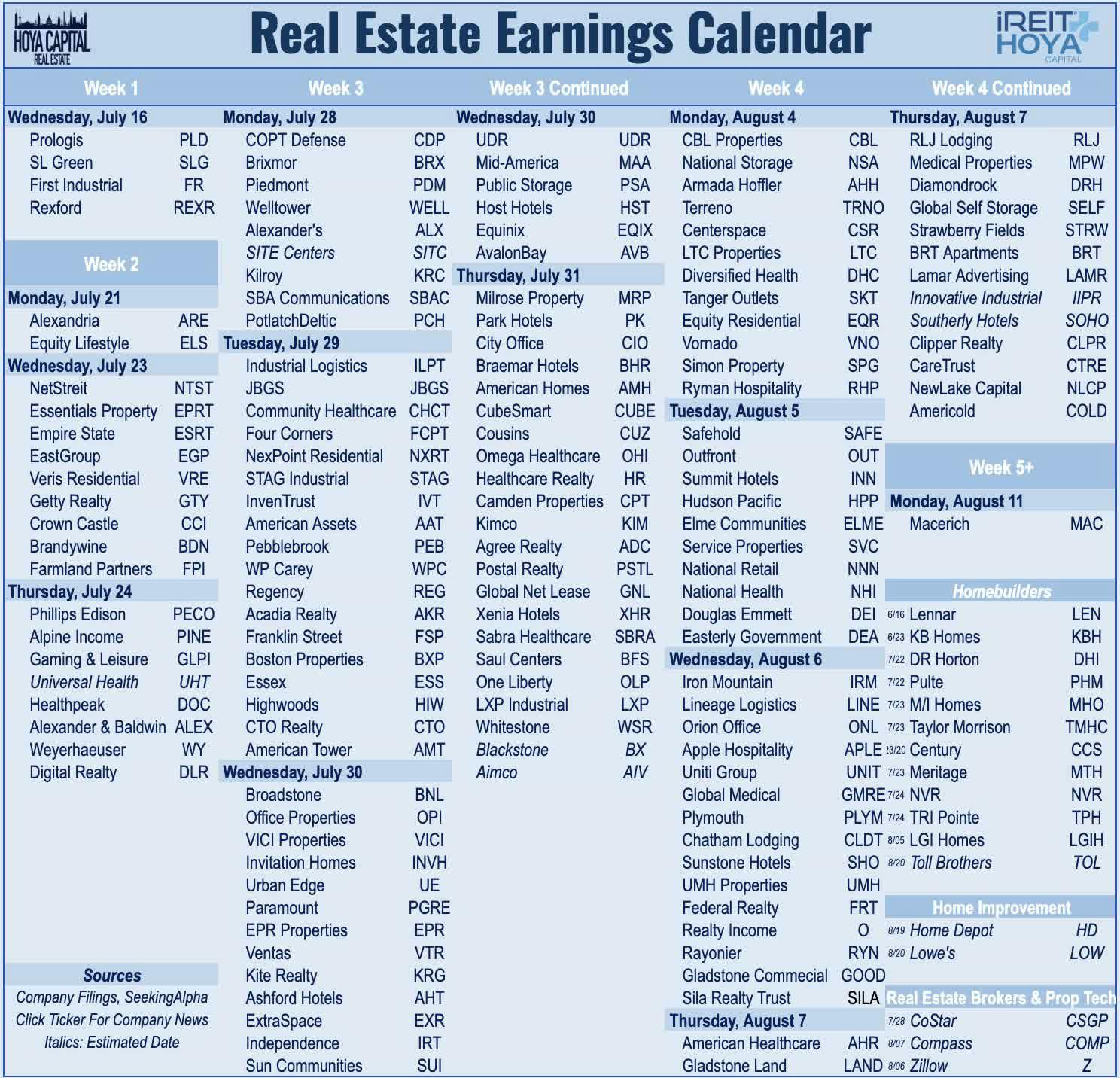
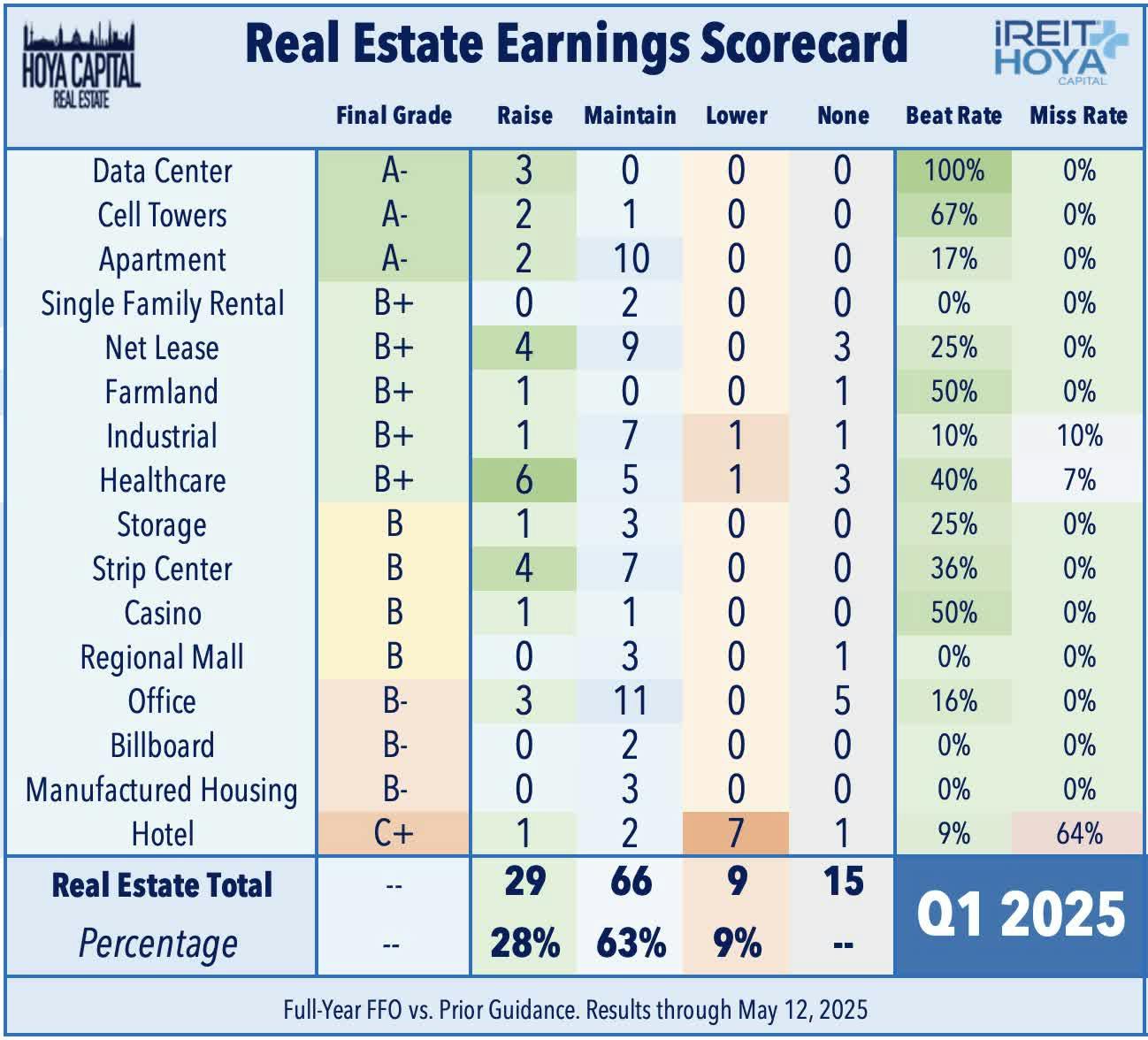
We're keyed in on these REITs' updated 2025 outlook and what impact - if any - the tariff and recession uncertainty is factoring into their forecast. REITs are coming off a decent Q1 season in which 29 (28%) raised their most recent full-year outlook, while just 9 (9%) lowered their outlook - roughly in line with the historical average "raise rate" for the first quarter of roughly 30%. Last earnings season, Technology REITs were notable upside standouts, with Data Center and Cell Tower REITs citing surprisingly solid demand trends. Results from Residential REITs were surprisingly solid, with single-family rental and apartment REITs reporting that rent growth accelerated after two years of sluggish trends. Senior Housing REITs posted another impressive quarter, while Industrial REITs reported only minimal impacts from tariffs. While there weren't major bombshells last earnings season, Hotel REITs were responsible for 7 of the 9 downward guidance cuts, while Cold Storage and Lab Space REITs accounted for the other two downside revisions. Office REIT results were also modestly disappointing last quarter, as leasing volumes dipped to a six-quarter low following a very strong third and fourth quarter. Below, we discuss the major high-level themes and metrics we'll be watching across each of the real estate property sectors this earnings season. Our baseline forecast for this quarter is that 55% of REITs will raise their full-year FFO outlook, 35% will maintain their outlook, and 10% will lower their outlook - slightly below the typical second-quarter "beat rate" of around 60%.
Hotel & Office REIT Earnings Preview
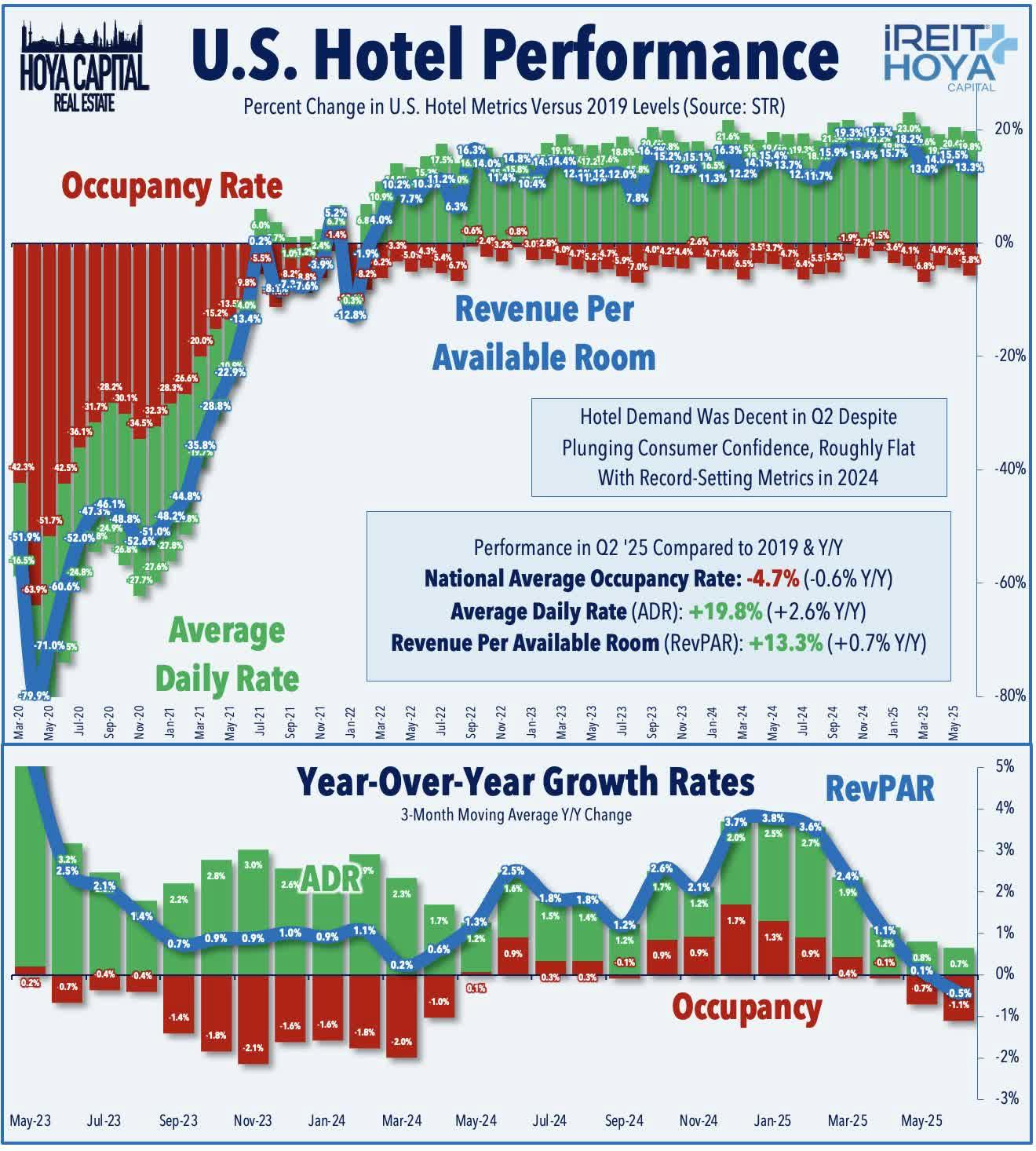
Hotel: The most economically sensitive property sectors will be the most closely watched this earnings season for insights into how consumers and businesses are responding to recent economic volatility. Despite the recession-level sentiment readings on Michigan Consumer Confidence and Business Sentiment surveys early in the quarter - along with a handful of high-profile airline incidents in early 2025 - recent high-frequency data indicates that travel demand has held up surprisingly well in recent months. TSA Checkpoint data shows that passenger throughput has been 8% above 2019 levels in June and into mid-July - a modest reacceleration from March through May - but down slightly from the 14% comparable increase in January, which was the post-pandemic high. Hotel data provider STR reports that industry-wide Revenue Per Available Room ("RevPAR") was roughly 13% above 2019 levels in Q2 - up about 1% from the record-setting Q2 of 2024 - as still-solid pricing trends have offset some recent weakness in occupancy rates. Hotel REITs have rallied nearly 20% in recent weeks heading into earnings season, so we'll need to see better results than in the past two quarters for the rally to hold.
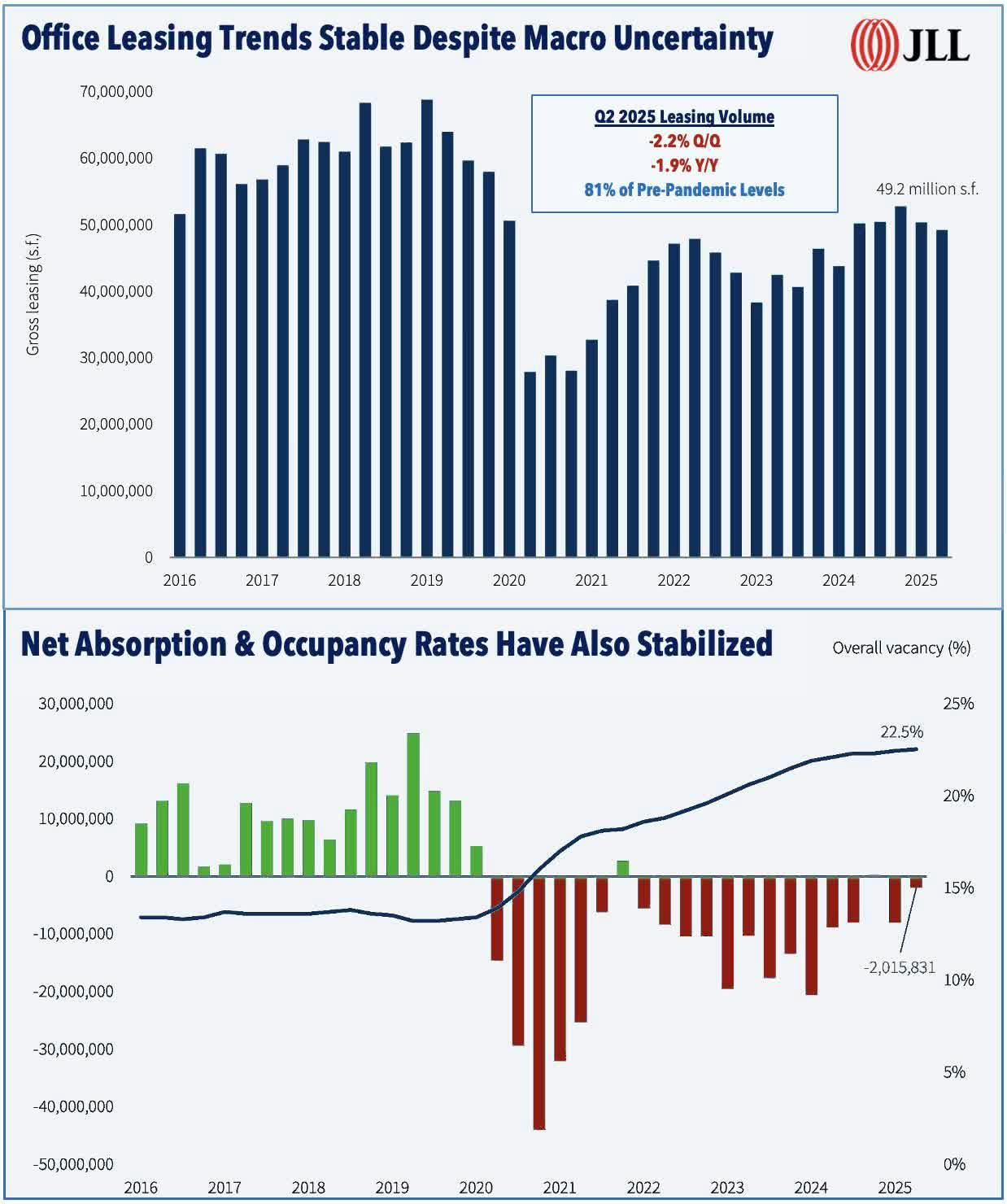
Office: Also riding some pre-earnings season momentum - fueled by a recent wave of in-person attendance requirements by several major corporations - office REITs have a relatively high hurdle to meet this earnings season. Brokerage firm Jones Lang LaSalle Inc. (JLL) released its quarterly office update this week, which showed mildly downbeat trends for the office sector after a relatively impressive rebound in leasing activity in the back-half of 2024. The report notes that leasing volume slowed moderately for a second straight quarter to 49.2M SF - down 2.2% from last quarter and down 1.9% from last year. JLL's measure of active space requirements, however, grew by 5.8% quarter-over-quarter to the highest levels of demand since Q4 2021. Office occupancy rates ticked slightly lower in Q2 to 78%, with modest negative net absorption of -2M SF, an improvement relative to the -7M seen in Q1. JLL noted that NYC and select Sunbelt markets – Atlanta, Austin, Dallas, Houston, Nashville, and Tampa – registered positive net absorption in Q2. Supply growth has been essentially nonexistent in recent quarters, however, as overall U.S. office inventory declined by another 700k in Q2 as deliveries continue to be offset by inventory removals for conversion and redevelopment. We're focused primarily on leasing volumes, commentary on any recent changes in demand, and the potential bottom in occupancy rates.
Residential Real Estate Earnings Preview
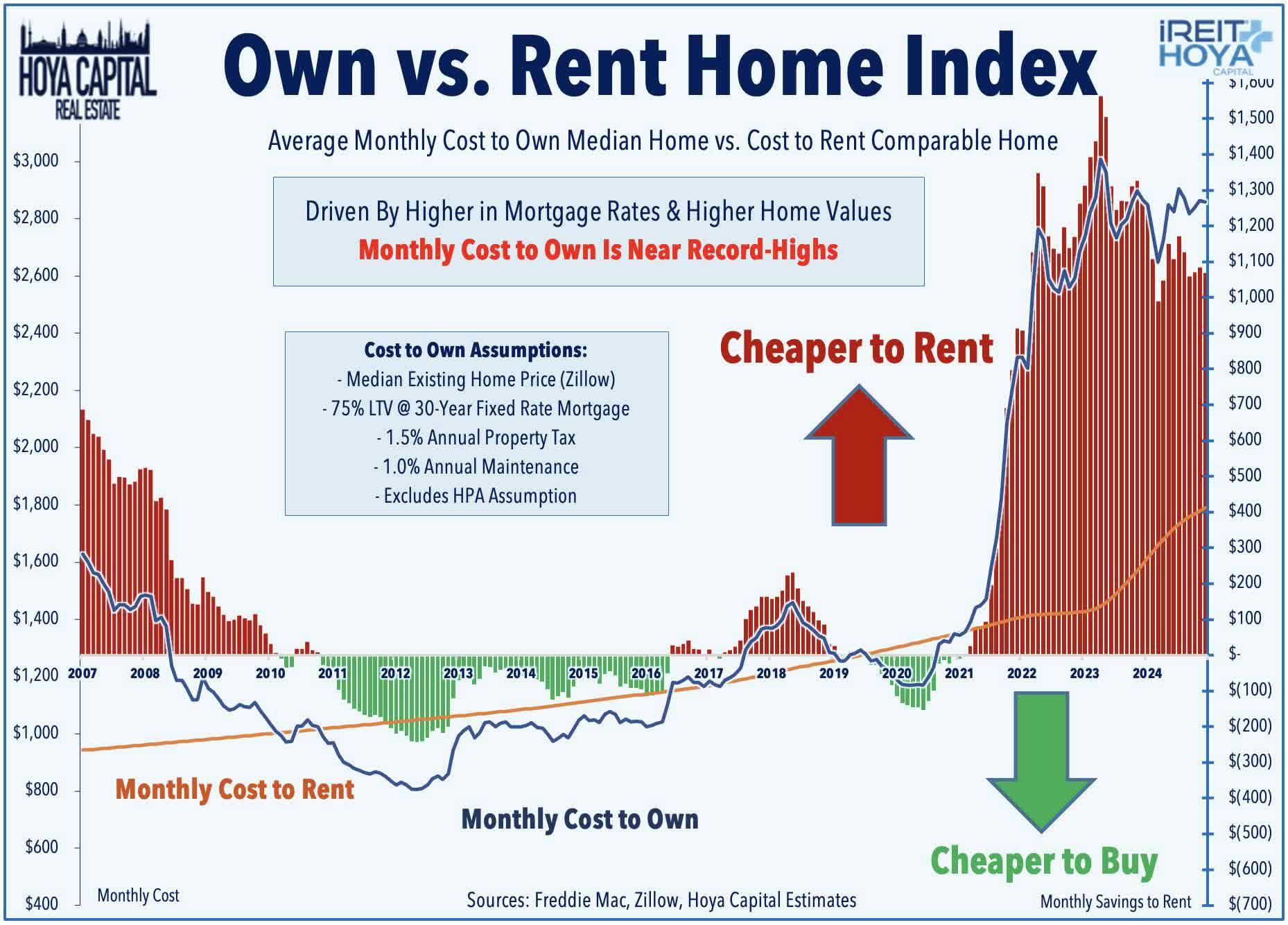
Apartments: For multifamily, oversupply concerns have eased in recent quarters as new construction starts have slowed substantially while demand has been particularly robust. Following an encouraging rent growth reacceleration in early 2025, however, recent data has shown a modest cooldown in rent growth since late Spring. Zillow's latest report this week showed that national rent growth cooled slightly to 2.9% in June - the lowest since early 2021 - but was still within the remarkably steady range of around 3% throughout that period. Other indicators have been more favorable, including a RealPage report last week showing "astonishing" demand in Q2 with 227k units being absorbed during the quarter, pushing its annual demand above the prior record seen during the pandemic boom in late 2021 and early 2022. Importantly, RealPage notes that the crest in supply growth is finally here, with the quantity of new units declining for a second straight quarter and an expectation of "rapidly declining delivery volumes" in the quarters ahead. The report notes that multifamily occupancy rose 140 bps year-over-year in Q2 and trended up in all of the nation’s 50 largest apartment markets. We'll be closely watching rent growth metrics on new and renewed leases, commentary on the financial health of their renters, and the outlook for supply growth.
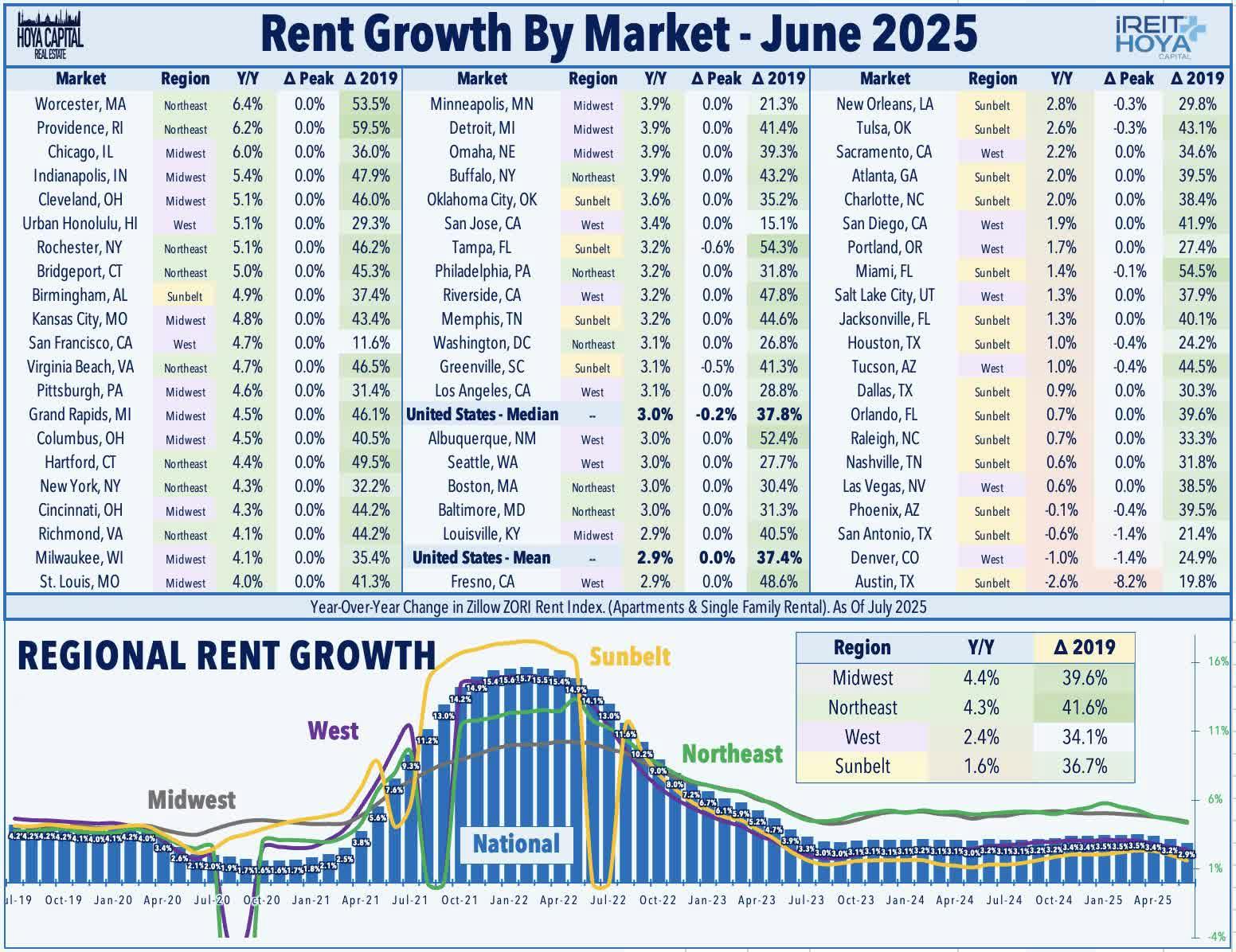
Single-Family Rentals: Supply growth has remained more contained on the single-family side throughout the pandemic era, but SFRs have not been entirely immune to the supply pressure on the multifamily side. After posting surprisingly buoyant mid-single-digit rent growth trends into early 2024, SFR REITs reported softer rent growth metrics in Q1, but recent data indicates firmer trends in recent months, even as multifamily rent growth moderated. Cotality reported this week that single-family rents accelerated for the fourth consecutive month in May, rising 3.1% from a year ago - an acceleration from annual increases of around 2.5% earlier this year. The report notes that monthly gains in their SFR index have "consistently outpaced seasonal norms this year, suggesting that annual rent growth for 2025 is on track to exceed 3%." The report also highlighted some emerging price-tier disparity, with higher-end units seeing firmer rent growth than those at the lower end. Rent prices for high-end properties increased 3.8% annually - an acceleration from 3% a year ago. Low-end rent prices increased 2.3% - down from 2.9% last May. The NYC metro area notched the highest rent growth in May with 6.4% annual growth, followed closely by Chicago at 6.2%. L.A. cooled after leading the way in early 2025 as the impact of the January wildfires dissipated. Dallas continues to have the lowest rent growth in the nation, rising just 0.3% annually in May. The two SFR REIT portfolios are skewed towards the mid-to-upper tier of the market but also have a heavy presence in the Sunbelt. Expenses remain the "wild card" for these REITs - especially as it relates to insurance and property taxes. In addition to rent growth metrics and expense controls, we're interested in commentary about these external growth prospects.
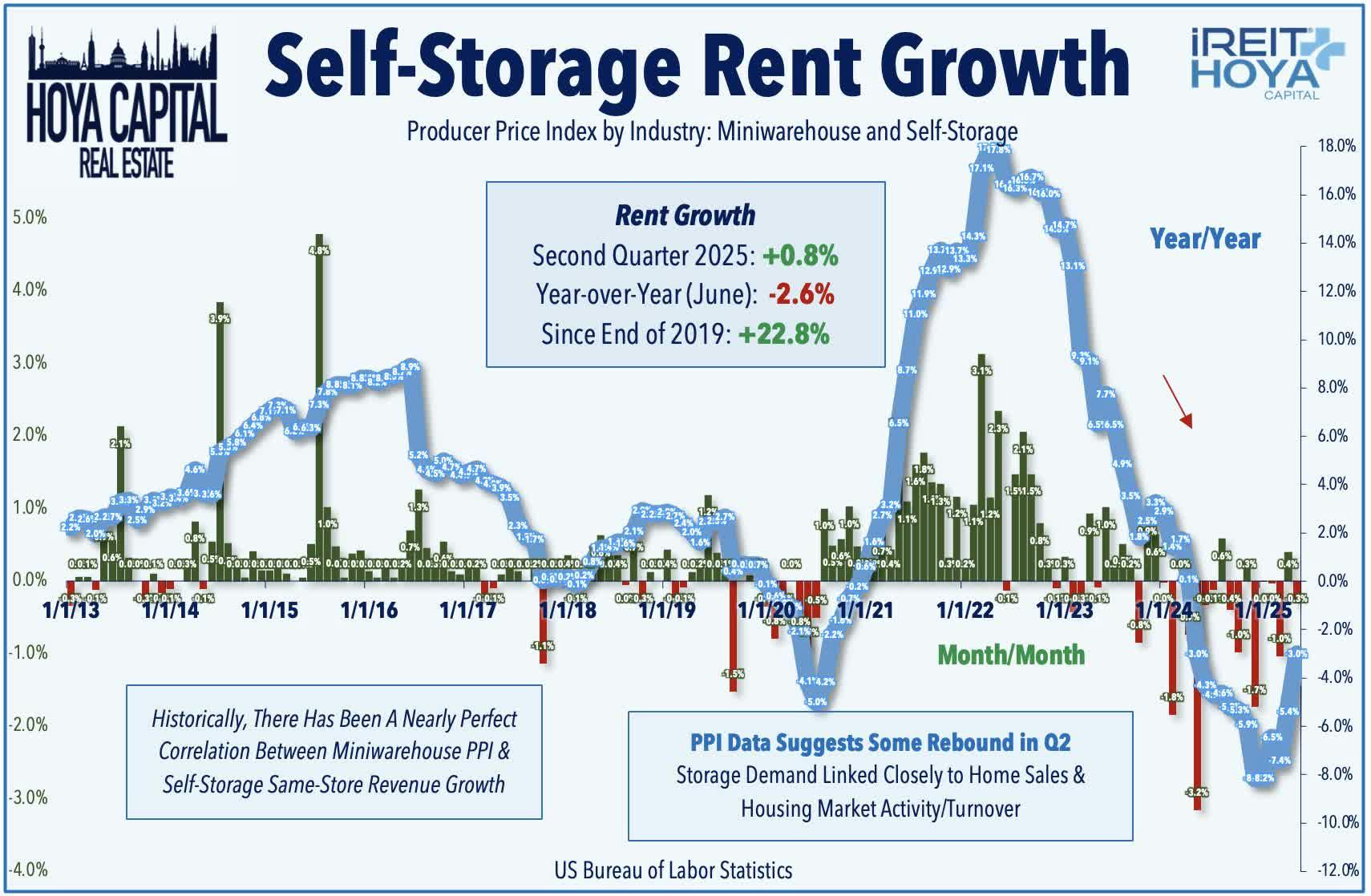
Storage: Self-storage demand is closely correlated with housing market turnover - existing home sales and apartment turnover rates - both of which have been around multi-decade lows over the past two years. Results from self-storage REITs last several quarters showed that soft fundamentals dragged into early 2025, as muted housing market activity and elevated supply growth have kept downward pressure on new lease rates. Muted move-out activity - and relatively buoyant low-single-digit rent growth on existing tenants - has helped to offset the considerable weakness in new lease rates, as all four storage REITs reported an eleventh-straight quarter of negative "Street Rate" (new lease) spreads, which has slowly started to bleed into the overall average rent metrics. Recent data in the PPI report and online search trends provide some reasons for optimism, however, with both indicating some firming in demand trends and rental rates in recent months. After many quarters of downbeat results, we think that storage REITs are finally poised for an upside surprise this quarter, and are focused on commentary on Street Rate trends and whether supply conditions are beginning to materially improve.
Tech and Industrial REITs Earnings Preview
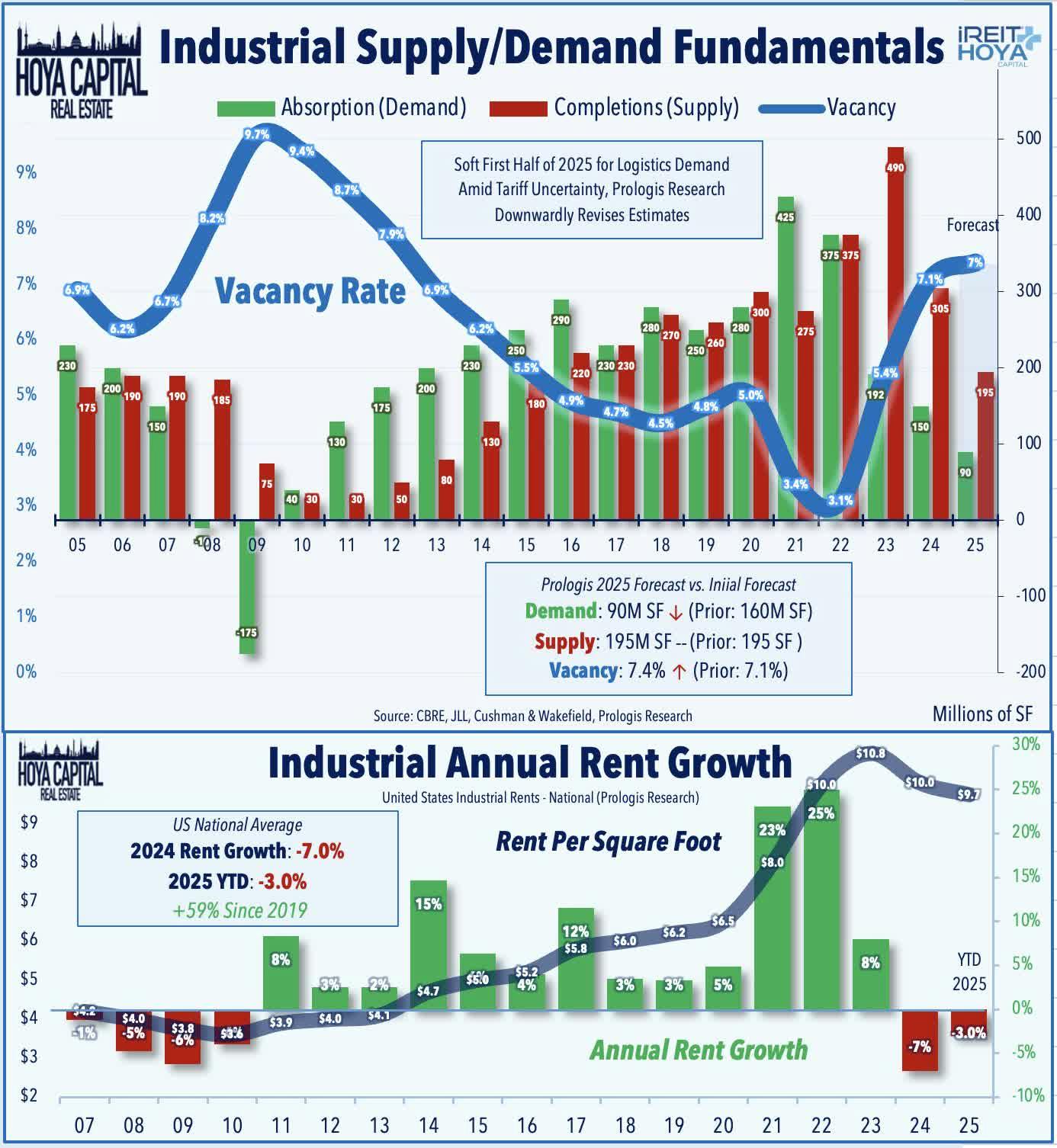
Industrial: After getting slammed in the post-liberation day sell-off, industrial REITs were among the better performers heading into earnings season after results last quarter pushed back on the prevailing consensus that looming tariffs would materially impair demand for logistics space. We saw results from three industrial REITs this week, which showed clearer signs of a "pause" in logistics leasing activity in the second quarter, particularly in coastal markets. While sector stalwart Prologis (PLD) led off the earnings slate with solid results and raised its full-year FFO outlook, its macro commentary on broader logistics market fundamentals was relatively downbeat. After initially forecasting roughly 200M SF of absorption for full-year 2025 and calling for a positive inflection in fundamentals in the back-half of this year, PLD now expects just 75-100M in net absorption this year after a "subdued" quarter in Q2 of just 28M SF, which lifted vacancy higher by 10 basis points to 7.4%. PLD noted that market rents declined 1.4% during the quarter and about 3% from a year ago, which follows a 7% annual decline in 2024. Results from Rexford (REXR) confirmed that the West Coast remains especially weak, with rents down 12.8% year-over-year in Q2. For the balance of the reports, we're focused on rent spreads and leasing volume, and tariff-related commentary.
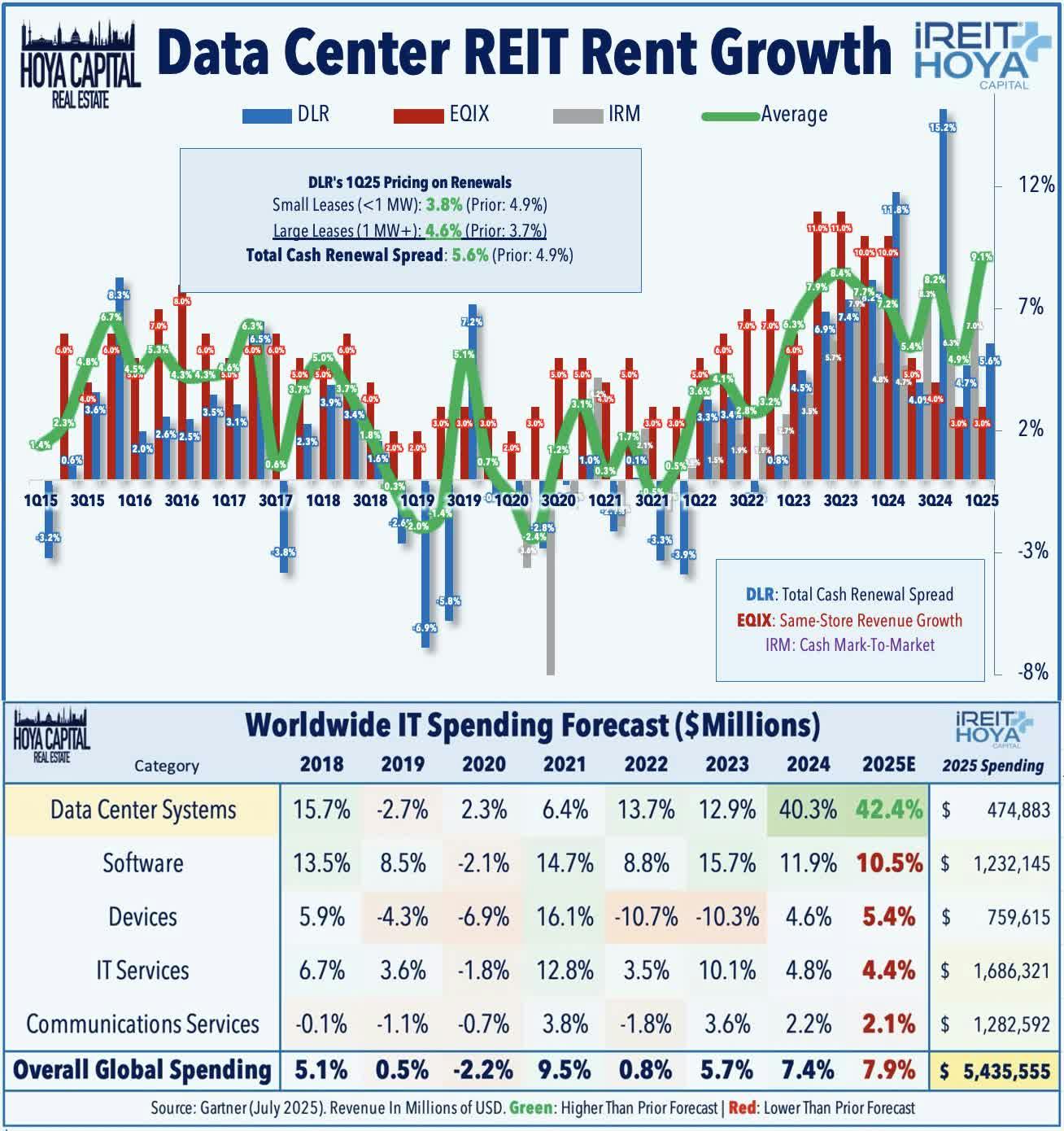
Data Center: The top-performing REIT sector in each of the past two years, data center REITs have lagged this year as the ongoing boom in AI demand has been offset by concerns about a slowdown in traditional cloud spending from the "hyperscalers" - Google, Amazon, and Microsoft. Results last quarter from Digital Realty (DLR) pushed back on that narrative, however, with DLR notching bookings representing $242M of incremental revenues, its third-strongest quarter on record and up from $100M last quarter, as very strong renewal bookings on smaller-scale enterprises leases (<1MW) helped to offset somewhat softer demand trends from larger hyperscalers (>1MW). Pricing was also surprisingly strong in Q1 following a moderation in late 2024, with DLR notching impressive cash rent increases of 5.6% on its renewals, up from 4.7% last quarter. A report last month from CBRE showed solid-but-moderating fundamentals in recent months across global markets, with rent growth cooling to 3.3% in early 2025, down from upwards of 5% last year. We'll be focused on leasing volumes and pricing, and on commentary regarding any shift in competitive dynamics as AI demand grows.
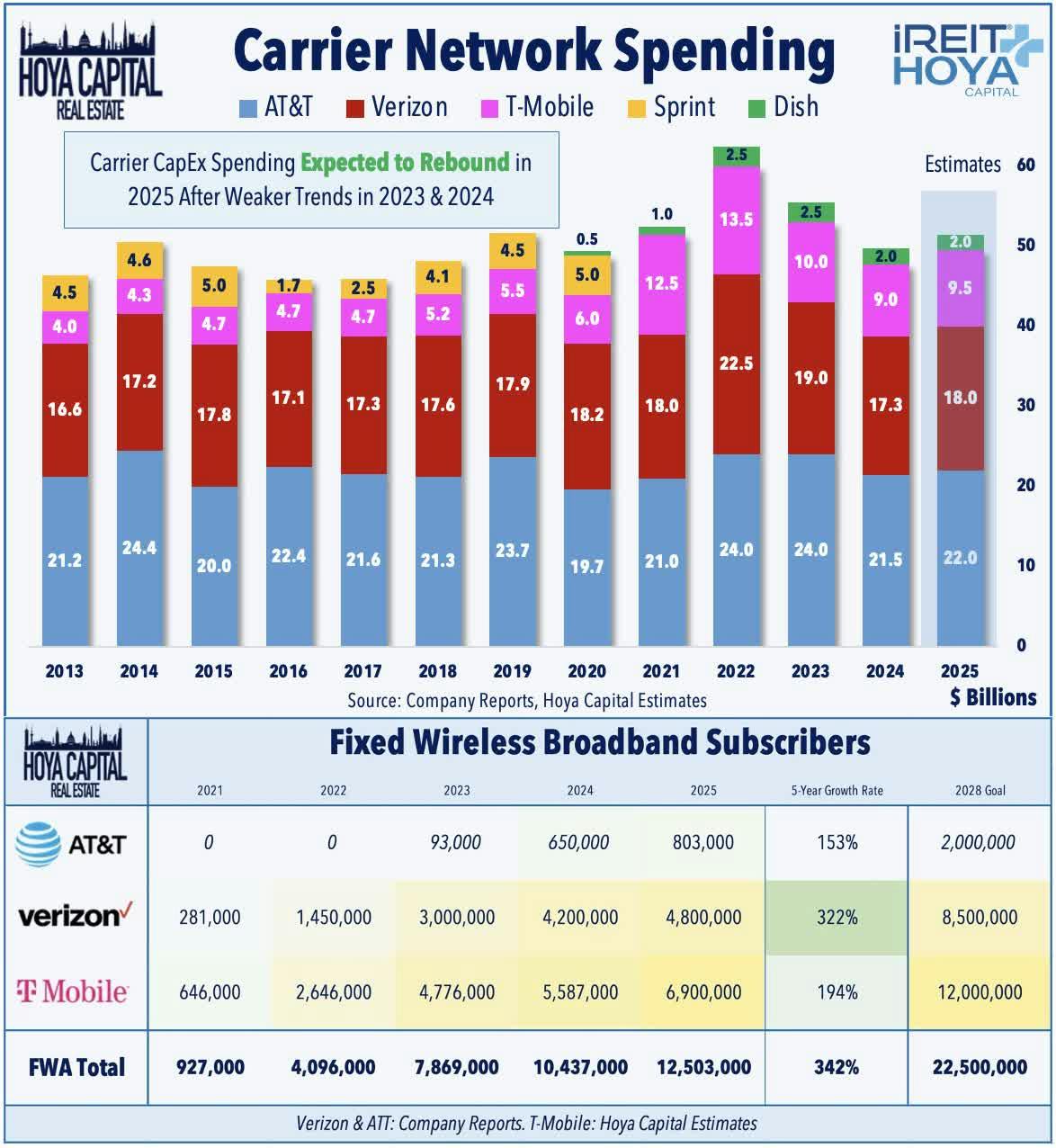
Cell Towers: The weakest-performing property sector from 2022-2024 amid a telecommunications industry-wide slump inflamed by tight monetary conditions and new competition from satellite offerings, cell tower REITs have rebounded in 2025 on positive green-shoots regarding increased network investment from the trio of U.S. carriers. These cellular carriers curbed their capital-intensive network expansion plans in 2023 and 2024 following a significant wave of investment and tower equipment upgrades from 2019-2022 to deploy nationwide 5G networks. Commentary from the major cellular carriers has provided some reasons for optimism this quarter, however, with industry-wide CapEx expected to re-accelerate in 2025. Robust demand for Fixed Wireless Broadband - which we've long viewed as the "killer app" for 5G - has prompted the major carriers to re-focus efforts on macro tower site deployment, which drives the "organic growth" for these tower REITs. Still, the shadow competition from the ever-improving service of Starlink cannot be ignored. A seemingly impossible feat when initially discussed in the late 2010s, Starlink has deployed roughly 8,000 low-earth-orbit satellites in five years - each serving as a "mini cell tower" - providing blanket worldwide coverage. Macro cell towers aren't going away anytime soon, but Starlink has significantly altered the competitive dynamic in the telecom space.
Healthcare REIT Earnings Preview
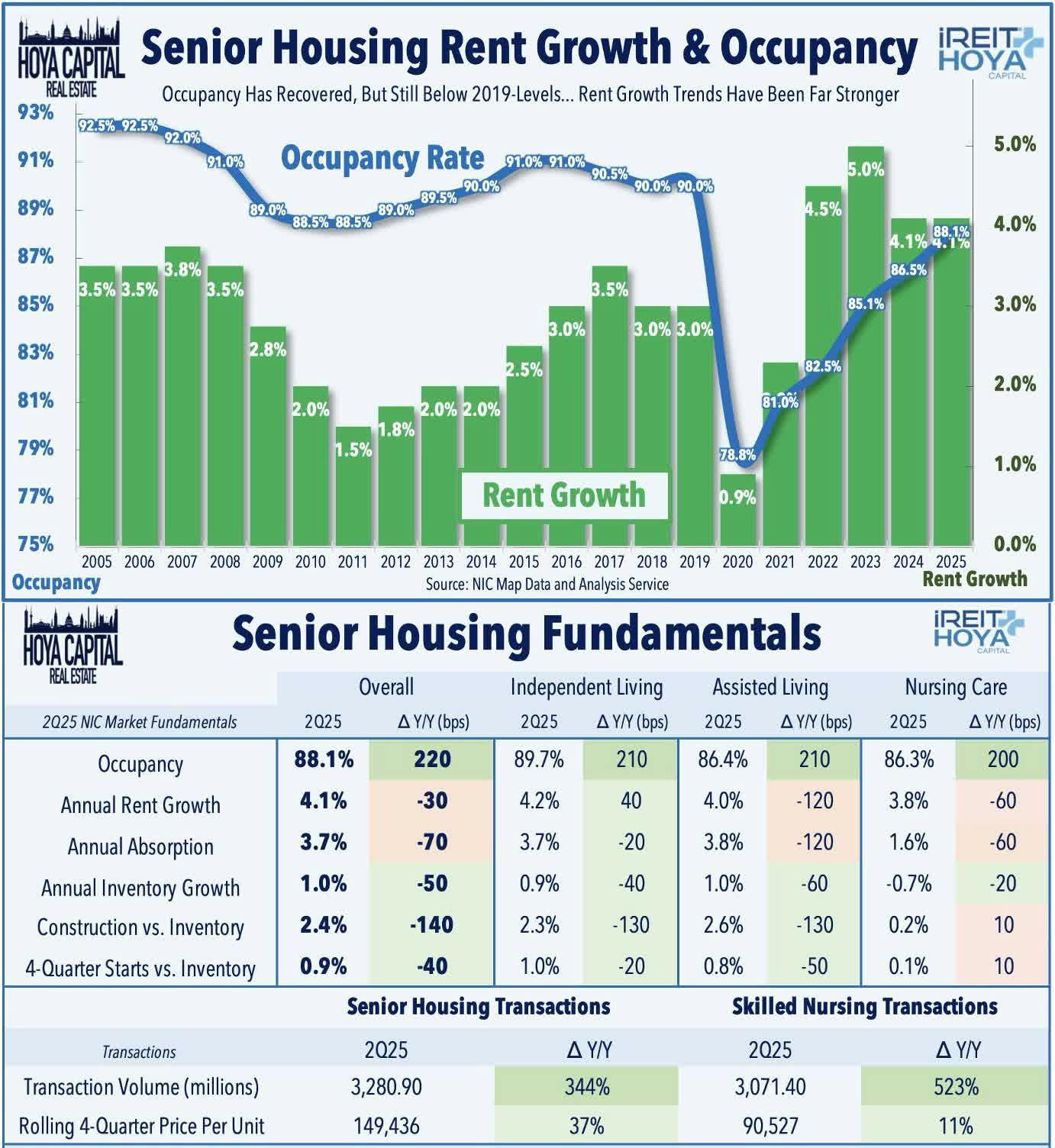
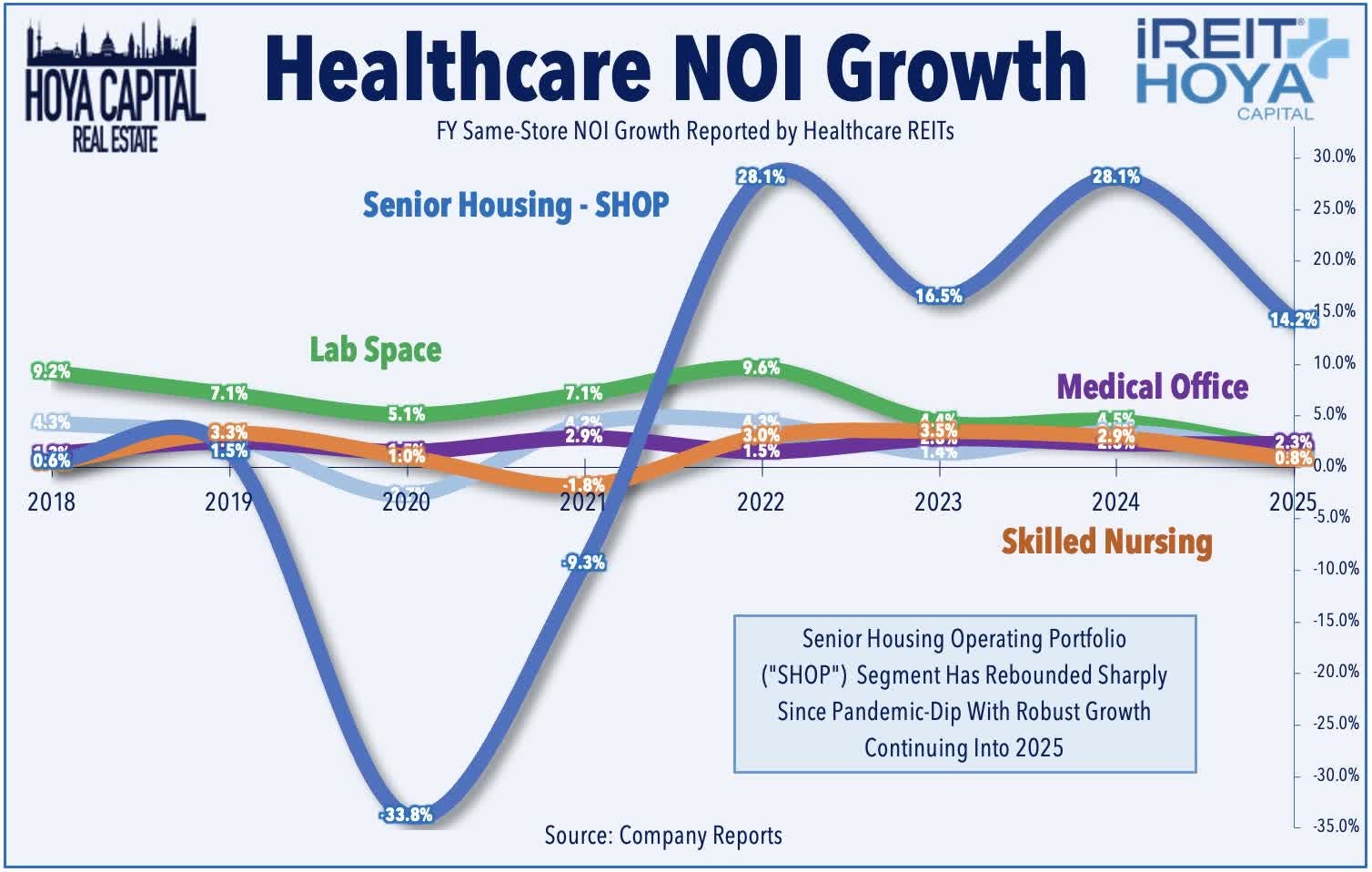
Senior Housing: Senior Housing and Skilled Nursing REITs were among the performance leaders in 2024, and have continued the strong run into 2025, as recent data shows a continued recovery in occupancy rates alongside historically strong rent growth. Industry data provider NIC published its quarterly Market Fundamentals report last week, which showed that senior housing occupancy rates increased for the 16th consecutive quarter to 88.1%, which is 10.3 percentage points above its pandemic low of 77.8% seen in the second quarter of 2021. The skilled nursing occupancy rate, meanwhile, rose to 86.3% in the most recent quarter, up 11.6 percentage points from its pandemic low of 74.7%. Fueled by tailwinds from record-setting COLA adjustments in 2023 and 2024, rent growth across both Senior Housing and Skilled Nursing facilities has remained historically in recent years - continuing to hover around 4.0%. Supply growth remains muted as well, with NIC noting that the rolling four-quarter average for construction starts sits at 0.9% of total inventory - the lowest since 2010. These tailwinds bode well for tenant financial health and rent coverage, which remains the primary focus.
Medical Office: While their healthcare REIT peers in the senior housing space have surged over the past two years, Medical Office Building ("MOB") REITs have remained one of the weakest-performing sub-sectors during this time and are now trading at average Price-to-FFO valuations that are below that of traditional office REITs. Despite being one of the most rate-sensitive segments, these REITs haven't yet enjoyed the valuation "bump" seen by their peers, which remains a bit head-scratching given the relatively steady property-level fundamentals. JLL's latest report published last quarter concludes, "[MOB] fundamentals remain strong, and construction starts remain slow, positioning medical outpatient buildings for increasing occupancy and rental rate growth, driving increased allocation from capital rotating from other asset classes." Despite steady demand, construction starts for MOBs have remained below pre-pandemic averages over the past three years. MOB REITs have a relatively low hurdle to meet this earnings season, and we'll be watching same-store metrics, tenant renewal rates, and lease volume growth.
Retail REITs Earnings Preview
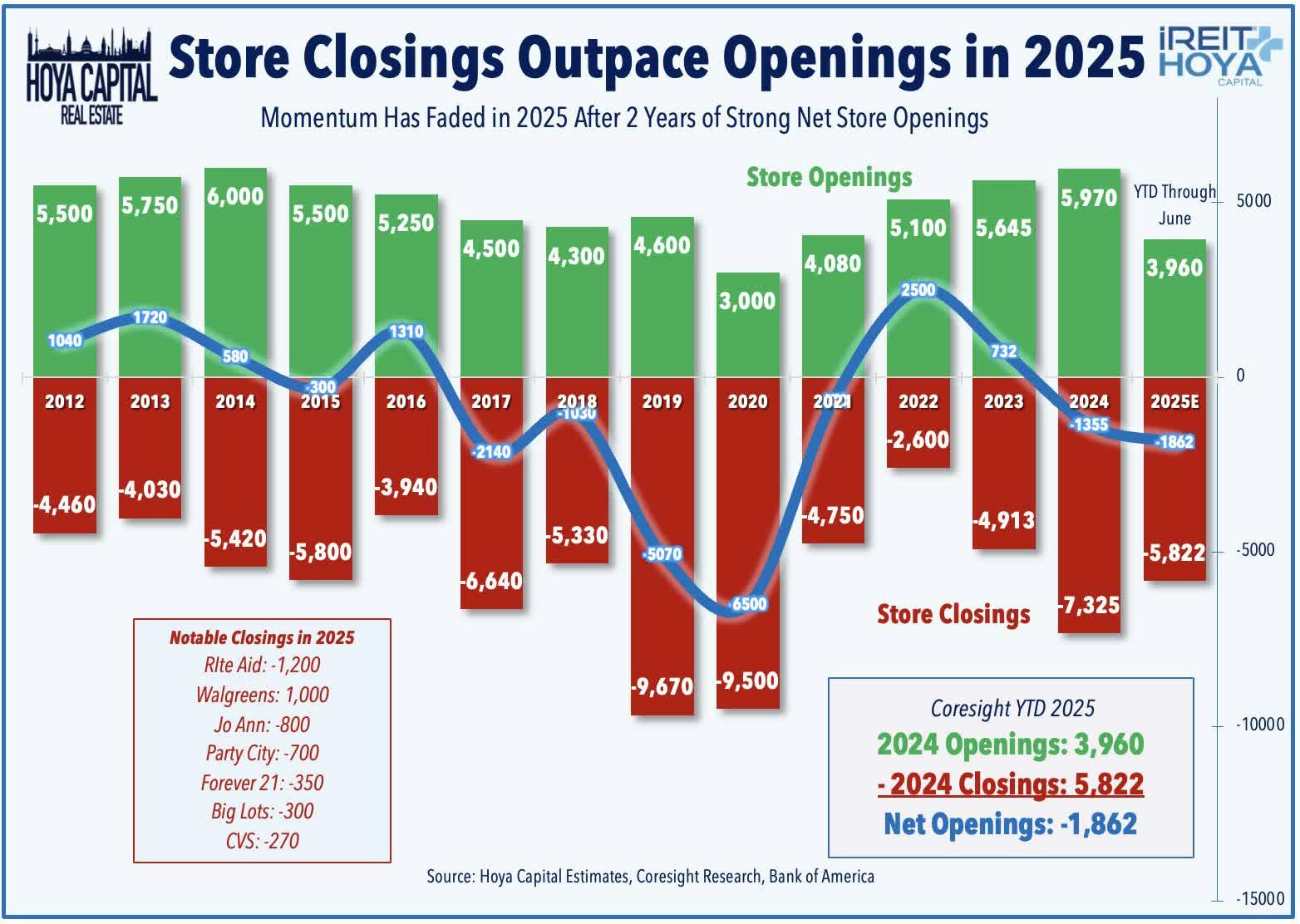
Strip Centers & Malls: Following a historically strong period of store openings in 2022 and 2023 - which drove record-setting retail rent growth - we've observed a rather notable cooldown in retail demand trends amid a handful of bankruptcies and large-scale store reduction announcements. Tempering the retail optimism, the latest data from Coresight shows that store closings have outpaced store openings by about 2,000 this year through the first half of 2025, but this is a significantly better pace than their initial outlook calling for 9k net store closings this year. The increase in store closings this year has been driven by a handful of recent bankruptcies - including Rite Aid, Jo Ann, Forever 21, Party City, and Conn's - along with announced store reductions from Family Dollar, CVS, Walgreens, Seven-11, and Big Lots. Retail REIT fundamentals had improved materially in 2023 and 2024, as the combination of near-zero new development and positive net store openings has driven occupancy rates to record highs and allowed both Strip Center and Mall REITs to enjoy some long-awaited pricing power. We're keyed in on commentary discussing whether this recent wave of closings is merely a bump in the road or indicative of a broader pivot across the retail space. We'll be focused on leasing spreads and occupancy rate trends.
Mortgage REIT Earnings Preview
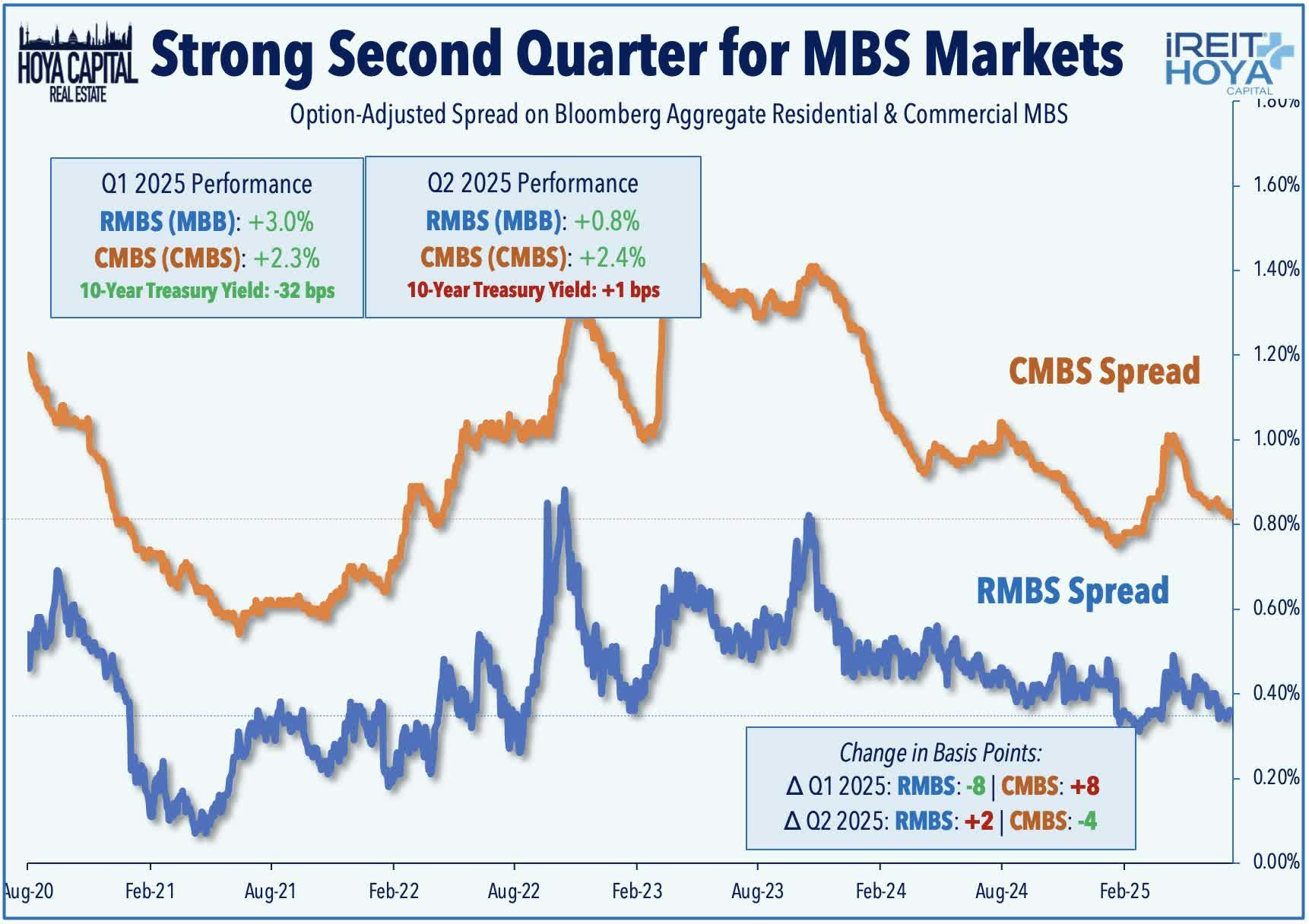
Mortgage REITs have been among the better-performing REIT sectors over the past quarter, buoyed by a relatively favorable macro backdrop for RMBS and CMBS valuations. The iShares CMBS ETF (CMBS) - which tracks the unlevered performance of commercial mortgage-backed securities ("CMBS") - posted total returns of 2.4% in Q2, which followed a similarly strong 2.3% return in Q1. The iShares MBS ETF (MBB) - which tracks the unlevered performance of residential mortgage-backed securities ("RMBS") - posted total returns of 0.8% in Q2, which follows a very strong 3.0% total return in Q1. CMBS spreads tightened 4 basis points during the quarter, while RMBS spreads rose by 2 basis points, while benchmark interest rates - as measured by the 10-Year Treasury Yield - were effectively flat. Given this valuation backdrop, for commercial mortgage REITs, we expect a +2-3% average increase in BVPS in Q2 (vs. -1.3% in Q1), and for residential mREITs, we expect BVPS to be roughly flat (vs. -0.4% in Q1).
Key Takeaways: Real Estate Earnings Preview
As analyzed in our State of REIT Nation report, however, valuations - not fundamentals - are responsible for the vast majority of this REIT underperformance, setting the stage for significant REIT outperformance in the quarters and years ahead as benchmark interest rates normalize. In this report, we focus specifically on these property-level fundamentals, previewing and forecasting REIT earnings performance based on an analysis of recent indicators across various sources. Notable favorable "green shoots" gleaned from recent data: 1) steady travel demand despite early-quarter confidence plunge; 2) long-awaited stabilization in self-storage fundamentals; 3) further strength in red-hot senior housing; and 4) signs of stabilization - and a rebound in lending activity - in CRE debt markets. Weaker trends include: 1) stalling office leasing following a late-2024 rebound; 2) "pause" in logistics leasing amid tariff uncertainty; 3) flat multifamily and SFR rents after Q1 reacceleration; and 4) a measured cooldown from historically strong retail fundamentals. Below, we compiled the real estate earnings calendar for Equity REITs, Homebuilders, and other key real estate industry players.
Please note that this article reflects the author’s personal views and does not represent the opinions of the publication or its affiliates. It is for informational purposes only and does not constitute investment advice. It is essential to seek guidance from a registered financial professional before making any investment decisions.
Latest ETF News
See all ETF news

Why ETF Spreads Often Mislead Investors







 Advantages of ETFs over Mutual Funds1/6
Lower Costs
In this guide, we'll explore the advantages of ETFs over mutual funds, giving you valuable insights into why ETFs have gained significant popularity among investors like yourself.
Leveraged ETFs: Unlocking the Potential for Amplified Returns1/6
Understanding Leveraged ETFs
Explore leveraged ETFs: potential for amplified returns & risks. 5 ETFs to consider across equities, commodities & fixed income.
What is a Leveraged ETF?1/6
Introducing Leveraged and Inverse ETFs
In this guide, we'll dive into the world of leveraged ETFs, exploring their definition, mechanics, potential risks, and rewards.
Recent educational content

Asset TV
The ETF Show - New Autism-Impact ETF Launched
Defiance ETFs has launched the first ETF, $ASD, focused on the autism ecosystem, investing in companies that provide services, products, and research related to autism and neurodivergence.


ETF Trends
ETF Industry KPIs June 1, 2026
The ETF Industry saw 22 New Launches, 1 Ticker Change and 1 closure last week.

ETF Trends
ETF Industry KPIs May 20, 2026
The ETF Industry saw 44 New Launches, 3 Mutual Fund Conversions and 9 closures last week.

Asset TV
The ETF Show - Politics Becomes Investable Trade through ETFs
Dan Weiskopf, Senior Portfolio Manager at Tidal Financial Group spoke with the ETF Show about Subversive ETFs that help investors trade like politicians.
Browse all educational columns



Build and Analyze Your ETF Portfolio Like a Pro
Create your own ETF portfolio in minutes and instantly see allocations, exposures, performance, and risk. Visualize diversification across asset classes, regions, and sectors. Stress-test ideas, compare benchmarks, and refine your strategy with professional-grade analytics.