Create, analyze, optimize your ETF portfolio. Start now →



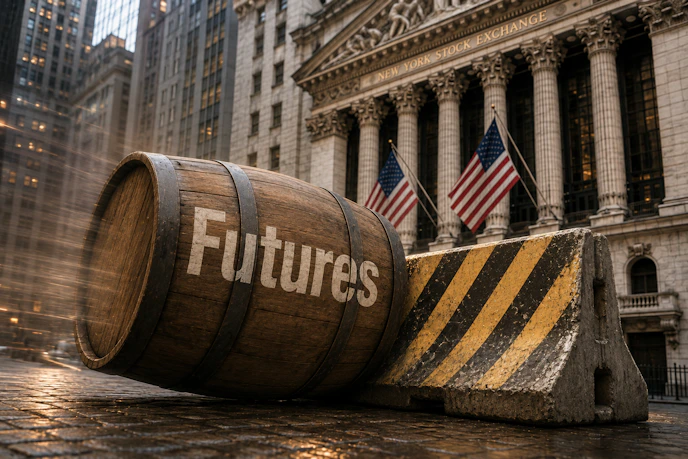
What If a Futures-Based ETF Never Had to Roll Again?
The next evolution in futures could open a new playbook for ETF issuers.

Keep up with what matters in ETFs
Get timely ETF insights, market trends, and top ideas straight to your inbox.
Your newsletter subscriptions with us are subject to ETF Central's Privacy Policy and Terms and Conditions.
I'm Nicholas Phillips, President of ETF Capital Markets Advisors LLC, with 27 years of experience in ETF trading and capital markets.
I provide fractional capital markets support to ETF issuers and asset managers, helping them navigate launches, liquidity, ETF market structure, market maker relationships, and sales and execution support.
Through my contributions to ETF Central, I aim to provide practical insights for investors and issuers navigating the ETF landscape.
In my latest piece, I explore a simple question with potentially big implications for ETFs: what changes when futures no longer expire?
Get data on 14,000+ ETFs
Access Trackinsight's reliable and comprehensive data with 500M+ points on 14,000+ ETFs.
A Futures Contract Without an Expiration Date?
Futures have been an important building block of the ETF industry for years.
They allow ETFs to provide exposure to commodities, digital assets, leveraged strategies and other markets where derivatives may be the most efficient way to implement an investment strategy.
But traditional futures have one unavoidable feature: they expire.
For an ETF that wants continuous exposure, that means periodically selling a contract approaching expiration and buying another with a later expiration date.
The fund has to roll.
What if it didn't?
That question is becoming more relevant with the emergence of regulated perpetual futures in the United States.
In May, the CFTC approved the listing of a perpetual futures contract referencing the spot price of Bitcoin on a U.S. regulated derivatives exchange and issued a broader policy statement addressing the listing of perpetual contracts.
Perpetual futures are different from traditional futures in one important way: they don't expire.
For the ETF industry, that could eventually have some interesting implications.
Eliminating the Roll
Rolling futures isn't necessarily free.
The shape of the futures curve matters.
The price of the contract being sold versus the one being purchased matters.
Liquidity and execution matter.
Perpetual futures potentially eliminate that event entirely.
There may also be another important benefit: liquidity concentration.
Rather than having liquidity migrate from one contract month to another as expiration approaches, a perpetual future could potentially concentrate trading and hedging activity in one continuously traded contract.
If sufficient institutional volume develops, that could create a deep and efficient market for establishing and hedging exposure.
For an ETF market maker, that could be particularly valuable.
The Cost Doesn't Disappear
There is a trade-off.
Perpetual futures generally use a funding mechanism to help keep the contract aligned with its underlying reference market.
When demand for long exposure is strong, longs may pay funding to shorts. When short pressure dominates, shorts may pay longs.
For an ETF investor, one way to think about funding is almost like a floating management fee attached to the exposure.
It isn't actually a management fee, however.
The rate can change significantly, and sometimes the fund could receive rather than pay it.
So perpetual futures don't eliminate the economics of maintaining exposure. They change where those economics appear.
Roll economics are replaced by funding economics.
Where Could This Matter for ETFs?
A perpetual future isn't necessarily an improvement for every ETF.
If an investor can efficiently own an asset through a low-cost spot ETF, there may be little reason to introduce derivatives and funding-rate risk.
The opportunity becomes more interesting where derivatives are already central to the strategy.
Leveraged ETFs are one example.
They would still have to rebalance their exposure as markets and fund assets change, but they could potentially eliminate the additional requirement of periodically rolling their futures positions.
Managed-futures and multi-asset strategies could be even more interesting.
These portfolios may maintain futures exposure across numerous markets and use leverage as part of their investment process.
Perpetual futures could potentially allow managers to maintain those exposures without continually managing contract expirations and rolls across multiple positions.
That could reduce one source of portfolio trading and operational complexity.
VIX Versus Oil
Where perpetual futures could be useful may depend heavily on the underlying market.
A VIX futures ETF is an interesting example.
The VIX is an index and isn't physically delivered.
A perpetual future could potentially allow an ETF to maintain exposure without continually rolling from one expiration to another, while potentially concentrating liquidity in one contract.
Oil is very different.
WTI futures are tied to a physical commodity and are used for delivery.
The different expiration months serve an important purpose for producers, consumers and other participants who need to buy, sell or hedge oil at specific points in time.
A perpetual future wouldn't eliminate the need for that function.
So while a perpetual structure could potentially make sense for something like VIX exposure, it may offer far less benefit for a physically delivered market like oil.
A New Tool for the ETF Industry?
Perpetual futures wouldn't make the economics of maintaining exposure disappear. They would change them.
Traditional futures have expiration dates, futures curves and roll considerations. Perpetual futures eliminate expiration but introduce funding rates and different liquidity dynamics.
For some ETF strategies, eliminating the roll while potentially concentrating liquidity in one continuously traded contract could be valuable.
For others, traditional futures—or simply owning the underlying asset—may still make more sense.
What if a futures-based ETF never had to roll again?
For some ETF strategies, we may eventually find out.
Disclaimer
Please note this article is for information purposes only and does not in any way constitute investment advice. It is essential that you seek advice from a registered financial professional prior to making any investment decision.
Latest ETF News
See all ETF newsHow Do You Build a Winning ETF Business?

Losers Of Q2 2026 REIT Earnings Season


Winners of Q2 2026 REIT Earnings Season


ETF Creation Windows Matter More Than You Think
Why the Time of Day Matters When Trading an ETF


 Advantages of ETFs over Mutual Funds1/6
Lower Costs
In this guide, we'll explore the advantages of ETFs over mutual funds, giving you valuable insights into why ETFs have gained significant popularity among investors like yourself.
Leveraged ETFs: Unlocking the Potential for Amplified Returns1/6
Understanding Leveraged ETFs
Explore leveraged ETFs: potential for amplified returns & risks. 5 ETFs to consider across equities, commodities & fixed income.
What is a Leveraged ETF?1/6
Introducing Leveraged and Inverse ETFs
In this guide, we'll dive into the world of leveraged ETFs, exploring their definition, mechanics, potential risks, and rewards.
Recent educational content

ETF Trends
ETF Industry KPIs August 24, 2026
This week’s KPI data overview highlights key metrics and trends shaping the ETF landscape.

What’sTheFund
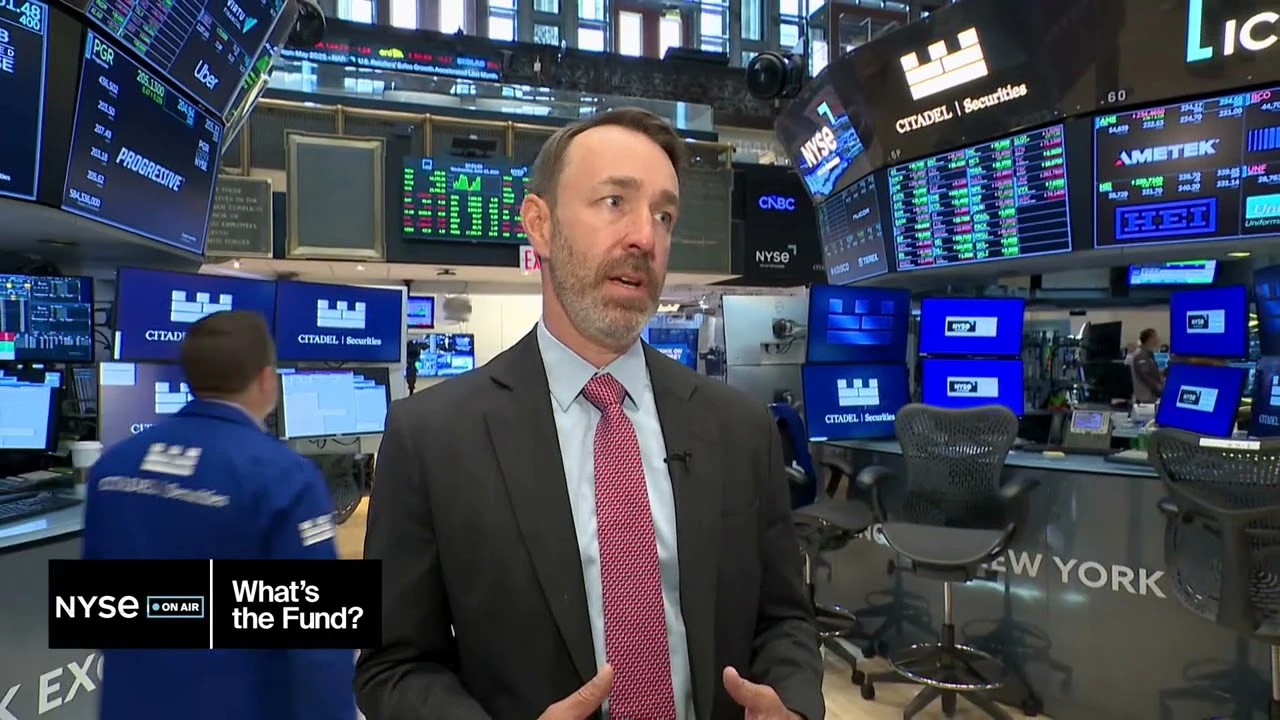
What's the Fund | Ocean Park Diversified Income ETF (DUKZ)
James St Aubin, Chief Investment Officer at Ocean Park Asset Management, discuss the DUKZ ETF, exposing investors to the whole spectrum of asset classes in the fixed income markets, through their rules-based process.

ETF Takeaway
ETF Takeaway: Ocean Park Diversified Income ETF (DUKZ)
James St Aubin, Chief Investment Officer at Ocean Park Asset Management discusses the state of fixed income markets and how their DUKZ ETF, through their rules-based process, tactically allocates to 11 sectors of fixed income through underlying ETFs.
ETF Trends
ETF Industry KPIs August 17, 2026
This week’s KPI data overview highlights key metrics and trends shaping the ETF landscape:
Browse all educational columns



Build and Analyze Your ETF Portfolio Like a Pro
Create your own ETF portfolio in minutes and instantly see allocations, exposures, performance, and risk. Visualize diversification across asset classes, regions, and sectors. Stress-test ideas, compare benchmarks, and refine your strategy with professional-grade analytics.