Keep tabs on your favorite ETFs with a personalized weekly tracker. Create a Watchlist now →



Upside & Impact Ep. 4 - What Happened to the Beyond Meat and Oatly stocks?
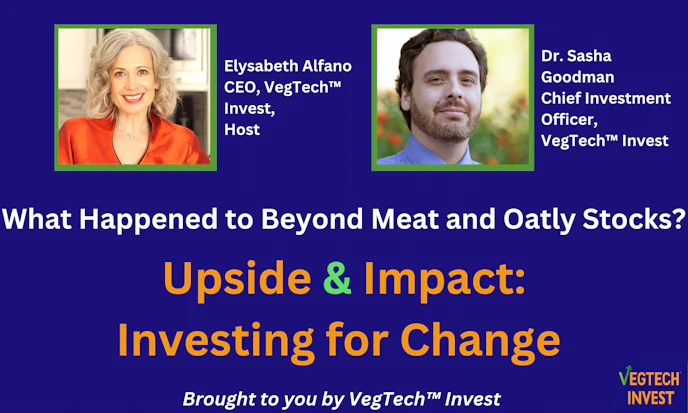
Dr. Sasha Goodman, Chief Investment Officer of VegTech Invest, joins Elysabeth Alfano, CEO of VegTech Invest to discuss what has happened to the Beyond Meat and Oatly stocks and, conversely, the large landscape of Plant-based Innovation companies in the public markets that are thriving.

Keep up with what matters in ETFs
Get timely ETF insights, market trends, and top ideas straight to your inbox.
Your newsletter subscriptions with us are subject to ETF Central's Privacy Policy and Terms and Conditions.
- What other companies are publicly traded that are focusing on Plant-based Innovation?
- What common misconceptions exist about the alt protein sector?
Like what you're reading?
Stay in the loop — get the latest ETF insights: trends, analysis, and expert picks.
- What is driving food systems innovation and is it an investable opportunity?
- What kind of growth and innovation will we see in the sector?
Trasncript of the podcast:
Elysabeth: Hey everyone, welcome to the VegTech Invest Upside & Impact podcast. I’m your host, Elysabeth Alfano, the CEO of VegTech Invest, Advisor to the Plant-based Innovation and Climate ETF, EATV. On Upside & Impact I chat with the leaders and movers who are shaping and growing impact investing for meaningful change. We “pull up as we go up” as the expression goes so this podcast is all about making meaningful and productive impact while also managing one’s portfolio for upside. Of course, always managing for upside.
If you’d like more information about VegTech Invest you can visit us at VegTechInvest.com and subscribe to our newsletter. You can also find us on LinkedIn and on Twitter at VegTech Invest. We record live every first and third Wednesday of the month on our LinkedIn page at 1:30pm eastern standard time. So, check us out live and be sure to bring your questions.
Now if you’re listening as part of a podcast, of course subscribe to this podcast right now so that you never miss an episode. And if you’re listening on iTunes, be sure to leave a 5-star review. It really does help.
So now let’s get down to today’s show and thanks for being with me on today’s episode of VegTech Invest’s Upside & Impact. And as always, a reminder, this podcast is for informational purposes only and is not meant to recommend any specific company or investment. Now, onto the show.
Hi everyone. I’m Elysabeth Alfano. It’s the Upside & Impact: Investing for Change podcast. I’m over the moon to say that we have good news. The Upside & Impact podcast is now part of the New York Stock Exchange’s ETFCentral.com platform, which means that you can find this episode and all our previous episodes on the ETFCentral.com platform. And in our show notes today you will have a direct link to my page with all my interviews from people like Jeffrey Gitterman, a leader in sustainable investing.
You’ll also see people you might think, “Well, how did they get on the Upside & Impact podcast?” like the All In podcast’s David Friedman, who has a very interesting perspective on investing in private equity as well as investing in public markets and sort of a sharp wit and mind. And Bloomberg Intelligence’s Jen Bartashus reporting on the food sector and other sustainable sectors. So, you will get voices from all over, giving different opinions on impact investing and sustainable and responsible investing. So, we are over the moon to be the voice for the New York Stock Exchange ETFCentral.com on sustainable investing.
Okay, with that today is no exception. A lot of people had high hopes for food systems transformation. Let me take that back. Some people had high hopes for sustainable food systems transformation. Many people asked, “Well, why the heck would we do that? What’s wrong with the food systems? Why are you messing with that?” So, we had players like Beyond Meat and maybe Oatly as well, considered to be leaders in a new era of food, the future of food, so to speak. But those stocks have fallen off a cliff and I’m being kind. So, what the heck happened to those stocks? And is this food systems transformation really an investable mega trend?
It has sustainability, we believe. We’ll get into those numbers, but does it really have viability as an investable trend? Obviously, we’re all here for both upside and impact. Well, the person to answer these questions today is Dr. Sasha Goodman. He is the Chief Investment Officer of VegTech Invest and my partner. Dr. Sasha Goodman, how are you today?
Dr. Sasha Goodman: Thanks, it’s good to be here. I’m doing well.
Elysabeth: I’m so happy to have you here, and I do have to say thank you to Dr. Sasha Goodman who usually likes to prepare and record in advance. But of course, everybody, if you are listening on the ETFCentral.com and you’re listening to the audio podcast, this is also live every other Wednesday on the VegTech Invest LinkedIn website page. So, you can always go live and bring your questions if you’d like to do that.
So, we are going to get to Dr. Sasha Goodman. A wealth of knowledge is he. But first, I want to set the stage and take you through a presentation as to why we believe that the Beyond Meat and Oatly stocks have had some trouble in the marketplace, and we’ll get into that and why there could be a bright future for them. We’ll talk about that as well after the presentation when I will bring back Dr. Sasha Goodman.
So let me bring up exactly what I would like to see here before I dive deep. I will say to anyone listening to an audio podcast you’re not going to be able to see the deck, but you can always reach out to me at any time on LinkedIn and I can send you a copy of this deck, which I’m happy to do. So as many of you might know, VegTech Invest is focusing on sustainable food systems transformation, and although we do have a non-tracking ETF product, we also have a benchmark frame of reference index product that really talks about the sector, global food systems transformation.
So, I want to take you through that and mostly how Beyond Meat and Oatly are impacted or maybe not so impacted. Maybe they’re not that big a deal as many thinks that they are. So, we look and take us back to when the economy was in a good spot, my gosh, 2019. It wasn’t just plant-based innovation that was on a high. By the way, when I say “plant-based innovation” I mean, of course, consumer packaged goods and plant-based foods, but I also mean up and down the supply chain. Innovations like precision fermentation, cultivated meat, innovations that pertain to materials taking inefficient business systems out of the equation and putting in better business systems that are better for the planet and better for the bottom line because they’re more efficient. So, I’ll continue to use that expression, “plant-based innovation”.
Okay so in 2019 Beyond Meat was all the rage and it was the most successful IPO since 2008. It went up, I believe, 162% or 168% in one day. Well, it has since fallen off a cliff. So why? What has happened to Beyond Meat and the Oatly stocks? Well, Beyond Meat was in a very particular situation. It was new to Wall Street. The whole sector of food systems transformation was relatively new to the very smart, very astute Wall Street analysts, but still a new secular trend and people had doubts if it was a secular trend. So how do you value these kinds of companies?
It was valued like a tech stock, but really, it’s not. It’s a consumer staple stock and I think this slide provided by Dr. Sasha Goodman- and he might choose to chime in here. Just put on your glasses if you’re watching live on the VegTech Invest LinkedIn page, but if you are with me on audio, I have a graph here that shows that Beyond Meat and also Oatly were trading at about 25 times their sales for their price-to-sales ratio. They have since come down. They’re below the NASDAQ and the S&P and they’re more now trading like three to four which still might even be a little bit high for consumer staples, which are usually trading at one and half to two or one and a half around there.
But food tech, and we’ll say veg tech, is not a typical consumer staple. It has extreme growth potential, which we’ll talk about later in this show. So, trading around three to four, that’s perhaps about right. Sasha, you are still with me even though we’re not seeing your face here. Is there anything you’d like to add to this slide?
Dr. Sasha Goodman: Well, I’d just like to agree that the valuations are important so we can have some sort of point of reference on if something’s expensive or not. And these companies were approaching dot com era prices of sales, which were in the 30s at the same time. So that’s a lot for a consumer goods company. And they’ve come down and I think they’re much more reasonable now.
Elysabeth: Yeah, they’re much more reasonable now which is great. So, as we move on in our presentation, that is perhaps how analysts were having a tricky time wrapping their mind around this new beast in the marketplace in unprecedented economic boom times. At the same time the companies themselves, perhaps of no blame to them, were not focused on profitability. Like most startups going into venture companies that finally IPO, they still have that kind of venture mindset. They’re focused on growth, growth, growth at all costs. They’re spending on Capex. Beyond Meat put in a plant in China and a plant in Holland, as well. Oatly was really taking on large infrastructure spending so that they could produce more. This was making them- even though they had good revenue and good sales, this was making them not profitable.
Well economic times, spoiler alert, you may realize the economic times have changed. And now everyone’s really looking at EBITDA growth and profitability, not just revenue. They’re looking for profitability. That kind of pivoted on a dime, if you will, and those two companies were very focused on Capex spending. Since then, they have pulled back considerably. Oatly relinquishing its contracts for large-scale manufacturing now, going through a co-man. Both companies have let people go, like many companies in this new economy. While both are trying to be profitable- so this is maybe a ray of light for them. They are paying attention to these. That’s a process and a journey, so they’re now trying to focus more on profitability. There’s also a particular bravado if I may say. Perhaps that’s not the exact right word.
When you are an entrepreneur and a startup and a venture, you must take on the mission of changing the world. I mean, it’s passion. Passion is at the forefront. Once you lean into an IPO and you’re on the public market, yes, you need to have a product that solves a problem or there needs to be a reason for the product. But passion doesn’t really get you very far. It really is numbers. Know your numbers, which means know your forecasts, which means when you’re in earnings calls, you need to be able to hit your numbers. If you show up in front of analysts time and time again saying, “Well, we have the dream, we have the mission, but we’re off our numbers again,” this gives analysts a reason to pause. So, these are some of the things that the companies themselves perhaps have mismanaged a bit or are working on. Let me put it that way.
I’ll go to another slide. This slide comes to us from Dr. Sasha Goodman. Why is it so tricky for analysts to wrap their minds around unprofitable companies and perhaps encourage a sell off, if you will? Well, there’s a metric called the price-to-earnings ratio. If you don’t have earnings, you can’t do the ratio. And this gives analysts reasons for pause, and reasons for uncertainty about the prospects of the companies. And those companies that aren’t profitable can have volatile fluctuations on the market because they don’t have that key pillar for analysis, which is earnings and profitability.
Again, just kind of underscoring here the importance of that profitability number. Now, the last reasons I’ll go through as to why these companies might be having trouble and their stock prices are reflecting this. Well, like every company, they are in a bad economy. What does that mean? Less so now, but coming out of Covid, what company didn’t have supply chain issues? We remain in a tricky, volatile, fearful market. There has been a negative campaign from the meat lobby. For anyone who doubts this or doesn’t have information about this. I’m happy to share it with you. It’s not going to be the focus of today’s conversation, but if you are curious about who’s funding a lot of the negativity, I’m happy to share that research with you.
And then most importantly, the products still are more expensive. Now we’re in inflationary times heading into perhaps a recession. Everyone is already in a fearful market, as we’ve discussed. When you don’t have price parity, you’re always going to be at a distinct disadvantage. Now again, just like getting profitability numbers in line, you’re going to see a price parity with scale come at a faster rate. Our research says that price is second only to taste in driving purchases very much like solar energy. Once solar energy reaches price parity- now they’re still having some tricky times on the market because of the economic times we’re in, those stocks are having some tricky times on the market in terms of stock price. But you see their growth rate is 24% since 2012. So very powerful once you reach price parity.
And A.T. Kearney says once you decrease a price by 1%, you increase your market share of 3%. So as more investment piles into food systems transformation, and that is happening, we’ll talk about that a little bit later. That is happening because of climate change and biodiversity loss, where the food system is extremely damaging. You’re seeing really this continued investment into food systems transformation.
Okay now I’ll just briefly say today I’m really speaking to investors and asset managers with upside and impact. But this topic is very interesting to entrepreneurs considering an IPO. So very quickly I’m putting my entrepreneurial head on. I will speak to that audience and say please do not IPO unless you’re seriously understanding how you are achieving currently or have a path to profitability. Know your numbers well enough to hit your forecast. It’s a sign of a good leader. Don’t over promise and sell the dream. Just hit those numbers and be on the road to economies of scale. Solve large problems at scale. That’s really what makes this sector so incredibly interesting. And if you can wrap a moat around yourself with IP, that’s great.
I was recently at the ESG For Impact conference, and I spoke on the main stage about food systems transformation and investing in the same for sustainability, well, for upside and impact. And I saw that so many of the asset managers were interested in private equity, so you might want to keep this list in the back of your cheat sheet for your founders as well. I think it’s handy information.
Moving on. Beyond Meat and Oatly, they’ve fallen off a cliff. Who cares? Completely irrelevant. It’s unfortunate that these two companies are the food systems transformation darlings, but they are in a sea of over a hundred companies. The VegTech Invest research department headed up by Dr. Sasha Goodman, which is why he’s here today, has gone around the world and found companies up and down the supply chain. By the way, in the supply chain is where we see the picks and shovels and the real growth. The real investment opportunity. He has found with our research team over a hundred pure play companies and even more partial pure play companies that are focused on sustainable consumption of food and materials, cleaning up those supply chains as we are in an era of transparency.
It’s very important for governments as well as consumers to know what kind of carbon footprint you have on the planet as a company. So, this kind of scrutiny is coming, and there are many companies that are seeing the business opportunity of feeding 8 billion people, although quickly going to 10 billion people, much more efficiently. Our current food supply system served us so well in the past, but no longer does its job. It really cannot feed a growing planet and is extremely wasteful in terms of natural resources and is extremely damaging. So what? Beyond Meat and Oatly fell apart. Okay, well, whatever. I do think they will live to rise again, but either way, it doesn’t matter. It’s a very large sector, and this is what it looks like.
So, this is just- we have a universe that is even larger than this universe. So, we look at a universe considering over a hundred companies, and then it filters down to our non-tracking index, EATVi. And this is what you’re looking at. And then from there we screen again. We have a product on the public markets. But this is just to show you that Beyond Meat and Oatly are just, you know, in a sea of many other companies.
Okay, so what does the sector look like then? If these two darlings don’t matter, then what exactly are we talking about? So, we’re talking about up and down the supply chain, those picks and shovels, that’s really where you make the money, and let’s be real. Real money is made when there’s a seismic shift in society. You’re going from the horse and buggy to the car. You’re going from the landline to the cell phone. You’re going from animal-based proteins to non-animal-based proteins and the innovations around that change. That’s going to happen whether you’re old or young or Chinese or American or religious or educated. It is a secular trend. Everyone will shift. Why? Because the price will come down. The taste will come down or be better. Taste will be as good as or better, and the environmental positive impact is undeniable. So, when you have something that’s better, you do it. This is why we love capitalism. It takes a problem, and it solves it at scale. That’s upside and impact and it’s beautiful. So that’s what we’re seeing here.
Up and down the supply chain, you’ve got ag tech companies, synthetic biology companies, ingredient companies, flavor and texture companies, CPG companies in food and in materials. So, this is the kind of research we’re doing. I even want to say almost behind the scenes, if you will, with our non-tracking index to do the work that we do in the public markets. So, we’re focused on that great food system shift and really kind of a new impact asset class of plant-based innovation and alternative proteins. And we’re happy to do that work.
I want to talk to you a little bit about why this is not just a sustainability play. Many of the asset managers listening today know that small and mid-cap companies are undervalued. We are long overdue for a pop there. And our index is really focusing on these high growth stocks that are still at low growth prices. So, as we talked early on, Wall Street analysts are still learning their way around food systems transformation, why it’s so important and what the economic opportunity is. So, the market hasn't priced these companies. An exposure to these companies really gives extra diversification to any portfolio.
If you look at the EATVi index, you see that revenue growth is a whopping 19% compared to the S&P 500 and the NASDAQ indices. But the price-to-sales ratio is only 1.6 as compared to 4.4 and 6.5. Again, this deck is available to anybody who reaches out to me on LinkedIn. So, you see a price for earnings ratio 16.7 compared to 26.5 for the S&P 500 and 28.3 to the NASDAQ. So, you see high growth companies, but still at low growth prices. And that’s a flag, if you will, for the sector. That’s a feather in the cap, an important thing to note of the sector. For those of you who are with me live, take out your glasses and get close to your screen. This is just to show you again the diversification.
This presentation might be considered sort of myth-busting if you will. So, we’ve already discovered that Beyond Meat and Oatly are not the only players. We’ve already discovered that it’s high growth at low growth prices, and here I want to dispel “is it a bunch of nano caps?” No, it’s not. This sector from our research is really a third large cap, a third mid cap and a third small cap. It almost breaks down quite evenly. So, there’s that extra diversification because of the supply chain around market caps, as well as novel companies that you probably don’t have in your portfolio and offering that high growth opportunity. So, there’s just kind of a nice graph there as well that shows just how global it is. And again, happy to let anyone do a deeper dive if they would like to.
Okay, so we believe that there is an investable opportunity here with large growth, currently at low growth prices. But what is the impact? Well, this is what we talk about a lot to help analysts understand why the food system would need to shift and how quickly it’s going to shift. Currently, it doesn’t do its job of feeding the world with 8 billion people. Our current food system is based on animal proteins producing 16.5% of the world’s global greenhouse gas emissions and a whopping 32% of the world’s methane emissions. Now, you simply will not impact climate change in the time we need to do it if you do not address methane. You just won’t. So, it is a very important part of the equation. It produces more methane than all transportation combined. So, it’s fossil fuels first, and then it’s food.
So, people are on it, including the Boston Consulting Group, which did a study and it said if you wanted to invest in green technologies, you have alternative energy, electric vehicles, alternative building materials, and plant-based innovation. Plant-based innovation is three times to forty times more impactful at bringing down greenhouse gas emissions. The Capex spending in that infrastructure buildout is a lot less expensive. A lot of the technology is already there. You look at a company like AB InBev, which is fermenting beer. We ferment tea, bread, beer, kimchi, and protein. Now, AB InBev is putting its technology, its large distribution channels, its know-how, and its R&D spend into brewing alternative proteins. You see some of this technology already exists, just being used in a novel way. That means the Capex spending is lower, which means you can get in faster and have impact faster. You see it’s three times more impactful than cement and it’s a whopping forty times more than big trucks and other things. So very impactful.
Now, that’s impactful to climate change. What about feeding people? Well, our current system is the following bad math: According to the World Resources Institute, it takes seven to nine calories of feed to get one calorie of chicken. This means that we deforest trees that pull carbon from the air. We level the ground; we grow crops that have food and protein. Do we give that food to people? No, we give it to animals. Chickens need seven to nine calories, so we’re going to have to cut down more trees to feed more chickens. Oh, give them land and water, by the way. That’s the best equation you’re ever going to see. It takes sixteen calories to get one calorie of pig and twenty-five to thirty-five calories of feed to get one calorie of cow. That’s why this is inefficient, and the long cost of goods sold equates to money wasted.
You could tighten that cost of goods sold with a more efficient equation and do better financially. It also means that you don’t put out enough food with the natural resources you have at your disposal. We’re going from eight billion people to ten billion people, but you’re not getting more land and you’re not getting more water. So, with a poor calorie conversion such as this, as India comes into the middle class, China comes into the middle class, Africa comes into the middle class, these people all want meat. That means we’re going to have to do all this deforestation to grow crops to get a 25 to 35 to 1 conversion, needing more land and water and time. You’ve run out of natural resources to do this, and by the way, you’ve destroyed biodiversity and forests. So, it’s just not functioning.
This is why according to the United Nations Environmental Program; our global food system is the primary driver of biodiversity loss. Indeed 41% of the world’s tropical deforestation is due to grazing and grazing animals and growing crops to feed animals. This is why you know our index doesn’t have exposure to deforesters and we are considered part of emissions avoidance. If you’re not making those emissions to begin with then you are considered emissions avoidance. Very powerful.
Jumping around a little bit but I just want to go back to the land equation because I always think this is powerful. So, if you focus on this part here. Those of you on audio, I will say the data. 77% of our agricultural land is used to grow crops and grazing animals gives us 18% of our calories. This comes to us from OurWorldInData.org. Again, we’re back to inefficient business equations. The market doesn’t like inefficiency. The market likes and rewards efficiency, hence the disruption that’s happening in food.
77% of our agricultural land gives us 18% of our calories. This means the flip side is also true. 23% of our land gives us 82% of our calories through growing things like legumes and lentils and beans and other fruits and vegetables and other things that do have protein, common myth. You want your protein? Hit up the legumes, and many plant-based products utilize them.
Alright just to hit this home we’re going to wrap it up here because I really want to get to Dr. Sasha Goodman. A wealth of knowledge that he is. This is just a simple chart. Okay let’s just take randomly a Beyond Meat burger and let’s compare it to a beef burger and see what kind of efficiencies we gain. It uses 99% less water, 93% less land, 90% fewer greenhouse gasses emitted, and 46% less energy. This comes from a University of Michigan life cycle analysis study.
So, we’ve got the investable opportunity. We’ve got the reason why. I like it for its impact, but you might like it just because it drives innovation. Inefficiency drives innovation. So, it’s kind of locking in the solidity of the value proposition. So, what does it look like, this value proposition? Well, this comes to us from Synthesis Capital and the Think Tank, Rethink X. According to their adoption curve, alternative proteins, plant-based innovations are going to follow basically the S-curve adoption of electric vehicles. It’s going to start there around 2025. You see it now kind of creeping up. Again, anyone on audio, I can send this to you. You see it creeping up. You see it really going into 2030, hitting a tipping point of about 10% between 2030 and 2035. Once you hit that tipping point, you’re off to the races. The money to be made, though, for the asset managers, money to be made is in the 2025 to 2030, early 2032. Once you get to 2035, all the growth has happened. You see it everywhere. It’s ubiquitous on the shelves, but the real money’s been made.
You can’t time the market. In an off-the-record conversation with Cargill, one of the many meat companies who see the writing on the wall, they said they’ve changed their name from a meat company to a protein company because they just want to make food efficiently and sell it. So, they see the better business proposition and they’re anticipating that when the food system shifts, it will happen quickly, as does Rethink X.
Okay, I just want to quickly summarize where we’ve been. We at VegTech Invst focus on public companies. Just kind of a note to the asset managers that are considering diversification and getting into private companies because the market has been so tricky lately. Remember that these private equity companies, the smaller startups, don't have big distribution channels. They don’t have infrastructure. They don’t have relationships. This can knock them easily out of the market, which is why you’re seeing so many startups, at least in food, fail and go away, have no upside and no impact. Also, that public companies have Capex budgets, R&D budgets, advertising budgets. They have global teams of food experts and there are good actors. There are bad actors in food. There are those companies that no one wants to invest in, but we’ve really found the 100+ solidly financial and good actor companies.
Okay, so what have we done here before we get to Dr. Sasha Goodman? We’ve dispelled a bunch of myths. So, is the sector only Beyond Meat and Oatly? No, it is not. Is it only nano caps? No, it is not. Is it only CPG, consumer packaged foods? No, it is not. Is it only really venture and startups that bring hope to the disruption? No, it is not. And hopefully with all our sustainability data, I’ve been able to share that changing the global food supply system isn’t a luxury or a choice or a nice thought. It’s happening. It’s happening now. We’re not going to go into it today, but the government spending that you’re seeing, the meat companies that you’re seeing get in, the bricks and the foundation are all being laid. Just like Cargill said, the shift would happen. It would happen fast.
It’s not a choice because the current food system doesn’t work. And as you get more empowered people in Africa, India, and China, you’re going to have to feed those people to avoid wars about food and water. The system now doesn’t work. It is ripe for disruption because it’s extremely inefficient and that will happen.
Okie dokie, so I will stop sharing now and I want to bring on Dr. Sasha Goodman as I get our screen back in order here. Thanks for your patience, Dr. Goodman, for being with me today and sitting through data that you already know. I will quickly give you the floor. I think we’ve established that there are more companies than Beyond Meat and Oatly but since you, as the Chief Investment Officer of VegTech Invest, are really responsible for scouring the globe and finding these companies, I wondered if you could share with us a little bit about your methodology for putting together the universe and then finding that EATVi Index which does kind of represent the global food systems transformation.
Dr. Sasha Goodman: Sure. For the index that you’re speaking of, of course we include the expected plant-based milks and meat companies that we can find but there’s really a lot more in the global economy than just those going on now in the plant-based sectors. So, we scrutinize a lot more data. We scrutinize global markets, believe it or not. We scrutinize them not just for that little niche of plant-based milks and meats, but we also look at AgTech, ingredients, flavor technologies, synthetic biology, and these companies also include plant-based consumer packaged goods.
So how do we do it? There’s a lot of markets out there. There are thousands of companies internationally in multiple languages. We do use technology to search, so one of the tools that’s been helpful for us in the last year has been FactSet’s thematic search technology that they developed using AI. It cuts across languages. It would read news items in Japan, news items in Asia and Europe in different languages and then point us in the direction of companies that are relevant to our sector. That was just the start.
We’ve added those. We have well over a hundred public companies that we have in our research database, closer to two hundred in our research database with over a hundred plant-based companies in there. Once they’re in there we monitor them more carefully. We look more carefully at their fundamentals and their level of engagement in the plant-based industry. So while we leverage these tools we then verify with people.
Elysabeth: Yeah, it’s wonderful. So, it’s a set methodology, is that fair to say? In terms of finding the companies but then putting them in the index. Is there a set methodology that you might follow there?
Dr. Sasha Goodman: Yeah, there’s different phases. So, we initially have candidates and then we look more deeply at the index companies at their relevance to the plant-based industry and their purity. Are they mostly involved in animal feed? You see that in a lot of companies that are very involved in animal feed that you wouldn’t expect necessarily. So, we’re careful to screen those out and make sure that they follow what’s disclosed in the index methodology which is that it needs to be plant-based companies.
Elysabeth: So, let me take a step back there just again defining for people. For us, plant-based innovation means more than just plant-based foods. So, we’re talking of course plant-based foods, but also precision fermentation and biomass fermentation and cultivated meat. And these are companies up and down the supply chain. And so, consumer packaged goods companies, but AgTech and SinBio. I think of companies like Ginkgo Bioworks that are working on precision fermentation and licensing out their innovations to other companies so that they can make alternative dairy products from them, or alternative meat products off them.
So, a lot of the picks and shovel companies that are focused on seeing food systems transformation are in the index. And then you referenced screening out those that are really supporting a legacy system. A system, again, that worked for us in the past, but just doesn’t do the job now. We don’t have any more natural resources to give up, and we have more of those natural resources than demand as the population grows. So, you screen out first these kinds of old legacy players and then you screen in for those innovators. You had said, “Oh, there’s a lot of companies involved in animal feed, and thus kind of supporting an old legacy system.” Are there any companies that you didn’t expect to see in the innovative spot of global food systems transformation?
Dr. Sasha Goodman: Yeah, well, that’s an interesting question. So, we did find that some of these vegetable oil producing companies were highly involved in innovating, and we were monitoring these companies a lot. So, Bunge and Fuji Oil, for example, are companies that produce a lot of oil, but then they’re getting that from legumes and seeds, and the resulting material can be processed through technology or it’s getting increasingly sophisticated to create really low-cost items for downstream producers that can help them produce price parity and help them really scale. These companies serve any brand potentially. Beyond could potentially buy from them. I think there's just a lot of potential in that area that I’m seeing in the index.
Elysabeth: Yeah, I really like that. I know for myself, again, you are really heading up the VegTech Invest research department, but for myself I was pleasantly surprised to see AB InBev starting to focus on fermenting alternative proteins. I think that’s super exciting. I was really interested to see companies like Givaudan, this multinational longtime company for over 100 years I believe, in Switzerland. Of course, they’re a flavor and texture company, so I wasn't surprised there that they’re working on making innovations so that these foods taste great, but they’re also doing enormous Capex spend into cultivated meat. That’s in Switzerland on a joint venture that they have and then they’re also having innovation labs on the west coast of the United States to see more products come to fruition in this area.
I think there’s some that are really doubling down on this sector. I said earlier, “Oh, Beyond Meat was under attack from some negative news, really directed at them personally,” but you see others who are quietly not getting press releases but are laying down the bricks in the foundation for a swift shift. Do you see this as well?
Dr. Sasha Goodman: Yeah. We’ve seen a lot of growth in plant-based beverages, of course, over the last decade where it’s become 15% of the global dairy market at this point with a lot of repeat customers and plant-based milks and creamers growing. And that’s been driven not just by the brands but by the ingredients. And so, a question is, can these ingredient providers bring down the prices enough also for plant-based meats so that grows from 2% into something like we’re seeing projected from Synthesis Capital, which is above 10. And so, when you mentioned some examples of AB InBev, and I think Ingredion is a good example as well because companies that like Ingredion can really scale it up, not just for one brand or a little brand or a startup. They can scale it up for anybody. And so, the whole plant-based industry can benefit from lower prices there.
And already, my research shows that if you look at soy protein or wheat protein, it’s already less expensive than whey protein in many cases. And so, pea protein is also coming down in price. And why? Because the entire industry has moved not just out of soy, but they’re going into wheat, into peas, other types of proteins, fava beans, all sorts of beans. And these can come down in price as well and just benefit everybody. And ultimately, I think in maybe a year or so or a couple of years, we’re going to see not just a few plant-based meats at price parity, but we’re going to see a lot of them. It’s already happening, thanks to these ingredient companies.
Elysabeth: Yeah, I think that really underscores the beauty of the supply chain and why you and I both agree that the real money to be made is in the growth in that supply chain. CPG can kind of be risky and it’s expensive to get that brand on shelf and it’s expensive to build a brand and keep a brand alive. But these ingredient companies, which you know, the large ones, again, you look at a company like Ingredion who already have scale, can bring down prices and are innovators, really making this transformation possible. So, I love to see this kind of innovation with, as you say, chickpea, mung bean, fava bean, barley, and pea protein. These are exciting areas for new products, new tastes, new innovations.
And ultimately the consumer wants choice. Why shouldn’t they have it? If you walk down the chip aisle, my God, it’s like is it fried? Is it baked? Is it a square? Is it a triangle? Is it yellow? Is it blue? Is it in a can? Is it in a bag? I mean, so many choices and I feel that, you know, why shouldn’t someone have cultivated meat on Monday, a regular steak on Tuesday, a plant-based burger on Wednesday, maybe a lentil mushroom burger if they’re up for it on a Thursday, and grass-fed on Friday? I mean, why can’t the consumer have more choices for their health, for the environment, and for the fun of it? So, I think that sometimes people are afraid, like “oh my gosh, don’t take my burger,” but you’re getting so much more. Do you see it this way?
Dr. Sasha Goodman: And there’s so many flavors too, to explore that. I think that, you know, just this journey into plant-based is really going to be exciting because of just the range of tastes and flavors. I mean, it’s like a whole new world. I just think of the song in the movie that I don’t want to say the name because, you know, copyrights, but you know, the whole new world. It’s just that there’s so many flavors and the flavor companies have so much to work with. Every protein has their flavors and it's going to take their know-how, I think, to really meet consumer expectations and then everybody in the industry can benefit from the flavor company’s products as well.
Elysabeth: I love that, and so since this interview is, of course, talking about Beyond Meat and Oatly, and that they’ve fallen off a cliff, but it doesn’t matter because there’s a completely large sector behind them doing wonderful, great things and growing and making money and doing cool innovations. I think it also kind of underscores another myth that I should have mentioned in that if you really want your protein, go to the lentils and the beans and the legumes. It is indeed a myth that you can only get your protein from meat and perhaps the flip side of that myth is many people think that meat has fiber because it looks like it has fiber. Meat has zero fiber going through a very long digestive tract. That’s why there’s so much colorectal cancer, heart disease and diabetes coming off lifestyle diets based on meat. I’m happy to share the documentation from things like Lancet studies and Harvard, etc. so that’s not up for debate.
Getting back to investors and asset managers, is there something you would like investors to know? Anything that will help them understand this relatively speaking novel sector?
Dr. Sasha Goodman: Well, let’s see. There are so many things. I mean, I just want to highlight them. I think there are going to be more acquisitions by public plant-based companies of private plant-based companies. So, we’re going to see more of that as these big companies help them scale. But I think I just wanted to also highlight, you know, there are a lot of mid-cap small companies. I mean, for Wall Street, that’s under two billion or so. But, you know, historically, these caps have shown a tendency to appreciate after a market turn that turned down. So, there’s that potential growth on the smaller end of the index.
I don’t even think Wall Street has this problem. But, you know, they should recognize that plant-based isn’t just Beyond Meat and Oatly. This extends to brands that are more health conscious. Consumers are moving too, like Dole, Vita Coco, Celsius and Del Monte, which have had good and stable performance lately, and growth. Dole had around 40% revenue growth recently in the last 12 months. So, there’s a significant role of these large producers to help the industry keep on going and even if there is inflation during recessionary periods, I just wanted to bring up something that people aren’t aware of that in recessionary periods plant-based food consumptions tend to rise.
So, foods like beans and vegetables which you were mentioning which have fiber and protein, they’re often presented as cheaper alternatives than the animal-based dairy or meat products. And so, there’s a term called recession vegetarian. You know brands like Dole and Del Monte stand to benefit from that kind of behavior if it happens, you know, with the shelf life that’s very stable in the canned goods or things that freeze well like the resilient foods. And people need to eat so you know I think that this value proposition to consumers is something Wall Street needs to know about as well.
Elysabeth: So, you’re saying that there’s sort of a build-in resiliency to the system, to the sector. Do I have that right?
Dr. Sasha Goodman: Yes, yes. People must eat.
Elysabeth: People must eat.
Dr. Sasha Goodman: People must eat, and they’re going to go for lower priced goods. And so, within the industry, the plant-based industry, the ones that can offer lower priced goods, they’re going to withstand any kind of stress on the system as people start to pare down on their discretionary spending and start to spend on things they need. Staples like food and body care products.
Elysabeth: Yeah, just some factoids about the companies you mentioned, Dole and Del Monte. So, Dole, people might recognize them as sort of the OG, if you will, for non-dairy desserts with their Dole whip. But maybe more on the forefront of the future is that Dole is upcycling its pineapple skins- food waste being a big contributor to climate change. That happens, again, because of our long distribution channels for food. We ship live animals all over the world to China, to the Middle East, just madness. And here, Dole, to address both emissions and food waste, upcycles its pineapple skins to make alternative leathers.
And we love to see that kind of innovation happening quietly, albeit, but it is happening behind the scenes. And Del Monte just recently, as you were talking about mergers and acquisitions and where the sector is going. That’s very exciting. Maybe we’ll get to that question next and dive a little bit deeper there, but Del Monte just bought a plant-based cheese company, and I think that’s interesting to see Del Monte go into cheese. Ultimately, these are food companies and they’re looking to address the challenges.
Dr. Sasha Goodman: I think it was a partnership that they had, but maybe I’m wrong.
Elysabeth: Ah yeah, I think you’re right.
Dr. Sasha Goodman: AB InBev has invested and now owns Evergrain. They work with BioBrew. Ingredion has brought Innovopro, which is an Israeli chickpea company. So, I think that those are just a few examples that we’re tracking in our database
Elysabeth: Yes, again, I’ll just do a shout out. If anyone wants to talk to Dr. Sasha Goodman or myself, just reach out to us on LinkedIn. We have a lot of research. We can only get into just the tip of the iceberg here today.
As we kind of wrap up, I want to ask you a couple of things. You kind of talked about the sector and where it’s going, because you’re talking about mergers and acquisitions, etc. But do you have any real predictions? Let’s say, you know, we saw Synthesis Capital saying where we’re going to be in 2025 or 2030. Any predictions that you would say maybe in the next two or three years?
Dr. Sasha Goodman: I do think that the current trickle of competitively priced plant-based meats and dairy products is going to increase and just really, it’s going to help meats grow. I mean, you know, like you say, it’s ultimately a choice for plant-based meats. People have a choice and they’re going to think about what the implications of their choices are three times a day, hopefully when they go to eat. And some people, I just wanted to not overlook this, but there are people for ideological reasons as well who avoid pork, for example, like Muslims, Jews, Buddhists. And that’s over a billion people that can go to barbecues or cookouts and outdoor kitchens and all that and not feel left out anymore with the plant-based meats and the pork. And so, I think that’s going to be a big factor in Asia as well.
So, I think that plant-based meats, once they reach price parity, I think I see a lot of change happening. And I also see the built-in-resilience, as you say, from the staple companies, just like the Doles and the Del Montes.
Elysabeth: I just want to underscore, Dr. Goodman’s talking about how people have choices when they eat, and they love it. The consumer loves to have choice. Go down the chip aisle or go down the bread aisle. Oh my gosh, it's a never-ending choice for bread. Does it have honey? Is it sliced? Is it whole grain? Is it rye? Is it white? Does it have corners? I mean it’s never ending. People want choice, but there’s no choice about whether the food system will shift or not. It is too inefficient to continue as it is, given that we have limited natural resources and more people on the planet.
So, I like where you’re going, where you think the predictions are coming in. I’ll say my two cents on that is that all major stakeholders in this equation want the same thing. Now they want it for different reasons. The consumer wants a better footprint for the planet and better health. Governments cannot stay in office if they don’t feed people. Food IP is now a question of national security, as well as getting voted back into office. You don’t have a strong stance in trade negotiations if the person or country you’re trading or negotiating against controls your food. This is why China’s investing so heavily in alternative proteins and Israel’s investing so heavily. The Middle East is dumping money here. So is Holland, Germany, etc. So, food IP is now a question of national security.
And it’s a pressure cooker for the legacy food companies. They have awful greenhouse gas emissions. They dump waste into water streams. They’re high users of water and high users of land. They’re responsible for most of the deforestation and biodiversity loss. Coming with it, enormous pandemic risks when you have lots of animals crowded in a small space of feces living butt to snout. So, there are lots of reasons that there’s a magnifying glass on this industry and they need to, and they know it, they need to clean up that supply chain. So, they want change for different reasons, but they all want the same shift at the same time
That’s why we really believe at VegTech Invest, that this is a mega trend. This is a seismic shift of society. We’re on the way out, because you’ve been very patient today Dr. Goodman and I know that you have things to do. Any last words for Wall Street? Any last thing you’d like to say?
Dr. Sasha Goodman: Well, just to be a little open-minded about this and think about not only the financial benefits but just consider the potential for this to have a big impact on the physical world. We’re dealing with atoms not bits and so investing in innovations here has a real impact on things in the world, like material things including the food system which affects so many real-world things like the waterways. It affects the climate. It affects air quality, all sorts of things. So just to kind of look at- start looking at the research. Ask AI if you want, you know, some questions because an AI like ChatGPT has a lot of these arguments and knows a lot of these arguments. And talk to us. We’re available to introduce you. We’re a petit firm and happy to talk to you.
Elysabeth: Yeah, I like that you say that. Stay open-minded about this. You know, one thing we haven’t even talked about is food justice and for those who are interested in this, think about how many people around the world can have filet mignon. That tiny piece of the cow. A cow is about a thousand pounds. Filet mignon is about six ounces and there’s only one of it per cow. How many people can have filet mignon? Now if you’re growing filet mignon outside of the cow, you’re not deforesting, you’re not giving it land, water, time, you’re not using antibiotics, you’re not giving it hormones, and you’re just growing those cells to a piece of filet mignon. It can be filet mignon for everybody. Everybody in Africa and India: filet mignon, have at it. So, you know, there’s some food justice issues. Just sort of stay open-minded and take a step back and look at the whole sector and therein lies the financial opportunity to solve these kinds of great, big problems at scale. Very meaningful for investment opportunities.
Okay, last word. I would be very remiss if I did not ask you what your favorite snack is. You’re running around, you’re very busy, you’re balancing and reweighting the index and you don’t have time for lunch. What is your favorite snack?
Dr. Sasha Goodman: Aloha peanut butter chocolate chip bars. They fit in your pocket if you must take a walk. They don’t melt much and it’s great that they use pumpkin seed protein.
Elysabeth: Pumpkin, there you go. Another novel source of protein. I mean, not novel because it’s been around forever but only meat seems to be thought of as protein and that is just myth number six for this episode. I want to say my favorite snack is crunchy peanut butter apples. Just in case anybody was wondering. I want to thank all the asset managers and everyone who has been here for your time today. Come find us on LinkedIn if you want to know more.
I want to thank all the entrepreneurs that I didn’t talk to directly as much but thank you for all that you do. Those startups never give up. You will get to the public markets one day and we’d like to see your IPOs. So, keep that profitability in mind. And again, thank you to the New York Stock Exchange for having Upside & Impact: Investing for Change on their ETFCentral.com platform. It is an honor, and I will be back next week with- I’ve got some great people coming on. I’m very excited about it. Dorrit Lowsen from Change Finance is going to be up next week, everybody. So, I’m very happy to highlight the voices that are focusing on upside and impact in the investment world.
Thank you everybody. Dr. Sasha Goodman, stay put. Don’t go away. But of course, thank you. We’ll be back in two weeks from now, everybody on the VegTech Invest LinkedIn page and of course on ETFCentral.com. Thank you all for all you do. Bye everyone.
Thanks for being with me everyone on today’s episode of VegTech Invest’s Upside & Impact. I hope that you’ve found this to be a knowledge drop and I’m always here to answer any questions so please feel free to reach out to me on LinkedIn. Elysabeth Alfano, you can find me there. I’m also on Twitter @ElysabethAlfano and you can find the VegTech Invest pages on both LinkedIn and Twitter.
Sign up for our newsletter at VegTechInvest.com and share this podcast with your colleagues, friends, and clients. And of course, be sure to subscribe to this podcast to never miss an episode. Remember we record live on the VegTech Invest LinkedIn page every first and third Wednesday of the month at 1:30pm eastern standard time. So come find us there to join the conversation live. Until then, thanks for leaving a 5-star review on this podcast app because it really does help.
If you’d like more information about VegTech Invest you can visit us at VegTechInvest.com and subscribe to our newsletter. Okay everyone, great show today. See you next time on VegTech Invest’s Upside & Impact.
VegTech LLC is an SEC registered investment advisor and provides this material solely for informational purposes. This presentation neither recommends any company or investment nor constitutes an offer or sale of any security, investment product or advice. VegTech’s strategies are actively managed, not mirroring any cited index performance. Their performance and volatility may significantly differ from those of a cited index, and you cannot invest directly in an index. This material may include forward looking statements and opinions identified by terms like, “may,” “will,” “should,” reflecting VegTech’s views as of the presentation date and are subject to change without notice. Past performance doesn’t guarantee future results and investing in securities involves risk including the potential loss of principle.
Segments
See all
No specific market segments were tagged
Mentioned ETFs
No specific ETFs were tagged
Further reading


Latest ETF News
See all ETF newsThis is How Calamos Turned Wall Street’s $100 Billion Secret Into an ETF


AAM’s Chandler Nichols on Making ETFs Work for Advisors and Investors


From Dot-Com to ETFs: How One Entrepreneur Helped Spark an Investment Revolution

How Blossom Social Is Revolutionizing Retail Investing and ETF Marketing

Is 2025 the Year for Financing Food Fast?

 Advantages of ETFs over Mutual Funds1/6
Lower Costs
In this guide, we'll explore the advantages of ETFs over mutual funds, giving you valuable insights into why ETFs have gained significant popularity among investors like yourself.
Leveraged ETFs: Unlocking the Potential for Amplified Returns1/6
Understanding Leveraged ETFs
Explore leveraged ETFs: potential for amplified returns & risks. 5 ETFs to consider across equities, commodities & fixed income.
What is a Leveraged ETF?1/6
Introducing Leveraged and Inverse ETFs
In this guide, we'll dive into the world of leveraged ETFs, exploring their definition, mechanics, potential risks, and rewards.
Recent educational content
What’sTheFund
What's the Fund | State Street SPDR IG Public & Private Credit ETF (Ticker: PRIV)
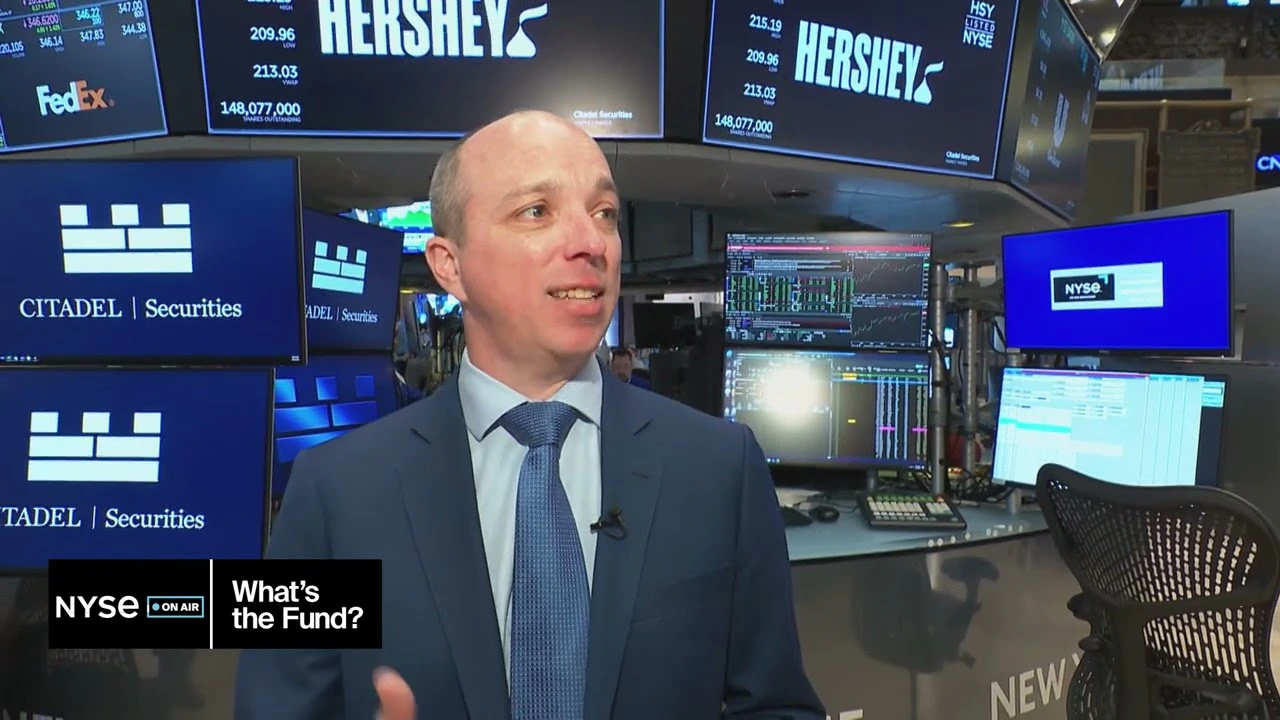
Matthew Bartolini, Global Head of Research Strategists, at State Street Investment Management, joins Ethan Hertzfeld on the New York Stock Exchange Floor to discuss PRIV, the State Street SPDR IG Public & Private Credit ETF.


ETF Trends
ETF Industry KPIs April 27, 2026
The ETF Industry saw 23 New Launches, 1 Ticker Change and 4 closures last week.

Asset TV
The ETF Show - Investors Can Fight Healthcare Inflation with Newly Launched ETFs
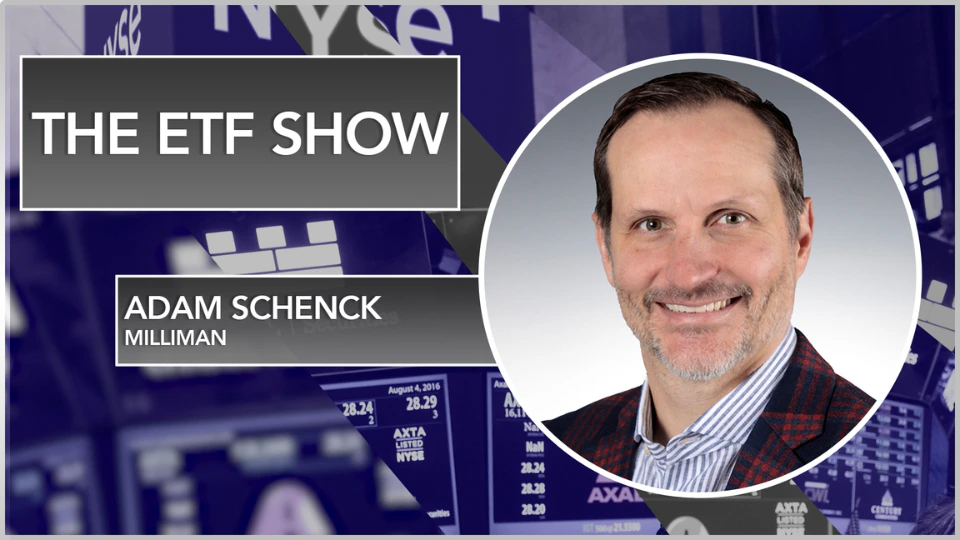
Adam Schenck, Principal and Managing Director of Fund Services at Milliman joined The ETF Show to discuss Milliman's first ETFs designed to hedge against rising healthcare inflation.

ETF Trends
ETF Industry KPIs April 20, 2026
The ETF Industry saw 14 New Launches, 1 Ticker Change and 16 closures last week.
Browse all educational columns



Have you tried our ETF Compare tool?
Compare ETFs like a pro. Analyze fees, performance, exposure & holdings side-by-side.