Create, analyze, optimize your ETF portfolio. Start now →



Unique ETFs You Probably Didn't Know About
Here's a look at some of the more fascinating yet overlooked ETFs on the market right now.


Keep up with what matters in ETFs
Get timely ETF insights, market trends, and top ideas straight to your inbox.
Your newsletter subscriptions with us are subject to ETF Central's Privacy Policy and Terms and Conditions.
In a previous article, I discussed the leading "ETF behemoths" characterized by the top three ETFs boasting the greatest assets under management (AUM). Based on the ETF Central Screener as of April 7th, 2023, three ETFs lead the way. They are the SPDR S&P 500 ETF (SPY), the iShares Core S&P 500 ETF (IVV), and the Vanguard S&P 500 ETF (VOO).
However, increased competition is always advantageous as it fosters innovation and drives down fees. Although the ETF landscape is primarily governed by broad-market index ETFs from providers like Vanguard, BlackRock, and State Street, diligent investors can discover valuable, specialized ETFs offered by smaller boutique providers with unique value propositions.
As we bid farewell to the first quarter of 2023, I would like to highlight three underappreciated ETFs that are worthy of investor attention throughout the rest of the year. Each of these ETFs currently holds less than $100 million in AUM, categorizing them within the smaller segment of the ETF market with unique features that set them apart from larger competitors.
Get data on 14,000+ ETFs
Access Trackinsight's reliable and comprehensive data with 500M+ points on 14,000+ ETFs.
WisdomTree Efficient Gold Plus Equity Strategy Fund (GDE)
WisdomTree's existing suite of "capital efficient" core equity ETFs like WisdomTree U.S. Efficient Core Fund have become popular with investors due to their clever use of bond futures. In essence, NTSX provides access to a 1.5x leveraged 60/40 portfolio (90/60) at a 0.20% expense ratio.
I'm baffled as to why GDE hasn't caught on to the same degree. While NTSX sports around $750 million in AUM, GDE is still sitting at around $7 million. This innovative ETF employs gold futures to offer investors a leveraged 90/90 stocks/gold portfolio under a single ticker.
90% of the GDE's assets are allocated to large-cap U.S. equities, akin to the S&P 500. The remaining 10% is reserved in cash, serving as collateral for gold futures with 9x notional exposure. This results in a 90/90 distribution with a total leverage of 1.8x.
If you combine NTSX with GDE, say in a 70/30 allocation, you could create a portfolio with exposure to 90% U.S. stocks, 42% intermediate Treasurys, and 27% gold for a 0.20% expense ratio without the use of margin, options, or leveraged ETFs.
Harbor Commodity All-Weather Strategy ETF (HGER)
Commodity ETFs can be hit-or-miss. Many of them sport high expense ratios, suffer from the deleterious effects of contango, or spit out a pesky schedule K-1 form that for many investors is a headache to file come tax time. A novel fund that aims to solve those constraints is HGER.
HGER tracks the proprietary Quantix Commodity Index (QCITR), which targets liquid commodities with high expected inflation sensitivity while mitigating negative futures roll yield. Since its inception in February of 2022, the ETF has outperformed the popular Invesco DB Commodity Tracking (DBC).
There's also the matter of fees. At a 0.68% expense ratio, HGER is attractively priced compared to the more popular DBC, which charges 0.87%. As noted earlier, this ETF also does not spit out a Schedule K-1 as it is offered as a 1940-Act ETF structure.
LifeGoal Wealth Builder ETF (WLTH)
Many financial advisors who charge a fixed percentage of AUM will often put their clients into highly complex, all-weather portfolios which incorporate a blend of stocks, bonds, commodities, and sector tilts. While effective, the after-fee results tend to be rather dismal.
WLTH solves all of this by offering the same portfolio strategy, but in a low-cost ETF structure. Launched by ETF entrepreneurs and brothers Taylor & Brett Sohns, WLTH incorporates U.S. and international stocks directly in addition to ETFs focusing on dividend growth, quality, and minimum volatility factors.
In terms of sector tilts, WLTH allocates to U.S. real estate, international real estate, and utilities. On the bond side, WLTH expands beyond the usual aggregate bonds to also include emerging market bonds, TIPS, mortgage-backed securities, high-yield bonds, and long-term corporate bonds.
Finally, to hedge against inflation, the ETF also holds a small allocation to diversified commodities and gold ETFs. The ETF has a general asset allocation target consisting of 65/35 stocks/bonds and charges a 0.34% net expense ratio, far below the 1-2% of AUM charged by most advisors.
Please note this article is for information purposes only and does not in any way constitute investment advice. It is essential that you seek advice from a registered financial professional prior to making any investment decision.
Latest ETF News
See all ETF newsCould Water ETFs Be the Next AI Bottleneck Trade?

What is a Boomer Candy ETF?

ETF Comparison: NEOS Nasdaq-100 High Income ETF (QQQI) Versus Goldman Sachs Nasdaq-100 Premium Income ETF (GPIQ)




 Advantages of ETFs over Mutual Funds1/6
Lower Costs
In this guide, we'll explore the advantages of ETFs over mutual funds, giving you valuable insights into why ETFs have gained significant popularity among investors like yourself.
Leveraged ETFs: Unlocking the Potential for Amplified Returns1/6
Understanding Leveraged ETFs
Explore leveraged ETFs: potential for amplified returns & risks. 5 ETFs to consider across equities, commodities & fixed income.
What is a Leveraged ETF?1/6
Introducing Leveraged and Inverse ETFs
In this guide, we'll dive into the world of leveraged ETFs, exploring their definition, mechanics, potential risks, and rewards.
Recent educational content

ETF Trends
ETF Industry KPIs September 8, 2026
This week’s KPI data overview highlights key metrics and trends shaping the ETF landscape.

ETF Trends
ETF Industry KPIs August 31, 2026
This week’s KPI data overview highlights key metrics and trends shaping the ETF landscape.
ETF Trends
ETF Industry KPIs August 24, 2026
This week’s KPI data overview highlights key metrics and trends shaping the ETF landscape.
What’sTheFund
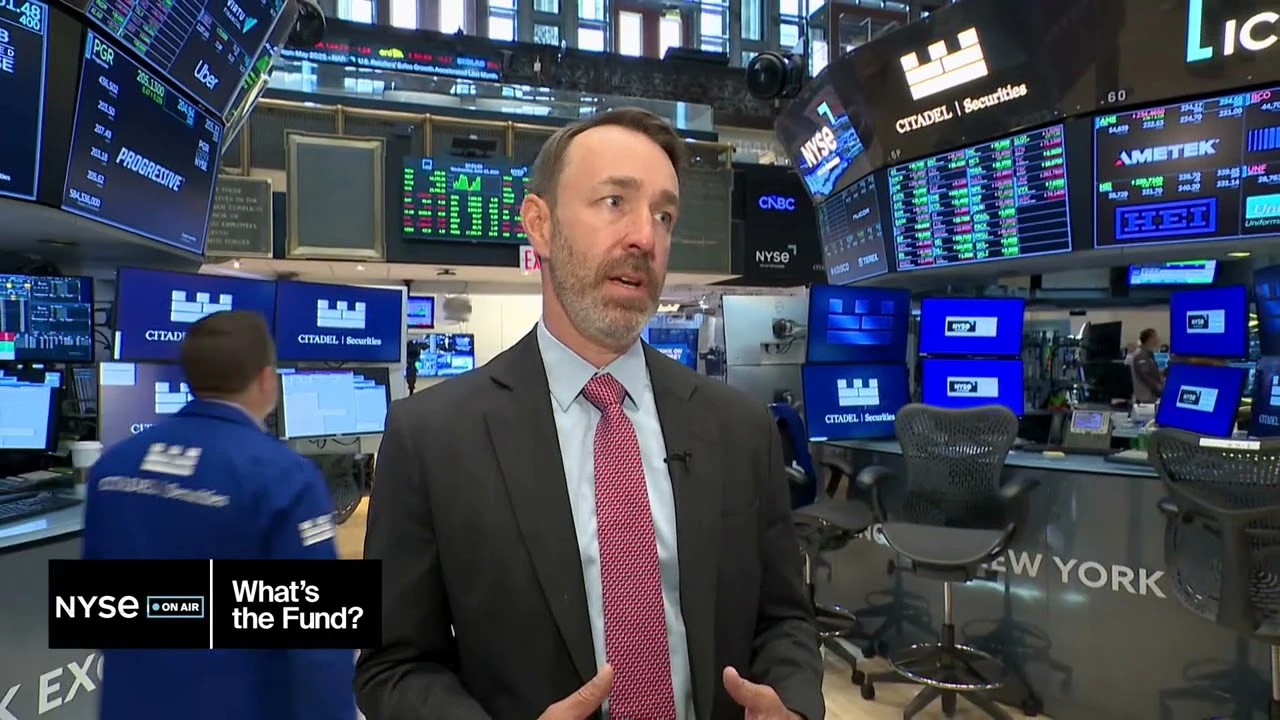
What's the Fund | Ocean Park Diversified Income ETF (DUKZ)
James St Aubin, Chief Investment Officer at Ocean Park Asset Management, discuss the DUKZ ETF, exposing investors to the whole spectrum of asset classes in the fixed income markets, through their rules-based process.

Browse all educational columns



Build and Analyze Your ETF Portfolio Like a Pro
Create your own ETF portfolio in minutes and instantly see allocations, exposures, performance, and risk. Visualize diversification across asset classes, regions, and sectors. Stress-test ideas, compare benchmarks, and refine your strategy with professional-grade analytics.