Turn ETF ideas into real portfolios. Try the builder now →



Two Strategies Bond ETFs Can Use to Boost Monthly Income
Investors can maximize income from bond ETFs by either taking on credit risk or selling volatility through option overlays.


Keep up with what matters in ETFs
Get timely ETF insights, market trends, and top ideas straight to your inbox.
Your newsletter subscriptions with us are subject to ETF Central's Privacy Policy and Terms and Conditions.
The yield potential of a fixed income ETF is fairly easy to gauge. The distribution yield tells you what to expect if the most recent monthly payout were to remain steady, based on the current NAV. While yields can change with markets, it’s a useful snapshot of what the fund has delivered recently.
Maximizing that yield comes down to monetizing risk, and there are two main ways to do it. The first is by taking on a higher credit risk. Corporate bonds usually offer more than Treasurys of similar maturity, and high-yield, or junk bonds, pay even more to compensate investors for added default risk. The extra yield you’re collecting is tied to what are called credit spreads.
The second way is by selling volatility and upside. Some bonds, like long-term Treasurys, swing widely in price. ETFs that hold them can be paired with buy-write strategies, where managers sell covered calls to harvest option premiums. The trade-off is you cap upside returns, and whether the income offsets that depends on market conditions and your skill.
ETF providers are well aware of these dynamics and investor appetite for yield. That’s why they’ve launched bond ETFs using both approaches. Here are two examples I think are worth noting, though fair warning: they’re not the most tax-efficient holdings.
Like what you're reading?
Stay in the loop — get the latest ETF insights: trends, analysis, and expert picks.
BondBloxx CCC Rated USD High Yield Corporate Bond ETF XCCC-0.07%
Bond ratings provide a quick snapshot of credit quality. AAA is the highest rating, and in the U.S. corporate bond market, only Microsoft and Johnson & Johnson still carry it. U.S. Treasurys themselves are now rated AA.
Investment grade spans from A down to BBB. Below that, you enter high yield, with BB and B being the most common. At the bottom of the investable spectrum are CCC-rated bonds. A CCC rating signals serious financial stress.
Ratings agencies classify these issuers as highly vulnerable, dependent on favorable conditions to avoid default. Historical data show annual default rates for CCC bonds can run in the double digits during downturns, compared with low single digits for BB-rated bonds. In other words, defaults aren’t a possibility; they’re an expectation.
The compensation for that risk is yield. Sometimes these bonds are issued with high coupons, but more often the yield is high because the bond price has collapsed. That’s the case for XCCC, which is paying a 30-day SEC yield of 10.65%.
This is a high-risk fund. It holds 211 bonds from 133 issuers, with a 2% issuer cap to avoid outsized exposure. Most of the portfolio sits in CCC1 and CCC2, with smaller weightings in CCC3. Maturity-wise, more than half of holdings fall in the 3–5 year range.
Performance has been strong in the current bull market. A three-year annualized return of 12.16% puts XCCC among the top bond funds by total return. But remember, those figures are before taxes. As a corporate bond ETF, its monthly distributions are fully taxable as ordinary income.
iShares 20+ Year Treasury Bond BuyWrite Strategy ETF TLTW+0.1%
The iShares 20+ Year Treasury Bond ETF
For example, an investor could buy 100 shares of TLT at roughly $89 each, for a total capital outlay of $8,900. To generate extra income beyond TLT’s 4.3% 30-day SEC yield, the investor could sell one call option contract against those shares.
Take the one-month contract TLT251024C00090000. This simply means it expires October 24, 2025, has a $90 strike price, and is a call option. Selling it nets about $0.80 in premium per share, or $80 for the contract before commissions.
On an $8,900 position, that’s about a 0.9% return for the month. Annualized, assuming you could repeat it consistently, that works out to around 11%. The trade-off is forfeiting upside beyond $90 if TLT rallies, though you keep the premium regardless.
Recognizing demand for this approach, iShares launched TLTW. The ETF automates the strategy, tracking the CBOE TLT 2% OTM BuyWrite Index (USD). As the name suggests, it sells one-month call options that are 2% out of the money on 100% of the portfolio.
The result is a very high income stream—currently an 11.3% 30-day SEC yield—though, like with any buy-write fund, it comes at the cost of capped upside.
This article is for informational purposes only and does not in any way constitute investment advice. The author may express their own opinions, which may not represent the opinions of ETF Central or its affiliated partners. It is essential that you seek advice from a registered financial professional prior to making any investment decisions.
Latest ETF News
See all ETF newsCould Water ETFs Be the Next AI Bottleneck Trade?

What is a Boomer Candy ETF?

ETF Comparison: NEOS Nasdaq-100 High Income ETF (QQQI) Versus Goldman Sachs Nasdaq-100 Premium Income ETF (GPIQ)





 Advantages of ETFs over Mutual Funds1/6
Lower Costs
In this guide, we'll explore the advantages of ETFs over mutual funds, giving you valuable insights into why ETFs have gained significant popularity among investors like yourself.
Leveraged ETFs: Unlocking the Potential for Amplified Returns1/6
Understanding Leveraged ETFs
Explore leveraged ETFs: potential for amplified returns & risks. 5 ETFs to consider across equities, commodities & fixed income.
What is a Leveraged ETF?1/6
Introducing Leveraged and Inverse ETFs
In this guide, we'll dive into the world of leveraged ETFs, exploring their definition, mechanics, potential risks, and rewards.
Recent educational content

ETF Trends
ETF Industry KPIs September 8, 2026
This week’s KPI data overview highlights key metrics and trends shaping the ETF landscape.

ETF Trends
ETF Industry KPIs August 31, 2026
This week’s KPI data overview highlights key metrics and trends shaping the ETF landscape.
ETF Trends
ETF Industry KPIs August 24, 2026
This week’s KPI data overview highlights key metrics and trends shaping the ETF landscape.
What’sTheFund
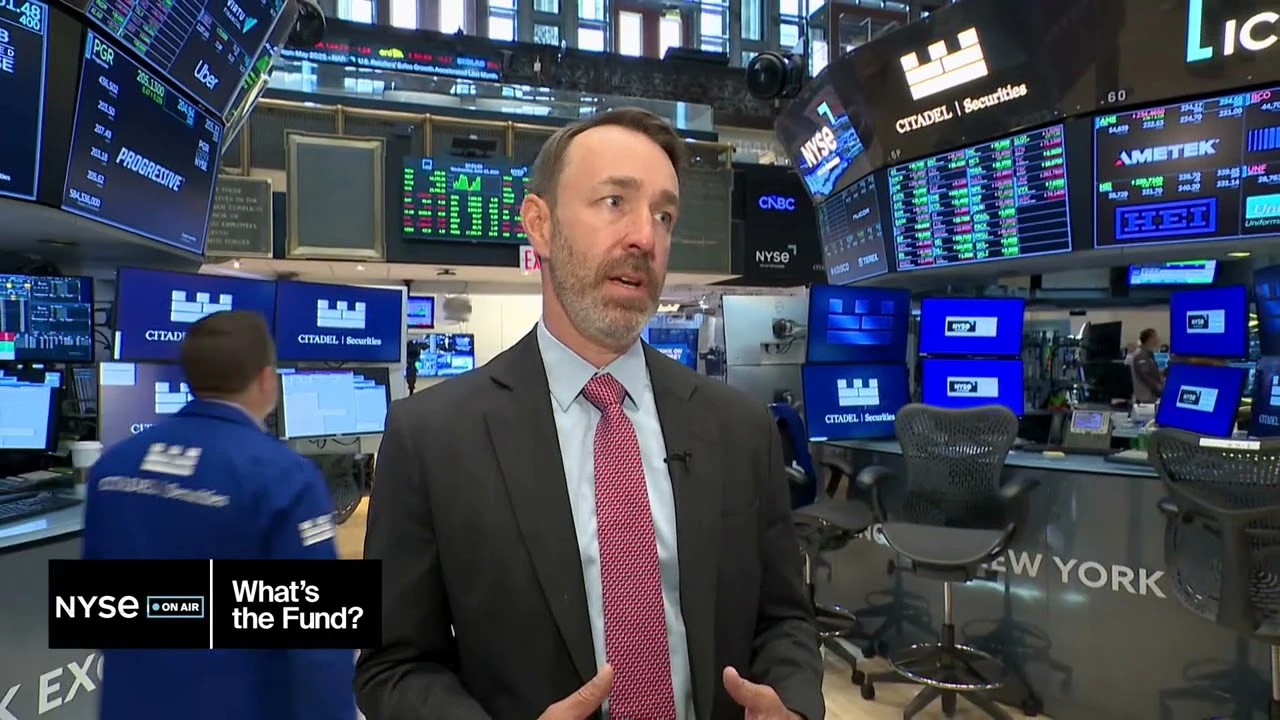
What's the Fund | Ocean Park Diversified Income ETF (DUKZ)
James St Aubin, Chief Investment Officer at Ocean Park Asset Management, discuss the DUKZ ETF, exposing investors to the whole spectrum of asset classes in the fixed income markets, through their rules-based process.

Browse all educational columns



Expert-Built ETF Portfolios, All in One Place
Don’t start from scratch. Discover ready-made ETF portfolios built by professionals to match different goals, timelines, and market views. Use them as inspiration or as a starting point for your own allocation.