Ready-made ETF portfolios built for real investor needs. Explore now →



How Turmoil Impacts Frontier Market ETFs Trading: Strategies and Lessons
ETF veteran Nicholas Phillips analyzes how geopolitical risks shape frontier market ETFs, using Egypt and Russia ETFs as case studies.


Keep up with what matters in ETFs
Get timely ETF insights, market trends, and top ideas straight to your inbox.
Your newsletter subscriptions with us are subject to ETF Central's Privacy Policy and Terms and Conditions.
In recent years, the dynamics of Frontier Market ETFs have provided both issuers and investors with critical insights into the complexities of emerging markets. This article delves into the intricacies of these ETFs, focusing on notable examples of liquidations and the unique trading dynamics that often accompany geopolitical and economic turbulence in these regions.
Get data on 14,000+ ETFs
Access Trackinsight's reliable and comprehensive data with 500M+ points on 14,000+ ETFs.
The Volatility of Frontier Markets: The Case of EGPT
One poignant example is the Market Vectors Egypt Index ETF (NYSE: EGPT), managed by VanEck. In late January 2011, amidst the height of political upheaval in Egypt, the firm halted creations of the ETF due to the extended closure of Egypt's stock exchange. This decision came as protests against President Hosni Mubarak escalated, disrupting not only the country's peace but also its financial markets.
Initially, the reaction from traders and investors was to sell off EGPT, fearing that the volatility and danger presented by the country's political scene would spill over into their investments. However, the trading dynamics soon shifted. With the Egyptian stock market closed and the ETF's creations suspended, EGPT began to trade at a significant premium to its net asset value (NAV). This was largely due to the limited number of shares available in the market.
Strategic Trading and the Resulting Premium
A strategy employed by some traders was to buy up the available shares of EGPT, anticipating that with creations halted, the ETF's limited supply would lead to a price surge. This hypothesis was based on the idea that if these traders could control the available shares and prevent them from being loaned out for short selling, a short squeeze could occur.
Essentially, they believed that the constrained supply and halted creations would force the price upward as demand outstripped the available shares. Their bet paid off, and for a brief period, EGPT traded at a large premium to its NAV. Once the Egyptian stock exchange reopened, and access to the Creation process was restored, the premium adjusted back to normal levels, aligning closer with the ETF's NAV.
Lessons from the Frontier: Understanding Market Mechanisms
The EGPT scenario underscores several critical lessons for ETF issuers and investors, particularly in frontier markets:
- Geopolitical Sensitivity: Investments in frontier markets are highly sensitive to geopolitical events, which can significantly impact market liquidity and trading dynamics.
- Importance of Creations and Redemptions: The ability to halt creations can profoundly affect an ETF's pricing and trading behavior, especially in markets where underlying assets are difficult to access.
- Strategic Trading Opportunities: Knowledgeable investors can leverage unique market conditions to capitalize on trading anomalies, such as those presented by halted creations or political upheavals.
The Russian ETF Dilemma
The situation with Russian ETFs, such as RSX and RSXJ from VanEck and ERUS from iShares, exemplifies another facet of frontier market ETF complexities. Following Russia's invasion of Ukraine, all Russian stocks were eventually halted on major exchanges, and it became illegal to hold Russian stocks.
This led to a scenario where creations were impossible, and valuations were discounted based on the new geopolitical realities. While these companies retained value in Russia, they were considered valueless in the Western world.
Investors and traders made speculative bets that geopolitical conditions might improve, which would restore value to these holdings. Some speculated that a similar strategy to the one used during the EGPT crisis could be employed—attempting to create a short squeeze by hoarding available ETF shares, driven by the hope that the funds would trade at a premium due to their limited availability.
Unfortunately, as political resolutions failed to materialize, these ETFs saw their values plummet, illustrating the extreme risks involved when investing in markets highly susceptible to geopolitical upheavals.
Conclusion
The lessons learned from the EGPT ETF and similar situations in other frontier markets provide valuable insights into the complex interplay of market forces in emerging economies. For investors and issuers alike, these scenarios highlight the importance of a nuanced approach to managing and investing in ETFs that track these volatile markets. These are crucial lessons not only for traders but also for market makers and capital marketers, who must convey these realities and strategies to issuers effectively.
Stay tuned for further insights as we continue to explore the intricacies of the ETF market, providing you with the knowledge to make informed investment decisions.
About the Author
Nicholas Phillips | President of ETF Capital Markets Advisors LLC
With over 25 years of experience in ETF market making and capital markets, Nicholas Phillips is recognized as a subject matter expert in the ETF industry. He started his career spending the first ten years as a lead market maker for SIG and Goldman Sachs. At the helm of MCAP LLC's ETF Desk, Nicholas built and scaled the division, enhancing its operations through innovative pricing and risk models, and robust relationships with market makers and issuers. His tenure at Van Eck Associates as Director of ETF Capital Markets further solidified his expertise, managing critical facets of operations and deepening connections within the trading community. Beyond market making, Nicholas is an avid content creator, sharing insights that demystify complex market dynamics. He is keen on exploring board member roles that benefit from his extensive background and forward-thinking approach to ETF strategies. His dual US/Ireland citizenship complements his global perspective, enriching his professional endeavors in diverse markets.
Disclaimer
Please note this article is for information purposes only and does not in any way constitute investment advice. It is essential that you seek advice from a registered financial professional prior to making any investment decision.
Topics
See all
Mentioned ETFs
No specific ETFs were tagged
Further reading
Latest ETF News
See all ETF newsForm 4 Has 20 Transaction Codes. None Say "Section 351 ETF Swap"


Who Really Owns a White-Label ETF?

What If a Futures-Based ETF Never Had to Roll Again?

How Do You Build a Winning ETF Business?

Losers Of Q2 2026 REIT Earnings Season


Winners of Q2 2026 REIT Earnings Season


 Advantages of ETFs over Mutual Funds1/6
Lower Costs
In this guide, we'll explore the advantages of ETFs over mutual funds, giving you valuable insights into why ETFs have gained significant popularity among investors like yourself.
Leveraged ETFs: Unlocking the Potential for Amplified Returns1/6
Understanding Leveraged ETFs
Explore leveraged ETFs: potential for amplified returns & risks. 5 ETFs to consider across equities, commodities & fixed income.
What is a Leveraged ETF?1/6
Introducing Leveraged and Inverse ETFs
In this guide, we'll dive into the world of leveraged ETFs, exploring their definition, mechanics, potential risks, and rewards.
Recent educational content

ETF Trends
ETF Industry KPIs August 31, 2026
This week’s KPI data overview highlights key metrics and trends shaping the ETF landscape.

ETF Trends
ETF Industry KPIs August 24, 2026
This week’s KPI data overview highlights key metrics and trends shaping the ETF landscape.
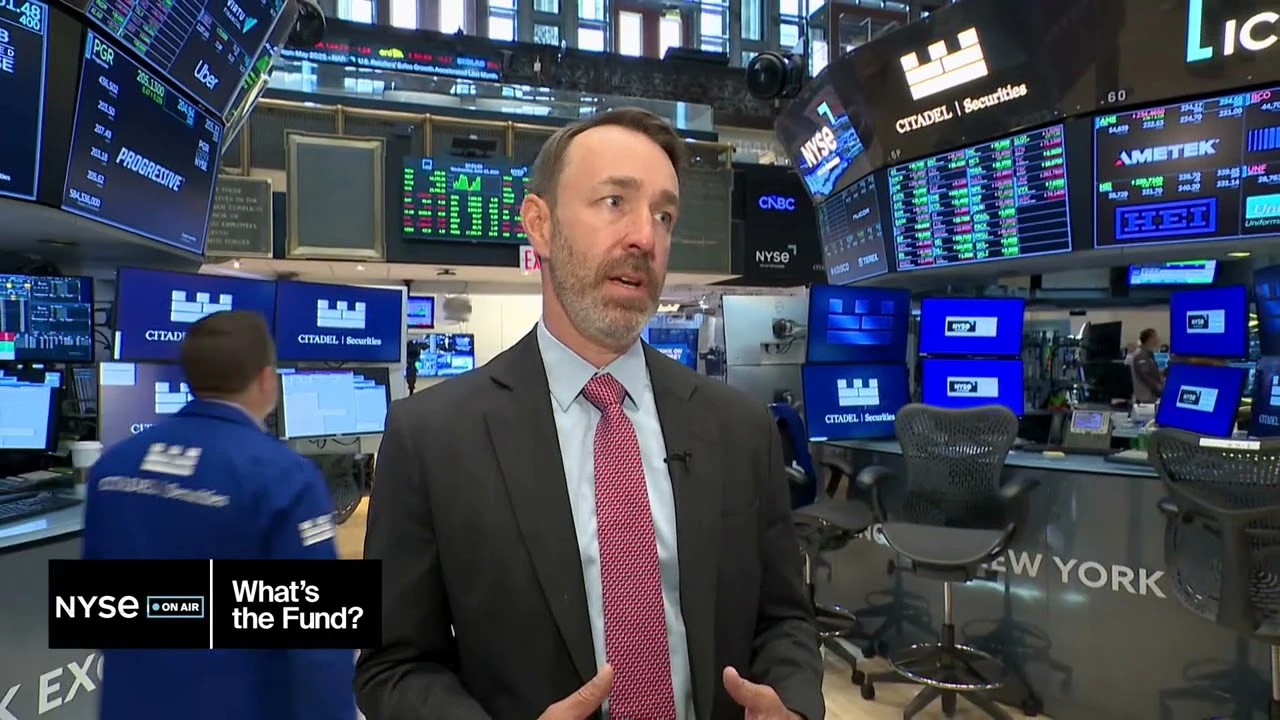
What’sTheFund
What's the Fund | Ocean Park Diversified Income ETF (DUKZ)
James St Aubin, Chief Investment Officer at Ocean Park Asset Management, discuss the DUKZ ETF, exposing investors to the whole spectrum of asset classes in the fixed income markets, through their rules-based process.

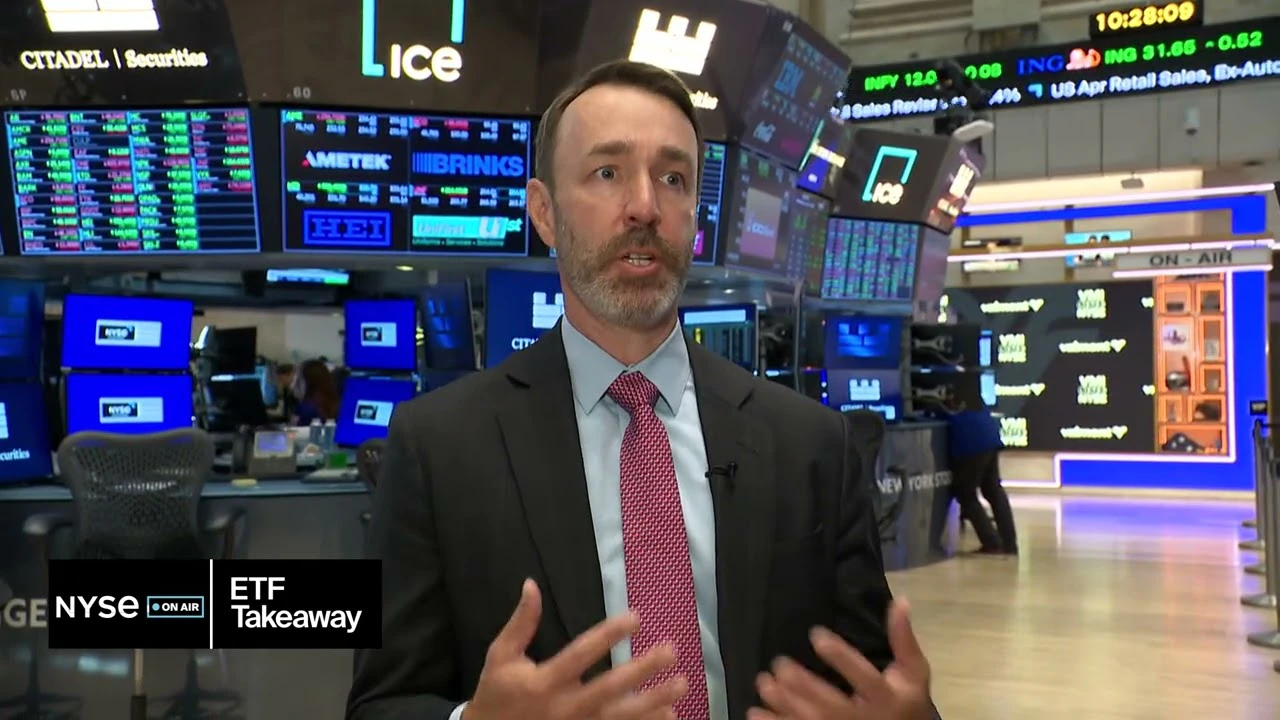
ETF Takeaway
ETF Takeaway: Ocean Park Diversified Income ETF (DUKZ)
James St Aubin, Chief Investment Officer at Ocean Park Asset Management discusses the state of fixed income markets and how their DUKZ ETF, through their rules-based process, tactically allocates to 11 sectors of fixed income through underlying ETFs.
Browse all educational columns



Build and Analyze Your ETF Portfolio Like a Pro
Create your own ETF portfolio in minutes and instantly see allocations, exposures, performance, and risk. Visualize diversification across asset classes, regions, and sectors. Stress-test ideas, compare benchmarks, and refine your strategy with professional-grade analytics.