Explore professionally built ETF model portfolios. Discover now →



There’s An ETF for That? Free Cash Flow
These ETFs use rules-based strategies to target companies exhibiting higher than average free cash flow.


Keep up with what matters in ETFs
Get timely ETF insights, market trends, and top ideas straight to your inbox.
Your newsletter subscriptions with us are subject to ETF Central's Privacy Policy and Terms and Conditions.
The landscape of smart-beta ETFs now stretches far beyond the basic investment factors like size, value, and quality, providing investors with a vast array of strategies to choose from. Among these, targeting companies with high free cash flow yield has emerged as a particularly popular approach.
Free cash flow yield, which is determined by dividing a company’s cash flow after capital expenditures by its market value, identifies businesses that generate more cash than they spend—signifying strong financial health and operational effectiveness.
Pacer’s US Cash Cows 100 ETF
But COWZ isn’t the only ETF focusing on companies with robust free cash flow. Let’s explore some additional NYSE-listed ETFs that leverage this financial metric, providing investors with various options to benefit from companies with substantial cash flows.
Like what you're reading?
Stay in the loop — get the latest ETF insights: trends, analysis, and expert picks.
Pacer US Cash Cows Growth ETF BUL+0.56%
BUL offers a distinct twist on leveraging free cash flow yield by targeting growth-oriented stocks rather than strictly value plays.
Unlike its sibling ETF, COWZ, which bases its stock selection on the Russell 1000 Value Index, BUL focuses on the S&P 900 Pure Growth Index. It selects the top 50 companies based on free cash flow yield, demonstrating the flexibility of the free cash flow metric across different market segments.
This makes BUL an appealing alternative for those looking to blend growth with value aspects, often akin to a Growth at a Reasonable Price (GARP) strategy.
With a free cash flow yield of 5.64% compared to the broader S&P 900 Pure Growth Index’s 2.46%, and a more moderate P/E ratio of 15.90 versus 37.52, BUL positions itself as a strategic choice for investors seeking growth stocks that also generate substantial cash flows.
Global X U.S. Cash Flow Kings 100 ETF FLOW+1.04%
Global X, widely recognized for its thematic ETF offerings, also ventures into smart beta strategies, notably with FLOW.
This ETF is designed around the proprietary Global X U.S. Cash Flow Kings 100 Index, which applies a stringent screening process for companies exhibiting high free cash flow yields. To ensure a diversified risk profile, the index implements a sector cap of 25% and limits individual stock exposure to 2%.
What stands out about FLOW is its cost-efficiency. With an expense ratio of just 0.25%, it is significantly more affordable than some of its counterparts like COWZ, which charges 0.49%.
Distillate U.S. Fundamental Stability & Value ETF DSTL+0.84%
Finally, we have DSTL, one of my favorite actively managed ETFs. Charging a reasonable 0.39% expense ratio, DSTL offers a well-thought-out methodology for capturing value in large-cap U.S. stocks.
The process starts by screening around 500 profitable large-cap companies, focusing on those with low leverage and stable cash flows. From there, it zeroes in on the most attractively valued 100 companies based on Distillate Capital’s normalized free cash flow methodology, weighting them by free cash flow and rebalanced quarterly.
Notable, DSTL is one of the few active ETFs that consistently outperforms the S&P 500. Over the past three years, it has returned 12.97% compared to the S&P 500’s 11.91%, and over five years, 16.82% versus 15.98%. Since its inception, DSTL has delivered 16.17%, outpacing the S&P 500’s 15.26%.
How to Use Free Cash Flow ETFs
All three of these ETFs—COWZ, BUL, and DSTL—exhibit high active shares, meaning that the holdings in these ETFs differ significantly from those in the S&P 500.
This divergence from the market index indicates that these funds are not merely replicating broad market moves but are selecting stocks based on specific financial health metrics, such as free cash flow.
I personally prefer using these ETFs as satellite allocations within a portfolio. They can provide exposure to a fundamental weighting strategy that complements the broader, more traditional market cap-weighted ETFs that might form the core of your investment strategy.
This approach allows you to diversify your investment style and potentially tap into different sources of alpha while maintaining a solid foundation of low-cost beta.
Please note this article is for information purposes only and does not in any way constitute investment advice. It is essential that you seek advice from a registered financial professional prior to making any investment decision.
Latest ETF News
See all ETF newsCould Water ETFs Be the Next AI Bottleneck Trade?

What is a Boomer Candy ETF?

ETF Comparison: NEOS Nasdaq-100 High Income ETF (QQQI) Versus Goldman Sachs Nasdaq-100 Premium Income ETF (GPIQ)





 Advantages of ETFs over Mutual Funds1/6
Lower Costs
In this guide, we'll explore the advantages of ETFs over mutual funds, giving you valuable insights into why ETFs have gained significant popularity among investors like yourself.
Leveraged ETFs: Unlocking the Potential for Amplified Returns1/6
Understanding Leveraged ETFs
Explore leveraged ETFs: potential for amplified returns & risks. 5 ETFs to consider across equities, commodities & fixed income.
What is a Leveraged ETF?1/6
Introducing Leveraged and Inverse ETFs
In this guide, we'll dive into the world of leveraged ETFs, exploring their definition, mechanics, potential risks, and rewards.
Recent educational content

ETF Trends
ETF Industry KPIs September 8, 2026
This week’s KPI data overview highlights key metrics and trends shaping the ETF landscape.

ETF Trends
ETF Industry KPIs August 31, 2026
This week’s KPI data overview highlights key metrics and trends shaping the ETF landscape.
ETF Trends
ETF Industry KPIs August 24, 2026
This week’s KPI data overview highlights key metrics and trends shaping the ETF landscape.
What’sTheFund
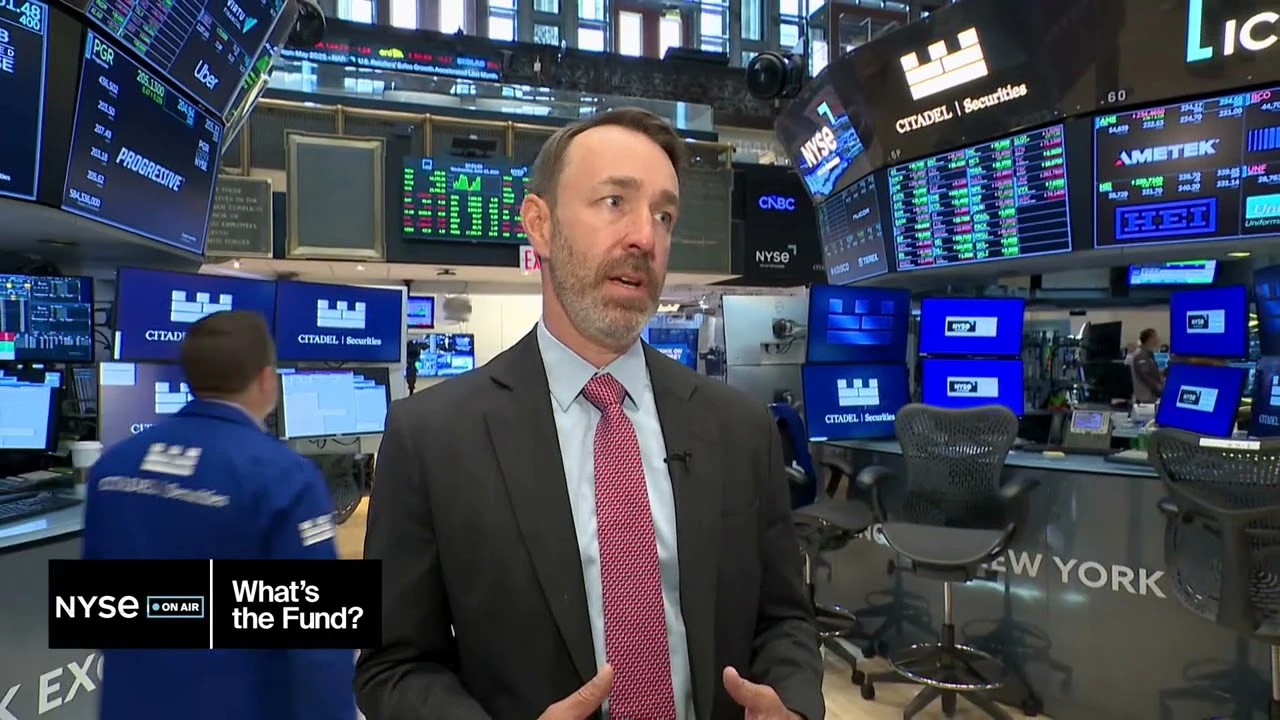
What's the Fund | Ocean Park Diversified Income ETF (DUKZ)
James St Aubin, Chief Investment Officer at Ocean Park Asset Management, discuss the DUKZ ETF, exposing investors to the whole spectrum of asset classes in the fixed income markets, through their rules-based process.

Browse all educational columns



Expert-Built ETF Portfolios, All in One Place
Don’t start from scratch. Discover ready-made ETF portfolios built by professionals to match different goals, timelines, and market views. Use them as inspiration or as a starting point for your own allocation.