Keep tabs on your favorite ETFs with a personalized weekly tracker. Create a Watchlist now →



There's an ETF for That? Black Friday & Cyber Monday Retail
Here's a look at some unique ETFs poised to benefit from higher consumer retail spending.


Keep up with what matters in ETFs
Get timely ETF insights, market trends, and top ideas straight to your inbox.
Your newsletter subscriptions with us are subject to ETF Central's Privacy Policy and Terms and Conditions.
It's that time of year again! Not Christmas, but everyone's favorite manufactured consumer event—Black Friday and its online counterpart, Cyber Monday.
What's the outlook this year? According to the National Retail Federation, an estimated 183.4 million shoppers are expected to participate. Of these, 131.7 million plan to shop in person on Black Friday, with the rest making purchases online during Cyber Monday.
Historically, trends show more total shoppers on Black Friday but higher spending on Cyber Monday. The rise of e-commerce, accelerated by the COVID-19 pandemic, has only strengthened Cyber Monday's prominence in recent years.
As usual, there are specialized retail ETFs designed to capitalize on consumer spending, not just during this shopping frenzy but year-round. These ETFs may see a bump if sales exceed expectations. Here's a quick roundtable look at the options, courtesy of the ETF Central screener.
Get data on 14,000+ ETFs
Access Trackinsight's reliable and comprehensive data with 500M+ points on 14,000+ ETFs.
VanEck Retail ETF RTH+0.85%
RTH
RTH
The current market-cap weighted portfolio is centered on mega-cap names like Amazon, Walmart, Costco, Home Depot, and Lowe's. This blend of discretionary and staples retailers provides broad exposure to both essential and non-essential consumer spending trends.
SPDR S&P Retail ETF XRT+1.39%
While RTH's market-cap-weighted methodology means mega-caps dominate its portfolio, an alternative with the same 0.35% expense ratio is the SPDR S&P Retail ETF
XRT
Here's a fun fact you might not know: XRT has been the subject of conspiracies on Reddit's r/SuperStonk community. The meme stock bagholders here theorize that the ETF is being used to "naked short" one of its holdings, GameStop, through "fail-to-deliver" (FTD) activity.
Direxion Daily Retail Bull 3x Shares ETF RETL+4.11%
If you're looking to trade retail stocks with a short-term bullish view, rather than holding over the long term, RETL
RETL
Like most leveraged ETFs, RETL
Amplify Online Retail ETF IBUY+1.16%
If your focus is more on Cyber Monday than Black Friday, IBUY is the thematic ETF to watch. With $187 million in AUM, it tracks the EQM Online Retail Index at an expense ratio of 0.65%.
Here's how it works: the globally diversified benchmark selects companies generating at least 70% of their revenue from online retail, travel, marketplaces, or omnichannel operations. Omnichannel refers to businesses that integrate both online and physical retail experiences to serve customers seamlessly across platforms.
IBUY
ProShares Decline of the Retail Store ETF EMTY+0.5%
ProShares offers a counterpart to IBUY in the form of the ProShares Online Retail ETF
EMTY's ticker is a play on "empty" stores. The ETF is net bearish on physical retail, effectively positioning itself as a direct bet against Black Friday shopping.
EMTY
Surprisingly, EMTY
Please note this article is for information purposes only and does not in any way constitute investment advice. It is essential that you seek advice from a registered financial professional prior to making any investment decision.
Topics
See all
Mentioned ETFs
Further reading
Latest ETF News
See all ETF newsCould Water ETFs Be the Next AI Bottleneck Trade?

What is a Boomer Candy ETF?

ETF Comparison: NEOS Nasdaq-100 High Income ETF (QQQI) Versus Goldman Sachs Nasdaq-100 Premium Income ETF (GPIQ)





 Advantages of ETFs over Mutual Funds1/6
Lower Costs
In this guide, we'll explore the advantages of ETFs over mutual funds, giving you valuable insights into why ETFs have gained significant popularity among investors like yourself.
Leveraged ETFs: Unlocking the Potential for Amplified Returns1/6
Understanding Leveraged ETFs
Explore leveraged ETFs: potential for amplified returns & risks. 5 ETFs to consider across equities, commodities & fixed income.
What is a Leveraged ETF?1/6
Introducing Leveraged and Inverse ETFs
In this guide, we'll dive into the world of leveraged ETFs, exploring their definition, mechanics, potential risks, and rewards.
Recent educational content

ETF Trends
ETF Industry KPIs September 8, 2026
This week’s KPI data overview highlights key metrics and trends shaping the ETF landscape.

ETF Trends
ETF Industry KPIs August 31, 2026
This week’s KPI data overview highlights key metrics and trends shaping the ETF landscape.
ETF Trends
ETF Industry KPIs August 24, 2026
This week’s KPI data overview highlights key metrics and trends shaping the ETF landscape.
What’sTheFund
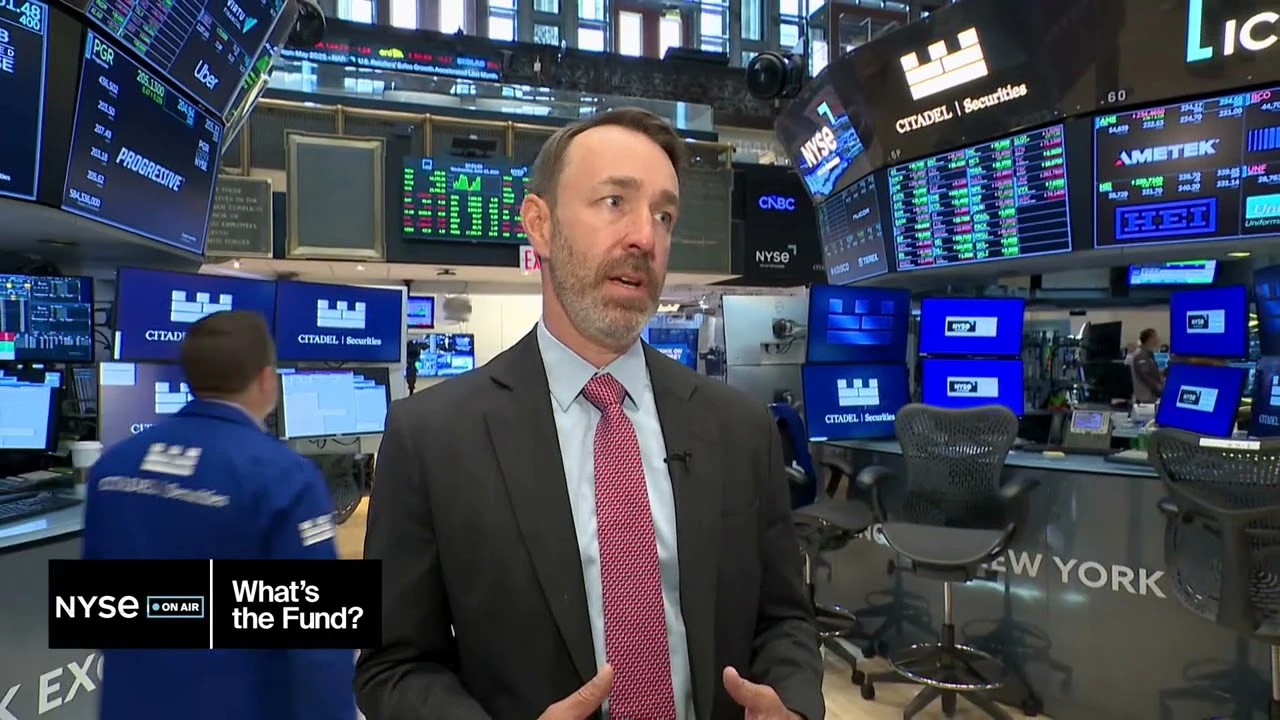
What's the Fund | Ocean Park Diversified Income ETF (DUKZ)
James St Aubin, Chief Investment Officer at Ocean Park Asset Management, discuss the DUKZ ETF, exposing investors to the whole spectrum of asset classes in the fixed income markets, through their rules-based process.

Browse all educational columns



Expert-Built ETF Portfolios, All in One Place
Don’t start from scratch. Discover ready-made ETF portfolios built by professionals to match different goals, timelines, and market views. Use them as inspiration or as a starting point for your own allocation.