From idea to ETF portfolio in minutes. Build yours now →



There's an ETF for That? Reshoring and Nearshoring
Here's how investors can position their portfolio to take advantage of a renaissance in domestic manufacturing.


Keep up with what matters in ETFs
Get timely ETF insights, market trends, and top ideas straight to your inbox.
Your newsletter subscriptions with us are subject to ETF Central's Privacy Policy and Terms and Conditions.
Recent geopolitical tensions—like the Israel-Hamas conflict, the Russian-Ukraine war, and rising issues with China—have emphasized to U.S. companies a clear lesson initially learned during COVID-19: offshoring isn't always the cost-saving solution and free lunch it once seemed to be.
Now, we're witnessing a significant shift. More and more companies are moving away from offshoring in favor of reshoring, which involves bringing manufacturing back to the U.S., and friendshoring, which focuses on relocating operations to politically stable and allied nations.
"Reshoring and nearshoring share the same drivers, which are 1) international commercial/trade policies that favor U.S. strategic interests, including national security and protection of intellectual property, especially in high-end semiconductors; 2) mitigation of supply chain risks that were evidenced during the pandemic," says Alejandro Garza, Founder and Portfolio Manager at Aztlan Equity Management, LLC.
This change is supported by data and trends showing how businesses are adapting their strategies to mitigate risks. Fortunately, for investors looking to position themselves advantageously, there are several thematic ETFs specifically designed to capitalize on these trends. Here are some notable ones to watch.
Like what you're reading?
Stay in the loop — get the latest ETF insights: trends, analysis, and expert picks.
The rise of reshoring and nearshoring
One of my go-to resources for tracking the state of reshoring is the Reshoring Index, which is released annually by the global management consulting firm Kearney.
Their 11th annual report, published in April, offers valuable insights into import/export flows between the U.S. and what they refer to as "low-cost countries and regions" (LCCRs). This term is used to describe regions typically favored for offshoring due to their lower operational and labor costs.
The report found that U.S. imports from 14 Asian LCCRs dropped from $1.022 billion in 2022 to $878 million in 2023, while domestic manufacturing gross output remained essentially flat. This indicates a shift towards more local production and less reliance on overseas manufacturing.
Additionally, the U.S. Self-Sufficiency Index (SSI), which measures the proportion of goods consumed in the U.S. that are also made in the U.S., has shown a steady increase since it flipped in favor of domestic production in 2021, with an increase of 5% from 2022 to 2023.
Regarding friendshoring, the report highlights a significant trend: imports from Canada have steadily increased since the pandemic began. Even more notably, Mexico has outpaced China, becoming the largest exporter to the U.S. Imports from Mexico rose by 32% from $320 billion in the pre-COVID period to $422 billion more recently.
This shift underscores a growing preference for closer economic ties with neighboring countries, which can offer both logistical advantages and greater political stability.
"The result is a set of U.S. directives to shift away from globalization to regionalization, away from trade with China favoring friendlier and geographically closer trade allies," Garza explains. " As much as the globalization process of the 80s and 90s took place over a multi-decade period, we think reshoring and nearshoring, which has just started, will continue as a major economic driver for years to come."
Reshoring and nearshoring ETFs
The thematic ETFs focusing on reshoring and nearshoring span a range from pure-play funds targeting either concept to hybrid ETFs that cover both areas.
For reshoring, investors can choose between two primary funds: the Tema American Reshoring ETF
This ETF tracks the S&P U.S. Manufacturing Select Index, which includes just under 100 companies in industrial manufacturing, consumer vehicles, and electronic components that generate the majority of their revenues domestically. Notable companies in its top holdings include Honeywell, Deere, General Motors, Ford, RTX, Lockheed Martin, and Boeing.
On the other hand, RSHO offers an actively managed, more concentrated portfolio with 31 holdings, showcasing a high conviction approach compared to MADE's index-focused strategy. Its top holdings include companies like Eaton PLC, Linde, Ingersoll Rand, and Applied Industrial Technologies. RSHO carries an expense ratio of 0.75%, versus 0.40% for MADE.
For a focus on nearshoring, Aztlan offers the North America Nearshoring Stock Selection ETF
The proprietary Aztlan North America Nearshoring Index targets eight industries: Industrial REITs, Specialty REITs, Real Estate Management & Development, Specialized REITs, Ground Transportation, Air Freight & Logistics, Transportation Infrastructure, and Marine Transportation.
The index utilizes a factor model to screen for cash flow generation, value, growth, capital structure quality, earnings revisions, and momentum. NRSH also carries a 0.75% expense ratio, the same as RSHO.
Finally, for those looking for a hybrid approach, there's the TCW Transform Supply Chain ETF
SUPP notably focuses on companies in environmental services, such as Waste Management, Waste Connections, and GFL, alongside railways such as Canadian Pacific Kansas City, which operates routes from Canada to Mexico.
Please note this article is for information purposes only and does not in any way constitute investment advice. It is essential that you seek advice from a registered financial professional prior to making any investment decision.
Latest ETF News
See all ETF newsCould Water ETFs Be the Next AI Bottleneck Trade?

What is a Boomer Candy ETF?

ETF Comparison: NEOS Nasdaq-100 High Income ETF (QQQI) Versus Goldman Sachs Nasdaq-100 Premium Income ETF (GPIQ)





 Advantages of ETFs over Mutual Funds1/6
Lower Costs
In this guide, we'll explore the advantages of ETFs over mutual funds, giving you valuable insights into why ETFs have gained significant popularity among investors like yourself.
Leveraged ETFs: Unlocking the Potential for Amplified Returns1/6
Understanding Leveraged ETFs
Explore leveraged ETFs: potential for amplified returns & risks. 5 ETFs to consider across equities, commodities & fixed income.
What is a Leveraged ETF?1/6
Introducing Leveraged and Inverse ETFs
In this guide, we'll dive into the world of leveraged ETFs, exploring their definition, mechanics, potential risks, and rewards.
Recent educational content

ETF Trends
ETF Industry KPIs September 8, 2026
This week’s KPI data overview highlights key metrics and trends shaping the ETF landscape.

ETF Trends
ETF Industry KPIs August 31, 2026
This week’s KPI data overview highlights key metrics and trends shaping the ETF landscape.
ETF Trends
ETF Industry KPIs August 24, 2026
This week’s KPI data overview highlights key metrics and trends shaping the ETF landscape.
What’sTheFund
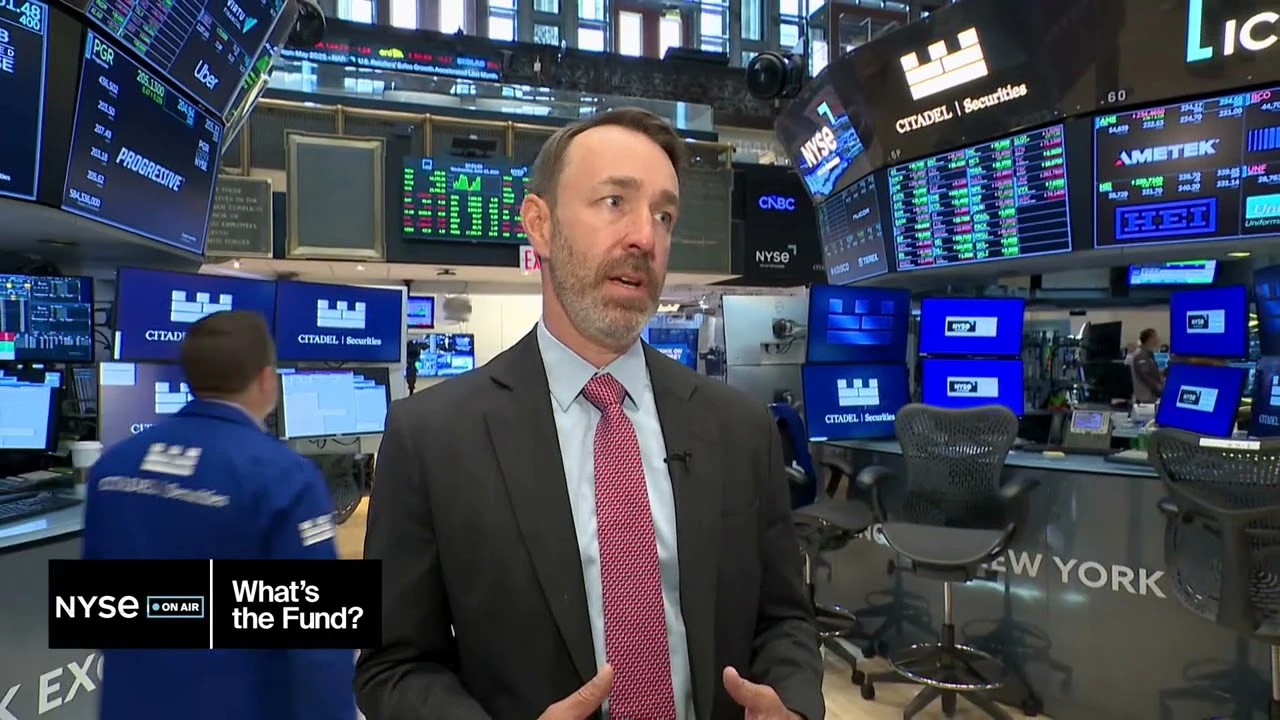
What's the Fund | Ocean Park Diversified Income ETF (DUKZ)
James St Aubin, Chief Investment Officer at Ocean Park Asset Management, discuss the DUKZ ETF, exposing investors to the whole spectrum of asset classes in the fixed income markets, through their rules-based process.

Browse all educational columns



Have you tried our ETF Compare tool?
Compare ETFs like a pro. Analyze fees, performance, exposure & holdings side-by-side.