Global ETF Survey Is Live! 600+ ETF Professionals Weigh In. See Results →



There’s an ETF for That? Memory Stocks
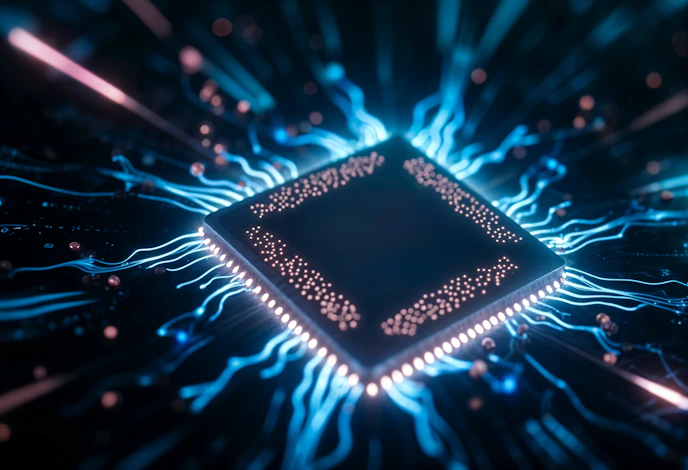
High demand for AI data centers, DRAM, and NAND flash storage has created a severe supply shortage, and these ETFs have been major beneficiaries so far.

Keep up with what matters in ETFs
Get timely ETF insights, market trends, and top ideas straight to your inbox.
Your newsletter subscriptions with us are subject to ETF Central's Privacy Policy and Terms and Conditions.
For a while, investors thought semiconductor fabrication plants, especially companies like Taiwan Semiconductor Manufacturing Company, would be the main bottleneck in the artificial intelligence boom. There were endless discussions around Taiwanese sovereignty, supply chain fragility, and whether enough advanced chips could actually be manufactured to satisfy demand.
Then the focus shifted toward hyperscaler spending. Investors started watching the capital expenditures of companies like Amazon, Alphabet, Microsoft, and Meta Platforms. The question became whether there were enough data centers, enough GPUs, and enough compute infrastructure to support the explosion in AI workloads.
After that came electricity. Utilities rallied sharply as markets realized just how much power these AI systems consume and how difficult it would be to scale grid infrastructure fast enough. Now, though, the spotlight has shifted again. Increasingly, the true bottleneck appears to be memory.
Specifically, the focus is on DRAM, or dynamic random-access memory, and NAND flash storage. DRAM acts as the short-term working memory for AI systems, allowing massive datasets and models to be processed in real time. NAND flash, meanwhile, is used for long-term high-capacity storage, critical for storing training data, inference models, and enterprise AI workloads.
Modern AI applications consume enormous amounts of both, especially high-bandwidth memory configurations tied to advanced GPUs. As a result, memory-related stocks have surged. Companies like Micron Technology, SanDisk, Seagate Technology, and Western Digital have all seen strong momentum, alongside South Korean giants Samsung Electronics and SK Hynix.
Interestingly, many existing AI thematic ETFs only captured portions of this trend. The first ETF to really lean into the theme directly has been the Roundhill Memory ETF
That said, DRAM is not the only way to invest in the theme, even if it is certainly the most memorable, pun intended. Several other thematic ETFs also provide meaningful exposure to the memory trade, though usually in a less concentrated or less pure-play format. Here are two of the different ways investors can access the memory theme today via ETFs.
Global ETF Survey 2026 is Live!
With 1,790 new products launched by July 2026, choosing is harder than ever. Our Global ETF Survey 2026, built on 620 professional investors and allocators, shows how active, fixed income, options-based and thematic ETFs are reshaping fund selection.
Roundhill Memory ETF DRAM
DRAM has very clearly been the breakout winner in this category. At roughly $6.66 billion in assets under management already, Roundhill Investments has struck gold with this launch, especially with a 0.65% expense ratio attached to it.
A big part of the ETF’s success comes down to its active management approach. Active ETFs often get criticized for higher fees and the risk of underperforming benchmarks, but this is one of those rare cases where flexibility appears to have helped.
Had Roundhill gone with a traditional index methodology, it likely would have been constrained by diversification rules and rigid eligibility screens that would have diluted the exposure.
Instead, DRAM is highly concentrated and unapologetically thematic. Roughly 75% of the portfolio sits in just three companies: SK Hynix, Micron Technology, and Samsung Electronics. Two of those trade primarily on Korean exchanges, and the broader portfolio also includes names from Taiwan and Japan that many retail investors would otherwise have difficulty accessing directly.
Packaging all of that into a single U.S.-listed ETF, delivering concentrated exposure, and launching right as the market realized memory was becoming a major AI bottleneck turned out to be an ideal setup. Year-to-date performance reflects that. Even after a recent correction, DRAM was still up roughly 76% on a price return basis as of May 12th.
Roundhill has also moved quickly to support trading activity around the ETF. Options are already available on DRAM, which means investors can use strategies like covered calls to potentially monetize the elevated volatility.
Still, there are reasons to be cautious. Valuations across the memory sector have expanded aggressively, and concentration risk is significant when three holdings account for most of the portfolio. This is probably not going to be a forever hold for many investors.
Instead, DRAM looks more like a tactical vehicle for expressing a very specific view on one of the hottest themes in the market right now. On that front, though, it has absolutely delivered.
VistaShares Artificial Intelligence Supercycle ETF AIS+1.11%
DRAM is very much geared toward tactical traders chasing the memory theme directly. But if you are looking for a broader long-term thematic tilt toward AI infrastructure, I think AIS is the better option.
Like DRAM, AIS is actively managed. However, its approach is much broader. The ETF uses what VistaShares calls a “Bill of Materials” investment process, which essentially breaks down the AI supply chain into the inputs and outputs the investment committee believes are critical to the artificial intelligence buildout.
Instead of just focusing on the obvious winners, the portfolio attempts to identify the enabling infrastructure and components underneath the trend. That broader mandate results in a portfolio of 62 companies. It is more diversified than DRAM, though still fairly concentrated compared to broad technology ETFs.
What stands out to me is that AIS had already built meaningful positions in many of the eventual memory winners before the trade became obvious to the broader market. Notably, SK Hynix now makes up roughly 11% of the portfolio, while Micron Technology sits around 7.5%.
Performance has reflected that positioning. As of May 12th, AIS was up roughly 69% on a price return basis year-to-date, which puts it surprisingly close to DRAM despite attracting far less attention.
Assets under management are still relatively modest at about $500 million, especially compared to DRAM’s explosive growth. Still, the ETF has quietly captured many of the same winners without going as all-in on the pure memory trade.
The trade-off, of course, is cost. AIS charges a 0.75% expense ratio, which is typical for a concentrated actively managed thematic ETF. Liquidity is also not particularly strong at the moment. I’m currently seeing a 0.34% 30-day median bid-ask spread, which can become a noticeable drag for investors frequently trading in and out.
Still, compared to DRAM, I think AIS is much more suitable as a longer-term thematic allocation rather than a short-term momentum trade.
Please note this article is for information purposes only and does not in any way constitute investment advice. It is essential that you seek advice from a registered financial professional prior to making any investment decision.

Latest ETF News
See all ETF newsBeyond Big Tech: The Increasing Specialization of AI ETFs

There's an ETF for That? Humanoid Robotics and Physical AI

How Some ETF Issuers Use Their Own Funds for Cash Management

These Public-Private ETFs Invest in Polymarket and Anduril

There's an ETF for That? Frontier Markets



 Advantages of ETFs over Mutual Funds1/6
Lower Costs
In this guide, we'll explore the advantages of ETFs over mutual funds, giving you valuable insights into why ETFs have gained significant popularity among investors like yourself.
Leveraged ETFs: Unlocking the Potential for Amplified Returns1/6
Understanding Leveraged ETFs
Explore leveraged ETFs: potential for amplified returns & risks. 5 ETFs to consider across equities, commodities & fixed income.
What is a Leveraged ETF?1/6
Introducing Leveraged and Inverse ETFs
In this guide, we'll dive into the world of leveraged ETFs, exploring their definition, mechanics, potential risks, and rewards.
Recent educational content

First Look ETF
First Look ETF: Income, International, and Cash Flow ETFs
In this season 6 episode of First Look ETF, Stephanie Stanton @etfguide examines the latest ETF marketplace trends with NYSE and guests.


ETF Trends
ETF Industry KPIs October 5, 2026
This week’s KPI data overview highlights key metrics and trends shaping the ETF landscape.

ETF Trends
ETF Industry KPIs September 28, 2026
This week’s KPI data overview highlights key metrics and trends shaping the ETF landscape.
ETF Trends
ETF Industry KPIs September 22, 2026
This week’s KPI data overview highlights key metrics and trends shaping the ETF landscape.