Keep tabs on your favorite ETFs with a personalized weekly tracker. Create a Watchlist now →



There’s an ETF for That? Crypto Staking
The newest breed of crypto ETFs allows investors to earn staking rewards from a variety of tokens.


Keep up with what matters in ETFs
Get timely ETF insights, market trends, and top ideas straight to your inbox.
Your newsletter subscriptions with us are subject to ETF Central's Privacy Policy and Terms and Conditions.
When the eleven spot bitcoin ETFs launched in January 2024, I knew I was in for a busy year of tracking new products. Sure enough, by December 2025, the crypto ETF universe will have exploded. According to ETF Central’s screener, there are now 119 crypto-related ETFs out of 4,793 total ETFs, representing roughly 2.5% of the entire U.S. ETF market.
Gone are the days when investors had only two choices: crypto futures ETFs created as a workaround to SEC restrictions, or equity-based crypto industry ETFs used as a stock-like proxy. Today the menu includes crypto-covered call ETFs, crypto buffer ETFs, leveraged and inverse crypto ETFs, and multi-crypto ETFs.
The newest trend I’m watching is staking ETFs. So far, two firms are leading the early race — Rex Financial and Bitwise. But larger players are preparing to enter. BlackRock recently filed for the iShares Ethereum Staking Trust, signaling that staking exposure may soon become a mainstream category.
Here’s a high-level look at how staking works and which crypto ETFs currently give investors access to staking as a portfolio strategy.
Like what you're reading?
Stay in the loop — get the latest ETF insights: trends, analysis, and expert picks.
Staking explained for ETF investors
To understand staking, it helps to start with the two dominant ways blockchain networks validate transactions: proof of work and proof of stake. Both secure the network, but they do so in very different ways — and only one enables the staking rewards that ETF investors can access.
Under proof of work (PoW), computers compete to solve complex mathematical puzzles. The first machine to solve the puzzle earns the right to add the next block of transactions to the blockchain and receives a reward paid in the network’s native token.
This process is known as “mining.” Bitcoin is the best-known example, and other PoW networks include Litecoin and Dogecoin. Rewards in PoW systems compensate miners for the time, computing power, and electricity required to maintain the network.
Proof of stake (PoS) takes a different approach. Instead of running energy-intensive hardware, PoS networks rely on token holders who lock up their tokens to help validate transactions. In this model, participants are chosen to confirm blocks based on the number of tokens they have staked and how long they’ve held them.
In return, the network pays out staking rewards, similar to earning interest or yield for helping keep the blockchain secure. Ethereum and Solana are examples of PoS networks.
For ETF investors, staking is essentially the blockchain equivalent of earning yield from holding an eligible PoS token. When you stake, you are choosing to behave like a validator by contributing your tokens to the network’s security and transaction process. In exchange, the network distributes rewards based on its issuance schedule, your share of the total staked supply, and overall network activity.
This is the mechanism behind the new class of crypto staking ETFs, which allow investors to capture staking yield through a regulated fund rather than having to run their own validator or delegate tokens directly.
Bitwise Solana Staking ETF BSOL+2.63%
Solana is a high-performance proof-of-stake blockchain best known for fast, low-cost transactions and a rapidly expanding developer ecosystem. It is the sixth-largest crypto asset by market cap, sitting just behind Bitcoin, Ethereum, Tether, XRP, and BNB.
As a native proof-of-stake token, owning SOL unlocks the ability to earn rewards for helping secure the network. Those rewards come from two sources. First, Solana issues new tokens each year, and a portion of that issuance goes to stakers. The inflation rate currently sits in the 4–5% range and is programmed to decline by roughly 15% per year until stabilizing at 1.5%.
Second, network users pay fees when they transact — whether they are sending stablecoins, trading on-chain derivatives, or tokenizing real-world assets — and a share of those fees flows to stakers. The more economic activity occurs on Solana, the larger the reward pool becomes.
Despite the appeal of staking, setting it up directly is technically complicated. Running your own validator or delegating tokens requires specialized software, custody considerations, and ongoing monitoring. Just as importantly, you cannot stake SOL from a traditional brokerage account, which limits accessibility for most investors.
With spot Solana ETFs now approved, Bitwise entered the market with BSOL, offering direct SOL exposure with 100% of the fund’s holdings staked. As of December 8, the ETF is earning a 6.95% net staking reward rate, which accrues in NAV and is reinvested daily.
In simple terms, this rate reflects the actual yield available to SOL stakers after factoring in inflation rewards, transaction-fee rewards, and validator-level income sources such as block production. It is averaged over the past 90 days and already nets out staking-related costs, which Bitwise has waived for the first three months after launch.
Bitwise is well-suited to bring this product to market. The firm is one of the most established names in crypto asset management, with institutional-caliber infrastructure, deep operational expertise, and a partnership with Helius, a leading Solana infrastructure provider that supplies validator, reward-tracking, and network analytics capabilities.
Since launching on October 23, 2025, BSOL has scaled quickly, reaching $658 million in AUM. The fund carries a 0.2% expense ratio, currently waived to 0%, giving investors a cost-efficient way to gain staking exposure through a regulated ETF wrapper.
REX-Osprey ETH + Staking ETF ESK
Ethereum is the second-largest crypto asset and the largest proof-of-stake network, which means holders can participate directly in securing the blockchain and earn rewards in return. The Ethereum network is used for decentralized finance, tokenization, stablecoin transfers, and thousands of smart-contract applications.
Because it uses proof of stake rather than proof of work, owning ETH enables participation in the validation process — but doing this on your own requires specialized wallets, careful custody management, and a validator or delegation setup that most brokerage-based investors cannot access.
That is where ESK comes in. The fund offers direct exposure to Ethereum while staking all of the ETH it holds, allowing shareholders to benefit from the network’s proof-of-stake rewards through a simple ETF wrapper. This arrives ahead of BlackRock’s planned iShares Ethereum Staking Trust, giving ESK a meaningful first-mover advantage.
The ETF is actively managed, with a focus on identifying and partnering with validator providers that demonstrate high uptime, strong operational reliability, and efficient reward capture.
The staking rewards earned by the ETF accrue directly into its NAV, which makes the strategy far more passive than operating your own validator. ESK pays out those accumulated rewards monthly, giving investors a way to capture staking yield without handling technical requirements.
It is important to understand how staking rewards are delivered in an ETF structure. The rewards are received in kind — meaning the fund receives newly issued ETH rather than cash — which increases the fund’s NAV over time. Any cash distributions paid to investors later may consist of a mix of ordinary income, capital gains, or return of capital. The exact breakdown is only known at year-end/
ESK currently shows a 4.3% 30-day SEC yield and charges a 0.75% expense ratio, offering investors one of the earliest opportunities to access Ethereum staking yield inside a regulated ETF format.
Please note this article is for information purposes only and does not in any way constitute investment advice. It is essential that you seek advice from a registered financial professional prior to making any investment decision.


Latest ETF News
See all ETF newsCould Water ETFs Be the Next AI Bottleneck Trade?

What is a Boomer Candy ETF?

ETF Comparison: NEOS Nasdaq-100 High Income ETF (QQQI) Versus Goldman Sachs Nasdaq-100 Premium Income ETF (GPIQ)





 Advantages of ETFs over Mutual Funds1/6
Lower Costs
In this guide, we'll explore the advantages of ETFs over mutual funds, giving you valuable insights into why ETFs have gained significant popularity among investors like yourself.
Leveraged ETFs: Unlocking the Potential for Amplified Returns1/6
Understanding Leveraged ETFs
Explore leveraged ETFs: potential for amplified returns & risks. 5 ETFs to consider across equities, commodities & fixed income.
What is a Leveraged ETF?1/6
Introducing Leveraged and Inverse ETFs
In this guide, we'll dive into the world of leveraged ETFs, exploring their definition, mechanics, potential risks, and rewards.
Recent educational content

ETF Trends
ETF Industry KPIs September 8, 2026
This week’s KPI data overview highlights key metrics and trends shaping the ETF landscape.

ETF Trends
ETF Industry KPIs August 31, 2026
This week’s KPI data overview highlights key metrics and trends shaping the ETF landscape.
ETF Trends
ETF Industry KPIs August 24, 2026
This week’s KPI data overview highlights key metrics and trends shaping the ETF landscape.
What’sTheFund
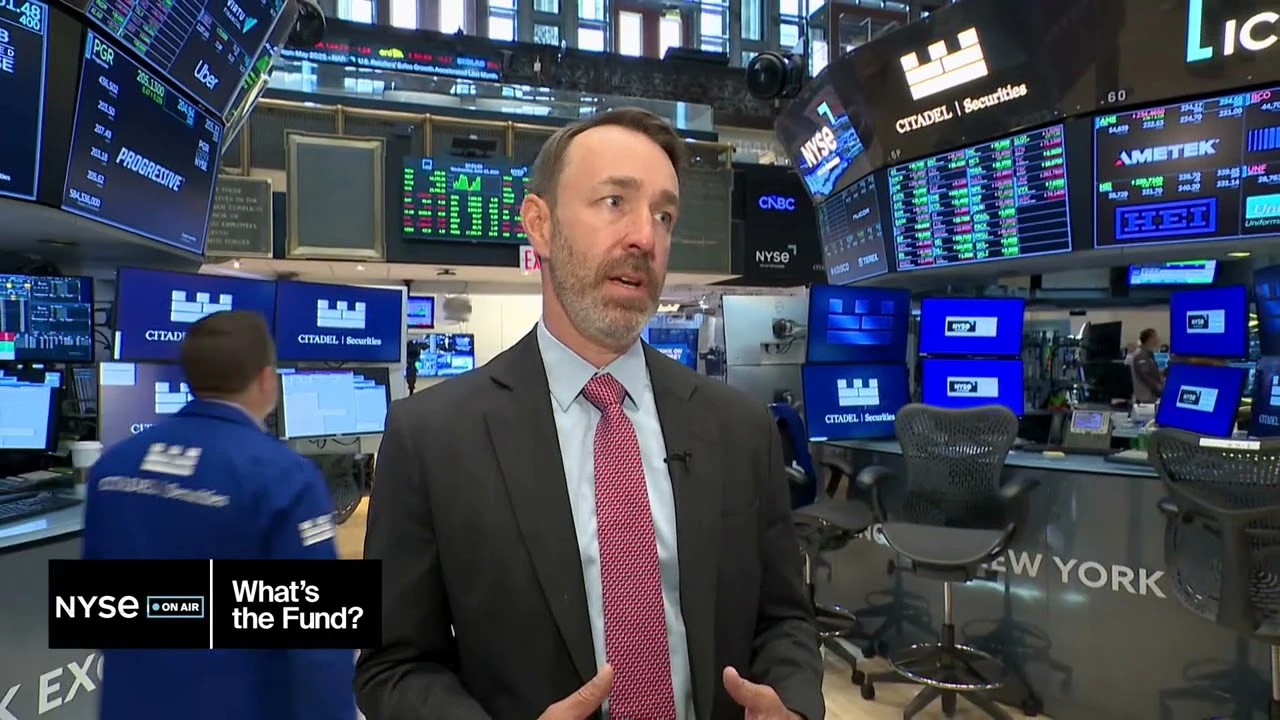
What's the Fund | Ocean Park Diversified Income ETF (DUKZ)
James St Aubin, Chief Investment Officer at Ocean Park Asset Management, discuss the DUKZ ETF, exposing investors to the whole spectrum of asset classes in the fixed income markets, through their rules-based process.

Browse all educational columns



Expert-Built ETF Portfolios, All in One Place
Don’t start from scratch. Discover ready-made ETF portfolios built by professionals to match different goals, timelines, and market views. Use them as inspiration or as a starting point for your own allocation.